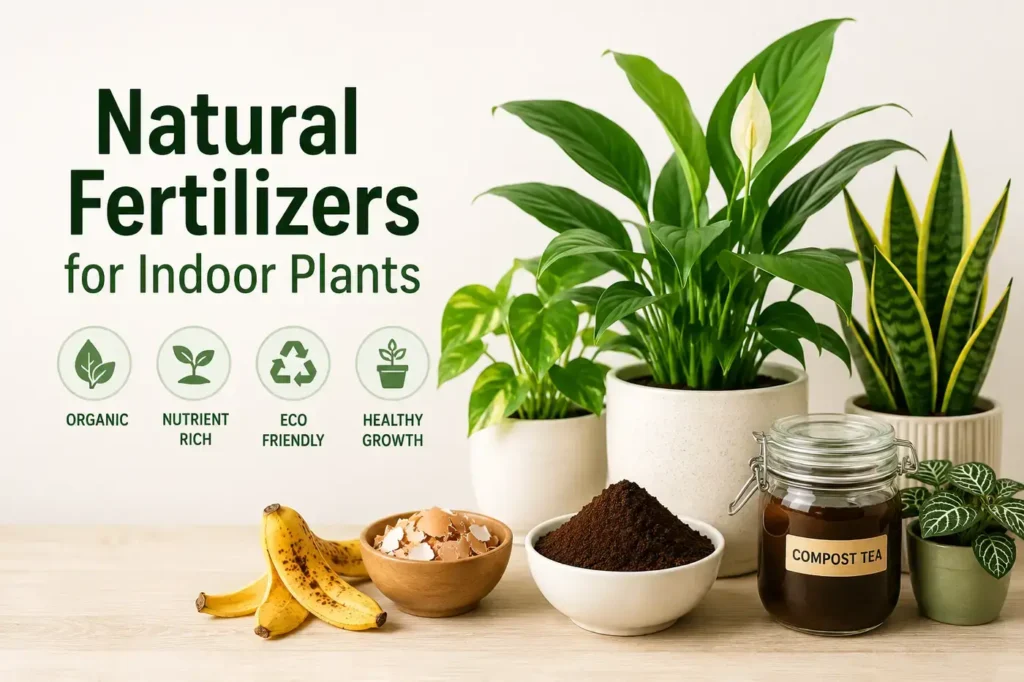
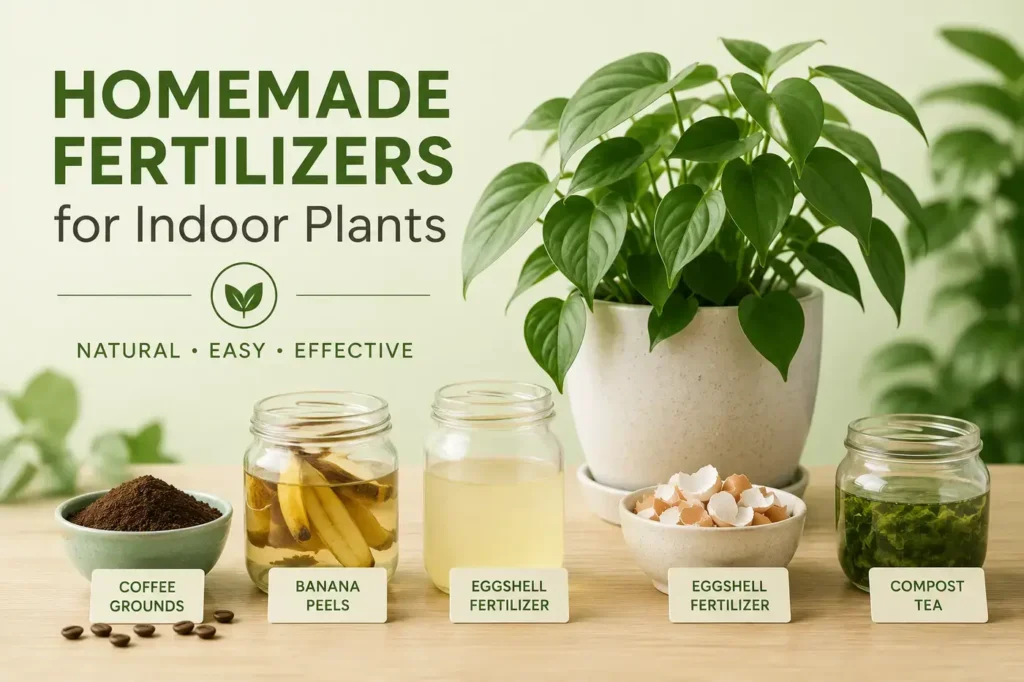
Homemade fertilizer for indoor plants is one of the most practical ways to keep houseplants well-nourished throughout the growing season without spending money on commercial products every few weeks. Most effective homemade fertilizer options use ingredients that are sitting in your kitchen right now as food scraps or household items you were going to throw away anyway. The difference between homemade fertilizers that actually work and the ones that disappoint is usually preparation technique rather than ingredient choice. A banana peel sitting directly on soil does very little. The same banana peel soaked in water for 48 hours produces a genuinely effective potassium-rich liquid fertilizer that flowering plants respond to noticeably.
This guide covers 10 homemade fertilizer recipes for indoor plants, exactly how to prepare each one to maximize nutrient availability, which plants respond best to each type, and how to combine them into a simple feeding schedule that keeps your houseplant collection thriving through the growing season without a single purchased fertilizer product.
Quick Answer
The best homemade fertilizers for indoor plants include banana peel water, eggshell water, diluted aquarium water, used coffee ground water, rice water, vegetable cooking water, green tea fertilizer, wood ash water, Epsom salt solution, and worm casting tea. Most require soaking or diluting a household ingredient in water and applying the resulting liquid as a regular watering every two to four weeks through spring and summer. Never apply fertilizers of any kind to dry soil and reduce or stop feeding entirely during fall and winter when most houseplants slow their growth.
Why Homemade Fertilizers Work for Indoor Plants
The nutrient content of plants themselves is the starting point for understanding why so many kitchen scraps make effective plant fertilizers. Plants absorb minerals from soil and build those minerals into their tissue. When plant material like banana peels, coffee grounds, or vegetable cooking water returns to soil through composting or soaking, those same minerals become available to plant roots again through the natural cycle of decomposition.
The key practical question for indoor plants is whether the nutrients in a given homemade fertilizer are available to roots in potting mix conditions, where the soil volume is limited, drainage is constrained, and there are fewer of the soil microorganisms that break down organic matter in outdoor garden beds. Most soaking and water-extraction methods produce nutrients in a form that is immediately soluble and available to roots without requiring extensive microbial processing, which is what makes liquid homemade fertilizers more effective in pots than simply adding solid kitchen scraps to the soil surface.
10 Homemade Fertilizer Recipes for Indoor Plants
Recipe 1: Banana Peel Water
Banana peels contain potassium, phosphorus, calcium, and magnesium. Potassium is the nutrient most critical for flower production, fruit development, and overall plant immune function. Indoor plants that are entering their blooming period or that produce fruit respond most noticeably to the potassium boost from banana peel water.
How to make it: Place two to three banana peels from ripe bananas into a clean quart jar or pitcher. Cover the peels completely with room temperature water. Leave to soak for 24 to 48 hours at room temperature. Remove the peels after soaking since leaving them longer encourages mold growth that can introduce unwanted pathogens to your plant soil. The resulting water is ready to use immediately with a slight yellowish tinge from the leached minerals.
How to use it: Water your plants with the banana peel water directly, using it in place of a regular watering rather than in addition to one. Do not dilute further since the natural leaching process produces an appropriately gentle concentration for most houseplants.
How often: Every two to three weeks through spring and summer for flowering plants. Every three to four weeks for foliage plants where potassium is less critical than for bloomers.
Best for: African violets, orchids, peace lilies, indoor roses, and any other flowering houseplant. Also beneficial for indoor tomatoes, peppers, and citrus trees where potassium drives fruit quality.
Recipe 2: Eggshell Water
Eggshells are primarily calcium carbonate, a mineral that strengthens plant cell walls, supports healthy root tip development, and is particularly important for flowering and fruiting plants that experience calcium demand during their reproductive period.
How to make it: Rinse the shells from 6 to 8 eggs to remove any egg white residue that would encourage bacterial growth during soaking. Crush the shells coarsely with your hands or a rolling pin. Place the crushed shells in a quart of water and let soak for 24 to 48 hours. The water will become slightly milky or cloudy as calcium carbonate leaches out. Strain out the shell fragments and use the water directly on plants.
How to use it: Apply as a regular watering every three to four weeks through the growing season. The calcium content is gentle enough for most houseplant types but raises soil pH very slightly over time through the alkaline nature of calcium carbonate. Monitor acid-loving plants like ferns, gardenias, and orchids if using regularly and discontinue if yellowing from pH-induced iron deficiency appears.
How often: Every three to four weeks through spring and summer. Use the remaining eggshell fragments in outdoor garden beds or compost rather than applying them directly to indoor potting mix where they decompose too slowly to be useful.
Best for: Flowering and fruiting indoor plants. Tomatoes and pepper plants grown indoors where calcium deficiency causes blossom end rot. General foliage plants as a gentle periodic calcium supplement.
Recipe 3: Aquarium Water
Freshwater aquarium water contains dissolved fish waste, uneaten food particles, and ammonia compounds that aquarium bacteria have already partially processed into plant-available nitrogen and phosphorus. It is one of the most convenient homemade fertilizers available because it requires zero preparation and is generated automatically every time you perform a routine partial water change.
How to use it: Use the water removed during partial water changes (typically 20 to 25% of tank volume every one to two weeks) directly on houseplants without any further dilution or preparation. Pour it at the base of plants just as you would with regular watering water.
Important note: Use only freshwater aquarium water. Saltwater aquarium water contains salt concentrations that damage plant roots and should never be used on houseplants.
How often: As often as you perform partial water changes, which for most freshwater aquarium keepers is every one to two weeks. The nutrient content of aquarium water is gentle enough that this frequency is appropriate for most houseplant types throughout the year rather than just the growing season.
Best for: All houseplant types. Particularly beneficial for tropical foliage plants like pothos, philodendrons, and monsteras that respond well to the nitrogen content of aquarium water with noticeably faster and healthier growth.
Recipe 4: Used Coffee Ground Water
Used coffee grounds contain nitrogen, potassium, magnesium, and trace minerals in addition to compounds that lower soil pH. The nitrogen content is the most significant nutritional contribution, making coffee ground water most useful as a supplemental nitrogen source for foliage plants during their active growth period.
How to make it correctly: Add one tablespoon of used coffee grounds (not fresh, unused grounds) to one quart of water. Stir and let sit for 24 hours. Strain out the grounds completely before using since grounds applied directly to potting mix surface compact and can encourage mold growth. The resulting water has a very light coffee color and is appropriately diluted for safe use on most plants.
How to use it: Apply as a regular watering every three to four weeks. The pH-lowering effect of coffee compounds means this fertilizer is best reserved for acid-loving plants and used only occasionally on plants that prefer neutral soil conditions.
How often: Every three to four weeks for acid-loving plants. No more than once every six weeks for plants with neutral soil preferences to avoid gradual pH shift.
Best for: Ferns, gardenias, azaleas, peace lilies, and other acid-loving plants. Not recommended for succulents, cacti, lavender, rosemary, or other plants that prefer neutral to alkaline soil. For the complete list of which houseplants respond well to coffee-based fertilizers and which are harmed by the acidity over time, what indoor plants like coffee grounds covers every common species with specific guidance on safe application rates.
Recipe 5: Rice Water
Starchy rice cooking water contains nitrogen, phosphorus, potassium, and beneficial bacteria and yeasts that improve soil microbial populations when applied to potting mix. It is produced as a byproduct of rinsing rice before cooking, requiring no additional preparation beyond saving the rinse water rather than pouring it down the drain.
How to make it: Rinse one cup of uncooked white or brown rice in two cups of water until the water becomes cloudy and opaque from the starch content. This rinsing water (not the water rice is cooked in, which may be salted) is the fertilizer. Use it immediately while the starch is still fully suspended.
How to use it: Water plants with the rice rinse water directly without dilution. Apply at room temperature rather than hot or cold.
How often: Every two to three weeks through the growing season. Rice water is gentle enough that applying it more frequently than this does not cause harm but provides diminishing nutritional returns.
Best for: General application across most common houseplant types. Particularly beneficial for tropical foliage plants where the starch content feeds beneficial soil microorganisms that improve nutrient availability to roots. The microbial stimulation effect is similar to a gentle compost tea at a fraction of the preparation effort.
Recipe 6: Vegetable Cooking Water
The water used to boil or steam vegetables leaches minerals from the vegetables including nitrogen, potassium, phosphorus, and various trace minerals that the vegetables absorbed during their growth. Rather than pouring this mineral-rich water down the drain, allowing it to cool and using it on houseplants is one of the most effortless homemade fertilizer options available.
How to use it: Allow vegetable cooking water to cool completely to room temperature before applying to plants since hot water damages plant roots. Use plain unsalted cooking water only since salt in cooking water builds up in potting mix and eventually damages root function. Steam condensation water that drips from the steamer lid is equally effective and often cleaner in terms of salt content.
How often: As often as you cook vegetables, up to several times per week for plants that are actively growing. The nutrient content is gentle enough that frequent application through the cooking season does not build up to harmful levels in potting mix with adequate drainage.
Best for: All houseplant types as a gentle general nutritional supplement. Most effective during the spring and summer growing season when plants can utilize the nutrients provided.
Recipe 7: Green Tea Fertilizer
Used green tea leaves and cooled green tea contain tannic acid, nitrogen, and trace minerals that provide gentle nutrition alongside a mild pH-lowering effect similar to but gentler than coffee grounds.
How to make it: Steep two to three used green tea bags or one tablespoon of loose green tea leaves in one quart of room temperature water for 24 hours. Alternatively, use cooled leftover green tea that has already been brewed but not sweetened or flavored with additives. Strain the leaves before use.
How to use it: Water plants with the tea directly every three to four weeks. The nutrient and acid content is gentle enough for most plants including those with sensitive root systems.
How often: Every three to four weeks through the growing season. Monthly during winter if plants are still showing active growth.
Best for: Ferns, peace lilies, pothos, and other tropical foliage plants that prefer slightly acidic soil conditions. The gentler acidity compared to coffee grounds makes green tea water a safer option for plants with moderate rather than strong acid preferences.
Recipe 8: Epsom Salt Solution
Epsom salt (magnesium sulfate) is one of the most widely recommended homemade plant fertilizers and one of the most misunderstood. It is not a complete fertilizer and does not provide nitrogen, phosphorus, or potassium. It provides magnesium and sulfur specifically, which are secondary macronutrients that plants need in smaller quantities than the primary three.
Epsom salt is genuinely useful for plants showing magnesium deficiency symptoms (yellowing between the veins of older leaves while the veins themselves remain green, known as interveinal chlorosis) and for magnesium-hungry plant types including roses, tomatoes, and peppers. Applied to plants that are not deficient in magnesium, it provides little benefit and can contribute to nutrient imbalances over time with repeated use.
How to make it: Dissolve one tablespoon of Epsom salt in one gallon of water. Use immediately since there is no benefit to soaking time with fully water-soluble minerals.
How to use it: Apply as a soil drench every four to six weeks to plants showing interveinal chlorosis or to magnesium-demanding plant types during their active growing period. Do not apply to plants that show no deficiency symptoms more than once every six weeks.
Best for: Roses grown indoors, indoor tomatoes and peppers, and any plant showing the distinctive interveinal yellowing pattern of magnesium deficiency. Not a general-purpose fertilizer and not appropriate for all plant types without confirmed deficiency need.
Recipe 9: Wood Ash Water
Clean wood ash from burning untreated wood provides potassium, calcium carbonate, and trace minerals in a quickly soluble form when dissolved in water. The significant caution around wood ash is its strong alkalinity. Wood ash raises soil pH rapidly even in small quantities, which can convert trace minerals from plant-available forms to chemically unavailable ones.
How to make it safely: Dissolve no more than one teaspoon of clean wood ash in one gallon of water. The solution will be slightly milky. Use within 24 hours since the alkalinity changes over time in contact with air.
How to use it: Apply as a soil drench no more than once every six to eight weeks. Never apply to acid-loving plants. Check soil pH with an inexpensive pH test kit before repeated use to ensure pH is not rising beyond the plant’s tolerance range.
Best for: Plants that prefer neutral to slightly alkaline soil conditions including lavender, rosemary, and some succulent species. A useful occasional potassium and calcium supplement for these species when banana peel water and eggshell water are not available.
Recipe 10: Worm Casting Tea
Worm casting tea is made by soaking purchased or home-harvested worm castings in water to extract the soluble nutrients and beneficial microorganisms they contain. It is the most nutritionally complete and broadly effective homemade liquid fertilizer on this list, suitable for virtually every common houseplant type without adjustment or concern about pH effects.
How to make it: Place one cup of worm castings in a mesh bag or cheesecloth and steep it in one gallon of dechlorinated water for 24 hours. For the most effective result, aerate the water with an aquarium air pump and airstone throughout the steeping period since aeration multiplies the beneficial microorganism population in the finished tea dramatically. After 24 hours, remove the casting bag and use the liquid immediately since the beneficial microorganism population declines quickly without continued aeration.
How to use it: Apply as a soil drench at the base of plants every two weeks through spring and summer. The remaining castings in the mesh bag can be top-dressed onto potting soil surfaces to continue releasing nutrients slowly.
How often: Every two weeks through the active growing season. Monthly maintenance applications through fall provide a gentle ongoing nutritional baseline for plants that continue growing slowly through cooler months.
Best for: All common houseplant types including tropical foliage plants, flowering houseplants, herbs, and succulents at reduced rates. Worm casting tea is the closest a homemade fertilizer comes to a complete, balanced plant food that requires no adjustment for different plant types. For the complete guide to worm castings as a standalone fertilizer including purchasing options, soil amendment rates, and which plants respond most dramatically, natural fertilizer for indoor plants covers worm castings alongside every other effective natural fertilizer option in full detail.
Building a Simple Homemade Fertilizer Schedule
Rather than using a single homemade fertilizer all season, rotating through two or three options covers a broader nutritional range than any single ingredient provides and keeps the feeding routine practical without becoming complicated.
A simple two-product rotation for most houseplants:
Weeks 1 and 5: Worm casting tea or aquarium water for broad-spectrum nutrition and soil biology support.
Weeks 3 and 7: Banana peel water for potassium and phosphorus supplementation, particularly for flowering plants.
This four-week rotation cycle repeated through spring and summer provides consistent, balanced natural nutrition without any measuring of concentrated fertilizers and with minimal preparation time per application.
For foliage-focused plants that are not flowering or fruiting, replace banana peel water with diluted coffee ground water (for acid-loving species) or rice water (for neutral-soil species) to shift the nutritional emphasis toward nitrogen for healthy leaf production.
For flowering and fruiting plants during their peak blooming and production period, increase banana peel water applications to every two weeks and add eggshell water every four weeks for the calcium that supports flower and fruit development.
Common Mistakes With Homemade Plant Fertilizers
Applying undiluted solid ingredients directly to soil. Banana peels, eggshells, coffee grounds, and other solid kitchen scraps placed directly on the soil surface of potted plants decompose far more slowly in dry indoor potting conditions than in outdoor garden beds with active microbial communities. They can also encourage mold growth and attract fungus gnats. Always use the water-extraction method described for each ingredient rather than direct soil application.
Fertilizing during fall and winter. Most houseplants slow their growth significantly from October through February and cannot utilize the nutrients in fertilizer effectively during this period. Unused nutrients accumulate in the limited soil volume of a pot and can reach concentrations that affect root health. Feed consistently through spring and summer and reduce or stop entirely through the cooler months.
Fertilizing a drought-stressed plant. Always water the plant normally the day before applying any fertilizer. Dry roots absorb fertilizer solution in a concentrated form that can cause burn even with gentle natural options. Moist soil distributes fertilizer solution evenly through the root zone at a concentration roots can absorb safely.
Expecting immediate results. Homemade natural fertilizers work more slowly than synthetic ones by design. Allow four to six weeks of consistent twice-monthly feeding before assessing results. A plant that has been in unfertilized potting mix for a year will show gradual improvement over several feeding cycles rather than dramatic change after the first application.
Conclusion
Homemade fertilizer for indoor plants covers a wider range of effective options than most plant owners realize, from the zero-effort convenience of aquarium water to the nutritionally complete worm casting tea. Every recipe on this list uses ingredients that are either free kitchen byproducts or inexpensive household items, making consistent natural feeding through the growing season genuinely achievable without a recurring commercial fertilizer budget.
Start with whichever two or three options on this list match the ingredients you already have available. Build a simple rotation that applies one option every two to three weeks through spring and summer. Reduce feeding frequency in fall and stop in winter. Water before fertilizing. Watch for improvement over four to six weeks of consistent application.
That simple approach, applied consistently through the growing season, keeps most common houseplant collections visibly healthier than irregular or non-existent fertilization, without a single trip to the garden center for commercial plant food.
Frequently Asked Questions
Which homemade fertilizer is best for indoor plants overall?
Worm casting tea is the most nutritionally complete and broadly safe homemade fertilizer for the widest range of houseplant types. It provides a balanced nutrient profile, beneficial soil microorganisms, and plant growth hormones without raising or lowering soil pH significantly. Aquarium water is the most convenient option for anyone who keeps freshwater fish since it requires zero preparation. Banana peel water is the best single-ingredient option for flowering houseplants specifically.
How do I know if my homemade fertilizer is working?
Signs that homemade fertilization is working include noticeably larger and healthier new leaves than the plant was producing before feeding began, darker green color in foliage plants (indicating adequate nitrogen), increased flower production in blooming plants, and overall more vigorous growth compared to the slow or stalled growth that indicates nutritional deficiency. Allow four to six weeks of consistent twice-monthly feeding before expecting visible results since natural fertilizers release nutrients gradually rather than delivering an immediate flush.
Can I use homemade fertilizers on all my indoor plants?
Most homemade fertilizers on this list are safe for the majority of common houseplant types. The exceptions are coffee ground water and green tea fertilizer, which should be reserved for acid-loving plants and used only occasionally on neutral-soil species. Wood ash water should be avoided on acid-loving plants entirely. Eggshell water should be monitored on orchids and ferns where pH sensitivity is highest. Worm casting tea, aquarium water, banana peel water, rice water, vegetable cooking water, and Epsom salt solution (for deficiency treatment only) are safe for virtually all common houseplant species.
How long does homemade plant fertilizer last once made?
Most homemade liquid fertilizers should be used within 24 to 48 hours of preparation since their nutrient content and microbial populations (where applicable) degrade quickly. Rice water and vegetable cooking water should be used within 24 hours. Banana peel water keeps for 48 hours in the refrigerator before its effectiveness declines. Worm casting tea is most effective used immediately after the aeration period ends since beneficial microorganism populations decline within hours without continued aeration. Make fresh small batches for each application rather than preparing large quantities to store.
Is homemade fertilizer as effective as commercial fertilizer for indoor plants?
For most common houseplant applications through the growing season, consistent homemade natural fertilizer applications produce comparable results to commercial organic fertilizers and noticeably better long-term soil health than synthetic fertilizer use. Commercial synthetic fertilizers produce faster initial visible results due to their immediately water-soluble form. For plants recovering from severe nutritional deficiency or for high-demand plants like indoor vegetables during their fruiting period, a commercial balanced fertilizer may provide more precise nutrient delivery than homemade options alone. Most indoor plant owners find that homemade fertilizers meet all their plants’ needs through the growing season when applied consistently every two to three weeks.
Can I mix different homemade fertilizers together?
Yes, in most cases. Combining banana peel water with eggshell water, for example, provides both potassium and calcium in a single application. Rice water and aquarium water can be combined without issue. The one combination to avoid is mixing coffee ground water with eggshell water since the acidity of the coffee compounds and the alkalinity of the calcium carbonate partially neutralize each other, reducing the benefit of both while creating an unpredictable pH effect in the soil. Use these two in alternation rather than combination for acid-loving plants that would benefit from both.