

Not all indoor plants like coffee grounds, and using them on the wrong plant is one of the fastest ways to create a yellowing, declining houseplant that you cannot figure out. But for the plants that do benefit, coffee grounds are genuinely useful. They provide nitrogen, potassium, and magnesium while gradually lowering soil pH toward the acidic range that certain plant families evolved in. The key is knowing exactly which plants fall into that category and which ones do not.
What indoor plants like coffee grounds? The short answer is acid-loving plants. The longer answer covers 11 specific species, why each one benefits, and how to apply grounds in a way that actually helps rather than creating the compaction, mold, and fungus gnat problems that direct surface application causes.
Quick Answer
Indoor plants that benefit from coffee grounds include peace lilies, pothos, African violets, ferns, gardenias, azaleas grown indoors, blueberry plants, roses, snake plants used sparingly, rubber plants, and philodendrons. These plants prefer slightly acidic soil conditions where the nitrogen and pH-lowering properties of coffee grounds produce genuine improvement. Always use grounds as diluted water (one tablespoon per quart) rather than applying them dry and directly to pot surfaces.
Why Some Plants Like Coffee Grounds and Others Do Not
Coffee grounds affect soil in two main ways. First, they provide nitrogen at approximately 2% by weight alongside potassium, magnesium, and trace minerals. Second, the compounds in used grounds gradually lower soil pH toward the acidic range as they decompose.
Plants that evolved in naturally acidic forest soil absorb iron, manganese, and other trace minerals most effectively at a pH between 5.5 and 6.5. For these plants, the pH shift from coffee grounds improves nutrient uptake in a way that makes the plant visibly healthier even if you do not change anything else about its care.
Plants that prefer neutral to alkaline soil experience the opposite. The pH shift creates conditions where these minerals become chemically unavailable, producing the interveinal chlorosis (yellowing between leaf veins while veins stay green) that looks like a deficiency even when nutrients are present.
This single factor, soil pH preference, is what determines whether your plant likes coffee grounds or not.
11 Indoor Plants That Like Coffee Grounds
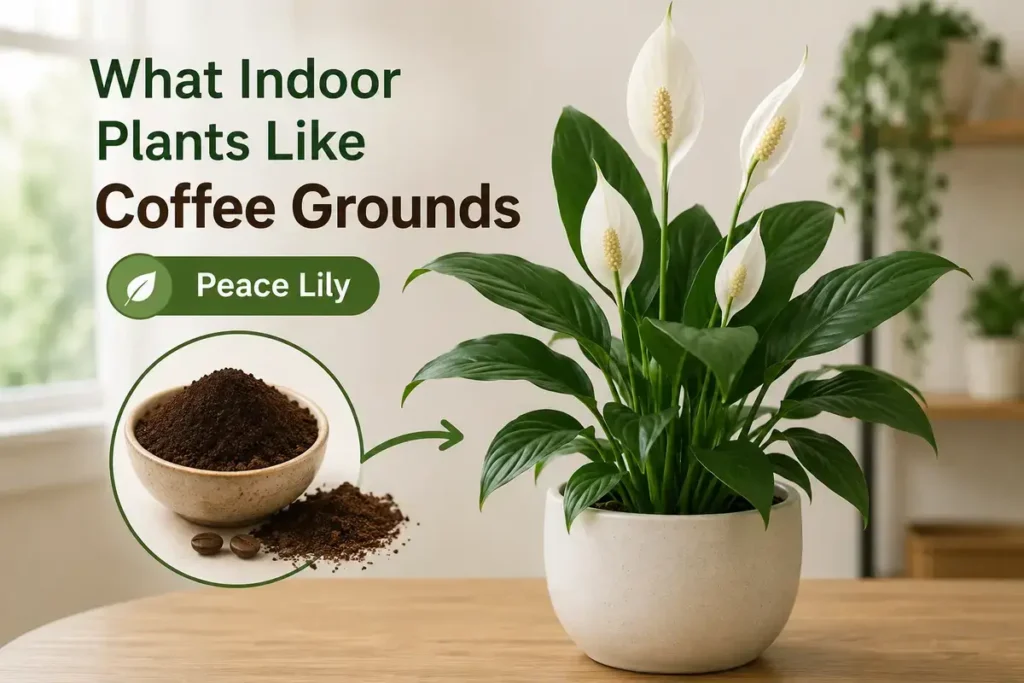
1. Peace Lily
Peace lilies perform well in slightly acidic soil and are one of the most forgiving plants for coffee ground experimentation. They tolerate a pH range of 5.8 to 6.5 comfortably, and the nitrogen boost from coffee ground water visibly improves the dark green, glossy leaf color that makes peace lilies so attractive.
How to use: Apply diluted coffee ground water (one tablespoon of used grounds soaked in one quart of water for 24 hours, then strained) every three to four weeks through spring and summer. The peace lily’s relatively forgiving pH range means you have more room to experiment with frequency than with more sensitive acid-lovers like gardenias.
What to watch for: If leaves develop interveinal yellowing (green veins, yellow leaf body), you have pushed the pH too acidic. Flush with plain water and reduce coffee ground application frequency.
2. Pothos
Pothos is one of the most popular houseplants for good reason: it tolerates a wide range of conditions including both neglect and enthusiastic care. It prefers soil in the slightly acidic range of 6.0 to 6.5, which makes it a good candidate for occasional coffee ground water applications.
The nitrogen content is what benefits pothos most noticeably. Well-fed pothos in appropriate light produces larger, more vibrant leaves than unfed specimens, and the nitrogen boost from coffee grounds specifically supports this leaf growth.
How to use: Coffee ground water every four weeks is appropriate for pothos. Given its tolerance for a wider pH range than plants like gardenias, you can use it less frequently and still see the nitrogen benefit without risking pH problems.
3. African Violets
African violets prefer slightly acidic soil between pH 6.0 and 6.5 and are among the flowering plants most visibly responsive to consistent, appropriate feeding. The nitrogen from coffee grounds supports healthy leaf production while the slight pH adjustment maintains the conditions these plants need for consistent blooming.
How to use: Very diluted coffee ground water, even lighter than the standard tablespoon-per-quart ratio, applied once every three to four weeks. African violets have sensitive roots and are better served by gentler, more diluted applications than larger, sturdier plants.
One important note: Always water African violets from the bottom by placing the pot in a shallow dish of water. Coffee ground water applied from the top that reaches the crown and leaves causes spotting on the velvety leaf surface. Bottom watering delivers the nutrients to the roots while keeping leaves dry.
4. Ferns
Most indoor fern varieties including Boston ferns, maidenhair ferns, and bird’s nest ferns evolved in acidic forest floor environments. They prefer pH between 5.5 and 6.5 and respond well to the moisture-retaining, acidifying properties of coffee compounds in the soil.
Ferns also benefit from the nitrogen content since they produce significant leaf mass through the growing season that requires consistent nitrogen support to maintain the rich green color they are grown for.
How to use: Coffee ground water every three to four weeks through spring and summer. You can also add a small amount of used grounds (no more than a teaspoon) worked into the top half-inch of soil every six to eight weeks since ferns tolerate slightly higher application rates than more sensitive species.
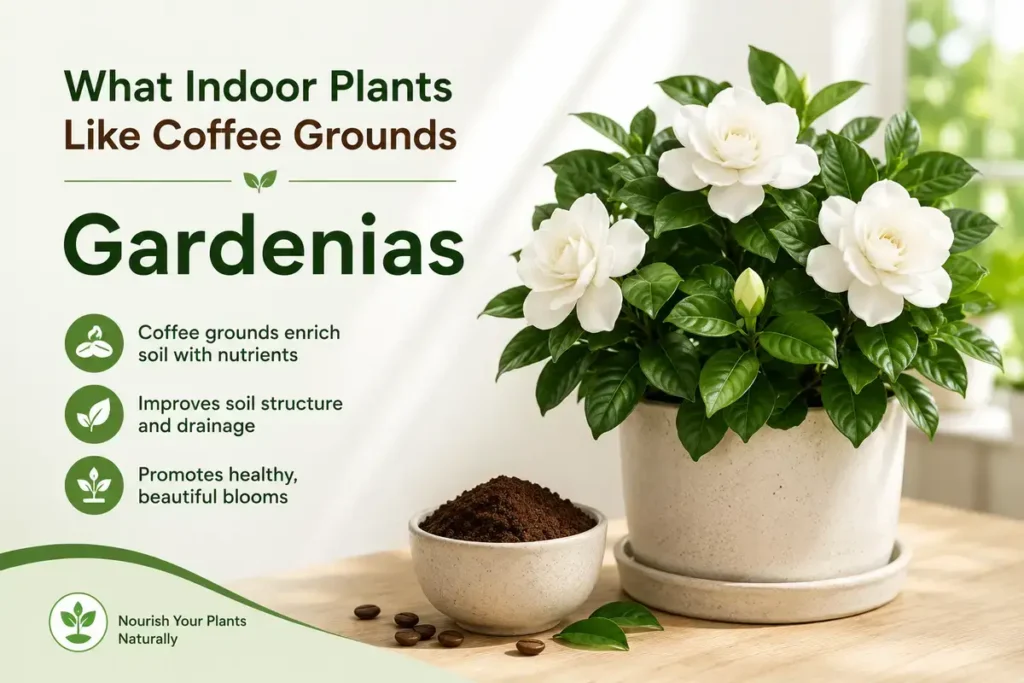
5. Gardenias
Gardenias are the plant that benefits most dramatically from coffee grounds of any species on this list. They require consistently acidic soil between pH 5.0 and 6.0 to absorb iron effectively. Without that acidity, gardenias develop iron chlorosis and their leaves turn yellow even when iron is present in the potting mix.
Regular coffee ground water applications are one of the most reliable and cost-effective ways to maintain gardenia soil acidity without purchasing specialized acidifying fertilizers.
How to use: Coffee ground water every two to three weeks through the growing season. Monitor leaf color closely. Dark, glossy green leaves indicate the pH is in the right range. Interveinal yellowing means the pH is too high and more frequent coffee ground water is needed. An inexpensive pH test kit confirms what is happening in the soil.
6. Azaleas Grown Indoors
Like gardenias, azaleas are ericaceous plants that require acidic conditions to thrive. They need pH between 4.5 and 6.0 for healthy growth and consistent flowering. In neutral potting mix without acidification, azaleas decline gradually as their ability to absorb essential minerals decreases with each month in the wrong pH environment.
Coffee ground water every two to three weeks maintains the acidity azaleas need alongside other acidifying practices like using rainwater rather than hard tap water for irrigation.
How to use: Apply coffee ground water at the standard dilution every two to three weeks through spring and summer. Reduce to monthly in fall. Use a pH test kit every few months to confirm the soil is staying in the target range rather than either becoming too acidic or drifting back toward neutral.
7. Blueberry Plants Grown Indoors
Blueberries require the most acidic conditions of any plant on this list, between pH 4.5 and 5.5. Coffee grounds alone rarely acidify potting mix enough to reach this range from a neutral starting point, but they contribute meaningfully to an acidification strategy that also includes acidic potting mix and rainwater irrigation.
For blueberry plants, coffee grounds work best as part of a comprehensive acidification approach rather than the sole method, particularly for plants that are already in appropriately acidic soil and need that acidity maintained over time.
How to use: Coffee ground water every two weeks through the growing season alongside acidic potting mix and sulfur amendments if pH testing shows the soil drifting above 5.5. For a broader understanding of how coffee grounds work alongside peat moss and coco coir in acidic soil mixes for plants like blueberries and gardenias, peat moss for indoor plants covers the complete picture of soil acidity management.
8. Indoor Roses
Roses prefer slightly acidic soil between pH 6.0 and 6.5 and are heavy feeders that benefit from the nitrogen boost that coffee grounds provide alongside their pH adjustment. The magnesium in coffee grounds is particularly valuable for roses since magnesium deficiency, visible as interveinal yellowing on older leaves, is one of the most common nutritional problems in roses.
How to use: Coffee ground water every two to three weeks through the growing season. The combination of nitrogen for leaf growth, potassium for flower production, and magnesium for chlorophyll production makes coffee grounds one of the more complete natural supplements for roses compared to most other indoor plants.
9. Snake Plants (Used Sparingly)
Snake plants prefer soil at approximately pH 6.0 to 7.0, which is neutral to slightly acidic. They benefit from occasional coffee ground water at reduced frequency rather than the regular applications appropriate for stronger acid-lovers. The nitrogen content is the primary benefit since snake plants in active growth respond to nitrogen with faster, more upright leaf production.
How to use: Coffee ground water no more than once every six weeks during spring and summer. The wider pH tolerance of snake plants means they handle the acidity without problems at this frequency while still getting the nitrogen benefit. More frequent applications push the pH below their tolerance range over time. Using coffee grounds for snake plants is covered in more detail in coffee grounds for indoor plants, which explains the pH threshold considerations for each plant type.
10. Rubber Plants
Rubber plants prefer slightly acidic to neutral soil between pH 6.0 and 7.0 and respond well to the nitrogen content of coffee grounds during their active growing season. The large leaf surfaces of rubber plants require consistent nitrogen support to maintain the deep green or burgundy color that makes them such striking houseplants.
How to use: Coffee ground water once every four to five weeks through spring and summer. Given their preference for pH close to neutral rather than strongly acidic, less frequent application than true acid-lovers prevents pH from dropping below their comfortable range over time.

11. Philodendrons
Philodendrons prefer slightly acidic soil between pH 5.5 and 6.5, placing them comfortably within the range that benefits from coffee ground applications. They are vigorous growers during the warm months and the nitrogen boost from coffee grounds specifically supports the large leaf production these plants are grown for.
How to use: Coffee ground water every three to four weeks through spring and summer. Both vining varieties like heartleaf philodendron and upright varieties like philodendron birkin respond well at this frequency without showing pH-related stress.
Plants That Do Not Like Coffee Grounds
Understanding which plants to avoid is as important as knowing which ones benefit. These species are consistently harmed by coffee ground applications.
Succulents and cacti require neutral to slightly alkaline, fast-draining soil. The pH shift from coffee grounds pushes them toward conditions they cannot tolerate well, and the organic matter increases moisture retention in ways that drive root rot in drought-adapted species.
Orchids grow on tree bark rather than in soil and require excellent aeration around their roots. Any amendment that increases moisture retention or changes the chemistry of their bark medium causes more harm than benefit.
Lavender and rosemary are Mediterranean plants that evolved in alkaline, fast-draining conditions. Coffee grounds create both the wrong pH and wrong moisture level for these herbs.
Spider plants prefer neutral soil and show gradual decline from the acidification that regular coffee ground use produces over several months.
How to Apply Coffee Grounds to Indoor Plants Correctly
The application method matters as much as which plant receives the grounds. Most problems people report from using coffee grounds on houseplants result from direct application of dry grounds to the soil surface.
The water extraction method (recommended): Add one tablespoon of used coffee grounds to one quart of room temperature water. Stir and let sit for 24 hours. Strain out all grounds completely before use. Apply the lightly colored water as a regular watering every three to four weeks for most acid-loving plants.
The top dressing method (use carefully): Apply no more than a quarter-inch layer of used grounds mixed gently into the top half-inch of soil. Never pile grounds on the surface since they compact into a water-repellent mat. Check the soil surface for mold within one week and remove grounds immediately if any appears.
What to avoid: Fresh unused grounds are significantly more acidic and contain higher concentrations of allelopathic compounds than used grounds. Always use grounds that have already been brewed. Never add dry grounds directly to the soil surface in a thick layer. Never use coffee grounds on any plant that prefers neutral to alkaline soil conditions.
Monitoring Your Plants After Coffee Ground Applications
Starting coffee ground applications without monitoring your plant’s response over the following weeks is how most people end up with plants worse off than before. A few simple checks tell you everything you need to know.
Positive response signs: Darker, richer green leaf color appearing within four to six weeks of the first application. Larger new leaves than before. More vigorous overall growth through the growing season. In flowering plants, more abundant or longer-lasting flowers.
Warning signs to watch for: Interveinal chlorosis (yellowing leaf body, green veins) appearing two to four weeks after application suggests the soil has become too acidic for that specific plant. Flush thoroughly with plain water and reduce application frequency before resuming. Overall leaf yellowing rather than interveinal yellowing suggests the plant prefers less acidic conditions than the grounds are creating.
For the complete guide to coffee grounds as a fertilizer covering application rates, pH effects, and the specific mistakes that cause plant damage, coffee grounds for indoor plants covers every consideration in full detail alongside a broader comparison with other natural fertilizer approaches.
Conclusion
What indoor plants like coffee grounds comes down to one main factor: soil pH preference. Plants that evolved in naturally acidic forest environments, including peace lilies, ferns, gardenias, African violets, azaleas, and philodendrons, genuinely benefit from the pH adjustment and nitrogen content that coffee grounds provide when applied correctly. Plants that prefer neutral to alkaline soil, including succulents, orchids, lavender, and spider plants, are harmed by the same properties that help acid-lovers.
Use the water extraction method rather than direct soil application. Apply to the right plants at the right frequency. Monitor leaf color for signs of benefit or stress. With those three practices in place, coffee grounds become a genuinely useful free fertilizer for the plants on this list rather than the hit-or-miss amendment that confusing online advice has made them seem.
Frequently Asked Questions
Do coffee grounds make good fertilizer for indoor plants?
Coffee grounds make a useful partial fertilizer specifically for acid-loving indoor plants. They provide nitrogen, potassium, and magnesium while gradually lowering soil pH toward the acidic range that ferns, gardenias, peace lilies, and African violets prefer. They are not a complete fertilizer and work best as one component of a broader feeding routine rather than the sole nutritional source.
How often should I use coffee grounds on indoor plants?
For strongly acid-loving plants like gardenias and azaleas, coffee ground water every two to three weeks through spring and summer maintains appropriate soil acidity. Every three to four weeks is sufficient for moderately acid-tolerant plants like pothos and philodendrons. For plants only lightly tolerant of acidity like snake plants and rubber plants, no more than once every five to six weeks prevents pH from dropping below their comfortable range.
Can coffee grounds hurt indoor plants?
Yes, in two situations. Plants that prefer neutral to alkaline soil including succulents, orchids, lavender, and rosemary are harmed by the pH shift toward acidity over time. Any plant is harmed by grounds applied in thick layers directly on the soil surface, which compact into a water-repellent mat, encourage mold growth, and create the moist conditions that attract fungus gnats.
Should I put coffee grounds on top of indoor plant soil?
Not as a thick layer. If you add any dry grounds to the soil surface, use a very thin layer no more than a quarter-inch deep worked into the top half-inch of existing soil. Better still, use the water extraction method where grounds are soaked in water for 24 hours and then strained out completely before application. This delivers the nutritional benefits without any solid grounds touching the soil surface.
Why are my plant’s leaves turning yellow after I added coffee grounds?
Two patterns tell different stories. Interveinal chlorosis (yellow between veins, green veins) suggests the soil has become too acidic, locking out certain minerals even for acid-loving plants when pH drops below their tolerance range. Flush with plain water and test soil pH before reapplying. Overall uniform yellowing suggests the plant prefers neutral or alkaline conditions and coffee grounds are creating the wrong environment for its nutritional chemistry. Identify the plant’s actual pH preference before resuming applications.
Can I use coffee grounds to lower soil pH for indoor plants?
Yes, over time with repeated applications. A single application of coffee ground water changes pH minimally. Consistent applications every two to four weeks through one growing season lower soil pH noticeably toward the acidic range. For plants requiring strongly acidic conditions like blueberries, coffee grounds work best as part of a broader acidification approach alongside acidic potting mix and sulfur amendments rather than as the sole pH management method.
Is it better to use fresh or used coffee grounds on indoor plants?
Always use used coffee grounds that have already been brewed. Fresh unused grounds are significantly more acidic, contain higher concentrations of allelopathic compounds that inhibit soil microorganism activity, and can suppress plant growth rather than support it. The brewing process extracts most of the harsh compounds while leaving the nitrogen, potassium, and magnesium that benefit plants. Used grounds also have a less intense pH-lowering effect than fresh ones, which makes them safer for plants across the moderate acid-tolerance range.
Pingback: Indoor Azalea Plant Care: 8 Steps to Keep It Blooming Year After Year - Plant Quill
Pingback: Care of Azalea Plants Indoors: 8 Steps to Longer Blooms - Plant Quill