
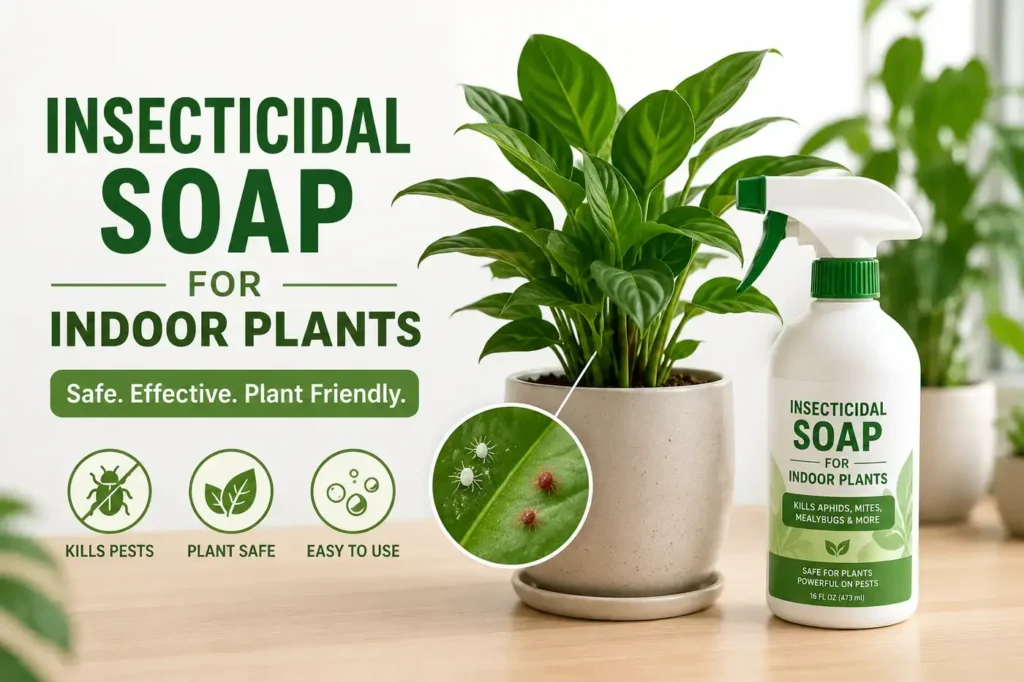
If you have ever dealt with aphids, spider mites, or whiteflies on your houseplants, you already know how fast a small pest problem can spiral. Insecticidal soap for indoor plants is one of the most effective, affordable, and beginner-friendly solutions available in the US right now. It kills soft-bodied insects on contact, leaves no harmful residue once dry, and is safe to use around children and pets when applied correctly. Whether you buy a ready-made product at Home Depot or mix your own at home in under two minutes, insecticidal soap works quickly and consistently when you know how to apply it properly.
This guide covers everything you need to know: how insecticidal soap actually works, which pests it kills, how to make your own version at home, which commercial products perform best, and the common mistakes that make it less effective than it should be.
Quick Answer
Insecticidal soap for indoor plants works by breaking down the protective waxy coating on soft-bodied insects, causing them to dehydrate and die. Mix 1 teaspoon of plain liquid dish soap with 1 quart of water, spray every surface of the plant including leaf undersides, and repeat every 3 to 4 days for two weeks. For sensitive plants, use a commercial insecticidal soap product like Safer Brand to avoid leaf damage.
How Insecticidal Soap Actually Works
Most people assume insecticidal soap works like a poison that insects absorb and die from. It does not work that way at all, which is actually what makes it so safe for use indoors around people and pets.
Insecticidal soap is a contact killer. When the soap solution hits an insect directly, the fatty acids in the soap penetrate and break down the insect’s outer cuticle, which is the waxy protective layer that keeps moisture inside its body. Once that layer is compromised, the insect dehydrates rapidly and dies. The soap also physically blocks the breathing pores on the insect’s body, accelerating the process.
Once the spray dries on the plant surface, it loses its killing power entirely. There is no residual toxicity, no lingering chemical, and no systemic uptake into the plant tissue. This is both its greatest strength and its most important limitation: it kills what it hits while wet, and nothing else.
This is why application technique matters more with insecticidal soap than with almost any other pest treatment. Missing the underside of a leaf means the aphids clustered there survive completely unaffected.
Which Pests Insecticidal Soap Kills
Insecticidal soap is effective against soft-bodied insects and mites. It does not work on hard-shelled insects like beetles or adult scale insects because their outer casing is too thick for the soap to penetrate.
Pests it kills effectively:
- Aphids
- Spider mites
- Whiteflies
- Mealybugs (young crawlers)
- Thrips
- Fungus gnat larvae
- Soft scale (crawlers only)
- Leafhoppers
Pests it does not kill:
- Hard-shelled beetles
- Adult armored scale
- Caterpillars
- Soil-dwelling grubs
If you are dealing with insects living in the soil rather than on the plant itself, insecticidal soap alone will not solve the problem. Understanding what is actually living in your potting mix is the first step, and bugs in indoor plant soil covers exactly which soil pests you are likely dealing with and how to treat each one.
Homemade Insecticidal Soap: Two Recipes That Work
Making your own insecticidal soap at home is genuinely simple and costs almost nothing if you already have dish soap in your kitchen. The key is using the right soap and the right concentration.
Recipe 1: Basic Dish Soap Spray
This is the most commonly used homemade version and works well for most indoor pest situations.
What you need:
- 1 quart of water (room temperature)
- 1 teaspoon of plain liquid dish soap
The soap that works: Dawn Original Blue is the most consistently recommended dish soap for this use across US gardening communities. It contains the right fatty acid profile without added moisturizers, bleach, or antibacterial agents that can damage plants. Avoid Dawn Platinum or any dish soap with added lotions or degreasers.
How to mix it: Combine water and soap in a clean spray bottle and shake gently. Do not shake vigorously as this creates too much foam that clogs the sprayer nozzle.
How to use it: Spray the entire plant from top to bottom, paying particular attention to leaf undersides and stem joints where pests concentrate. Apply until the solution drips from the leaves. Rinse with plain water after 2 to 3 hours to prevent any potential leaf spotting.
Recipe 2: Soap and Neem Oil Combination Spray
This version adds neem oil to the basic soap recipe, which extends the effectiveness significantly. The soap kills on contact while the neem oil’s active compound, azadirachtin, disrupts insect hormones and prevents surviving insects from reproducing.
What you need:
- 1 quart of warm water
- 1 teaspoon of plain dish soap
- 1 tablespoon of pure cold-pressed neem oil
How to mix it: Add the dish soap to the warm water first and stir briefly. Then add the neem oil. The soap acts as an emulsifier that keeps the oil suspended in the water. Shake before each spray application as the mixture separates quickly.
This combination is particularly effective for spider mite infestations, which can develop resistance to soap alone when treated repeatedly. Rotating between the basic soap spray and the neem combination every other application helps prevent resistance from developing.
Best Commercial Insecticidal Soap Products in the US
If you prefer a ready-made product rather than a homemade mix, or if your plants have had leaf burn reactions to dish soap in the past, these are the most widely available and consistently effective options at US garden centers.
Safer Brand Insect Killing Soap
The most widely recommended commercial insecticidal soap for indoor use in the US. It uses potassium salts of fatty acids specifically formulated for plant safety, which means it is less likely to cause leaf burn on sensitive plants than dish soap versions.
Available at Home Depot, Lowe’s, Walmart, and Amazon in both ready-to-use spray bottles and concentrate forms. The concentrate is more economical if you are treating multiple plants regularly.
Bonide Insecticidal Soap
Another widely available option at US garden centers and on Amazon. Works on the same fatty acid principle as Safer Brand and performs comparably in most indoor plant situations. The ready-to-use spray bottle version is convenient for smaller collections.
Garden Safe Insecticidal Soap
Specifically marketed for organic gardening and available at most major US retailers. Works well for herb and vegetable growers who want to use the same product on edible plants as on ornamentals.
All three of these products are OMRI listed for organic use, which matters if you are growing herbs or edible plants indoors alongside your ornamental houseplants.
How to Apply Insecticidal Soap Correctly
Getting good results from insecticidal soap comes down almost entirely to application technique. The product itself is straightforward. The application is where most people make mistakes that reduce its effectiveness.
Step 1: Check the Weather and Light Conditions
Apply insecticidal soap in the morning or evening, never during peak afternoon sun or when the plant is sitting in direct intense light. Soap applied to leaves in bright direct sunlight can dry too quickly and cause burning or spotting, particularly on thin-leaved plants.
Step 2: Water Your Plant First
Do not apply insecticidal soap to a plant that is drought-stressed. A stressed plant with slightly wilted tissue is more susceptible to soap damage. Water the plant the day before treatment and let it recover to normal turgidity before spraying.
Step 3: Test on One Leaf First
Before treating the entire plant, spray a single leaf and wait 24 to 48 hours. If you see yellowing, browning, or spotting at the test site, dilute the solution further or switch to a commercial product formulated for sensitive plants.
Step 4: Spray Every Surface Thoroughly
This is the most critical step. Spray the tops and undersides of every leaf, all stems, and growing tips. Aphids, spider mites, and whiteflies concentrate on leaf undersides specifically because it is a sheltered feeding spot. Missing those surfaces means a large portion of the pest population survives untreated.
For plants with densely packed or curled leaves, use a small paintbrush dipped in the solution to work it into areas the spray nozzle cannot reach.
Step 5: Rinse After 2 to 3 Hours
Rinse the plant with plain water 2 to 3 hours after application to remove soap residue from the leaf surface. This prevents the rare cases of soap burn on sensitive plants and removes the dead insects and debris from the plant surface.
Step 6: Repeat on Schedule
Apply every 3 to 4 days for a minimum of two full weeks. This schedule is not optional for complete control. The first application kills adult insects. Subsequent applications catch the nymphs that hatch from eggs the first spray did not penetrate. Stopping after one or two applications when visible insects disappear is the most common reason aphid and spider mite infestations return within days.
Plants That Are Sensitive to Insecticidal Soap
Most common houseplants tolerate insecticidal soap at normal concentrations without any damage. A smaller group of plants is genuinely sensitive and requires either a lower concentration, a shorter contact time, or a switch to a commercial product formulated for delicate species.
Plants that commonly show sensitivity:
- Ferns (most varieties)
- Succulents and cacti
- Orchids
- African violets
- Jade plants
- Some palms
For these plants, dilute the soap concentration by half and always rinse within 1 hour of application rather than waiting the full 2 to 3 hours. Alternatively, use a commercial insecticidal soap product which is pH-balanced and formulated to reduce the risk of plant tissue damage.
If your sensitive plant has a severe infestation, a targeted application with a cotton swab dipped in the diluted solution gives you precise control without exposing the entire leaf surface to soap contact.
How Insecticidal Soap Fits Into a Complete Pest Management Plan
Insecticidal soap is a powerful tool but works best as part of a broader approach rather than the only method in your pest management kit. Here is how it fits alongside other treatments for the most common indoor pest scenarios.
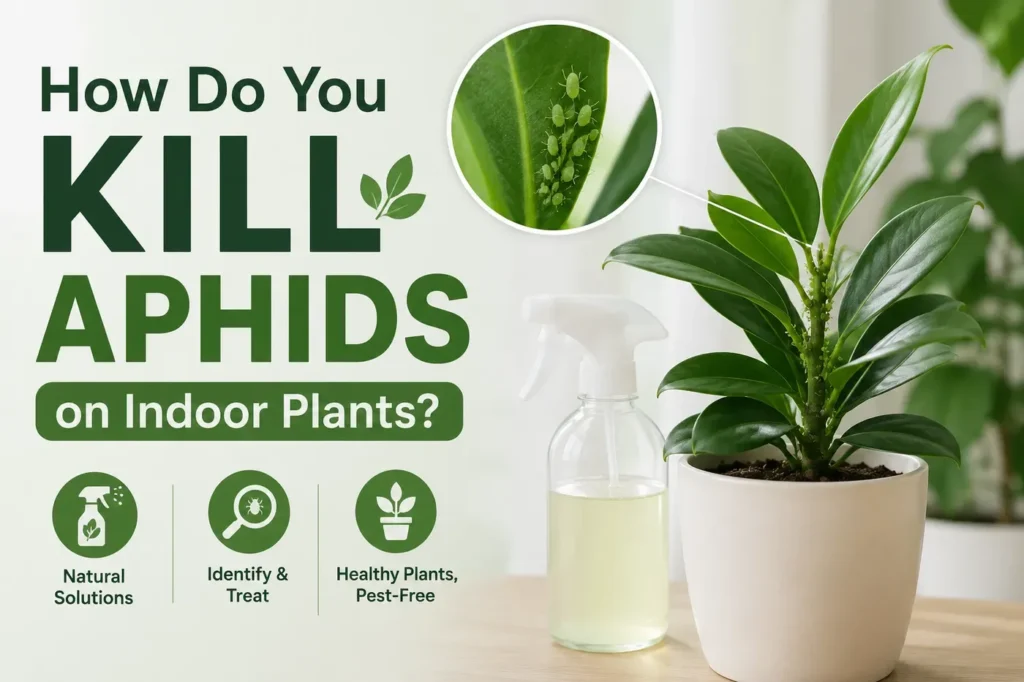
For aphid infestations: Start with manual removal of visible clusters, then apply insecticidal soap spray every 3 to 4 days. If the infestation persists after two weeks, switch to neem oil or combine both. You can read the complete treatment approach in how do you kill aphids on indoor plants which covers every method from the gentlest to the most heavy-duty in order of severity.
For spider mites: Soap alone is effective but mites develop resistance when exposed to the same treatment repeatedly. Alternate between soap spray and neem oil every other application to prevent resistance from building up.
For whiteflies: Combine insecticidal soap with yellow sticky traps. The soap kills whiteflies on contact during the spray application. Sticky traps catch adult whiteflies between spray sessions and prevent them from laying eggs on clean plants nearby.
For fungus gnats: Insecticidal soap applied to the soil surface kills young larvae but does not address adults. Combine with sticky traps for adults and a soil drench of hydrogen peroxide solution (1 part 3% hydrogen peroxide to 4 parts water) to eliminate eggs in the soil.
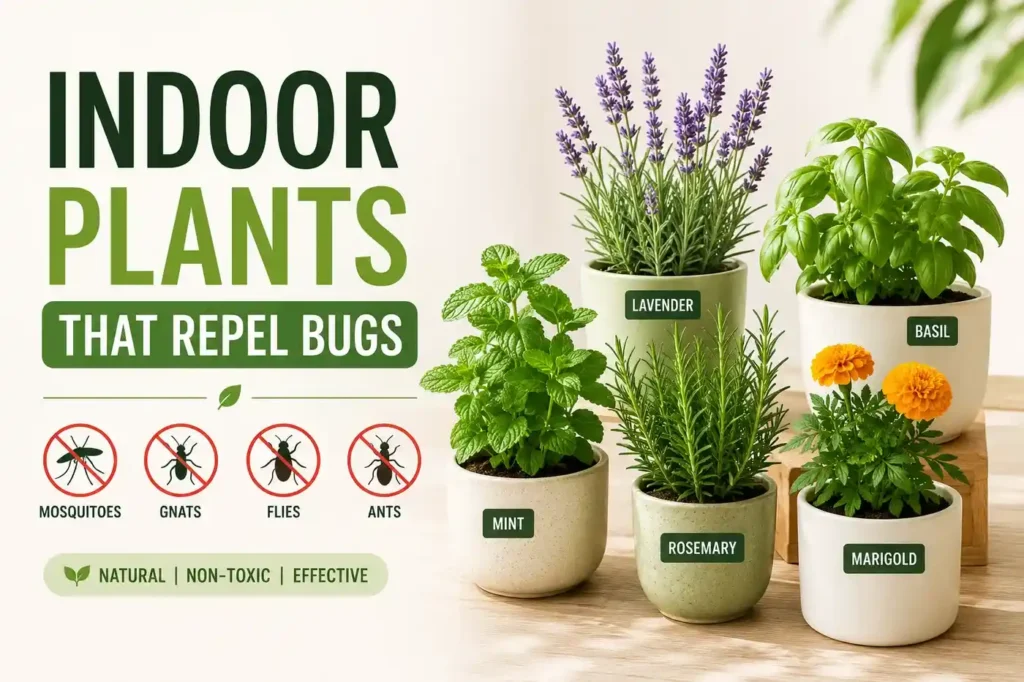
Growing plants that naturally deter pests alongside your vulnerable houseplants reduces the frequency of infestations significantly. The full guide on indoor plants that repel bugs covers which plants work as natural preventive companions and where to place them for the best effect.
Common Mistakes That Make Insecticidal Soap Less Effective
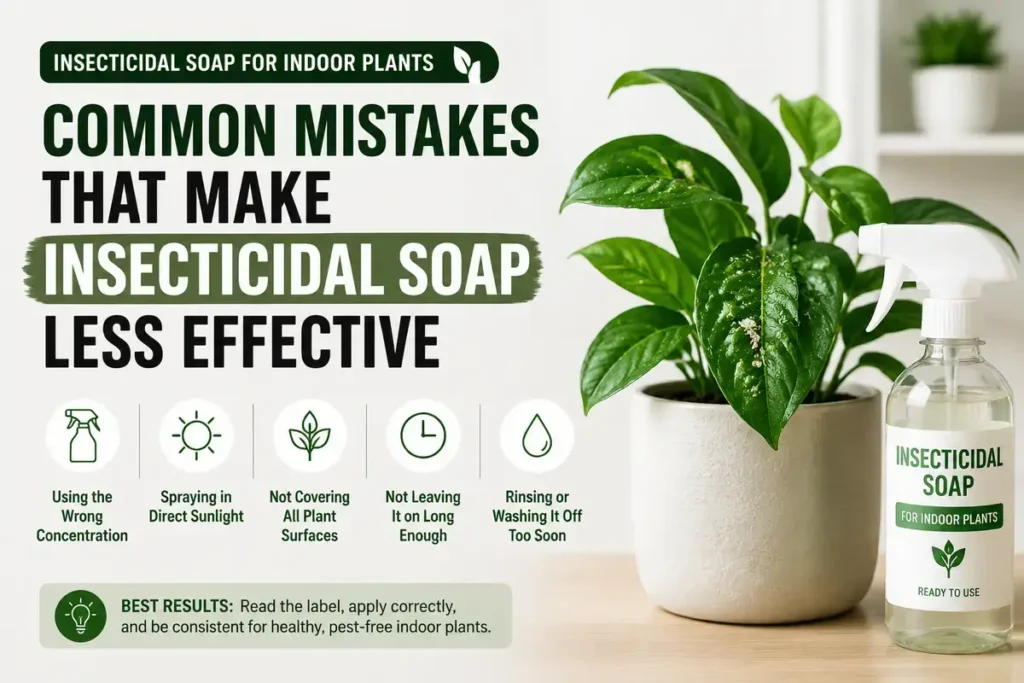
Applying too weak a concentration. Less than 1 teaspoon of soap per quart of water often produces a solution too dilute to break down the insect’s protective coating. Stick to the 1 teaspoon per quart ratio for the basic recipe.
Not covering leaf undersides. This single mistake is responsible for more treatment failures than any other. Pests live on leaf undersides. If your spray does not reach there, it does not reach the pests.
Stopping treatment too soon. Soap kills on contact and has zero residual effect. Eggs are unaffected by soap entirely. Stopping after one or two applications when visible insects disappear leaves a fresh generation of eggs about to hatch with no treatment waiting for them.
Using the wrong soap. Dish soaps with added moisturizers, antibacterial agents, bleach, or degreasers can damage plant tissue or fail to kill insects effectively. Use plain dish soap without additives, or a commercial insecticidal soap product.
Applying in bright direct sunlight. Soap dries too fast in intense light, reducing contact time with the insects and increasing the risk of leaf burn. Apply in the morning, evening, or when the plant is out of direct sun.
Using hard tap water. Hard water with high mineral content can reduce the effectiveness of the soap solution and leave mineral deposits on leaves. If your tap water is very hard, use filtered or distilled water for the spray solution.
When to Move Beyond Insecticidal Soap
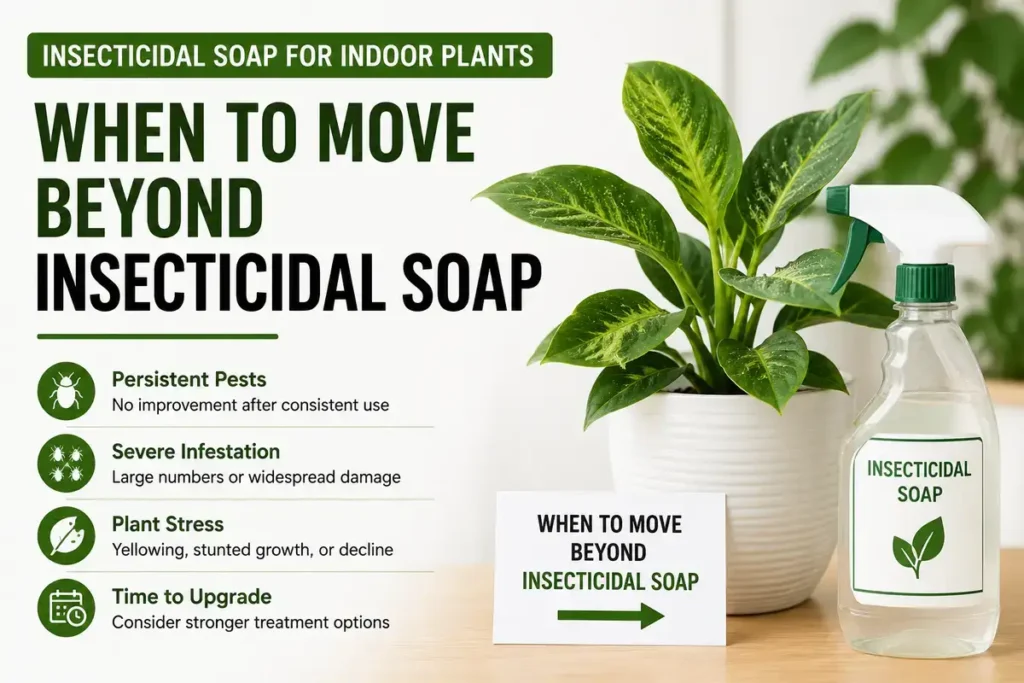
Insecticidal soap handles the majority of soft-bodied pest infestations on indoor plants when applied correctly and consistently. There are situations where a different or additional treatment is needed.
Move to neem oil or a systemic treatment when:
- A two-week consistent soap treatment has not reduced the infestation noticeably
- The infestation keeps returning within days of treatment ending
- The pest is hard-shelled or soil-dwelling rather than a soft-bodied surface feeder
- The plant is showing significant decline despite treatment
For plants in serious decline from pest damage, keeping them well-nourished during and after treatment speeds recovery significantly. Best liquid fertilizer for indoor plants covers the products that help stressed plants rebuild healthy tissue fastest after a pest infestation.
Conclusion
Insecticidal soap for indoor plants is one of the most practical pest control tools available to US home gardeners because it works immediately, costs almost nothing to make at home, and is genuinely safe to use in an indoor environment. The key to getting full results is thorough coverage of every leaf surface including undersides, consistent reapplication every 3 to 4 days for a full two weeks, and choosing the right soap without additives that damage plants.
Start with the basic dish soap recipe for most situations. Switch to a commercial product like Safer Brand for sensitive plants or for anyone who wants the consistency of a purpose-formulated product. Add neem oil to the mix for stubborn spider mite infestations where resistance is a concern.
Two weeks of consistent application, complete leaf coverage, and treating every plant in the area at the same time. Do those three things and insecticidal soap will handle most indoor pest problems you are likely to face.
Frequently Asked Questions
Is homemade insecticidal soap as effective as store-bought?
For most common indoor pest situations, a properly made homemade dish soap spray performs comparably to commercial insecticidal soap products. The advantage of commercial products is that they are pH-balanced and specifically formulated for plant safety, which makes them a better choice for sensitive plants like ferns, orchids, and succulents where dish soap has a higher risk of causing leaf damage.
How often should I apply insecticidal soap to indoor plants?
Apply every 3 to 4 days for a minimum of two full weeks. This schedule covers the aphid and spider mite reproductive cycle and ensures that eggs hatching between spray applications encounter a treated surface before the nymphs can mature and reproduce. Applying once or twice and stopping when visible insects disappear is the most common reason infestations return.
Can insecticidal soap harm my indoor plants?
Most indoor plants tolerate insecticidal soap without damage when used at the correct concentration of 1 teaspoon per quart of water. Sensitive plants including ferns, succulents, orchids, and African violets can develop leaf spotting or burning. Always test on a single leaf and wait 24 hours before treating the whole plant. Rinsing with plain water 2 to 3 hours after application reduces the risk of damage on borderline-sensitive species.
Does insecticidal soap kill aphid eggs?
No. Insecticidal soap kills insects on direct contact but does not penetrate aphid eggs. This is why the two-week treatment schedule matters. The first application kills adult aphids and nymphs. Subsequent applications catch the newly hatched nymphs from eggs that survived the initial treatment, before they mature and start a new reproductive cycle.
Can I use insecticidal soap on edible herbs indoors?
Yes, when used at the correct dilution and rinsed off before harvest. All three major commercial brands available in the US, Safer Brand, Bonide, and Garden Safe, are OMRI listed for organic use on edible plants. If using a homemade dish soap version, rinse the plant thoroughly with plain water at least 24 hours before harvesting and consuming any leaves.
Will insecticidal soap kill beneficial insects?
Insecticidal soap kills any soft-bodied insect it contacts directly, including beneficial insects like lacewing larvae. Since it has no residual effect once dry, beneficial insects that arrive after the spray has dried are unaffected. For indoor plants this is rarely a concern since beneficial insects are not typically present indoors in significant numbers, but it is worth knowing if you are deliberately introducing predatory insects as part of your pest management approach.
How do I store leftover insecticidal soap spray?
Homemade soap spray can be stored in a sealed spray bottle for up to one week at room temperature. Beyond that, the solution degrades and loses effectiveness. Commercial ready-to-use products have a shelf life printed on the label, typically one to two years when stored in a cool place away from direct sunlight. Always shake both homemade and commercial products thoroughly before each use.
Pingback: How to Get Rid of Aphids on Indoor Plants: 9 Methods That Work - Plant Quill
Pingback: 7 Best Bug Sprays for Indoor Plants That Actually Work - Plant Quill
Pingback: 8 Best Indoor Plant Spray for Bugs That Kill Pests Fast - Plant Quill
Pingback: Insecticide Soap for Indoor Plants: 7 Things You Need to Know - Plant Quill
Pingback: How Do You Get Rid of Aphids on Indoor Plants: 8 Steps That Work - Plant Quill
Pingback: 8 Best Plant Bug Sprays for Indoor Use That Are Safe and Effective - Plant Quill
Pingback: Holes in Leaves of Indoor Plants: 9 Causes and How to Fix Each One - Plant Quill