
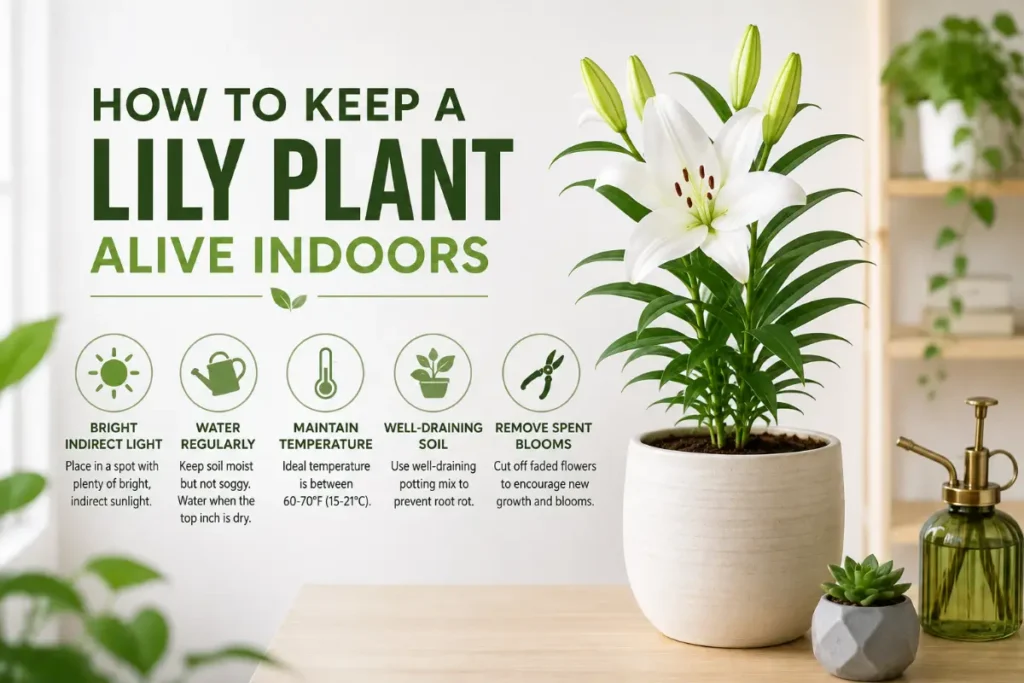
Knowing how to keep a lily plant alive indoors after purchase is one of the most asked questions in houseplant care because most lilies sold at florists and garden centers are bought in full bloom and are dead within three weeks. That rapid decline is not inevitable. It is predictable and entirely preventable once you understand that a lily in bloom has specific needs completely different from what it needs before and after flowering, and that the post-bloom period is where long-term survival is actually decided.
This guide covers 8 steps that keep lilies alive through the bloom period and beyond, which species can actually be kept as indoor plants year-round, and the realistic expectations for reblooming that will save you frustration.
Quick Answer
To keep a lily plant alive indoors, place it in the brightest indirect light available, water when the top inch of soil dries out, remove spent flowers before they set seed, allow foliage to die back naturally after blooming rather than cutting it, store the bulb through dormancy in cool dry conditions, and replant in fresh well-draining soil the following growing season. Easter lilies and Asiatic hybrids can be kept as indoor plants with the right post-bloom care. True tropical lilies including peace lily are not true lilies and have different requirements.
Understanding Which Lily You Have
The word lily covers several completely different plant families with different care requirements. Knowing which one you have changes everything about the care approach.
Easter lily (Lilium longiflorum): The large white trumpet-shaped lily most commonly sold at Easter. A true lily that grows from a bulb. Blooms once per season and then goes dormant. Can be transitioned to outdoor garden planting after blooming indoors.
Asiatic and Oriental lily hybrids: Various hybrid lilies sold in multiple colors. Also true bulb lilies. Bloom once per season. Better candidates for outdoor garden planting after indoor bloom than for continued indoor growing.
Peace lily (Spathiphyllum): Not a true lily at all despite the name. A tropical foliage plant that blooms repeatedly indoors without dormancy. Completely different care requirements from true lilies.
Calla lily (Zantedeschia): Grows from a rhizome rather than a true bulb. More adaptable to indoor growing than true lilies. Goes dormant after blooming but can be kept indoors through dormancy.
Stargazer lily: An Oriental lily hybrid that is one of the most fragrant commonly available lilies. A true bulb lily with the same dormancy requirements as other Oriental hybrids.
The steps below focus primarily on true bulb lilies (Easter, Asiatic, Oriental, and Stargazer) with specific notes on calla lily where it differs.
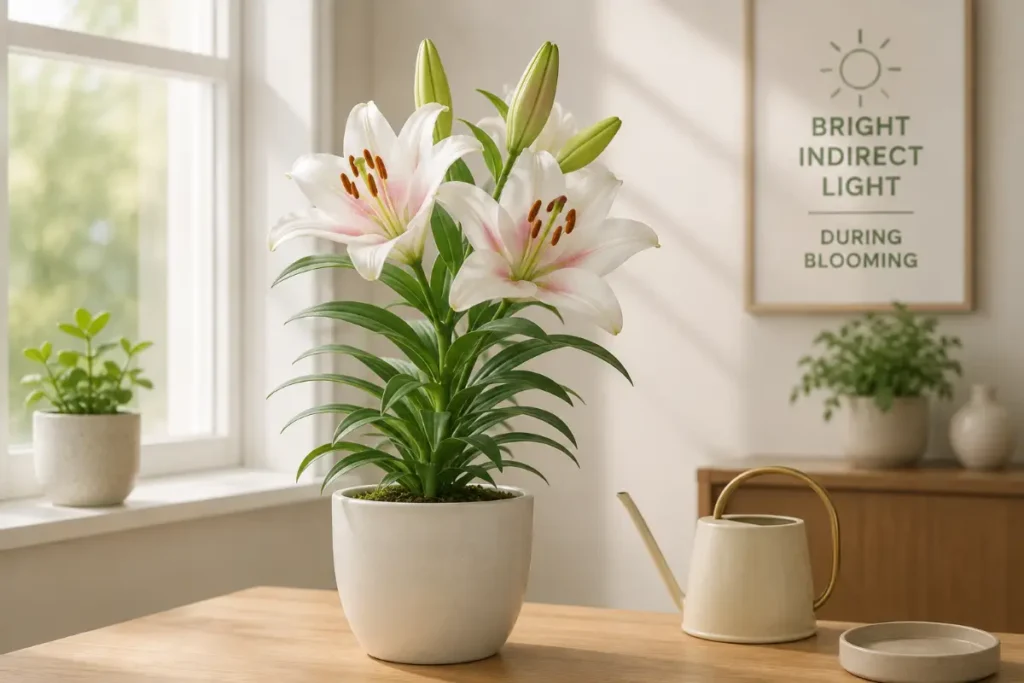
Step 1: Get the Light Right During Blooming
True lilies need good light during their bloom period to sustain flower production and prevent the foliage beneath the flowers from yellowing prematurely.
What works: Bright indirect light from a south or east-facing window. Morning sun is well tolerated. Avoid direct harsh afternoon sun which fades flower color rapidly and shortens individual bloom duration.
What causes problems: Very low light causes buds to fail to open properly, flowers that open to pale color rather than full color intensity, and foliage that yellows quickly beneath the flowers as the plant cannot photosynthesize effectively to support itself.
During blooming: The plant is expending significant energy on flower production. Good light supports the photosynthesis that keeps the foliage healthy while the plant is flowering.
Step 2: Water Correctly Through the Bloom Period
Lilies in bloom are actively growing and need consistent moisture to maintain both foliage health and flower quality through the full bloom duration.
The correct approach: Water when the top inch of soil feels dry. In a bright position during the bloom period this typically means every five to seven days. The soil should stay consistently moist but never waterlogged.
Always use pots with drainage holes: Lilies in pots without drainage develop root rot rapidly. The bulbs that produce lily flowers are particularly susceptible to rot in standing water conditions.
Water temperature: Use room temperature water. Cold water causes temperature shock to the root system, which shortens the bloom period noticeably. This matters more for lilies than for most other houseplants because of their bulb-based root systems.
During dormancy: Stop watering almost entirely when the foliage has completely died back. The dormant bulb needs cool, dry conditions rather than the consistent moisture of the active growing period.
Step 3: Remove Spent Flowers Before Seed Set
Deadheading spent lily flowers is the single most impactful thing you can do to extend the overall bloom period of a lily with multiple buds.
When a lily flower is pollinated and begins to set seed, the plant redirects significant energy from opening remaining buds to developing seeds in the spent flower. Removing spent flowers before they set seed keeps the plant’s energy directed toward opening remaining buds rather than seed production.
How to deadhead: Pinch or cut spent flowers at the base of the flower head where it connects to the stem. Remove the entire flower including the pistil and any developing seed pod. Leave the stem and all foliage intact since these continue photosynthesizing and feeding the bulb for next season.
Pollen: Lily pollen stains fabric and surfaces permanently. Remove the pollen-bearing anthers from open flowers using a tissue or paper towel as soon as flowers open, before the pollen becomes loose and airborne. This prevents staining and also reduces allergy impact for sensitive individuals.
Step 4: Allow Foliage to Die Back Naturally
This is the step most people skip and the reason most lilies bought as indoor plants fail to rebloom. After the flowers finish, the foliage continues living for weeks to months, photosynthesizing and moving nutrients back into the bulb. This process builds the energy reserve that powers next season’s bloom.
What to do: Leave all foliage in place after blooming ends. Continue watering when the top inch dries out. Continue fertilizing lightly every two to four weeks. The foliage will gradually yellow and die back on its own over weeks to months.
What not to do: Do not cut the foliage when it still has green color, even if it looks untidy. Cutting green foliage stops the energy transfer to the bulb and significantly reduces the bulb’s ability to produce the following season’s flowers.
When it is safe to cut: Once the foliage has turned completely yellow and brown on its own, it can be removed cleanly at the soil surface. At this point the transfer of energy to the bulb is complete.
Step 5: Manage the Dormancy Period
True lilies need a dormancy period after foliage dies back. During this period the bulb rests, gathering strength for the following season’s growth. How you manage dormancy determines whether you get a rebloom or a failed bulb.
For Easter lily and other indoor-started bulb lilies: After foliage has completely died back, remove the bulb from its pot. Brush off loose soil and inspect the bulb for any soft or rotted sections, removing these with a clean sharp knife and allowing cut surfaces to dry before storage.
Storage conditions: Store bulbs in a paper bag or mesh bag filled with slightly moist peat moss or sawdust. Keep in a cool, dark location between 35 and 50 degrees Fahrenheit. A refrigerator vegetable drawer works well for small bulbs. An unheated basement or garage that stays above freezing suits larger bulbs. Check periodically through storage and remove any bulbs showing signs of rot.
Calla lily dormancy: Calla lily rhizomes can remain in their pot through dormancy. Stop watering when foliage dies back and store the pot in a cool dry location rather than removing and cleaning the rhizome as you would with true lily bulbs.
Step 6: Replant at the Right Time
Knowing when to replant dormant lily bulbs determines whether they bloom at the time you want them to.
For spring or summer bloom outdoors: Plant after the last frost date for your area in well-draining garden soil. Most Asiatic and Oriental hybrids bloom in summer when planted outdoors after indoor blooming.
For indoor bloom the following season: Pot the bulb in fresh well-draining potting mix with the pointed end up, buried at a depth of two to three times the bulb’s diameter. Place in a cool, bright location initially. As new growth emerges and temperatures are right for the variety, move to the position where it will bloom.
Fresh soil is important: Replanting into the same old potting mix from the previous season fails to provide the nutrients and drainage structure that bulb lilies need for strong growth. Always use fresh well-draining mix when replanting dormant bulbs. For the complete guide to building the right soil mix for bulb plants including drainage ratios and components, soil mixture for indoor plants covers every ingredient with specific guidance for bulb-growing applications.
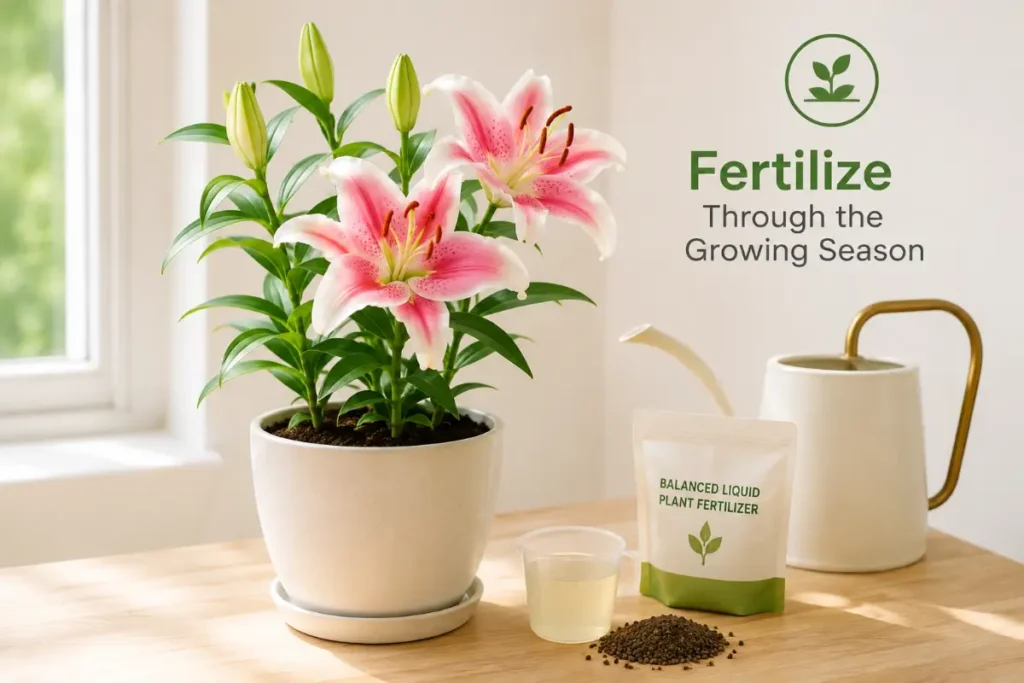
Step 7: Fertilize Through the Growing Season
Lily bulbs store the energy for next season’s bloom during the foliage period after current-season blooming. This makes fertilizing after the current bloom ends one of the most important nutritional investments you can make for next season’s performance.
During and immediately after blooming: A balanced liquid fertilizer at half rate every two to three weeks provides the nutrition to keep foliage healthy and actively photosynthesizing through the energy transfer period.
After foliage dies back: Stop fertilizing. The dormant bulb does not use or benefit from fertilizer during its rest period.
At replanting: Incorporate a slow release fertilizer or worm castings into the fresh potting mix at replanting to provide a nutritional foundation for the new growing season from the start. For the complete guide to organic feeding options that work best for bulb plants through the growing season, natural fertilizer for indoor plants covers every gentle approach appropriate for the sensitive root systems that develop from dormant bulbs.
Step 8: Set Realistic Expectations for Reblooming Indoors
This is perhaps the most important step because unrealistic expectations lead to discarding plants that would have rebloomed with appropriate management.
Easter lily reality: Easter lilies were forced into bloom indoors through commercial greenhouse manipulation of temperature and light. Reblooming them indoors requires replicating the cool conditioning periods that commercial growers use, which most home environments cannot provide precisely. Most Easter lilies are better transitioned to outdoor garden planting after indoor blooming where they naturally rebloom in summer for years to come.
Asiatic and Oriental hybrids: Similar to Easter lily. These are natural outdoor garden plants that bloom reliably in summer when planted in appropriate climates. Treating them as outdoor garden plants after indoor bloom rather than attempting to maintain them as permanent indoor plants produces more consistent results.
Calla lily: More genuinely adaptable to indoor growing through dormancy and rebloom cycles than true bulb lilies. With appropriate dormancy management, calla lilies rebloom reliably for multiple seasons as indoor plants.
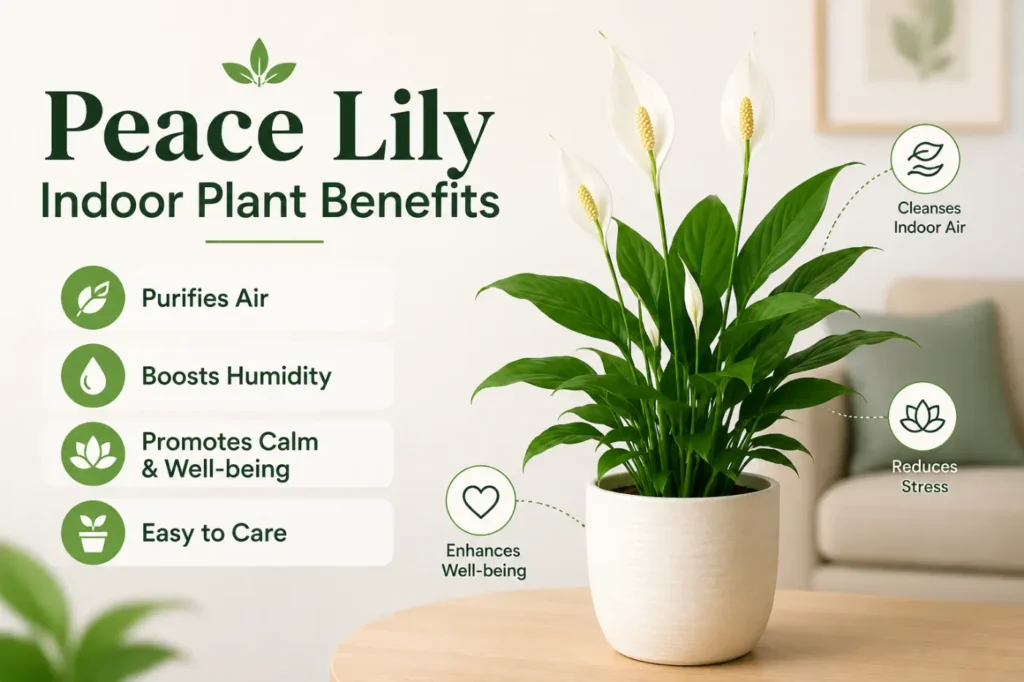
Peace lily (not a true lily): Blooms repeatedly indoors without dormancy and is one of the most reliably reblooming flowering indoor plants available. If year-round flowering without seasonal dormancy management is the goal, peace lily is the right choice. For the complete guide to peace lily care and its documented benefits as a long-term indoor plant, peace lily indoor plant benefits covers everything from air purification to the care routine that keeps it blooming year-round.
Common Lily Problems Indoors
Buds failing to open: Most commonly caused by very low humidity or insufficient light during the bud development stage. Increase light and humidity immediately when buds are visible. Cold temperature below 55 degrees also causes bud failure in most lily varieties.
Flowers fading quickly: Direct sun bleaches lily flowers faster than any other care factor. Move to bright indirect light without direct sun rays hitting the flowers. Warm temperatures above 70 degrees also accelerate flower fade. A cooler room extends individual flower duration noticeably.
Foliage yellowing during bloom: Low light causing the foliage to prioritize flower support over its own maintenance. Improve light immediately. Also check for overwatering if yellowing affects lower leaves specifically.
No rebloom despite correct care: True bulb lilies require specific temperature conditioning for indoor rebloom that most homes cannot easily provide. Transition to outdoor garden planting where seasonal temperatures naturally provide the conditioning these plants need.
Lily Fragrance and Indoor Air Quality
Several popular indoor lily varieties, particularly Oriental hybrids like Stargazer and Casa Blanca, produce intense fragrance that can be overwhelming in small enclosed spaces. Understanding how to manage this is practical for anyone keeping lilies in bedrooms or small rooms.
The fragrance intensity of lilies peaks when flowers are fully open and during the warmer parts of the day when the volatile compounds responsible for scent are most actively released. In a small bedroom this can be overpowering for some people and has been reported to cause headaches in sensitive individuals with prolonged exposure.
Managing fragrance indoors: Place strongly fragrant lily varieties in larger, better-ventilated rooms rather than bedrooms or small offices. Removing the pollen-bearing anthers as flowers open reduces both fragrance intensity and allergy risk since lily pollen contains some of the same compounds as the petals. Opening a window periodically allows fragrance to dissipate rather than concentrating in a closed room.
Less fragrant varieties: Asiatic lily hybrids are typically much less fragrant than Oriental hybrids while producing equally impressive flowers. If fragrance is a concern, Asiatic varieties or Easter lily (which has moderate rather than intense fragrance) are more appropriate for small indoor spaces.
Choosing the Right Pot for Indoor Lilies
The pot you choose for an indoor lily affects watering behavior, root health, and the plant’s overall stability during its bloom period when tall flower stems can make top-heavy plants unstable.
Pot depth: Lily bulbs need adequate pot depth to develop their root system properly. A minimum of eight inches of depth for most lily varieties prevents the shallow root development that limits plant stability and nutrient access.
Pot material: Terracotta pots dry out faster than plastic or glazed ceramic, which suits lily bulbs that prefer not to stay wet between waterings. The weight of terracotta also provides better stability for tall-stemmed lilies than lightweight plastic pots.
Drainage: Multiple drainage holes are preferable to a single hole for lily pots since the fine feeder roots that lilies produce can block single drainage holes as they grow, creating the drainage problems that lead to root rot.
Pot size: Choose a pot that provides two to three inches of space around the bulb on all sides. Too small a pot restricts root development and dries out too quickly. Too large a pot holds excess soil volume that stays wet and creates root rot risk. A six to eight inch diameter pot is appropriate for most single lily bulbs. Larger pots accommodate multiple bulbs planted together for a fuller display.
For the complete guide to soil mix ratios and pot selection for bulb plants including drainage requirements and component choices that prevent the root rot lilies are particularly susceptible to, soil mixture for indoor plants covers every element of building the right growing environment for sensitive bulb root systems.
Conclusion
Keeping a lily plant alive indoors beyond the first bloom comes down to understanding the seasonal cycle these plants follow and working with it rather than against it. Provide good light and consistent moisture during blooming. Deadhead spent flowers to extend the bloom period. Allow foliage to die back completely before removing it. Store bulbs through dormancy in cool dry conditions. Replant in fresh soil at the right time. Fertilize through the growing season to build bulb strength for next season.
Set realistic expectations about which lily types genuinely thrive as long-term indoor plants. Calla lily and peace lily adapt well to indoor conditions through multiple seasons. True bulb lilies including Easter and Asiatic hybrids are better treated as temporary indoor bloomers transitioned to outdoor garden planting where they thrive reliably without the complex temperature manipulation that indoor reblooming requires.
Frequently Asked Questions
How do I keep my Easter lily alive after it blooms?
After Easter lily flowers finish, remove spent blooms, continue watering and providing good light until the foliage naturally yellows and dies back on its own, then remove and store the bulb in cool dry conditions through summer. The most reliable approach for long-term success is transplanting the bulb into an outdoor garden bed after dormancy where it naturally reblooms in summer for years without any special care.
Why are my lily buds falling off before opening?
Lily bud drop before opening is most commonly caused by low humidity, sudden temperature changes, or insufficient light during the bud development stage. Fumes from ripening fruit nearby, which release ethylene gas, also cause bud drop in lilies. Move the lily away from fruit bowls, improve humidity with a pebble tray or humidifier, and ensure consistent temperatures without cold drafts.
How long does a lily plant bloom indoors?
With correct cool temperatures and deadheading of spent flowers, a lily plant with multiple buds blooms for two to four weeks total as individual flowers open in succession. Warm temperatures above 68 degrees shorten individual flower duration and the overall bloom period. Cooler room temperatures between 55 and 65 degrees extend the bloom period of each individual flower and allow buds to open more gradually over a longer total period.
Can I plant my indoor lily outside after it blooms?
Yes, and this is often the best long-term strategy for Easter lily and Asiatic and Oriental hybrid lilies. After foliage has completely died back and been removed, transplant the bulb into outdoor garden soil in a sunny, well-draining location. In USDA zones 4 through 8, these lilies naturalize reliably and bloom every summer without any special care, producing increasingly impressive displays as the bulb multiplies over years.
Is lily toxic to cats?
Yes, true lilies (Lilium species) including Easter lily, Asiatic lily, and Oriental lily are highly toxic to cats. Even small amounts of pollen, flowers, leaves, or water from the vase can cause acute kidney failure in cats that may be fatal without immediate veterinary treatment. Do not keep true lilies in any home with cats. Peace lily (Spathiphyllum) causes oral irritation but is not in the same category of severe kidney toxicity as true lilies.
How often should I water a lily plant indoors?
Water when the top inch of soil feels dry, typically every five to seven days during the bloom period in a bright position and every seven to ten days after blooming as growth slows. Use room temperature water to avoid the temperature shock that cold water causes to bulb root systems. Always use pots with drainage holes and never allow lily bulbs to sit in standing water in their drainage saucers.
Pingback: Easter Lily Plant Care Indoor: 7 Steps to Extend the Bloom - Plant Quill