Easter lily plant care indoor is one of those topics where understanding the plant’s nature immediately explains every care decision. Easter lilies are outdoor garden plants that commercial growers force into bloom ahead of their natural schedule using carefully controlled temperature and light manipulation. When you bring one home, you are working with a plant that is already past its natural bloom timing, in a pot rather than its preferred garden soil, and surrounded by conditions very different from what produced those perfect white trumpet flowers at the nursery.
That context explains why most Easter lilies decline quickly after purchase and why the ones that survive and rebloom do so only with specific post-bloom management. This guide covers everything from extending the current bloom to the most rewarding long-term outcome for Easter lily.
Quick Answer
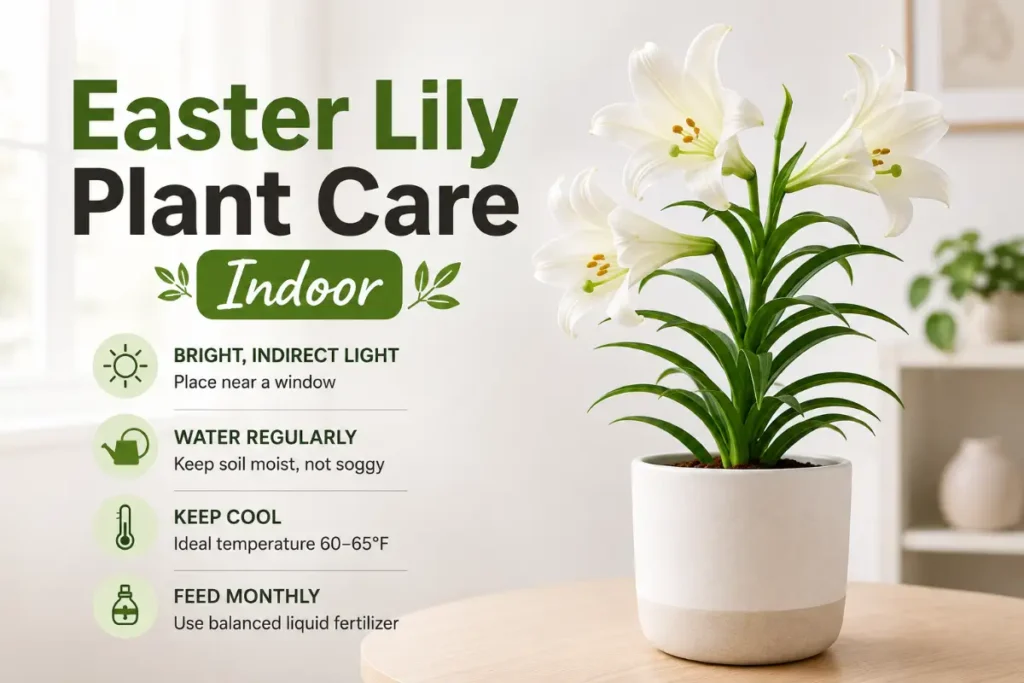
Easter lily plant care indoor requires cool temperatures between 60 and 65 degrees Fahrenheit to extend bloom duration, bright indirect light without direct sun, consistent moisture with good drainage, removal of yellow anthers before they shed pollen, deadheading of spent flowers, and allowing foliage to die back naturally after blooming ends before storing the bulb. The most successful long-term approach is transitioning the bulb to outdoor garden planting after the indoor bloom period where it naturalizes and reblooms reliably every summer without special care.
Understanding the Easter Lily’s Seasonal Mismatch
The Easter lily (Lilium longiflorum) is native to the subtropical islands of Japan where it blooms naturally in late summer. Commercial growers in the Pacific Northwest and California use controlled greenhouse environments, specifically manipulating temperature and day length over fifteen or more months, to force these bulbs into bloom exactly at Easter regardless of season.
This means the plant you bring home at Easter is bloom-exhausted in a way that natural summer-blooming lilies are not. It has used significant bulb energy to flower out of season, and its natural instinct is to set seed, go dormant, and rebuild its energy reserves for the following season.
Understanding this seasonal mismatch explains why reblooming Easter lilies indoors the following Easter is nearly impossible without sophisticated controlled environment growing. The practical goal is extending the current bloom as long as possible and then transitioning the plant to its natural outdoor summer bloom schedule where it thrives without any special intervention.
Step 1: Maximize Bloom Duration With Cool Temperatures
Temperature is the single biggest variable in how long an Easter lily blooms indoors. The difference between two weeks and four weeks of bloom is almost entirely about where you place the plant in your home.
Ideal temperature for bloom extension: 60 to 65 degrees Fahrenheit. At this range individual flowers last significantly longer than in warm indoor environments and buds open gradually in succession rather than all at once.
What warm temperatures do: Above 70 degrees consistently, Easter lily flowers fade within days of opening and all remaining buds accelerate toward opening simultaneously rather than in succession. The overall bloom period compresses from several weeks to less than two.
Practical placement: The coolest bright room in the house is the right location. A north-facing room that stays noticeably cooler than the rest of the house, a bright enclosed porch that does not receive direct heating, or a sunny but cooler spare bedroom. The living room near the television and heating vent is the worst possible placement for bloom longevity.
Night temperature: Even if daytime temperatures are slightly above ideal, a room that drops to 55 to 60 degrees at night extends bloom duration meaningfully compared to a room that stays warm around the clock.
Step 2: Provide Bright Indirect Light
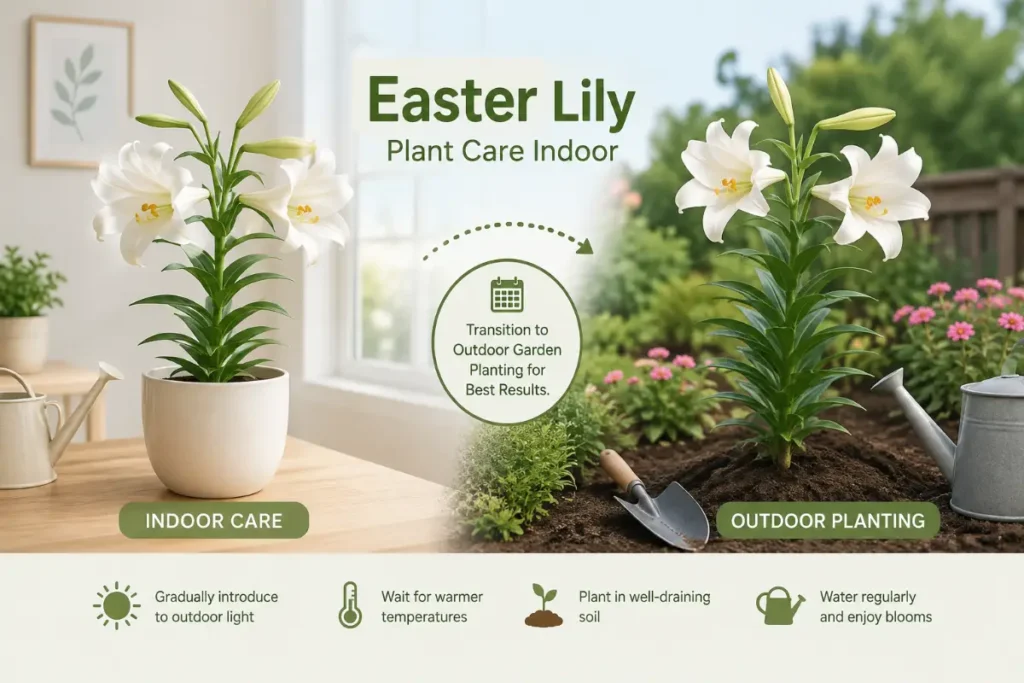
Easter lilies need good light to maintain foliage health and keep the plant’s energy production running through the bloom period, but direct harsh sun shortens individual flower life and fades the pure white color that makes the plant so striking.
What works: Bright indirect light from an east or north-facing window. Filtered light through a sheer curtain from a south-facing window. Morning sun from an east-facing exposure.
What to avoid: Direct afternoon sun from south or west-facing windows without any filtering. This bleaches flower petals to a creamy yellow rather than pure white and causes flowers to fade and drop significantly faster than they would in indirect light.
Rotating the plant: Turn the plant one-quarter turn every few days to ensure all sides receive equal light exposure and the plant maintains its upright, symmetrical form rather than leaning toward the light source.
Step 3: Remove Anthers to Prevent Staining and Extend Freshness
This step is specific to Easter lily care and one of the most practically useful tips for managing these plants indoors. The large, pollen-bearing anthers on Easter lily flowers shed orange pollen that permanently stains fabric, carpet, and wood surfaces on contact. The pollen is also a significant allergen for sensitive individuals.
When to remove anthers: As each flower bud opens and the anthers become accessible, remove them with a tissue or paper towel before the pollen becomes loose and powdery. The anthers are the elongated orange structures at the tip of the stamens inside each flower.
How to remove them: Pinch the anther gently with a tissue and pull upward. The anther separates cleanly from the filament without damaging the flower. Dispose of the tissue immediately.
Benefits beyond stain prevention: Removing anthers before pollen release also prevents pollination of the flowers, which extends individual flower life. A pollinated Easter lily flower drops its petals within one to two days of pollination as the plant redirects energy toward seed development. An unpollinated flower lasts up to a week longer.
Step 4: Water Consistently and Use Room Temperature Water
Easter lily bulbs need consistently moist soil through the bloom period to maintain foliage health and keep flowers from dropping prematurely from water stress.
The correct approach: Water when the top inch of soil feels dry. In a cool bright position this typically means every five to seven days. Check daily during warm periods since Easter lilies in warm rooms dry out faster than those in cool positions.
Water temperature: Use room temperature water rather than cold tap water. Cold water causes temperature shock to Easter lily bulb root systems which shortens bloom duration noticeably. Fill your watering can the night before and allow it to reach room temperature before watering the next day.
Drainage: Always use a pot with drainage holes. Empty the saucer beneath the pot within 30 minutes of watering to prevent the bulb from sitting in standing water which causes the root rot that kills Easter lilies faster than any other care mistake.
Signs of underwatering during bloom: Flower buds that fail to open fully. Flowers that drop before their petals have fully faded. Foliage that looks slightly wilted or dull rather than glossy and upright.
Step 5: Deadhead Spent Flowers Correctly
Removing spent Easter lily flowers as they finish is essential for two reasons. It prevents the plant from redirecting energy to seed development, and it keeps the plant looking attractive through the entire bloom period rather than becoming visually cluttered with faded flowers alongside fresh ones.
How to deadhead: Remove spent flowers by snipping or pinching the flower head at its base where it connects to the stem. Do not remove the stem itself or any foliage. The stem and all leaves continue photosynthesizing and feeding the bulb through the post-bloom period.
Timing: Remove flowers as soon as the petals begin to drop or turn brown. Waiting until flowers are fully brown and shriveled allows the energy diversion to seed development to begin. Prompt removal keeps energy directed toward remaining buds and toward the bulb for next season.
Step 6: Post-Bloom Foliage Care and Bulb Preparation
This is the step that determines whether your Easter lily bulb can be used again. Most people cut the foliage when flowers finish because it looks untidy. This is the single action that most reliably prevents any possibility of the plant producing flowers again.
What to do after bloom: Continue providing good light and consistent watering. Begin a light fertilizing schedule with a balanced liquid fertilizer every two to three weeks. The foliage is actively photosynthesizing and moving energy into the bulb to rebuild the reserves that were used for indoor forcing and flowering. This process takes six to eight weeks after the last flower drops.
What not to do: Do not cut green foliage. Do not move the plant to low light once blooming ends. Do not stop watering. Each of these actions interrupts the energy transfer to the bulb and significantly reduces its vigor for future blooming.
When foliage turns yellow on its own: Once the foliage has naturally yellowed and dried without any intervention, it can be removed at the soil surface. This is the signal that energy transfer to the bulb is complete. The bulb is now ready for storage or garden planting.
For the complete guide covering all lily types and their post-bloom care requirements, how to keep a lily plant alive indoors covers every lily species with specific guidance on dormancy management and realistic reblooming expectations for each type.
Step 7: Transition to Outdoor Garden Planting for Best Results
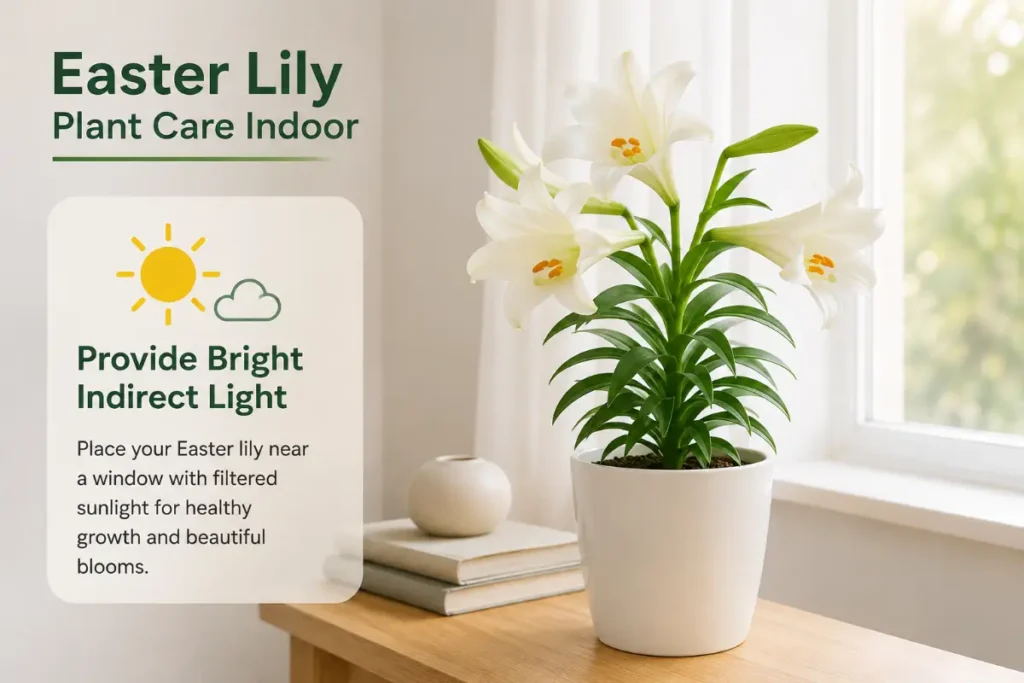
This is the advice most florist and grocery store plant tags never give and it is the most genuinely useful recommendation for long-term Easter lily satisfaction. Easter lilies are natural outdoor summer bloomers that thrive in garden beds with zero special care once established.
When to plant outdoors: After the indoor foliage has completely died back and the bulb has been cleaned and inspected. In most US regions, late spring through early summer is ideal for outdoor planting of the stored bulb.
Where to plant: A sunny to partly sunny garden bed with well-draining soil. Amend clay soil with compost to improve drainage. Plant the bulb at a depth of three times its diameter with the pointed end up.
What happens next: The bulb establishes through summer and fall, experiencing the natural cool winter dormancy it needs without any management from you. The following summer, typically in June or July, new shoots emerge and develop into flowering plants that bloom for several weeks.
Long-term performance: Easter lilies naturalize readily in USDA zones 4 through 8, meaning the original bulb divides and multiplies over years, eventually producing larger and more impressive clumps of flowering stems each summer. A single Easter lily purchased at a grocery store can become a reliable perennial garden display that blooms for decades.
This natural summer rebloom cycle is far more reliable and rewarding than attempting to force the bulb back into Easter bloom indoors, which requires the same controlled environment manipulation that commercial growers use and which is simply not practical in a home setting.
Easter Lily and Pet Safety
This is critical information for any household with cats. Easter lily is one of the most acutely toxic plants known to cats. All parts of the plant including pollen, petals, leaves, and even water the flowers have been kept in are toxic. Ingestion of even small amounts causes acute kidney failure in cats that is fatal without immediate emergency veterinary treatment.
Dogs are less severely affected than cats but Easter lily is still toxic to dogs and causes gastrointestinal symptoms.
If you have cats, do not bring Easter lily into your home under any circumstances. The risk is too severe. Peace lily (Spathiphyllum) causes only oral irritation rather than the severe kidney toxicity of true Easter lily and is a safer flowering plant for cat households, though still worth keeping out of reach. For the air purification and bloom benefits of peace lily specifically, peace lily indoor plant benefits covers every reason this plant is one of the best long-term indoor flowering plants for homes without cats.
Buying an Easter Lily: What to Look for at the Store
Most Easter lily purchases happen at grocery stores, big box retailers, and florists where plant care knowledge among staff varies widely and display conditions are rarely optimal. Choosing the right plant at the point of purchase gives you the longest possible bloom period from the start.
What to look for: Choose a plant with more buds than open flowers. Buds that are still tight and green at the tips with just a hint of white showing at the very tip of each bud are at the earliest stage and will open over the longest period. A plant with all flowers fully open has already used most of its bloom potential and will finish within days regardless of how well you care for it.
Healthy foliage: Dark green leaves all the way down the stem indicate a well-rooted, well-fed plant. Yellow lower leaves suggest the plant has been in poor conditions at the store, possibly overwatered or in insufficient light.
Check the soil: Bone dry soil at the store indicates the plant has been underwatered and is already stressed. Very wet, soggy soil indicates overwatering that may have begun the root rot process. Slightly moist soil that feels evenly damp through the pot is ideal.
Store display conditions: Avoid plants displayed near automatic sliding doors that let in blasts of cold air from outside, near heating vents, or in very warm interior displays. Plants that have been in these conditions have already experienced the stress that shortens bloom duration before you even bring them home.
Comparing Easter Lily to Other Indoor Lily Options
Understanding how Easter lily compares to other lily options available indoors helps you choose the right plant for your specific goals and conditions.
Easter lily vs Asiatic lily hybrids: Asiatic hybrids come in a wider range of colors including yellow, orange, red, pink, and bicolors that Easter lily’s pure white cannot match. They are typically less fragrant than Easter lily and are equally short-lived as indoor plants, making the outdoor garden transition recommendation apply equally to both.
Easter lily vs Oriental lily hybrids: Oriental hybrids including Stargazer produce the most intensely fragrant indoor lily experience. They are more challenging as indoor plants than Easter lily due to their sensitivity to cold and their very intense fragrance that can be overwhelming in enclosed spaces. The outdoor garden transition strategy works equally well for Oriental hybrids.
Easter lily vs calla lily: Calla lily is a better long-term indoor plant than Easter lily because it tolerates the indoor environment through dormancy and reblooms more reliably as a potted plant without the complex forcing requirements that Easter lily reblooming indoors demands.
Easter lily vs peace lily: Peace lily (Spathiphyllum) is not a true lily but is the most reliably reblooming flowering plant for indoor use. If year-round flowering without dormancy management is the goal, peace lily is the practical choice over any true lily species. For the complete care guide and documented benefits of peace lily as a long-term indoor plant, peace lily indoor plant benefits covers every advantage this plant offers over seasonal bloomers like Easter lily.
Fertilizing Easter Lily During and After Bloom
Most Easter lily care guides skip fertilizing entirely, treating the plant as a disposable seasonal purchase. Including a light fertilizing program through and after the bloom period significantly improves bulb quality for outdoor replanting.
During blooming: A very dilute balanced liquid fertilizer at quarter strength every two weeks provides gentle support to the foliage and root system during the energetically demanding bloom period without the concentration that might cause any root sensitivity.
After blooming while foliage remains green: Increase to half strength balanced fertilizer every two weeks. This is the period when fertilizing makes the most difference since the foliage is actively photosynthesizing and moving nutrition into the bulb for future season performance. A bulb well-nourished through this period produces stronger first-year outdoor garden performance than one that received no post-bloom nutrition.
What to use: A balanced 10-10-10 liquid fertilizer at half rate suits Easter lily well. Organic options including worm casting tea at the standard two-tablespoon-per-gallon dilution are equally effective and carry no burn risk on the sensitive bulb root system. For a complete comparison of fertilizer options suited to flowering bulb plants through their active growing season, natural fertilizer for indoor plants covers every gentle approach appropriate for the post-bloom bulb-building period that determines next season’s performance.
Conclusion
Easter lily plant care indoor is most rewarding when you treat the indoor bloom as the beginning of a longer relationship with the plant rather than its entirety. Cool temperatures extend the current bloom. Removing anthers prevents staining and extends individual flower life. Consistent watering maintains the foliage health that feeds the bulb after bloom. Allowing foliage to die back naturally completes the energy cycle. And transitioning to outdoor garden planting gives you a reliable summer blooming perennial that returns more impressively each year without any of the complex forcing requirements that indoor reblooming at Easter would require.
The Easter lily purchased on impulse at a grocery store checkout can become one of the most rewarding perennial plants in your summer garden. It just needs the right exit strategy from its indoor debut.
Frequently Asked Questions
How long do Easter lilies last indoors?
With cool temperatures between 60 and 65 degrees Fahrenheit and proper care, Easter lilies bloom for three to four weeks indoors. In warm rooms above 70 degrees the bloom period shortens to one to two weeks. Temperature is the single biggest factor in bloom duration. Removing anthers before pollen release and deadheading spent flowers promptly also extends the overall bloom period by keeping energy directed toward opening remaining buds.
Can I get my Easter lily to rebloom at Easter next year?
Reblooming Easter lily indoors at Easter the following year requires replicating the complex commercial greenhouse forcing process that involves specific temperature manipulation over many months. This is not practical in a home setting. The realistic and most rewarding approach is transitioning the bulb to outdoor garden planting where it naturally reblooms every summer as a reliable perennial without any special management.
Why are my Easter lily flowers dropping before fully opening?
Bud drop on Easter lily before flowers open is most commonly caused by warm temperatures, low humidity, or inconsistent watering. Ethylene gas from ripening fruit nearby also causes rapid bud drop in lilies. Move away from fruit bowls, increase humidity with a pebble tray, ensure consistent moisture, and move to a cooler position if temperatures are above 65 degrees.
Should I cut back my Easter lily after it blooms?
Do not cut back an Easter lily while any foliage remains green. The foliage is actively moving energy back into the bulb after bloom ends, and cutting it interrupts this process. Allow foliage to yellow and die back completely on its own, which takes six to eight weeks after the last flower drops. Only remove foliage once it has turned completely yellow and dried naturally.
Is the orange pollen from Easter lily dangerous?
Easter lily pollen stains fabric, carpet, and skin permanently if not removed promptly. It is also a significant allergen for some people. The pollen itself is not otherwise toxic to humans. Remove the anthers with a tissue as each flower opens before pollen becomes loose and airborne to prevent staining and reduce allergen exposure. For cat owners, lily pollen is acutely toxic to cats and must be kept completely inaccessible.
Where should I plant my Easter lily bulb outdoors after the indoor bloom?
Plant in a sunny to partly sunny location with well-draining soil after the last frost date for your area. Amend clay or poorly draining soil with compost before planting. Bury the bulb at three times its diameter depth with the pointed end up. Mark the location since nothing will emerge until the following spring. The lily will bloom in late June or July in most US zones and return each summer as a naturalizing perennial.