

You notice a white, fuzzy, or powdery coating on the surface of your houseplant’s potting mix and immediately wonder whether it means something is seriously wrong. The good news: white fuzz on houseplant soil is usually not a sign of a dying plant. In most cases it is saprophytic fungus — a beneficial or neutral decomposer living in the potting mix — or mineral salt buildup from tap water and fertilizer.
In a minority of cases it signals something that does require action: mealybugs, fungus gnats, or a moisture problem that needs correcting. This guide walks through all seven common causes, how to tell them apart, and exactly what to do about each.
Why White Fuzz Appears: The Core Conditions
Before diving into individual causes, it helps to understand the conditions that create white fuzz in the first place. White fuzz of almost any kind on potting mix surface is associated with:
- Excess moisture: Wet potting mix that stays wet for extended periods supports fungal growth, salt accumulation from repeated watering with hard water, and the conditions mealybugs prefer
- Poor air circulation: Still air around the soil surface allows fungal mycelium to colonize undisturbed
- Organic material: Rich potting mixes with high bark, compost, or peat content provide more substrate for fungal decomposers
- Overwatering or inadequate drainage: The root cause of most soil-surface fungal growth
Understanding these conditions points directly to the fix for most cases: improve drainage, reduce watering frequency, and increase air circulation.
Cause 1: Saprophytic Fungus (Most Common)
What it looks like: White, gray-white, or pale blue-gray fuzz that grows in patches on the potting mix surface. The texture is cottony or web-like — similar to bread mold. It may appear after a period of overwatering or in a pot with poor drainage. It is most visible after watering and may partially dry out and become less visible as the soil dries.
What it is: Saprophytic fungi are decomposer organisms that break down organic material in potting mix — bark, peat, compost, wood chips. They are not pathogens; they do not attack living plant roots or stems. They are essentially doing the same job that fungi do in a forest floor: breaking down dead organic matter into nutrients. Many of the fungal species that appear as white fuzz on houseplant soil are beneficial decomposers that actually contribute to potting mix health over time.
Is it harmful? Not to the plant directly. However, the conditions that allow saprophytic fungi to visibly colonize the soil surface — consistently moist soil, poor air circulation, low light — are themselves conditions that stress plants and promote root rot. The fuzz is a symptom of those conditions rather than the problem itself.
How to fix it:
- Allow the potting mix to dry out more thoroughly between waterings — the fungus cannot sustain growth in dry conditions
- Improve air circulation around the pot by repositioning the plant or running a small fan nearby
- Remove the visible fuzz from the soil surface with a spoon and discard it
- If the problem recurs repeatedly, consider repotting in fresh potting mix with better drainage (add 20–30% perlite to improve aeration)
- A light dusting of food-grade cinnamon powder on the soil surface has mild antifungal properties and can suppress surface fungal growth between waterings

Cause 2: Mineral Salt Deposits
What it looks like: White, powdery, or crusty coating on the potting mix surface — also commonly seen on the outside of terracotta pots as a white efflorescence. Unlike fungal growth, this deposit does not have a fuzzy or web-like texture — it is more crystalline or powdery and does not change with moisture levels in the same way. It is most common in areas with hard tap water and in plants that have been fertilized regularly for a long period.
What it is: When water evaporates from potting mix, dissolved minerals — primarily calcium, magnesium, and sodium from tap water — are left behind as a surface residue. Fertilizer salts (the carrier compounds in liquid and granular fertilizers) accumulate the same way. Over time, these salt deposits build up into a visible white crust.
Is it harmful? Mineral salt buildup at high concentrations can create an osmotic imbalance that makes it harder for roots to absorb water — a phenomenon sometimes called fertilizer burn or salt stress. Light accumulation is cosmetic; heavy buildup over years warrants action.
How to fix it:
- Scrape the white crust from the soil surface with a spoon and discard
- Flush the pot thoroughly by running water through until it drains freely from the bottom for 2–3 minutes — this dissolves and removes accumulated salts from the potting mix
- Switch to filtered or distilled water for sensitive plants, particularly orchids, calatheas, and tillandsias
- Reduce fertilizer frequency or concentration — most houseplants need fertilizer only during active growth (spring through early fall) at the dilution rate on the label, not more
Cause 3: Mycelium from Fungus Gnat Activity
What it looks like: White, thread-like, cotton-web fuzz in the potting mix — similar to saprophytic fungus but associated with visible fungus gnat adults hovering around the plant. The mycelium is part of the fungal growth that fungus gnat larvae feed on in the soil.
What it is: Fungus gnats lay eggs in moist potting mix, and their larvae feed on fungi, decaying organic matter, and (in heavy infestations) plant roots. The white mycelium visible at the soil surface is part of the same saprophytic fungal network that the larvae are exploiting as a food source.
Is it harmful? The mycelium itself is not the problem — it is the fungus gnat larvae beneath it that may be damaging roots. If you see fungus gnats alongside white fuzz on houseplant soil, treat the larvae, not just the surface fuzz.
How to fix it:
- Allow the potting mix to dry out between waterings — this is the most effective single step for both the fungal growth and the gnat larvae
- Apply a Bti (Bacillus thuringiensis israelensis) soil drench — Bti is a naturally occurring bacterium that kills fungus gnat larvae specifically without harming plants, beneficial insects, or humans. Available as Mosquito Bits (apply 1 tablespoon per gallon of water, let soak 30 minutes, then water plants with the solution)
- Use yellow sticky traps to capture adult gnats
- A neem oil soil drench (2 teaspoons neem oil + ½ teaspoon dish soap per quart of water) addresses both larvae and the mycelial network they feed on
Cause 4: Mealybugs in the Soil
What it looks like: White, cottony clusters or individual cottony masses at or just below the potting mix surface — particularly at the stem base where it meets the soil, or on the visible root zone near the drainage holes. This white fuzz is denser and more concentrated than saprophytic fungal mycelium — it appears in clusters rather than spreading across the soil surface evenly.
What it is: Root mealybugs (Rhizoecus spp.) are soil-dwelling mealybugs that colonize root systems and the stem base below the soil line. Like their above-ground relatives, they produce a distinctive white, waxy, cottony coating. They are a common and often overlooked cause of white fuzz on houseplant soil in US home plant collections.
Is it harmful? Yes — root mealybugs feed on root tissue, weakening plants and causing symptoms that include wilting despite adequate watering, stunted growth, and gradual decline with no obvious above-ground pest visible.
How to confirm: Unpot the plant and inspect the root system directly. Root mealybugs appear as white cottony clusters at root junctions and on root surfaces. The white waxy material at the stem base is a key diagnostic sign.
How to fix it:
- Unpot the plant; shake away all old potting mix; rinse roots with lukewarm water
- Dip roots in a 35% isopropyl alcohol solution (70% alcohol diluted 1:1 with water) for 10–15 seconds; rinse
- Repot in fresh, completely dry potting mix in a clean pot
- Apply a neem oil soil drench (2 teaspoons neem oil + ½ teaspoon dish soap per quart) for the first 3–4 weeks after repotting, once per week
Cause 5: Beneficial Mycelium (Mycorrhizal Networks)
What it looks like: White thread-like strands or a faint white web in the potting mix — typically finer and more uniform than saprophytic fungal growth, often visible when you unpot a plant or disturb the soil rather than on the surface. It may appear as a dense white network coating the roots.
What it is: Mycorrhizal fungi form symbiotic relationships with most plant species — the fungal mycelium extends the root system’s effective reach, absorbing water and nutrients from potting mix that roots cannot access directly in exchange for plant sugars. Many quality potting mixes (and all those inoculated with mycorrhizal products) contain live mycorrhizal fungi, and their mycelium networks are a sign of a healthy, biologically active root zone.
Is it harmful? Not at all — this is beneficial. Mycorrhizal mycelium on roots and in potting mix is a positive sign of root zone health.
How to identify (vs. harmful growth): Beneficial mycorrhizal mycelium is typically fine, thread-like, and uniform; it coats root surfaces without producing the cottony or crusty texture of mealybug colonies or the blob-like patches of saprophytic fungus at the surface. If the plant is otherwise healthy and you are seeing fine white threads in the root zone when you unpot, it is almost certainly mycorrhizal.
What to do: Nothing. Leave it alone and do not apply fungicides, which will kill the beneficial network along with any harmful organisms.
Cause 6: White Perlite at the Surface
What it looks like: Small, bright white spheres or chunks at the surface of potting mix — not fuzzy, not crystalline, but physical particles that may be concentrated at the surface from repeated watering washing them upward.
What it is: Perlite is a volcanic glass that is processed into lightweight white particles widely used in potting mixes to improve drainage and aeration. It is 100% inorganic and entirely harmless. Perlite floats to the potting mix surface when watered from above repeatedly.
Is it harmful? No. It is a potting mix component.
What to do: Nothing — or gently push perlite back into the potting mix if the appearance bothers you. If you are regularly seeing large amounts of perlite at the surface, consider switching to bottom-watering (setting the pot in a tray of water and allowing the mix to absorb from below) which does not displace perlite upward.
Cause 7: Fungal Disease (Pythium, Fusarium, or Botrytis)
What it looks like: White or gray fuzz concentrated at the stem base at soil level — often accompanied by stem softening, browning, or collapse at the same location. May look like the plant is rotting at the soil line. This is distinct from surface saprophytic growth: it is at the stem itself rather than on the potting mix, and the stem tissue is affected.
What it is: Pathogenic fungi — most commonly Pythium (water mold), Fusarium, or Botrytis (gray mold) — can colonize plant stems at the soil line under conditions of consistent excess moisture. This is the one cause of white fuzz at the soil level that directly threatens the plant.
Is it harmful? Yes — stem base rot caused by these pathogens can kill a plant quickly if not addressed. This is damping off in seedlings and crown rot in established plants.
How to fix it:
- Reduce watering immediately and improve drainage
- If only part of the stem is affected, remove the damaged tissue with a clean knife sterilized with isopropyl alcohol; dust the wound with powdered sulfur or cinnamon (mild antifungal) and allow to dry
- Repot in fresh, well-draining potting mix — do not reuse old mix that was in contact with the pathogen
- Severely affected plants (stem collapsed or rotted at the base) cannot be saved from the base — take stem cuttings from healthy tissue above the rot line and propagate
How to Tell Them Apart: Quick Identification Guide
| Appearance | Location | Associated signs | Most likely cause |
|---|---|---|---|
| Cottony web, gray-white patches | Across soil surface | Overwatering, poor drainage | Saprophytic fungus |
| White crust or powder, crystalline | Soil surface, pot rim | Hard water, fertilizer use | Mineral salt deposits |
| White threads + small flies | Soil surface | Fungus gnats visible | Fungus gnat mycelium |
| Dense cottony clusters | Stem base, root zone | Plant declining, wilting | Root mealybugs |
| Fine uniform white threads on roots | Root zone (when unpotted) | Healthy plant, good potting mix | Mycorrhizal fungus |
| Bright white spheres | Soil surface | None | Perlite |
| Fuzz at stem base + soft stem | Stem at soil line | Stem collapse, browning | Pathogenic fungus |
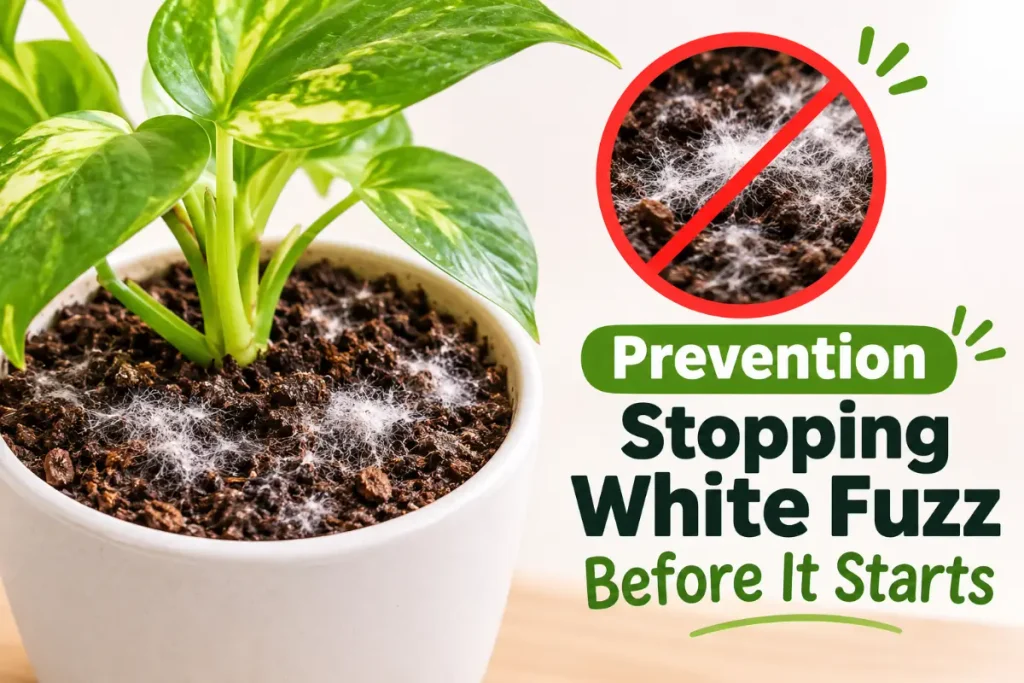
Prevention: Stopping White Fuzz Before It Starts
The majority of white fuzz causes share the same root conditions: too much moisture, too little air circulation, and potting mix that retains water longer than the plant’s roots can process it. Addressing these preventively eliminates most causes before they appear.
Use well-draining potting mix: Add 20–30% perlite to standard potting mix for most houseplants. For succulents, cacti, and other drought-tolerant plants, use a 50/50 mix or dedicated succulent mix.
Water correctly: Let the top inch (or more, for drought-tolerant plants) of potting mix dry between waterings. Lift the pot to gauge weight — a dry pot is significantly lighter than a freshly watered one.
Ensure adequate drainage: Every pot should have drainage holes. Pots without drainage accumulate anaerobic conditions at the bottom that promote pathogenic fungi and root rot. Remove decorative cachepots after watering so pots do not sit in standing water.
Improve air circulation: A gentle fan running nearby — even just a few hours per day — dramatically reduces surface fungal growth by keeping the soil surface drier and the air moving.
Use terracotta pots where possible: Terracotta is porous and allows moisture to evaporate through the pot walls, keeping the potting mix drier between waterings than plastic or glazed ceramic pots. The breathability of terracotta makes it one of the best preventive tools against the excess-moisture conditions that cause surface fungal growth, mineral salt accumulation, and the conditions root mealybugs prefer. For plants in plastic nursery pots inside decorative cachepots, remove the nursery pot and allow it to drain fully after each watering before returning it to the cachepot — never let the plastic pot sit in pooled water at the bottom of the cachepot.
Conclusion
White fuzz on houseplant soil is in most cases saprophytic fungus — harmless in itself but a signal that the potting mix is staying too wet for too long. Scraping it off, reducing watering frequency, and improving drainage resolves it in the majority of cases. The exceptions that need prompt action are root mealybugs (unpot, treat, repot) and pathogenic fungi at the stem base (reduce moisture, remove affected tissue, repot). Use the identification table above to determine which cause you are dealing with before choosing a fix — most of these conditions have overlapping appearances but require different responses.
For research-backed guidance on potting mix biology, fungal decomposers, and soil health in indoor plant growing, the University of Georgia Extension guide to growing plants in containers covers potting media composition, drainage, and the soil biological environment in detail.
FAQs
Is white mold on houseplant soil dangerous to humans?
The saprophytic fungi that most commonly cause white fuzz on houseplant soil are not hazardous to healthy adults at the exposure levels of a household plant. People with compromised immune systems, mold allergies, or respiratory conditions should take care to avoid inhaling the fuzz directly when removing it — wear a mask when scraping it off and do so outdoors or with good ventilation.
Should I throw away potting mix with white mold?
Not necessarily. If the plant is otherwise healthy and the white fuzz is surface-level saprophytic fungus, scraping it off and adjusting your watering schedule is sufficient. Repotting in fresh mix is warranted if the problem is severe and recurring, if root mealybugs are confirmed, or if the plant is in decline.
Why does white fuzz appear after repotting?
New potting mixes with high organic content — bark, compost, peat — often contain fungal spores already. The first few weeks after repotting, while the mix is settling and the plant is establishing, provide ideal conditions for surface fungal growth. It typically stabilizes on its own as the plant’s watering routine is established and the mix dries more consistently between waterings.
Can cinnamon stop white mold on houseplant soil?
Cinnamon contains cinnamaldehyde, which has demonstrated antifungal properties against some fungal species. A light dusting of ground cinnamon on the potting mix surface can suppress surface fungal growth between waterings. It is a useful supplementary measure but not a complete solution — correcting the moisture conditions that allow fungal growth is the primary fix.
What is the white fluffy stuff on my succulent soil?
On succulent potting mix, white fluffy material is most likely one of three things: saprophytic fungus (caused by overwatering — the most common care mistake with succulents), root mealybugs at the stem base, or perlite that has floated to the surface. Because succulents are extremely vulnerable to root rot, any sign of persistent moisture combined with white fuzz is a prompt to investigate drainage and reduce watering immediately.


Pingback: Sticky Residue on Houseplant Leaves: 6 Smart Solutions (2026) - Plant Quill