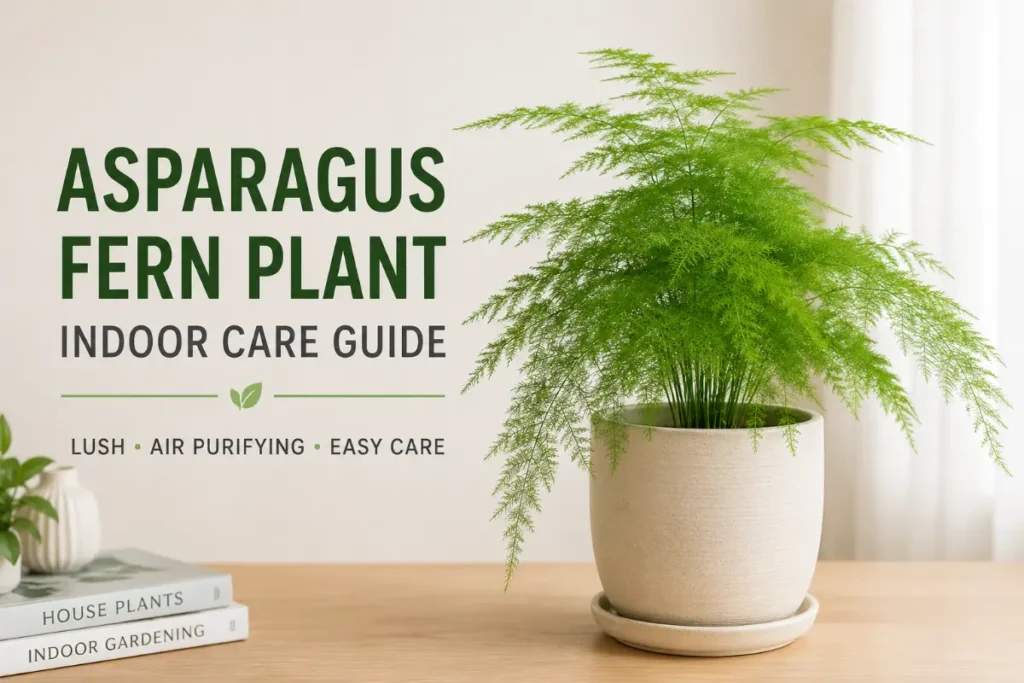
The asparagus fern plant indoor is one of those houseplants that looks delicate but is surprisingly tough, and that looks like a fern but is not one at all. Asparagus fern (Asparagus setaceus, Asparagus densiflorus, and related species) belongs to the asparagus family and grows from tuberous roots with needle-like cladodes (modified stems that function as leaves) that create the feathery, fern-like appearance that gives it its name. Understanding what it actually is rather than what it looks like immediately explains the care approach that keeps it thriving indoors.
This guide covers the complete indoor asparagus fern care approach including the two most common problems, browning and dropping cladodes, and exactly what causes each one.
Quick Answer
Asparagus fern plant indoor care requires bright indirect light without direct harsh sun, consistent moisture that never fully dries out, high humidity above 50% since this is the primary driver of the browning and dropping that frustrates most asparagus fern owners, temperatures between 60 and 75 degrees Fahrenheit, fertilizing every two to four weeks through spring and summer, repotting every one to two years as the tuberous roots fill the pot quickly, and misting or a humidifier to maintain the humidity this moisture-loving plant requires.
Understanding What Asparagus Fern Actually Is
Asparagus fern is not a fern. It is a member of the Asparagaceae family, related to garden asparagus and garden asparagus ornamentals. What appear to be feathery leaves are actually cladodes, modified stems that perform photosynthesis, arranged along arching main stems that can extend to several feet in length.
This botanical distinction matters practically because it affects how the plant responds to care. True ferns are adapted to deeply shaded, consistently moist forest floor conditions. Asparagus fern is adapted to the bright, seasonally variable conditions of South African coastal scrubland where it grows in light shade with moderate seasonal moisture variation and good air circulation.
The two most commonly grown indoor varieties have slightly different growth habits. Asparagus setaceus (common asparagus fern) has very fine, densely packed cladodes creating a delicate, feathery texture and tends to grow upright and then arch as stems lengthen. Asparagus densiflorus ‘Sprengeri’ (foxtail asparagus fern or Sprengeri fern) has coarser, more open cladodes on arching stems and is slightly more robust than A. setaceus in typical indoor conditions.
Step 1: Get the Light Right
Asparagus fern performs best in bright indirect light that mimics the dappled light of its native coastal scrubland habitat. It tolerates a wider light range than many other popular houseplants but performs best within the moderate to bright indirect range.
What works: Bright indirect light from an east or north-facing window. A position two to four feet back from a south or west-facing window where direct afternoon sun rays do not reach the plant. A well-lit room with ambient light from multiple windows even without direct sun reaching the plant specifically.
What causes problems: Direct harsh afternoon sun bleaches the delicate cladodes and causes the rapid browning and dropping that looks alarming but is actually a straightforward response to excess sun stress. Very low light causes slow, sparse growth with widely spaced cladodes rather than the dense, feathery texture that makes asparagus fern attractive.
The light-texture connection: The density of the feathery texture that makes asparagus fern visually appealing is directly related to light quality. In good bright indirect light, cladodes are closely spaced creating full, dense foliage. In low light, cladodes are spaced further apart and the plant looks sparse and open regardless of how healthy it otherwise is.
Step 2: Water Consistently to Maintain Moisture
Unlike the Mediterranean herbs in this cluster that prefer drying out between waterings, asparagus fern prefers consistently moist soil. Its tuberous roots store some moisture, giving it brief drought tolerance, but it drops cladodes quickly when the soil dries out completely and recovers slowly from significant drought stress.
The correct approach: Water when the top inch of soil feels dry. In a bright position during summer this typically means every five to seven days. In lower light or winter every seven to ten days. The soil should feel consistently moist but not soggy throughout the pot.
Signs of underwatering: Yellowing cladodes followed by dropping, starting from the oldest portions of stems. The yellowing and dropping from underwatering typically progresses gradually rather than the sudden mass dropping that temperature shock or other acute stressors cause.
Signs of overwatering: Yellow stems and cladodes accompanied by a musty soil smell and soil that stays wet for more than ten days. Root rot in asparagus fern progresses faster than the tuberous root storage suggests since individual fine feeder roots are susceptible to anaerobic conditions in consistently waterlogged soil.
Drainage: Use pots with drainage holes and empty saucers within thirty minutes of watering. Asparagus fern in a pot without drainage develops root rot reliably within months regardless of watering care.
Step 3: Maintain High Humidity
This is the most commonly underestimated asparagus fern care requirement and the one most directly responsible for the browning and dropping that frustrates most asparagus fern owners in typical home environments.
Asparagus fern prefers humidity above 50% consistently. In heated winter homes where humidity commonly drops to 25 to 35%, the delicate cladodes dry from their tips inward, turning brown before dropping from the stems. This browning from low humidity is the most common asparagus fern complaint and the most commonly misattributed problem since owners often assume overwatering, underwatering, or disease is the cause.
Signs of low humidity: Brown cladode tips that progress toward the stems. The browning typically starts at the tips of older growth and progresses inward. Cladodes that turn entirely brown and drop from the stems en masse. The plant looks increasingly bare from the inside out as older interior cladodes brown and drop while newer outer growth remains green briefly before following.
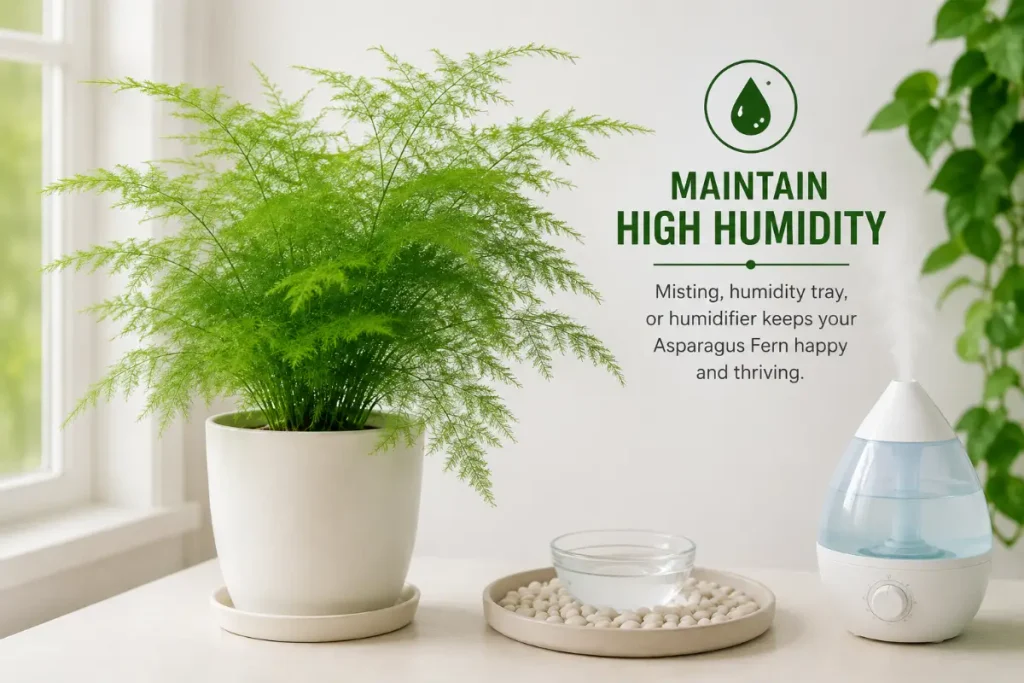
Effective solutions: A humidifier positioned within three to four feet of the plant is the most effective solution for asparagus fern since the large surface area of thousands of fine cladodes loses moisture to dry air rapidly and benefits most from sustained high ambient humidity. A pebble tray with water beneath the pot provides modest benefit. Grouping with other tropical plants raises collective humidity through combined transpiration.
Misting: Asparagus fern responds well to misting since its fine cladodes have minimal disease susceptibility from surface moisture compared to plants with flat leaf surfaces prone to fungal spotting. Misting every one to two days provides brief humidity benefit and is a practical supplemental approach when other methods are not available.
Step 4: Maintain Temperature and Protect From Extremes
Ideal range: 60 to 75 degrees Fahrenheit. Asparagus fern is comfortable in the mid-range of typical home temperatures and does not have the dramatic temperature sensitivity of the cool-preferring flowering plants earlier in this cluster.
Cold sensitivity: Below 50 degrees the plant shows visible stress. Cold drafts from exterior doors and cold windowpanes cause immediate cladode dropping and browning in the affected portions of the plant. Keep away from cold airflow sources.
Heat and low humidity: The combination most harmful to asparagus fern is warm temperatures above 75 degrees combined with low humidity. Warm dry air accelerates moisture loss through the enormous collective surface area of thousands of cladodes, causing the browning and dropping that appears most aggressively in dry heated homes during winter.
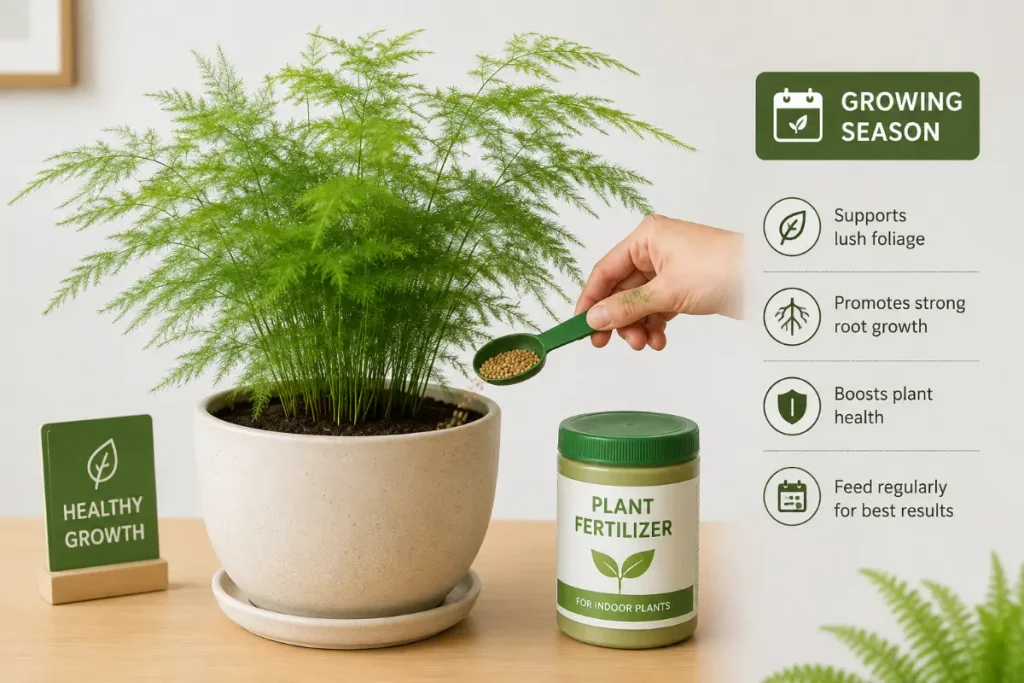
Step 5: Fertilize Through the Growing Season
Asparagus fern is a moderately heavy feeder that benefits from consistent nutrition through spring and summer to support the active new stem and cladode production that keeps the plant looking full and healthy.
Through spring and summer: Feed every two to four weeks with a balanced liquid fertilizer at half the label rate. The nitrogen component supports the vigorous cladode production that creates the feathery density that makes asparagus fern attractive.
Organic options: Worm casting tea applied every two weeks provides gentle, burn-safe nutrition with soil biology benefits appropriate for the tuberous root systems of asparagus fern. For the complete worm casting application guide, worm castings for indoor plants covers every method with timing guidance for plants with tuberous and fleshy root systems.
Fall and winter: Reduce to monthly feeding or stop entirely when growth slows. Asparagus fern in reduced winter light grows significantly more slowly and does not need the biweekly nutrition of its active growing season.
Step 6: Repot Regularly as Tuberous Roots Fill the Pot
Asparagus fern produces substantial tuberous roots that fill pots faster than most other comparable houseplants. A plant purchased in a six-inch pot typically needs repotting within twelve to eighteen months as the tubers press against pot sides and begin emerging from drainage holes.
Signs it needs repotting: Roots visibly pushing against the sides of a flexible plastic pot. White tuberous roots emerging from drainage holes. The plant drying out within two to three days of thorough watering indicating tubers have displaced most of the soil. Significantly slowed growth despite adequate light and fertilizing.
How to repot: Choose a pot two to three inches larger in diameter. Asparagus fern tubers are robust enough to handle modest root disturbance without the sensitivity of more delicate root systems. Some temporary cladode dropping after repotting is normal as the plant adjusts.
Soil: Standard potting mix with 15 to 20% perlite added suits asparagus fern well. The slightly moisture-retentive standard mix suits this plant’s preference for consistent moisture better than the very fast-draining mixes appropriate for drought-tolerant plants.
Dividing when repotting: Mature asparagus ferns with large tuberous root masses can be divided at repotting time by separating the root ball into two or three sections each with multiple stems and a portion of the tubers. Each division potted into appropriate-sized containers produces a full plant within one growing season.
For the complete guide to repotting timing and post-repotting care including when to resume fertilizing after root disturbance, do you need nutrients after repotting a indoor plants covers every consideration for plants with tuberous root systems.
Step 7: Manage Browning and Dropping Proactively
Browning and cladode dropping is the most common asparagus fern complaint and deserves specific focused attention because it has multiple distinct causes that require different responses.
Low humidity browning (most common): Tips brown first and browning progresses toward stems over days to weeks. Entire cladodes eventually turn brown and drop. Occurs most aggressively in winter heating season when indoor humidity drops. Response: increase humidity immediately with humidifier or pebble tray, increase misting frequency, and move away from heating vents.
Underwatering browning: Yellowing precedes browning and the pattern starts from older interior growth. Soil is very dry. Response: water thoroughly and establish more consistent moisture maintenance.
Direct sun browning: Rapid bleaching and browning of cladodes on the sun-exposed side of the plant. The pattern is directional rather than distributed throughout the plant. Response: move to bright indirect light without direct sun exposure.
Cold draft browning: Sudden browning and dropping of cladodes on the side of the plant nearest a cold air source. Appears more suddenly than humidity browning. Response: move away from cold air sources.
After any significant browning: Remove brown stems at their base using clean scissors. Do not pull since this can disturb attached cladodes. The plant regenerates new growth from the tuberous root system but the rate of regeneration depends on light quality and humidity being appropriate.
Asparagus Fern Toxicity
Asparagus fern is toxic to cats and dogs. The small red berries that occasionally appear on mature indoor asparagus fern plants are mildly toxic and cause gastrointestinal symptoms if ingested. The sap can also cause contact dermatitis in some people and animals. Keep out of reach of pets that chew on plants and wash hands after extended handling.
Asparagus Fern as a Hanging Basket Plant
Asparagus fern is particularly well-suited to hanging basket display where its arching, cascading stems trail naturally downward in the way that best shows off the feathery texture that makes it attractive. Understanding the specific care adjustments for hanging basket placement versus pot placement on a surface helps you manage the plant effectively in either display context.
Why hanging baskets dry out faster: A hanging basket sits in ambient warm room air from all sides rather than resting on a cool surface or being somewhat insulated by surrounding objects. This exposure to circulating warm air accelerates evaporation from the soil surface and through the basket material itself, meaning hanging basket asparagus fern typically needs watering every four to five days in summer versus the seven days typical of the same plant in a standard pot.
Humidity management in hanging positions: Elevated positions closer to the ceiling of heated rooms tend to have lower humidity than floor-level positions since warm dry air rises and concentrates at ceiling height. Asparagus fern in a hanging basket may experience more intense low-humidity stress than the same plant at counter height. A nearby humidifier is particularly valuable for hanging basket asparagus fern in heated winter homes.
The coco moss liner advantage: Hanging baskets with coco moss liners rather than plastic inserts allow air to circulate freely through the basket sides which accelerates cladode drying and makes watering frequency even more critical. The natural aesthetic of coco moss suits asparagus fern’s appearance well and allows you to plant at the basket sides as well as the top for a fuller display.
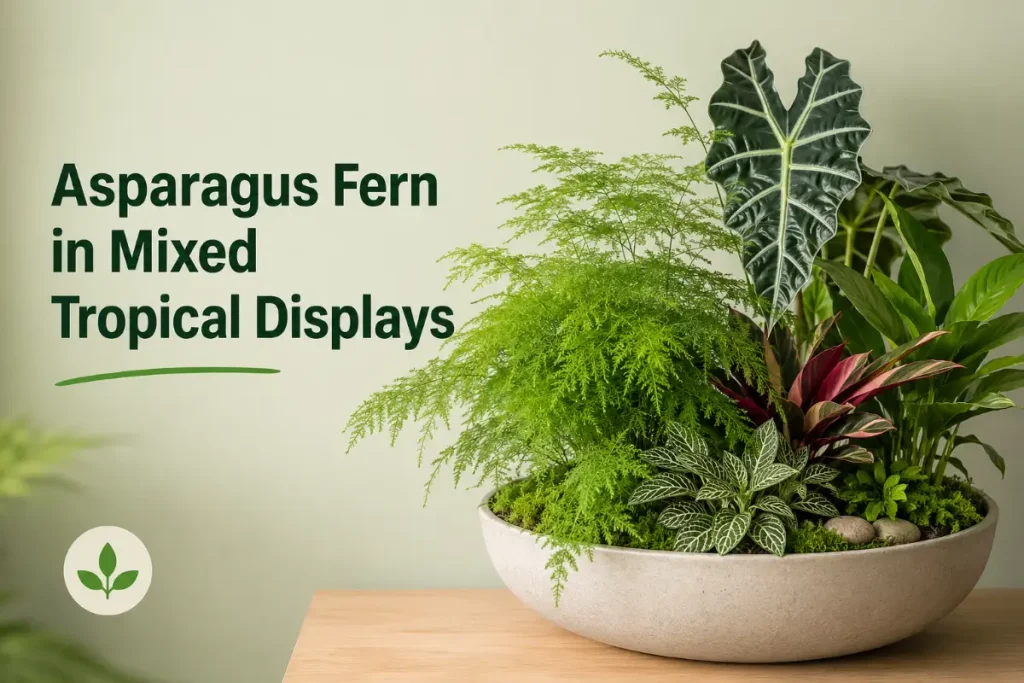
Asparagus Fern in Mixed Tropical Displays
Asparagus fern’s feathery texture creates excellent textural contrast in mixed tropical plant displays where it pairs well with bold-leaved plants that emphasize the difference between fine and coarse textures.
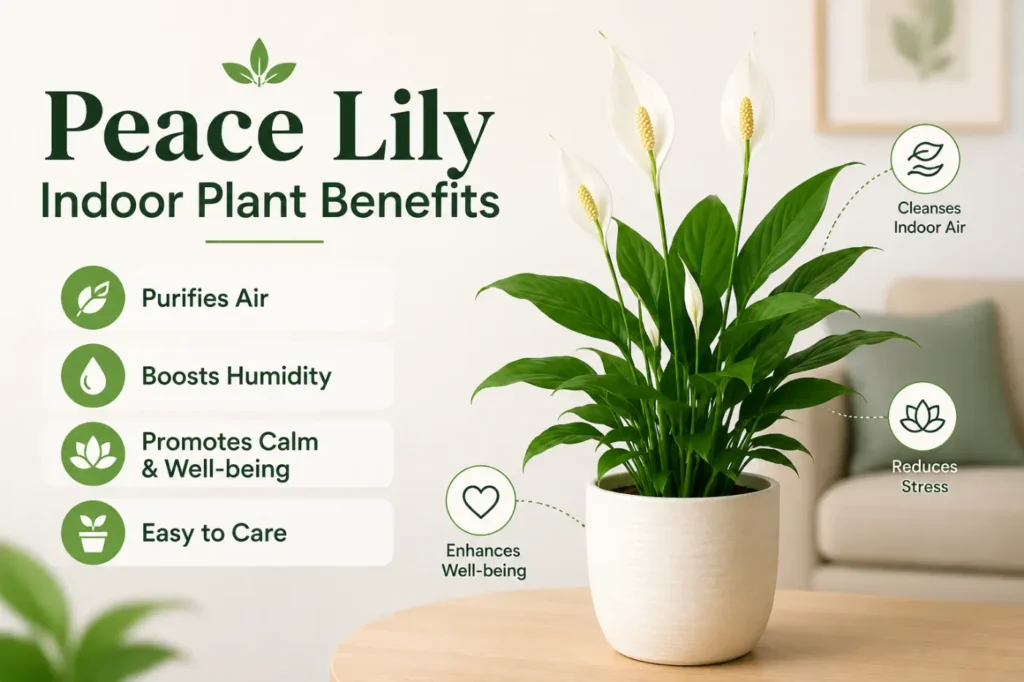
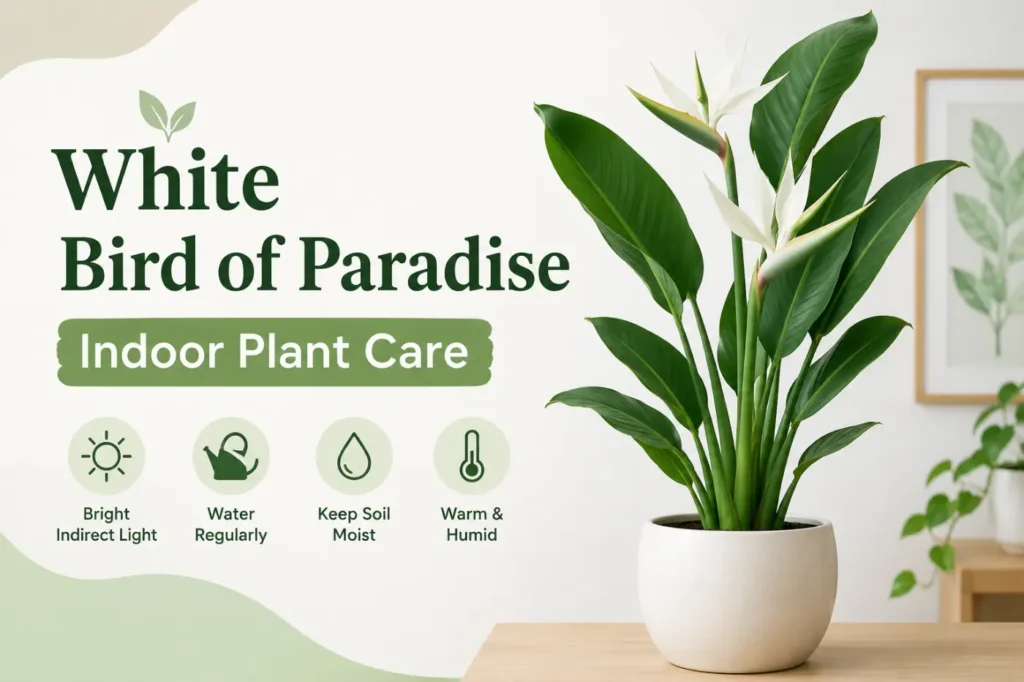
It works particularly well alongside plants with large, smooth leaves like peace lily, rubber plant, and white bird of paradise where the contrast between the massive smooth leaf surfaces and the thousands of tiny asparagus cladodes creates a visually dynamic display. The feathery filler role that asparagus fern occupies in these compositions is similar to the role baby’s breath plays in cut flower arrangements.
In mixed hanging baskets, trailing asparagus fern from the basket’s edge while a more upright plant occupies the center creates a fuller, more professional-looking display than either plant achieves alone.
For context on how asparagus fern pairs specifically with peace lily in mixed tropical displays and how the air quality benefits of peace lily complement asparagus fern’s primarily aesthetic contribution to an indoor plant collection, peace lily indoor plant benefits covers the documented benefits that make peace lily an excellent companion for asparagus fern in displays where both aesthetic appeal and practical indoor environment benefits matter.
Conclusion
Asparagus fern plant indoor care is primarily about understanding two things: this is not a true fern with a fern’s light and moisture preferences, and humidity is the single most important variable determining whether the plant maintains its lush feathery appearance or browns and drops progressively.
Bright indirect light without direct harsh sun. Consistently moist soil checking the top inch before each watering. Humidity above 50% maintained actively with a humidifier, pebble tray, or regular misting. Temperatures in the comfortable room-temperature range away from cold drafts and hot air vents. Biweekly fertilizing through the growing season. Annual or biennial repotting as tuberous roots fill the pot. And proactive humidity management before browning develops rather than in response to it.
Those seven practices produce the dense, feathery, cascading asparagus fern display that makes this plant such an enduring interior design favorite, applied correctly to a plant that is far more robust than its delicate appearance suggests.
Frequently Asked Questions
Why is my asparagus fern turning brown and dropping?
The most common cause of asparagus fern browning and dropping is low humidity, particularly in heated indoor environments where winter humidity commonly drops to 25 to 35% while the plant prefers above 50%. Direct sun exposure, underwatering, and cold drafts each cause characteristic browning patterns. Low humidity browning starts at tips and progresses toward stems. Direct sun browning is directional. Cold draft browning is sudden. Identifying the pattern points to the correct cause and response.
How often should I water an indoor asparagus fern?
Water when the top inch of soil feels dry, typically every five to seven days in a bright position during summer and every seven to ten days in lower light or winter. Asparagus fern prefers consistently moist soil unlike drought-tolerant plants that benefit from complete drying between waterings. Never let the soil dry out completely since this causes the cladode dropping that takes weeks to months to recover from.
Does asparagus fern need direct sunlight?
No. Direct harsh afternoon sun bleaches and browns the delicate cladodes rapidly. Asparagus fern performs best in bright indirect light, which it receives from an east or north-facing window, or from a position several feet back from a south or west-facing window where direct sun rays do not reach it. The plant tolerates a range from medium indirect light to bright indirect light but performs best toward the brighter end of that range for dense, healthy cladode production.
How do I increase humidity for my asparagus fern?
A humidifier positioned within three to four feet of the plant is the most effective approach. A pebble tray with water beneath the pot provides modest benefit. Grouping with other tropical plants raises collective humidity. Misting every one to two days is practical as a supplemental approach. For asparagus fern specifically, the combination of a pebble tray and regular misting through winter heating season typically maintains adequate humidity without requiring a dedicated humidifier.
Can asparagus fern grow in low light?
It survives in low light but does not thrive. In low light the cladodes are spaced further apart producing an open, sparse appearance rather than the dense feathery texture that makes this plant visually appealing. Growth slows significantly and the plant becomes increasingly susceptible to the humidity-related browning that is manageable in good light but more difficult to prevent in low light where the plant is already somewhat stressed.
Is asparagus fern safe for cats and dogs?
No. Asparagus fern is toxic to cats and dogs. The small berries that appear on mature plants are mildly toxic causing vomiting and gastrointestinal symptoms. The sap causes contact dermatitis in some animals. Keep out of reach of pets that chew on plants. The plant itself also has small hidden thorns on its stems that can cause scratches during handling, making it worth wearing gloves during pruning and repotting sessions.