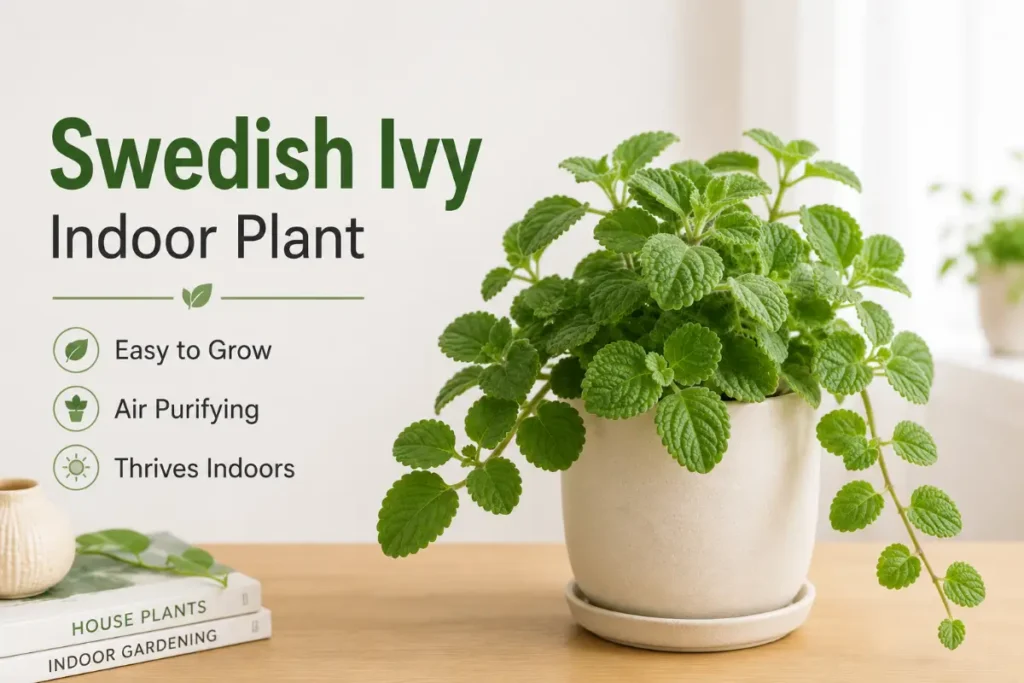
The Swedish ivy indoor plant is one of those houseplants that rewards the least effort of almost any commonly grown trailing plant, which makes it particularly well-suited to beginners and to plant owners who want a lush, attractive trailing display without the intensive maintenance that more demanding plants require. Despite its name, Swedish ivy (Plectranthus australis) is neither Swedish in origin nor a true ivy. It is native to Australia and South Africa and is called Swedish ivy because of its popularity as a houseplant in Sweden where it became a common household plant.
What makes Swedish ivy genuinely appealing for indoor growing is its combination of easy care, fast growth, attractive rounded scalloped leaves with a slight waxy sheen, occasional small white to pale lavender flowers, and the pleasant mint-like fragrance the foliage releases when touched or brushed. It trails beautifully from hanging baskets and elevated positions and propagates from cuttings so easily that a single plant can provide unlimited new plants through the growing season.
Quick Answer
Swedish ivy indoor plant care requires bright to medium indirect light, watering when the top inch of soil dries out, temperatures between 60 and 80 degrees Fahrenheit, moderate humidity above 40%, biweekly fertilizing through spring and summer, regular tip pruning to maintain fullness and prevent legginess, and easy propagation from cuttings to refresh the display when parent plants age. It tolerates more neglect than most trailing plants while still producing impressive lush growth when conditions are appropriate.
Understanding Swedish Ivy
Plectranthus australis is a member of the mint family (Lamiaceae) which explains the characteristic slight minty fragrance that its foliage releases when disturbed. It is a soft-stemmed, fast-growing trailing plant that produces rounded to kidney-shaped leaves with scalloped edges and a waxy upper surface that gives them a slight sheen.
The plant grows naturally in the warm, partially shaded conditions of South African and Australian coastal woodland margins where it spreads along the ground and over rocks in the same trailing habit it displays in indoor hanging baskets. In its natural habitat it receives good indirect light, moderate rainfall with some dry periods, warm temperatures, and the natural air circulation of outdoor conditions.
This origin explains why Swedish ivy is more tolerant of imperfect indoor conditions than many other trailing plants. Its native habitat is variable enough that it has adapted to the kind of fluctuating conditions that indoor growing often produces.
Several varieties are available beyond the basic green-leaved species including silver-edged varieties like Plectranthus coleoides ‘Marginatus’ with cream-white leaf margins, and the variegated ‘Velvet Elvis’ with purple undersides. All share essentially identical care requirements despite their visual differences.
Step 1: Provide Bright to Medium Indirect Light
Swedish ivy is one of the more light-flexible trailing plants commonly grown indoors. It performs well across a range from medium indirect light through bright indirect light without the dramatic color fading in low light that affects more light-sensitive plants like polka dot plant and wandering jew.
What works best: Bright indirect light from an east or north-facing window produces the most vigorous growth and most compact, dense trailing stems. A position two to four feet back from a south or west-facing window where direct afternoon sun does not reach the plant is also appropriate.
Medium light tolerance: Swedish ivy maintains acceptable growth in medium indirect light that would significantly stress more demanding plants. North-facing windows that are too dim for most tropical plants generally provide enough light for Swedish ivy to grow acceptably, though less vigorously than in brighter conditions.
What causes problems: Direct harsh afternoon sun bleaches the waxy leaf surface and causes brown scorching. Very deep shade produces very slow, sparse growth with widely spaced leaves rather than the dense trailing stems that make the plant attractive.
The practical advantage: Swedish ivy’s light flexibility makes it one of the better choices for interior positions in rooms with adequate ambient light but no direct window access for the plant itself.
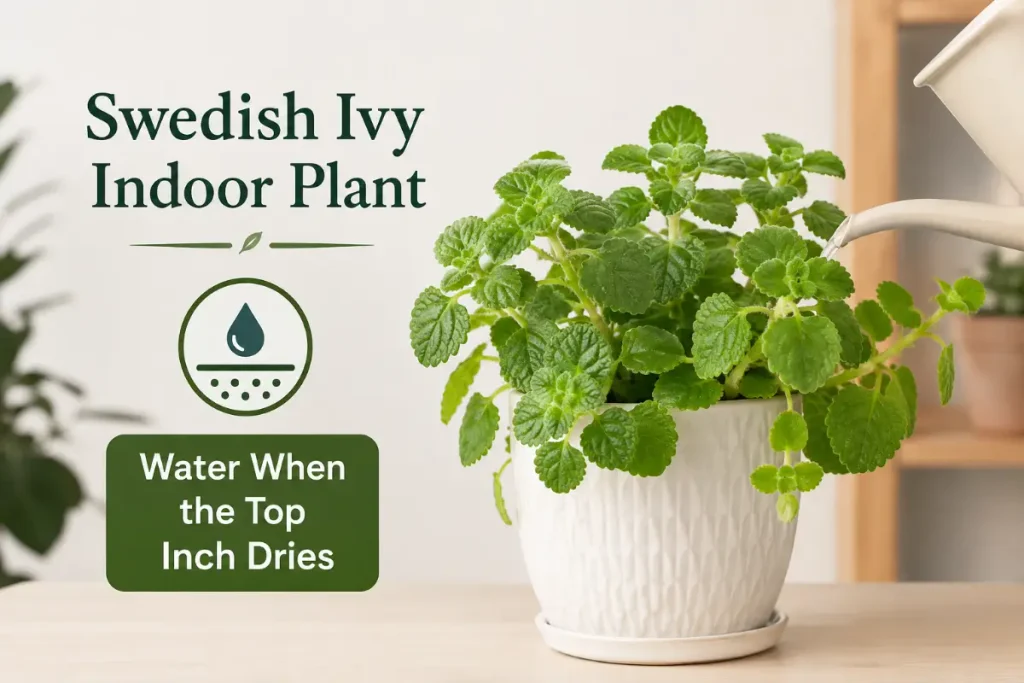
Step 2: Water When the Top Inch Dries
Swedish ivy prefers consistently moist soil but tolerates the occasional missed watering better than plants like peace lily or asparagus fern that wilt dramatically from drought. Its soft stems do droop noticeably when the plant is thirsty, providing a clear early signal before any lasting damage occurs.
The correct approach: Water when the top inch of soil feels dry. In a bright position during summer this typically means every five to seven days. In lower light or winter every seven to ten days. The plant recovers from mild drought stress quickly after watering but benefits from the consistent moisture that prevents the cumulative stress of repeated drought cycles.
Signs of overwatering: Yellow lower leaves. Soft, mushy stem sections near the soil. Soil staying wet for more than a week. Swedish ivy is susceptible to root rot in chronically wet conditions despite its preference for consistent moisture. Always use pots with drainage holes.
Signs of underwatering: Drooping stems and leaves that perk up quickly after watering. More extreme drought causes leaf drop from the oldest portions of the stems, which takes several weeks to recover from even after appropriate watering resumes.
Seasonal adjustment: Reduce watering frequency noticeably in fall and winter as growth slows. Maintaining summer watering frequency through winter consistently overwatering Swedish ivy as it reduces its water uptake in lower light conditions.
Step 3: Maintain Moderate Temperature
Swedish ivy is comfortable across the range of typical indoor home temperatures without the specific cold preference of azalea and cyclamen or the tropical heat preference of some other plants in this cluster.
Ideal range: 60 to 80 degrees Fahrenheit. Growth is most active through the upper portion of this range. The plant handles typical room temperatures in most US homes without special management.
Cold tolerance: Swedish ivy handles temperatures down to approximately 50 degrees without significant damage. Below 45 degrees the plant shows stress with yellowing and potential leaf drop. This cold tolerance makes it suitable for cool sunrooms and enclosed porches that would stress more tropical plants.
Heat tolerance: Swedish ivy handles the upper portion of its ideal temperature range well provided humidity and moisture are maintained. In very warm dry conditions above 80 degrees, watering becomes more critical since moisture demand increases with temperature.
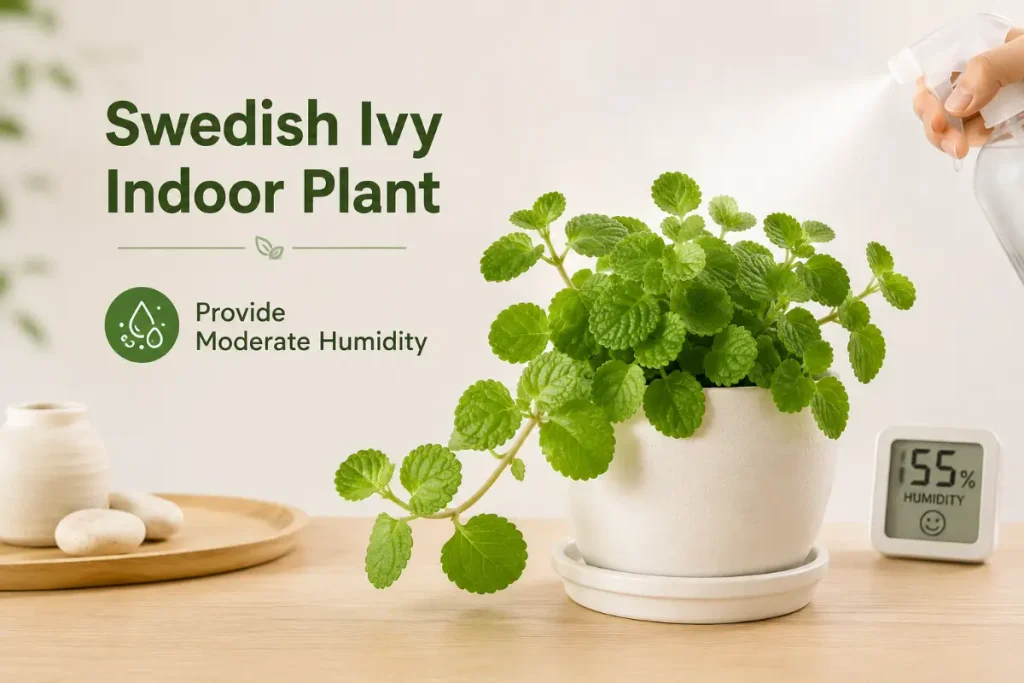
Step 4: Provide Moderate Humidity
Swedish ivy is less humidity-sensitive than asparagus fern and performs well in the 40 to 60% humidity typical of most US homes without requiring active humidity management in most situations.
When humidity management matters: In very dry heated winter air below 35% relative humidity, Swedish ivy develops the brown leaf tips and edges that indicate moisture stress from low ambient humidity. This is less severe than the mass cladode dropping that asparagus fern experiences in low humidity but still reduces the plant’s appearance.
Simple management: A pebble tray with water beneath the pot is typically sufficient for Swedish ivy in most indoor environments. The plant does not require a humidifier and manages well with occasional misting as a supplemental humidity boost during the driest winter months.
Step 5: Fertilize Consistently Through the Growing Season
Swedish ivy is a fast grower during its active season and benefits from the consistent nutrition that keeps the rapid new growth looking vibrant rather than pale and sparse.
Through spring and summer: Feed every two weeks with a balanced liquid fertilizer at half the label rate. The nitrogen component specifically supports the vigorous stem and leaf production that creates the dense trailing display this plant is grown for.
Organic options: Worm casting tea applied every two weeks suits Swedish ivy’s somewhat sensitive root system with gentle nutrition and soil biology benefits. The gradual release of organic nutrition maintains consistent growth quality through the season without the salt accumulation risk of full-rate synthetic fertilizers applied in the small pots most Swedish ivy occupies.
Fall and winter: Reduce to monthly feeding or stop entirely when growth slows. Swedish ivy grows noticeably more slowly in fall and winter and does not need the biweekly nutrition of its active season.
Step 6: Prune Regularly for Dense, Trailing Growth
Swedish ivy develops a natural tendency toward legginess without regular tip pruning, producing long bare-stemmed trails with leaf clusters only at the growing ends. Regular pruning prevents this progression and maintains the dense, leafy trailing appearance that makes the plant most attractive.
How to prune: Pinch or cut stem tips back to just above a leaf node every two to four weeks through the growing season. Remove the top two to four inches of each actively growing stem. The plant produces two new shoots from the node below each cut within seven to ten days creating a progressively denser plant over multiple pruning sessions.
More aggressive rejuvenation: When an established plant has developed many long, bare stems, cut all stems back to within three to four inches of the soil. Swedish ivy regenerates vigorously from this level of pruning and produces a fresh dense flush of new growth within three to four weeks.
Propagation from pruned cuttings: Every pruned cutting from Swedish ivy is a propagation opportunity. Place stem cuttings four to six inches long in water and roots develop within one to two weeks. Pot the rooted cuttings in fresh slightly moist potting mix and they establish as compact new plants within a month. Adding fresh rooted cuttings back into the parent plant’s pot immediately increases display density while the parent plant regenerates from pruning.
Step 7: Propagate Freely to Maintain Fresh Growth
Propagation is a core management tool for Swedish ivy rather than just a way to make more plants. Like polka dot plant and wandering jew, Swedish ivy maintains its most attractive form most easily when regularly refreshed with young compact cuttings rather than attempting to maintain aging parent plants indefinitely.
Why propagate regularly: Swedish ivy stems become increasingly woody and less actively growing after one to two years. The youngest, most recently produced growth is the densest and most vibrantly green. Taking cuttings annually from the most vigorous growth and using them to refresh the display ensures the plant always looks at its best.
How easy it is: Swedish ivy is among the easiest plants to propagate of any commonly grown houseplant. Cuttings root in water within one to two weeks without rooting hormone, humidity tents, or any special treatment. The success rate is essentially 100% under normal conditions.
Sharing: Swedish ivy produces enough cutting material from a single healthy plant to start dozens of new plants annually. It is one of the standard plants for sharing between gardeners, plant swaps, and community propagation events precisely because of its effortless propagation and its reward to new growers who see rapid results from minimal effort.
For companion plants that complement Swedish ivy’s trailing growth habit in mixed tropical displays and hanging basket arrangements, wandering jew plant care indoors covers the similarly easy-to-propagate trailing plant that works particularly well alongside Swedish ivy in mixed hanging basket arrangements where the contrast between their different leaf textures and colors creates a more visually dynamic display than either plant achieves alone.
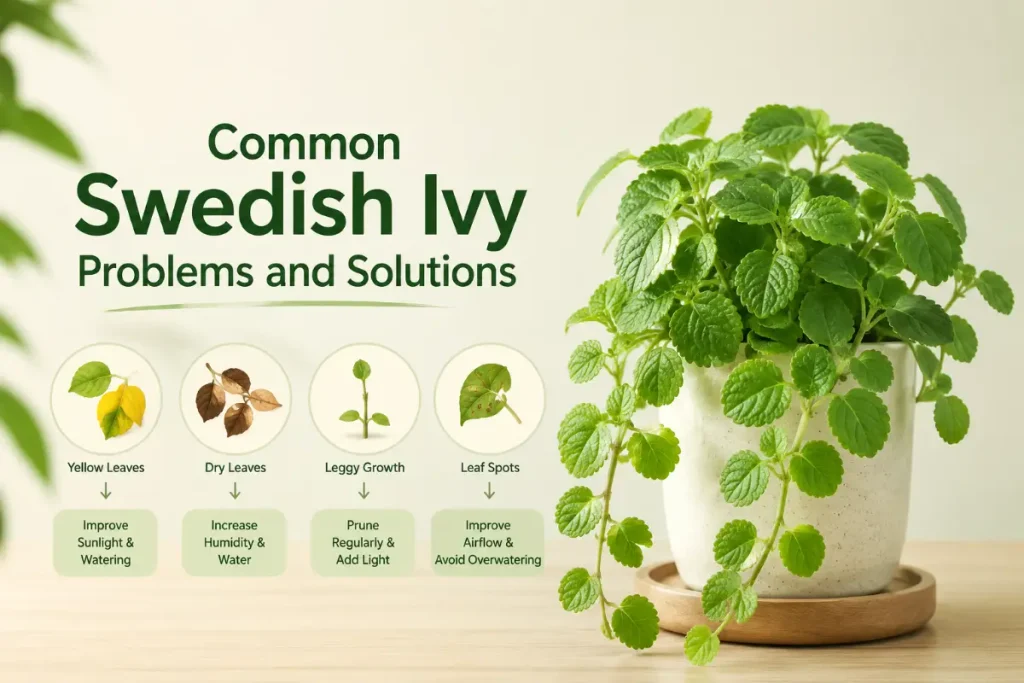
Common Swedish Ivy Problems and Solutions
Leggy, sparse stems: Not pruning frequently enough combined often with insufficient light. Prune back aggressively and improve light simultaneously. Add rooted cuttings to the pot for immediate density increase.
Yellowing lower leaves: Overwatering or natural aging of oldest leaves. Check soil moisture. If overwatering is the cause, allow more drying time between waterings and ensure good drainage. Single lower leaf yellowing from aging is normal.
Brown leaf tips and edges: Low humidity in dry winter air. Increase humidity with a pebble tray or periodic misting. Also check for accumulated mineral salts from tap water use and flush soil monthly if browning persists despite adequate humidity.
Pale, washed-out leaf color: Insufficient light. Move to brighter indirect light. New growth in better light emerges with richer green color within two to three weeks.
Wilting despite moist soil: Root rot from overwatering in poorly draining conditions. Check root health by removing from pot. Trim any black or mushy roots, repot in fresh well-draining mix, and adjust watering to allow more drying between sessions.
Seasonal Swedish Ivy Care Calendar
Spring (March through May): Resume biweekly fertilizing as growth accelerates. Begin the regular pruning schedule. This is the ideal time to take cuttings for new plants since rooting is fastest and establishment most rapid during the spring growth flush. Check for any pests that may have established during the lower-light winter period.
Summer (June through August): Full growing season. Maintain biweekly fertilizing and fortnightly pruning. Consider outdoor placement on a shaded patio or balcony for maximum growth vigor. Monitor for spider mites in dry air-conditioned environments. Take cuttings as needed from the most vigorous growth for propagation or display density enhancement.
Fall (September through November): Reduce fertilizing to monthly as growth slows. Continue pruning to maintain shape but expect somewhat slower branching response than in summer. Move indoors before nighttime temperatures drop below 45 degrees if the plant was outdoors. Inspect for pests before bringing indoors.
Winter (December through February): Stop or significantly reduce fertilizing. Water less frequently as growth slows and water uptake decreases. Maintain humidity since winter heating drops indoor humidity. Monitor for the browning from low humidity that occasionally affects Swedish ivy in very dry heated environments. This is the period when starting fresh cuttings under a grow light can provide compact, vigorously growing plants for spring display.
For the complete guide to creating and managing mixed indoor plant displays that incorporate Swedish ivy alongside complementary trailing and upright plants, arrowhead plant care indoors covers the care approach for another easy-growing trailing tropical that pairs beautifully with Swedish ivy in mixed arrangements where two different leaf textures and growth habits create more visual interest than either plant achieves alone.
Swedish Ivy Varieties Worth Knowing
The Swedish ivy category includes several distinct varieties beyond the standard green-leaved Plectranthus australis that offer different visual characteristics while sharing the same care requirements.
Plectranthus australis (standard) produces rounded, bright green, scalloped leaves with a slight waxy sheen. The most commonly available variety and the most vigorous grower of the group. Flowers occasionally in small white clusters that are attractive without being the primary reason to grow the plant.
Plectranthus coleoides ‘Marginatus’ has green leaves with broad cream-white margins that create a variegated appearance. Less vigorous than the solid green species but produces a more visually complex display. Needs slightly more light than the standard variety to maintain good color in the cream margins.
Plectranthus ‘Velvet Elvis’ is a dramatic variety with dark purple undersides to its leaves and a velvety texture on the upper surface rather than the waxy finish of standard varieties. The purple underside shows beautifully in hanging basket positions where the cascading stems are viewed from below. This variety has stronger fragrance than standard varieties.
Plectranthus amboinicus (Cuban oregano or Indian borage) is a closely related species with much larger, thicker, more succulent leaves and a very strong oregano-like fragrance. Often sold alongside Swedish ivy but requires drier conditions than standard varieties and is more drought-tolerant than moisture-preferring.
For most indoor growing situations, the standard Plectranthus australis provides the best combination of vigor, ease of care, and attractive trailing appearance. Specialty varieties are worth exploring for growers who want visual variety across multiple hanging baskets or elevated displays.
Conclusion
Swedish ivy indoor plant care is among the most rewarding of all trailing houseplant experiences precisely because the return on effort is so high. A plant that grows quickly, looks attractive from the moment you bring it home, tolerates a wide range of conditions without dramatic stress responses, fills hanging baskets and elevated positions beautifully, and propagates from cuttings so easily that free new plants are always available deserves its place as one of the most consistently recommended beginner and experienced gardener plants for indoor trailing displays.
Bright to medium indirect light. Consistent moisture with a top-inch check before every watering. Comfortable room temperatures. Moderate humidity. Biweekly fertilizing through spring and summer. Regular tip pruning every two to four weeks. And annual propagation from cuttings to keep the display fresh. Those seven practices produce the lush, full, cascading Swedish ivy display that makes this underappreciated plant one of the most satisfying and effortless additions to any indoor plant collection.
Frequently Asked Questions
How often should I water Swedish ivy indoors?
Water when the top inch of soil feels dry, typically every five to seven days in a bright position during summer and every seven to ten days in lower light or winter. Swedish ivy tolerates brief drought better than plants like peace lily but still benefits from consistent moisture. Avoid both chronic overwatering that causes root rot and repeated drought stress that causes leaf drop from the oldest stems.
Why is my Swedish ivy wilting and drooping?
Swedish ivy wilts most commonly from underwatering when the top inch of soil has dried out past its preferred moisture level. Water thoroughly and the plant typically recovers within an hour or two. If wilting does not recover after thorough watering, check for root rot from chronic overwatering where roots can no longer absorb water despite adequate soil moisture. Remove from pot and inspect roots for black, soft, mushy sections.
Can Swedish ivy grow in low light?
Swedish ivy tolerates medium indirect light better than most other colorful trailing plants, making it one of the better choices for interior positions with limited natural light access. In very low light growth slows significantly and leaves become sparser and more widely spaced along stems. A north-facing window with adequate ambient room light typically provides enough light for acceptable growth.
How do I make Swedish ivy fuller and bushier?
Pinch stem tips back to a leaf node every two to four weeks throughout the growing season. Each pinched tip produces two new branches from the node below. Over multiple pruning sessions this doubling effect creates a progressively denser plant. For very leggy plants, cut all stems back to within three to four inches of the soil. The plant regenerates vigorously within three to four weeks. Add rooted cuttings back to the pot to increase immediate density.
Is Swedish ivy safe for cats and dogs?
Swedish ivy (Plectranthus australis) is generally considered non-toxic to cats and dogs, which is one of its practical advantages over many other popular trailing houseplants including wandering jew and asparagus fern that are toxic to pets. However, any plant material ingested in large amounts can cause gastrointestinal upset in sensitive animals. The ASPCA database should be consulted for the most current information on specific varieties.
How long does Swedish ivy live indoors?
Individual stems become increasingly woody and less actively growing after one to two years but the plant as a whole lives indefinitely through propagation from cuttings. Annual cutting propagation that uses the most vigorous fresh growth to replace aging stems maintains Swedish ivy as a perpetually young, compact, vibrantly green display rather than a single aging specimen. This propagation approach is the most practical strategy for long-term Swedish ivy management.