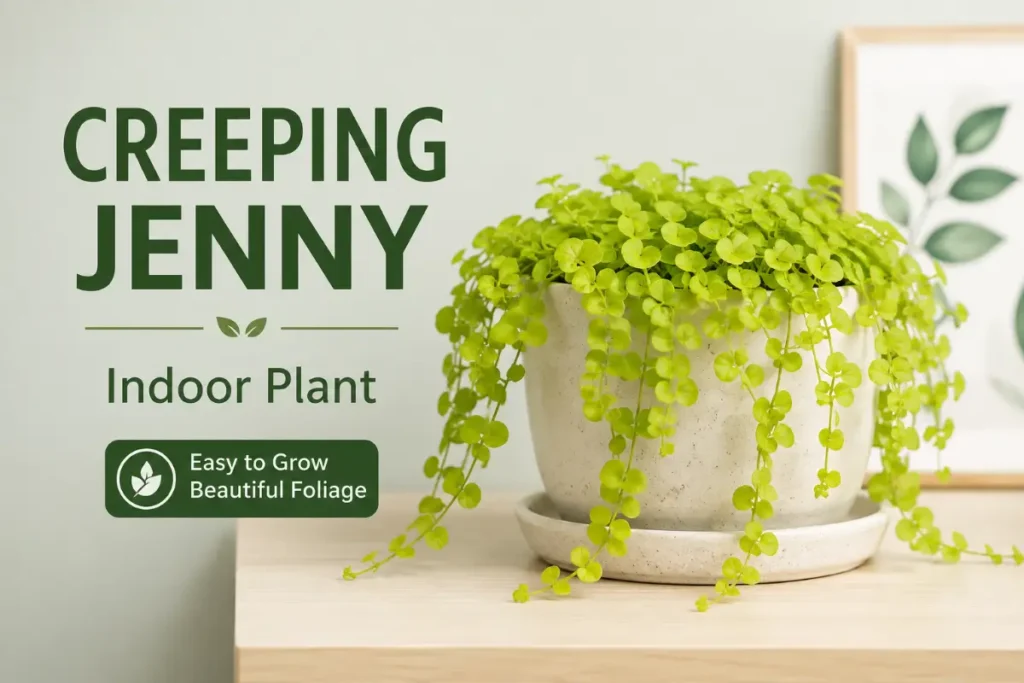
The creeping jenny indoor plant brings something genuinely unusual to indoor plant collections: a bright chartreuse to golden yellow color that almost no other commonly available houseplant provides. Creeping jenny (Lysimachia nummularia ‘Aurea’ in the golden variety, or green Lysimachia nummularia in the standard form) produces rounded coin-shaped leaves on low, rapidly trailing stems that cascade beautifully from hanging baskets and elevated positions.
The honest context for indoor creeping jenny care is that this plant is primarily an outdoor perennial native to Europe that is grown as a vigorous groundcover in cool, moist, partially shaded garden conditions. It adapts to indoor growing with appropriate care but is most reliably successful in cool, bright indoor spaces rather than warm, dim ones. Understanding this outdoor origin explains every care decision in this guide.
Quick Answer
Creeping jenny indoor plant care requires bright indirect light to maintain the golden leaf color, cool temperatures between 50 and 70 degrees Fahrenheit rather than the warm conditions most tropical houseplants prefer, consistently moist soil that never dries out, moderate to high humidity, minimal fertilizing since this is a lean-soil plant, regular pruning to manage the vigorous trailing growth, and realistic expectations since indoor creeping jenny performs best in cool sunrooms and enclosed porches rather than warm living rooms.
Understanding Creeping Jenny as an Indoor Plant
Lysimachia nummulariifolia is not a tropical plant. It is a European perennial from cool, moist meadows and woodland margins where it grows in consistently moist soil in partial shade or dappled sunlight. In North America it is grown as both a garden perennial and, increasingly, as an indoor plant where its golden color and cascading growth make it visually striking in hanging baskets.
The golden variety (Lysimachia nummularia ‘Aurea’) is the most commonly sold indoor form. Its lime green to chartreuse to golden-yellow leaf color is most intense in bright light and fades toward plain green in insufficient light, though even the faded green form is attractive.
The practical implication of its European cool-meadow origin is that creeping jenny performs best in indoor conditions cooler than what most tropical houseplants prefer. A cool sunroom, bright enclosed porch, or cool spare bedroom provides closer-to-ideal conditions than a warm living room. This temperature preference is the most important departure from typical tropical houseplant care and the factor most commonly overlooked when people bring creeping jenny inside.
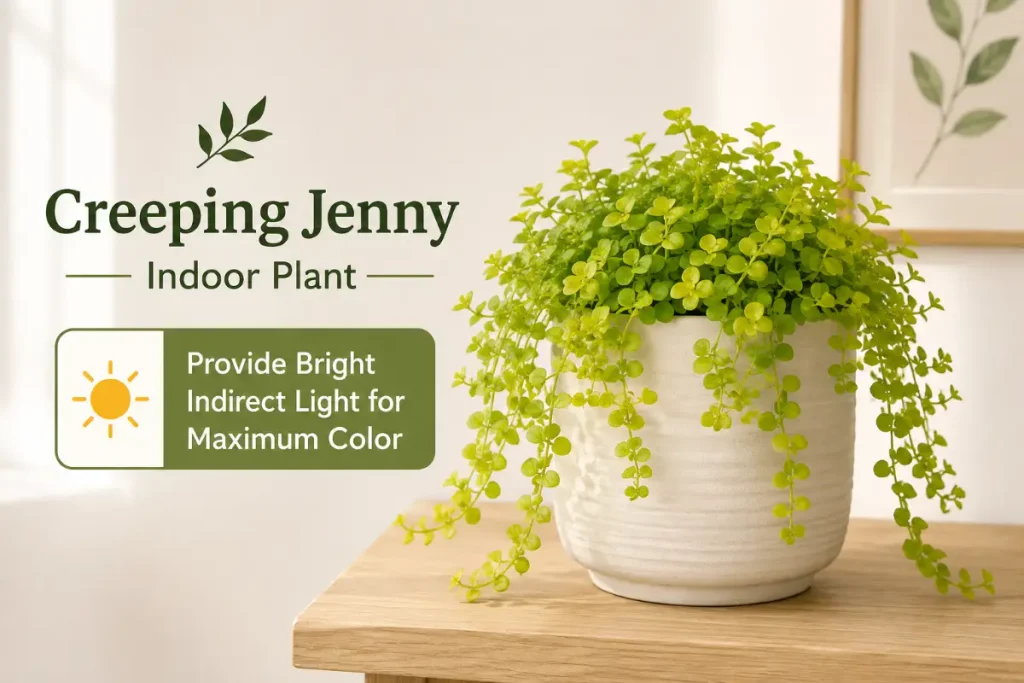
Step 1: Provide Bright Indirect Light for Maximum Color
Light drives the golden color intensity that makes creeping jenny worth growing indoors. The more light it receives within the indirect range, the more vivid the chartreuse to golden color. In insufficient light the color fades toward plain green within weeks.
What works: Bright indirect light from an east or west-facing window. A position near a south-facing window with some filtering to prevent direct afternoon sun scorching. The plant actually tolerates more direct sun than most tropical houseplants given its outdoor perennial nature, but indoor glass filtering makes most south-facing window positions appropriate rather than too intense.
What low light does: The golden and chartreuse colors fade toward plain medium green as the plant produces more chlorophyll to maximize light capture in dim conditions. A plant that was vivid gold at purchase can look like an ordinary green plant within a month in insufficient light.
Grow lights: Creeping jenny responds well to standard grow lights which provide the consistent bright light that maintains color intensity in spaces without adequate natural light. Running lights for twelve to fourteen hours daily sustains the golden color in interior positions.
Step 2: Keep It Cool
This is the most critical care difference between creeping jenny and the tropical plants that dominate this cluster. Creeping jenny is a cool-weather plant that performs better at temperatures most people find uncomfortably chilly.
Ideal temperature: 50 to 70 degrees Fahrenheit. The cooler end of this range produces the most vivid color, most compact growth, and the overall best plant health. Growth slows above 70 degrees and the plant shows stress above 75 degrees with increasingly leggy, pale growth.
The practical implication: The warm living rooms and heated bedrooms that suit tropical houseplants are not the best indoor environments for creeping jenny. The coolest bright room in the house, a cool sunroom, a bright enclosed porch that does not receive full heating, or a cool spare bedroom near a window provides more appropriate conditions.
Winter advantage: Creeping jenny is genuinely cold-hardy (to about -30 degrees Fahrenheit outdoors in some varieties) and handles the cool temperatures of winter indoor spaces that stress tropical plants. This makes it one of the few plants that actually benefits from the cooler indoor conditions of fall and winter rather than declining during that period.
Summer challenge: Summer warmth above 70 degrees is the most challenging period for indoor creeping jenny. In warm climates or warm rooms, moving it to the coolest available position with good light helps. Running air conditioning nearby on a low setting in a concentrated area is not practical for most situations, so accepting reduced performance in summer and planning for stronger growth in spring and fall is a realistic approach.
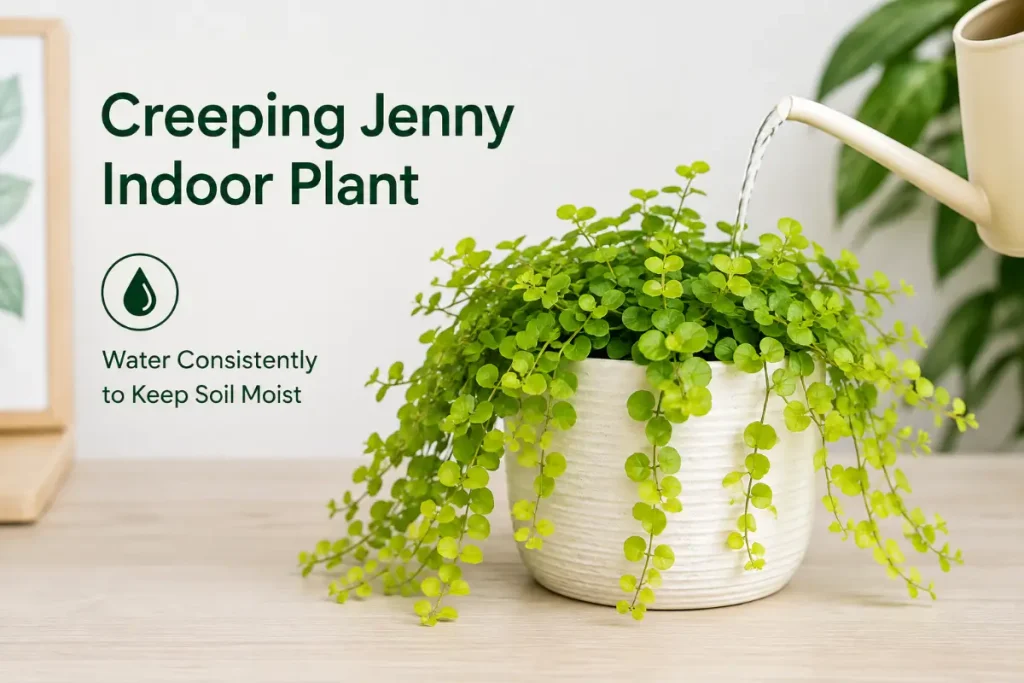
Step 3: Water Consistently to Keep Soil Moist
Creeping jenny comes from consistently moist meadow and woodland conditions and is among the thirstiest plants in this cluster. It wilts quickly when soil dries and recovers slowly from significant drought stress.
The correct approach: Water when the top half inch of soil feels dry. Given how fast creeping jenny wilts from underwatering and how slowly it recovers, checking every three to four days during the growing season and watering as soon as any dryness is detected at half an inch is appropriate.
The wilting risk: Creeping jenny wilts more dramatically and more rapidly than most other trailing plants. Even one significant drought event can cause leaf drop and stem die-back that takes several weeks to grow out of. Preventing drought entirely by checking frequently is more practical than responding to wilting.
Signs of overwatering: Yellow leaves starting from older growth. Stem sections that feel soft or mushy near the soil. Soil that remains wet for more than a week. Despite its high moisture preference, creeping jenny is susceptible to root rot in genuinely waterlogged conditions. Use pots with drainage holes and empty saucers promptly.
Water temperature: Use room temperature water rather than cold tap water. Cold water stresses the root system and can cause sudden wilting similar to drought stress in the sensitive root systems of moisture-loving plants.
Step 4: Maintain Moderate to High Humidity
Creeping jenny from moist European meadow and woodland habitats prefers consistently humid conditions. Its small coin-shaped leaves lose moisture relatively quickly to dry indoor air.
Target humidity: Above 50% is ideal. The plant tolerates the moderate humidity of most US homes without significant problems during spring, summer, and fall. The primary humidity challenge is winter when heating systems drop indoor humidity to 25 to 35%.
Signs of low humidity: Brown leaf edges and tips. Leaves that feel slightly papery rather than plump and flexible. In severe cases some leaf drop.
Effective solutions: A pebble tray with water beneath the pot. Regular misting every two to three days. Grouping with other plants to raise collective humidity. Given creeping jenny’s cool temperature preference, a cool-mist humidifier suits it better than a warm-mist humidifier in cool indoor positions.
Step 5: Fertilize Sparingly
Creeping jenny evolved in moderately nutrient-poor meadow conditions and does not need the heavy feeding that tropical houseplants require. Over-fertilizing produces the soft, pale, leggy growth that makes the plant less attractive rather than more vigorous.
What works: A light application of balanced fertilizer at quarter strength once a month through spring and summer only. This is significantly less than the biweekly half-rate application appropriate for heavy-feeding tropical plants and reflects creeping jenny’s lean-soil adaptation.
What to avoid: High-nitrogen fertilizers that drive soft vegetative growth. Monthly fertilizing at full strength or biweekly fertilizing at any rate. Both produce the pale, stretched growth that reduces color intensity and increases disease susceptibility in a cool-adapted plant.
Fall and winter: Stop fertilizing entirely. Creeping jenny often maintains slow growth through winter in cool, bright positions and does not need or benefit from supplemental nutrition during this period.
Step 6: Prune to Manage Vigorous Growth
Creeping jenny grows vigorously when conditions suit it and needs regular pruning to remain a manageable indoor plant rather than an overflowing mass of stems that spreads beyond its intended display area.
How to prune: Cut stems back to two to three inches from the soil or basket edge every three to four weeks through the growing season. Unlike some trailing plants where tip pinching is the primary technique, creeping jenny benefits from more aggressive stem shortening since its vigorous growth extends beyond pinching control quickly.
Maintaining display boundaries: In a hanging basket, allow stems to trail to the desired length and then trim back consistently to that length at each pruning session. The plant grows back to that length within three to four weeks and the regular trimming maintains a uniform, neat trailing display.
Rejuvenation: When a plant has become very dense or tangled, cut all stems back severely to within one to two inches of the soil. Creeping jenny regenerates from this level of cutting within two to three weeks and the resulting fresh growth is more uniform and vigorous than attempting to selectively thin an overcrowded established plant.
Step 7: Know When to Replace Versus Maintain
Creeping jenny is a perennial that theoretically lives indefinitely but performs best as a young vigorous plant rather than an aging one in indoor pot conditions. Understanding when to start fresh from new plants or cuttings versus when to maintain the existing plant makes long-term management more effective.
Signs the plant needs refreshing: Stems that have become very woody and produce sparse, small leaves despite adequate care. Color that does not return to full intensity despite improved light conditions. Growth that is consistently slow even in appropriate cool, bright conditions during spring and early summer.
Starting fresh options: Take stem cuttings four to six inches long and root them in consistently moist growing mix. Unlike truly tropical plants that root easily in water, creeping jenny roots best when cuttings are placed directly into moist soil or peat-perlite mix. Keep the rooting medium consistently moist and provide bright indirect light. Roots develop within two to three weeks.
The outdoor option: In USDA zones 3 through 8, creeping jenny is a perennial groundcover that can be planted outdoors after indoor use where it naturalizes and spreads vigorously in moist, shaded to partially shaded garden areas. It is considered invasive in some regions so check local guidelines before planting outdoors.
For the complete guide on propagating and managing trailing plants for indoor displays through multiple growing seasons, creeping charlie indoor plant covers the propagation and display management approach for a compatible trailing plant that shares many of creeping jenny’s care characteristics and pairs well with it in mixed cool-position displays.
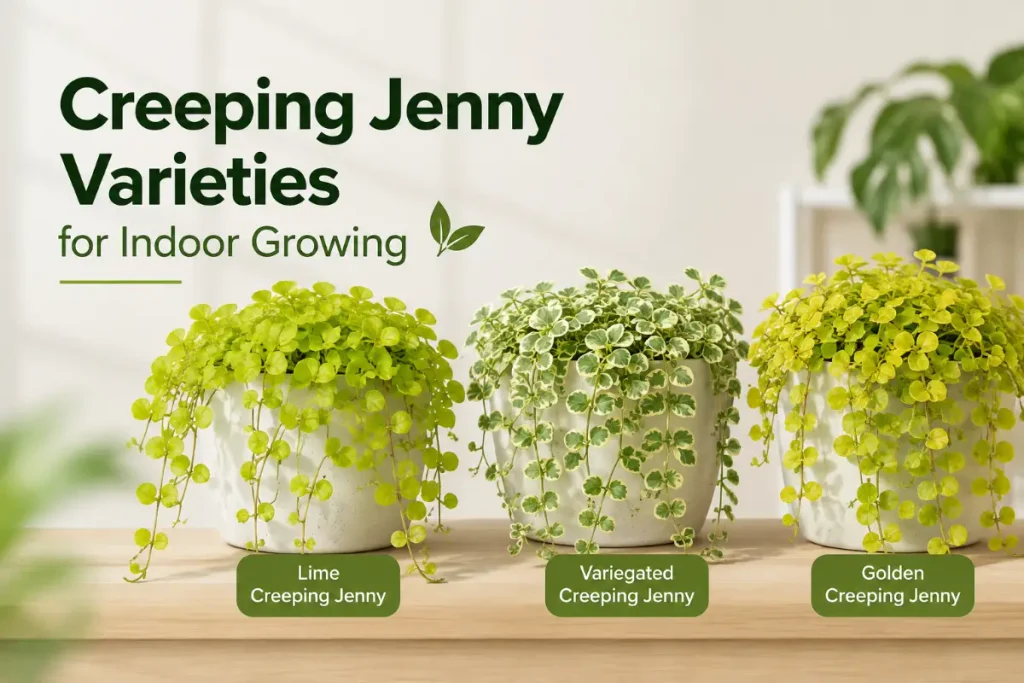
Creeping Jenny Varieties for Indoor Growing
Lysimachia nummularia ‘Aurea’ (golden creeping jenny) is the most commonly grown indoor variety with its lime green to gold leaf coloring that provides the unusual color that makes this plant distinctive. The color intensity depends on light: vivid gold in bright light, fading toward pale green in moderate light.
Lysimachia nummularia (standard green) is less commonly sold as an indoor plant but is more vigorous than the golden form and slightly more tolerant of lower light without significant color change since its color is consistently green.
Lysimachia congestiflora ‘Outback Sunset’ is a closely related species with similar care requirements but more compact growth and leaves marked with yellow centers and green margins. Less cold-hardy than standard creeping jenny but similarly suited to cool indoor environments.
For most indoor growing situations the golden variety is the more rewarding choice since its unusual color is the primary reason to grow it. The standard green form is a competent trailing plant but offers less visual distinctiveness compared to the many other green-leaved trailing options available.
Common Creeping Jenny Problems and Solutions
Color fading to plain green: Insufficient light. Move to brighter indirect light immediately. New growth in better light emerges with vivid color within two to three weeks.
Sudden wilting: Underwatering in almost all cases. Water immediately. Creeping jenny recovers from mild drought within two to four hours of watering. If wilting does not recover, check for root rot from chronic overwatering.
Leggy pale growth: Combination of warm temperatures and often insufficient light. Move to cooler, brighter position. The warm temperature component is often missed as a contributing cause since most plant owners focus on light alone when addressing legginess.
Brown leaf edges: Low humidity or cold draft exposure. Increase humidity with pebble tray and check for cold air sources. If browning is directional, a cold draft is the more likely cause. If distributed throughout the plant, low humidity is more likely.
Yellow leaves: Overwatering or natural aging of oldest growth. Adjust watering to allow more drying between sessions if the former is suspected. Single older leaf yellowing is normal.
Creeping Jenny in Mixed Cool-Position Displays
Creeping jenny’s cool temperature preference actually opens up growing opportunities in indoor spaces that are too cold for most tropical houseplants but not cold enough to harm cool-adapted plants. Understanding which plants share its cool temperature preference helps you create mixed displays that thrive together rather than requiring different care approaches for each specimen.
Compatible cool-position companions:
Cyclamen is one of the best companions for indoor creeping jenny since both prefer temperatures between 50 and 65 degrees Fahrenheit. A mixed display of golden creeping jenny trailing from the edges of a pot or basket with cyclamen blooming in cool vivid colors above creates one of the most visually striking cool-position indoor plant combinations available. Both benefit from the same bright indirect light, consistent moisture, and cool temperature conditions. For the complete cyclamen care guide that covers the specific cool-position requirements that creeping jenny shares, care for cyclamen plant indoors covers every detail of the cool-position care approach that applies equally to creeping jenny.
Azalea is another cool-preferring flowering plant that pairs well with creeping jenny in cool bright positions. The vivid flower colors of indoor azaleas contrast beautifully with creeping jenny’s golden foliage and both share a preference for slightly acidic, consistently moist, cool growing conditions.
Small fern varieties including maidenhair fern and button fern tolerate and prefer cooler conditions than most tropical ferns and share creeping jenny’s moisture requirements. A mixed basket with creeping jenny trailing over the edges and a small fern in the center creates a layered, textural display appropriate for cool sunrooms and enclosed porches.
Seasonal Care Timeline for Indoor Creeping Jenny
Spring (March through May): This is typically the period of best performance for indoor creeping jenny as temperatures are cool and day length is increasing. Growth accelerates in response to improving light while temperatures remain within the preferred cool range. Begin light monthly fertilizing in April once new growth is clearly active. Take cuttings in May from the most vigorous growth for propagation while the parent plant is performing at its best.
Summer (June through August): The most challenging period for indoor creeping jenny in most US climates where indoor temperatures commonly exceed the plant’s comfortable range. Move to the coolest available bright position. Reduce fertilizing or stop entirely since warm temperatures combined with fertilizer drive the soft leggy growth that reduces color intensity. Maintain consistent moisture since warm air increases transpiration. Accept somewhat reduced performance and plan for recovery in fall.
Fall (September through November): Performance improves as temperatures cool. Growth resumes vigorous color in response to cooler conditions even before significant light changes. This is often the second-best period of the year for indoor creeping jenny. Stop fertilizing in September. Maintain good light as days shorten.
Winter (December through February): In cool indoor positions between 50 and 65 degrees, creeping jenny can maintain acceptable growth through winter. In warmer rooms it may slow significantly. Reduce watering slightly as growth slows but never allow complete drying. No fertilizing. Maintain the best available light. This is the period when creeping jenny potentially outperforms many tropical plants that struggle with winter light reductions since it is adapted to cooler conditions rather than needing warmth to compensate for light deficiency.
Conclusion
Creeping jenny indoor plant care is most successful when you respect its cool-season outdoor perennial origin rather than treating it like a tropical houseplant. Cool temperatures between 50 and 70 degrees are not just tolerated but actively preferred. Consistent moisture that prevents any significant drought. Bright indirect light for the vivid golden color that distinguishes this plant. Sparse fertilizing that reflects its lean-soil adaptation. Regular pruning to manage vigorous growth within display boundaries.
The indoor environments where creeping jenny performs best, cool sunrooms, enclosed porches, and cool spare bedrooms near bright windows, are the same environments where many other houseplants struggle. This makes it a useful and distinctive addition to cool indoor growing spaces where tropical plants would require careful temperature management. In those conditions, its unusual golden color, fast growth, and neat trailing habit produce one of the most visually distinctive indoor plant displays available.
Frequently Asked Questions
Why is my creeping jenny losing its golden color indoors?
Golden creeping jenny fades toward plain green in insufficient light. Move to a brighter position with more bright indirect light and new growth will emerge with vivid gold color within two to three weeks. Already-faded leaves will not recover their color but new growth in better light shows full color intensity. Warm temperatures above 70 degrees also reduce color intensity even in adequate light, so checking both light and temperature as contributing causes produces faster resolution.
How often should I water creeping jenny indoors?
Check soil moisture every three to four days and water when the top half inch feels dry. Creeping jenny wilts more rapidly and recovers more slowly from drought than most other trailing plants. In a bright cool position this might mean watering every four to five days in summer and every six to seven days in winter. Consistent moisture maintenance preventing any significant drying is more important for creeping jenny than for drought-tolerant plants.
Can creeping jenny survive warm indoor temperatures?
It survives but does not thrive in warm conditions above 70 degrees. Growth becomes leggy and pale. Color intensity decreases. The plant is most vigorous and most attractively colored in cool conditions between 50 and 70 degrees. For indoor growing in warm climates or warm rooms, accept reduced performance in summer and plan for stronger growth in spring and fall when temperatures are more appropriate.
How do I propagate creeping jenny indoors?
Take stem cuttings four to six inches long and place directly into consistently moist growing mix rather than rooting in water as with many tropical plants. Keep the rooting medium consistently moist and provide bright indirect light. Roots develop within two to three weeks. Alternatively, trail stems over the edge of the pot and allow them to contact moist soil in an adjacent pot where they root naturally from the nodes.
Is creeping jenny toxic to pets?
Lysimachia nummularia is generally not considered significantly toxic to cats and dogs. However, as with any plant, ingestion of large amounts can cause gastrointestinal upset in sensitive animals. Consult the ASPCA database for the most current toxicity information. The plant’s small coin-shaped leaves and trailing habit make it physically accessible to pets that interact with floor-level plants.
Can I plant indoor creeping jenny outside?
Yes, in USDA hardiness zones 3 through 8 where it naturalizes as a perennial groundcover. It spreads vigorously in moist, shaded garden conditions. Check local invasive species guidelines before planting outdoors since Lysimachia nummularia is considered invasive in some regions. The golden variety is somewhat less vigorous than the standard green form and correspondingly less likely to spread problematically in garden conditions.