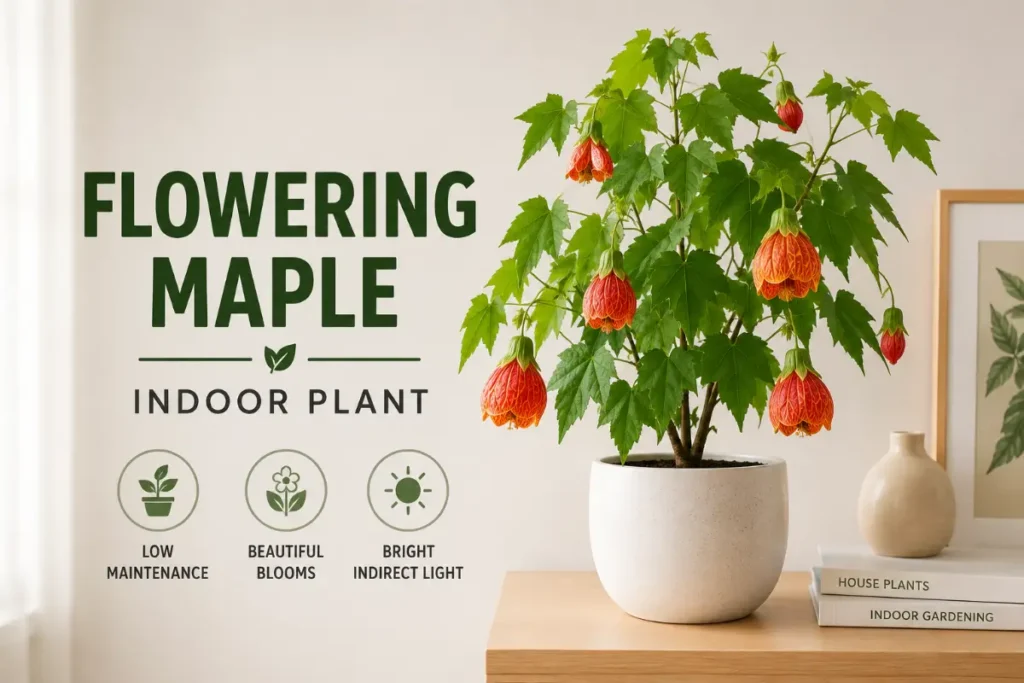
The flowering maple indoor plant is one of the most underrated continuously blooming houseplants available. Abutilon hybridum, commonly called flowering maple, Chinese lantern, or parlor maple, produces pendant bell-shaped flowers in red, orange, yellow, pink, and white on arching stems throughout most of the year in good indoor conditions. It is not a true maple but earns the name from its distinctively maple-shaped leaves that give the plant a familiar, friendly appearance alongside its exotic, colorful blooms.
What makes flowering maple genuinely impressive as an indoor plant is its ability to bloom almost continuously from spring through fall without the complex dormancy management required by seasonal bloomers like cyclamen and azalea. A well-cared-for flowering maple in a sunny window can produce hundreds of flowers over a single growing season, making it one of the highest-output blooming houseplants available at any price point.
Quick Answer
Flowering maple indoor plant care requires the brightest possible light, ideally four to six hours of direct sun through a south-facing window, consistent moisture keeping the top inch moist, temperatures between 55 and 75 degrees Fahrenheit with slightly cool nights that encourage continuous bloom, moderate to high humidity above 50%, fertilizing every two weeks through spring and summer with a high-phosphorus formula, and regular pruning every four to six weeks to prevent the legginess that reduces both appearance and flowering.
Understanding Flowering Maple
Abutilon hybridum belongs to the mallow family (Malvaceae) and is native to tropical and subtropical regions of South America where it grows as a large shrub or small tree in warm, partially shaded to full sun conditions with moderate rainfall. The genus name Abutilon comes from the Arabic word for a type of mallow plant and the group includes over 200 species with a wide range of growth habits and flower forms.
The varieties most commonly sold as indoor plants are compact hybrid selections bred specifically for pot culture, producing smaller plants with more abundant flowers than wild species. The pendant bell-shaped flowers with their characteristic tissue-paper petal texture and prominent central staminal column are unmistakably recognizable and unlike the flowers of any other commonly grown houseplant.
The maple-like leaf shape comes from the broadly lobed, slightly hairy leaves that bear a genuine resemblance to maple leaves in overall form, giving the plant a non-tropical appearance that suits a wider range of interior styles than obviously tropical plants.
Step 1: Provide Maximum Available Light
Light is the primary driver of flower production in flowering maple and the factor most directly responsible for whether the plant produces the continuous bloom it is capable of or a sparse, disappointing handful of flowers on a leggy green plant.
What it needs: Four to six hours of direct sunlight daily through a south or west-facing window. Flowering maple is one of the more light-demanding commonly grown indoor flowering plants and its bloom production scales directly with light quality. More direct sun produces more flowers with richer color.
Bright indirect light as a minimum: In positions where direct sun is unavailable, very bright indirect light close to a south-facing window maintains acceptable bloom production, though less abundantly than in direct sun. In medium indirect light, bloom production drops significantly and the plant becomes primarily a foliage plant rather than the continuous bloomer it can be in good light.
The outdoor summer advantage: Moving flowering maple outdoors for summer in a bright partially shaded position produces dramatically more vigorous growth and more abundant bloom than indoor growing alone. The higher natural light intensity outdoors, even in partial shade, exceeds what most indoor windows provide and produces the most impressive bloom performance of the year.
Grow lights: A high-output LED grow light running fourteen hours daily supplements natural light effectively for flowering maple in homes without adequate south-facing window exposure. Flowering maple under grow lights producing adequate intensity maintains continuous bloom year-round that natural indoor light in most homes cannot achieve through the shorter days of fall and winter.
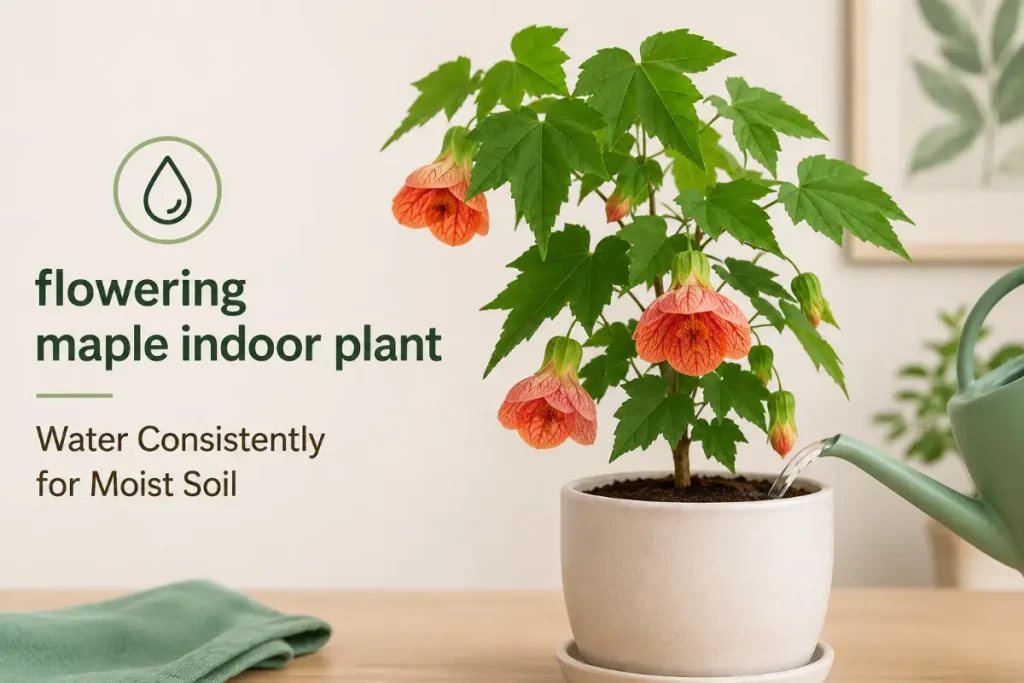
Step 2: Water Consistently for Moist Soil
Flowering maple prefers consistently moist soil and wilts quickly when underwatered, with wilting causing bud and flower drop that takes weeks to recover from as new buds develop to replace those lost.
The correct approach: Water when the top inch of soil feels dry. In a bright sunny position during summer this typically means every five to seven days. In lower light or winter every seven to ten days. The plant’s active flowering through most of the year means water demand stays higher than for non-flowering plants across more months.
Bud and flower drop from drought: Flowering maple is among the plants most sensitive to drought stress during the bloom period. Even a single significant drying-out event causes the plant to drop existing buds and open flowers as a water conservation measure. The lost buds take two to four weeks to replace as new buds develop. Preventing drought entirely is more practical than managing the recovery from it.
Signs of overwatering: Yellow lower leaves progressing upward. Soft, mushy stem sections near soil. Musty smell from the pot. Root rot in flowering maple progresses at a moderate rate but causes the wilting and decline that owners often misattribute to underwatering, leading to more watering that worsens the problem.
Drainage: Always use pots with drainage holes. Empty saucers within thirty minutes of watering. Flowering maple in a pot without drainage or sitting in standing water develops root problems within months regardless of other care quality.
Step 3: Maintain Cool to Moderate Temperatures
Flowering maple produces the most continuous and most abundant bloom in conditions slightly cooler than what most warm-loving tropical plants prefer. This temperature preference is one of the key distinctions that makes this plant suitable for positions that are slightly too cool for true tropical houseplants.
Ideal range: 55 to 75 degrees Fahrenheit. The plant actively grows and blooms throughout this range.
The cool night advantage: Flowering maple produces the most abundant bloom when nights are noticeably cooler than days, between 55 and 60 degrees ideally. This day-night temperature differential replicates the natural subtropical conditions the plant evolved in and specifically encourages the flowering response. A plant that experiences 70-degree days and 58-degree nights typically produces more flowers than the same plant in a consistently 70-degree environment.
Above 80 degrees: Bloom production drops noticeably in consistently warm conditions above 80 degrees. The plant continues growing but redirects energy from reproductive to vegetative growth in sustained heat. Moving to a slightly cooler position or running air conditioning nearby improves bloom in overheated indoor environments.
Cold sensitivity: Below 45 degrees the plant shows stress and potential frost damage. It is not frost-hardy but handles the cool conditions of early spring and fall outdoors in most US climates without damage.
Step 4: Maintain Moderate to High Humidity
Flowering maple prefers moderate to high humidity and produces better flower quality with fewer dropped buds in humid conditions than in the dry air of heated winter homes.
Target humidity: Above 50% for best flower quality and reduced bud drop. The thin, tissue-paper-textured petals of Abutilon flowers are particularly susceptible to the desiccation in dry air that causes petal browning at the edges before flowers reach full maturity.
Effective solutions: A pebble tray with water beneath the pot. A humidifier running nearby during winter heating season. Grouping with other tropical plants to raise collective humidity through combined transpiration.
The bud drop connection: Low humidity below 40% causes bud drop in flowering maple through the same mechanism as drought stress. The thin petal tissue of developing buds loses moisture to dry air faster than the plant can supply it, causing bud abortion before flowers open. Maintaining humidity above 50% alongside consistent soil moisture addresses both causes of bud drop simultaneously.
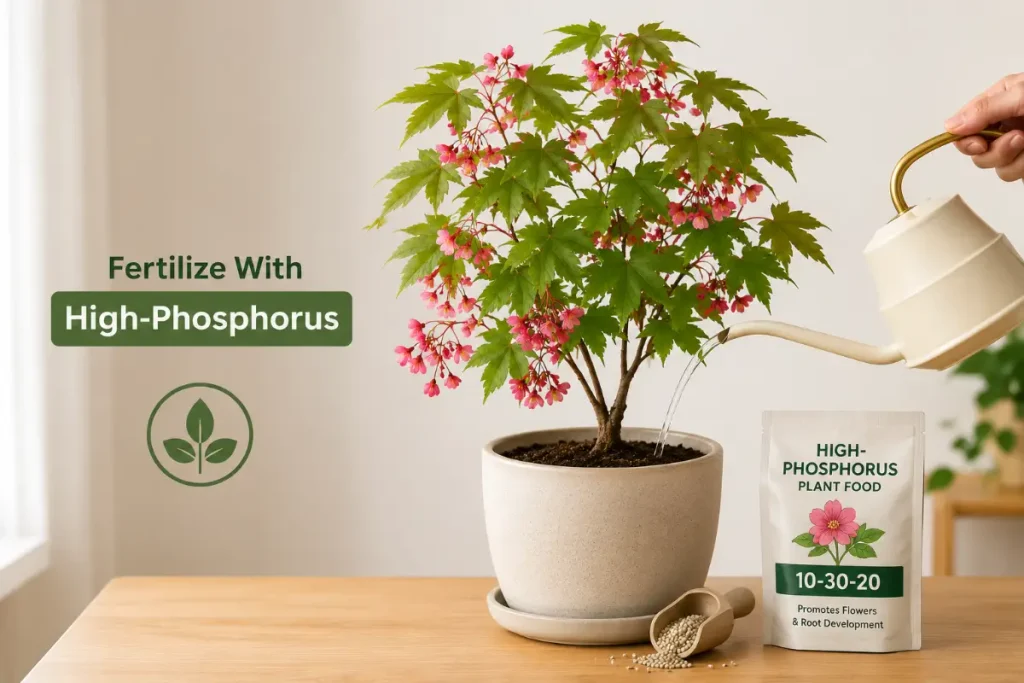
Step 5: Fertilize With High-Phosphorus Formula for Continuous Bloom
Continuous bloom production is nutritionally demanding. Flowering maple needs consistent fertilizing specifically targeted at bloom support rather than the general balanced fertilizing appropriate for foliage plants.
What to use: A fertilizer with elevated phosphorus (the middle NPK number) such as 5-10-5, 10-30-10, or a product specifically marketed for flowering and blooming plants. Phosphorus is the primary nutrient that supports flower initiation and development in plants, and flowering maple’s near-continuous bloom production makes phosphorus support consistently important through the entire growing season.
How often: Every two weeks through spring and summer. Flowering maple’s high bloom output requires more consistent nutrition than sporadic seasonal bloomers that only flower for a few weeks.
Organic phosphorus sources: Bone meal incorporated into the potting mix at potting time provides slow-release phosphorus. Banana peel water applied every two to three weeks alongside regular fertilizing provides potassium alongside the phosphorus from the fertilizer program. For the complete guide to natural phosphorus-supporting fertilizer options for continuously blooming plants, natural fertilizer for indoor plants covers every effective approach with timing guidance specific to heavy-blooming plants.
Fall and winter: Reduce to monthly feeding in fall. Stop entirely if growth slows significantly through the darkest winter months. Resume in late winter as day length increases and growth resumes.
Step 6: Prune Regularly to Maintain Compact Blooming Growth
This is the care step most critical to long-term flowering maple appearance and the one most commonly skipped with the most damaging consequences. Flowering maple is a fast-growing shrub that becomes leggy, sparse, and less floriferous within months without regular pruning.
Why pruning matters for bloom: Flowers are produced on new growth. A plant that has been pruned regularly produces more new growth simultaneously across more stems than an unpruned plant, resulting in significantly more flowers at any given time. Pruning is both aesthetic and productive.
How to prune: Cut stems back by one-third of their length every four to six weeks through the growing season. Cut just above a leaf node where new growth will emerge. The plant produces two new flowering shoots from the node below each cut within ten to fourteen days.
More aggressive rejuvenation: When a plant has become significantly leggy, cut all stems back to within four to six inches of the soil. Flowering maple regenerates vigorously from this level of pruning within three to four weeks with fresh, compact, heavily flowering new growth that is often more impressive than the plant was before the hard prune.
Pinching new growth: In addition to regular stem cutting, pinching the growing tips of new shoots as they emerge from previous cut points produces even more branching and more flower production per stem. This pinching approach creates the densest, most floriferous plant form but requires the most frequent management, approximately weekly attention during peak growth.
Step 7: Manage Pests Proactively
Flowering maple attracts several specific pest species that take advantage of its soft stems and abundant flowers.
Whiteflies are the most common and most problematic pest on indoor flowering maple. Tiny white flying insects that cloud up when the plant is disturbed, whiteflies feed on leaf undersides and excrete sticky honeydew that encourages sooty mold growth on leaves. Yellow sticky traps catch adult whiteflies. Neem oil spray every seven days for three to four weeks handles active infestations. The systemic insecticide imidacloprid applied as a soil drench provides longer-lasting control in persistent infestations.
Spider mites appear in dry winter conditions. The stippling and fine webbing patterns of mite damage on upper leaf surfaces indicate active infestation. Neem oil spray every seven days for three weeks. Increasing humidity above 50% prevents establishment.
Aphids cluster on new growth and developing buds where sap concentration is highest. A firm spray of water dislodges colonies. Follow with neem oil spray if populations persist. For the complete treatment approach for aphids and soft-bodied pests on flowering houseplants, how to get rid of aphids on indoor plants covers every effective method with the escalation from manual removal through organic treatment.
Scale insects occasionally appear on stems as small brown or tan bumps. Remove manually with rubbing alcohol and follow with neem oil spray weekly for three weeks.
Flowering Maple Varieties Worth Growing
The Abutilon hybridum category includes dozens of named varieties with different flower colors, growth habits, and leaf patterns.
Solid-colored flower varieties: Bella series, Savitzii, and many unnamed varieties produce flowers in single colors including red, orange, yellow, pink, and white. Solid colors show most vividly in good light and are the most commonly available at garden centers.
Bicolor varieties: Some varieties produce flowers with contrasting colors such as red petals with yellow veining or orange with darker veining that creates a striped or painted appearance inside the bell.
Variegated leaf varieties: Abutilon pictum ‘Thompsonii’ produces leaves mottled with yellow-green variegation caused by a virus that is stable and harmless in this cultivar. The combination of variegated foliage and orange flowers makes it one of the most visually complex varieties available.
Trailing varieties: Some Abutilon selections have a more lax, trailing growth habit suited to hanging baskets where the pendant bell-shaped flowers can be viewed from below, which shows their full structure most clearly.
Flowering Maple Outdoors in Warm Climates
In USDA zones 9 through 11, flowering maple grows as a large outdoor shrub reaching six to twelve feet in height with continuous bloom throughout the warm months. In these climates it is most commonly grown as a garden shrub rather than a houseplant, which gives indoor growers in cooler climates context for the vigorous growth potential they are managing in a pot.
For indoor growers in cooler climates, moving flowering maple outdoors for summer in a partially shaded position produces the most impressive bloom of any season. The plant grows vigorously outdoors and may need more frequent pruning than indoors to remain manageable. Bring back inside before the first frost.
Conclusion
Flowering maple indoor plant care rewards the grower who provides maximum available light and consistent biweekly fertilizing with a phosphorus-forward formula. These two factors, more than any others, determine whether flowering maple delivers the near-continuous colorful bloom display it is capable of or a disappointing handful of flowers on a leggy green plant.
Four to six hours of direct sun. Consistent moisture preventing both drought and waterlogging. Slightly cool nights for maximum flower production. Humidity above 50%. Biweekly high-phosphorus fertilizing. Regular pruning every four to six weeks. And proactive weekly pest inspection for whiteflies and spider mites.
Those seven practices produce the near-continuous bell-shaped flower display in red, orange, yellow, pink, or white that makes flowering maple one of the most productive and most underappreciated continuously blooming houseplants available. For any plant owner looking for an indoor plant that flowers abundantly through most of the year without complex seasonal management, flowering maple is one of the most compelling answers.
Frequently Asked Questions
Why is my flowering maple not blooming indoors?
Insufficient light is the most common cause of poor or absent blooming in indoor flowering maple. The plant produces flowers most abundantly in four to six hours of direct sun daily. In bright indirect light blooming is reduced. In medium or low indirect light it may produce only foliage. Move to the brightest available position immediately. Phosphorus deficiency from using a nitrogen-heavy fertilizer or no fertilizer is the second most common cause. Switch to a phosphorus-forward fertilizer applied every two weeks.
How often should I water a flowering maple indoors?
Water when the top inch of soil feels dry, typically every five to seven days in a bright sunny position during summer and every seven to ten days in lower light or winter. Flowering maple wilts quickly from underwatering and drops buds and flowers in response to drought stress. Preventing any significant drying between waterings is more effective than responding to wilting after it occurs.
Why does my flowering maple keep dropping buds?
Bud drop in flowering maple has three primary causes: drought stress from underwatering, low humidity below 40%, and sudden temperature changes from drafts or moving the plant. Check soil moisture first since drought is the most common cause. If moisture is adequate, increase humidity with a pebble tray or humidifier. Check for cold draft sources from windows or vents if drops occur after environmental changes.
How do I keep flowering maple from getting leggy?
Prune stems back by one-third of their length every four to six weeks through the growing season, cutting just above a leaf node. Each cut produces two new flowering shoots creating a progressively more compact and floriferous plant over multiple pruning sessions. For already-leggy plants, cut all stems back to within four to six inches of the soil. The plant regenerates vigorously within three to four weeks with fresh compact growth that blooms more abundantly than the leggy stems it replaced.
Can flowering maple grow outdoors in summer?
Yes, in any US climate after the last frost date when nighttime temperatures stay above 45 degrees. Move outdoors to a bright partially shaded position, acclimating gradually over two weeks. The higher natural light intensity outdoors produces dramatically more vigorous growth and more abundant bloom than indoor growing alone. Bring back indoors before the first fall frost. In USDA zones 9 through 11 it can be grown as a permanent outdoor shrub.
Is flowering maple toxic to pets?
Abutilon species are not listed among the most commonly toxic plants to cats and dogs. The plant is considered generally non-toxic though any plant material ingested in quantity can cause gastrointestinal upset in sensitive animals. Consult the ASPCA database for the most current toxicity information on specific Abutilon varieties. The pendant bell-shaped flowers hang at accessible heights in most indoor displays and pets that interact with the plant may consume fallen petals, which are not considered significantly toxic.