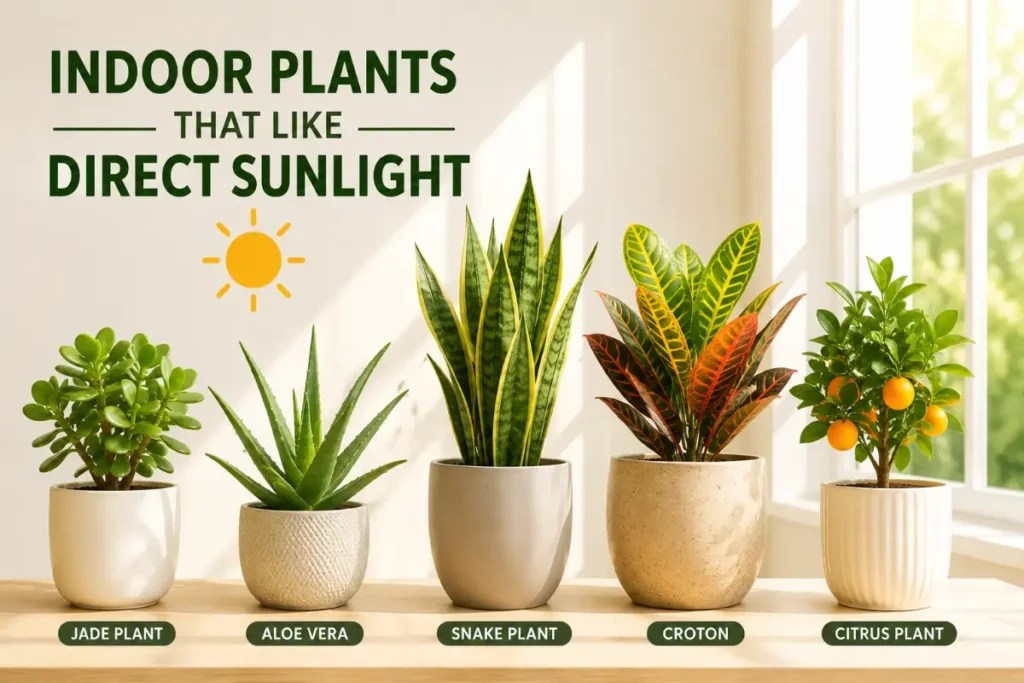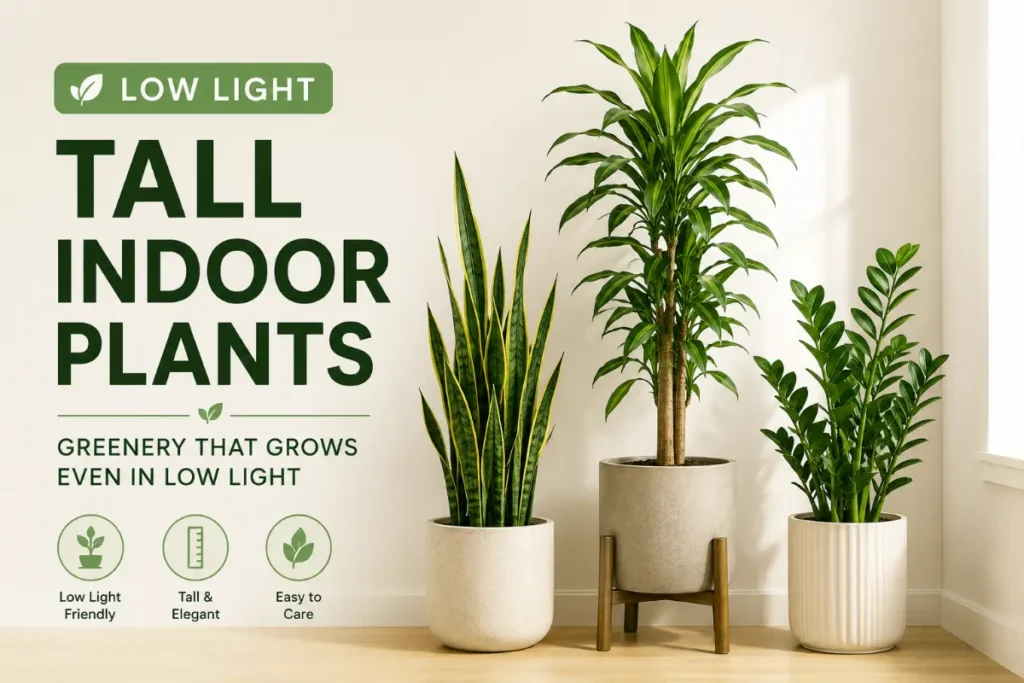
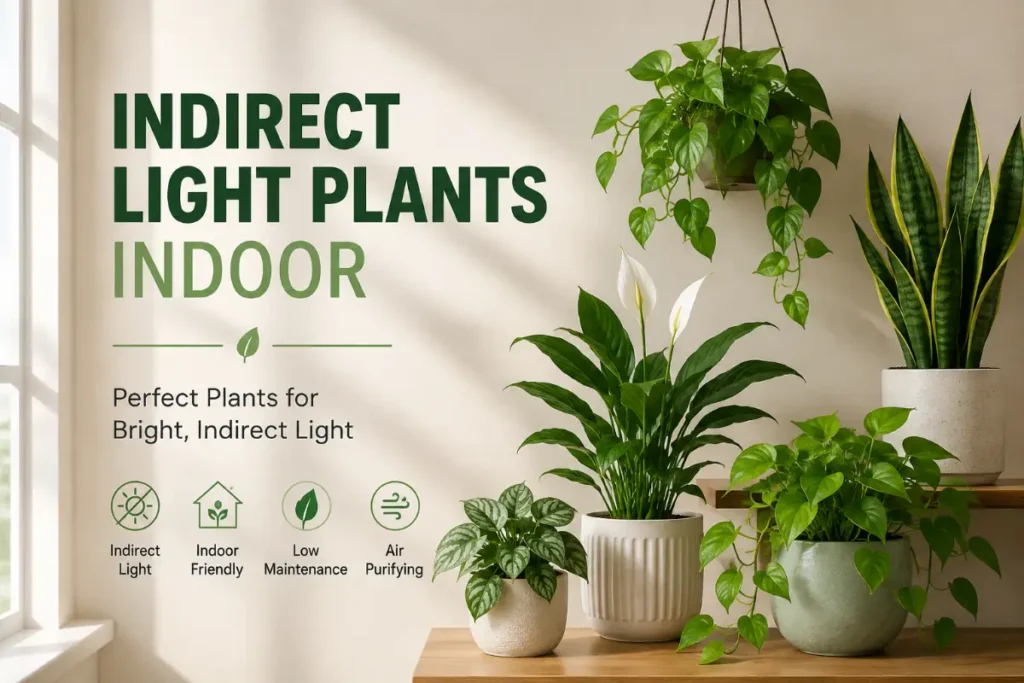
Indirect light plants indoor represent the largest and most diverse category in houseplant growing because indirect light, whether bright or moderate, describes the conditions in the majority of indoor spaces in most US homes. No direct sun rays touching the plant, but plenty of ambient light from nearby windows, reflected light from walls and surfaces, or the diffuse light of a room with good natural light access without south-facing window exposure.
Understanding indirect light as a spectrum from very bright to quite dim within the same category helps you choose more precisely than the broad “indirect light” label on most plant tags suggests. A fiddle leaf fig and a pothos are both described as indirect light plants but perform very differently in the same dim north-facing room. This guide covers the full range from plants that need bright indirect light to those that genuinely thrive in medium indirect light, with specific guidance on which position suits each.
Quick Answer
The best indirect light plants indoor include pothos, snake plant, ZZ plant, peace lily, Chinese evergreen, heartleaf philodendron, spider plant, rubber plant, fiddle leaf fig, dracaena, cast iron plant, and monstera. These plants grow in bright to medium indirect light without needing direct sun through a window, making them suitable for east-facing windows, rooms away from south-facing windows, and well-lit interior spaces.
Understanding the Indirect Light Spectrum
Indirect light covers a wide range that matters more to plant success than most guides acknowledge. Three distinct levels within the indirect light category produce meaningfully different results.
Bright indirect light: The plant is close to a bright window but direct sun rays do not touch it. An east-facing window. A position a few feet from a large south-facing window with some filtering. This is high-quality indirect light that suits the most demanding plants in this guide including fiddle leaf fig and rubber plant.
Medium indirect light: Comfortable ambient room light from visible windows in the same or adjacent room. No direct sun access. North-facing windows. Interior positions with good ambient light. Most tropical houseplants grow acceptably here, though more slowly than in bright indirect light.
Low indirect light: A dim corner with distant window access. Hallways. Rooms with small or obscured windows. Only the most shade-tolerant plants in this guide, including cast iron plant, ZZ plant, and snake plant, maintain themselves here. Most other indirect light plants decline in low indirect light over weeks to months.
Matching the plant to the specific level of indirect light in your space produces better results than treating all indirect light as equivalent.
1. Pothos (Epipremnum aureum)
Pothos is the most light-flexible houseplant commonly available, growing in conditions from bright indirect light down to very low indirect light. In bright indirect light it produces vigorous trailing growth with large, well-spaced leaves. In lower light growth slows and leaves stay smaller and more widely spaced.
The variegation in golden, marble queen, and neon varieties depends heavily on light level. In bright indirect light variegation is vivid and well-defined. In low indirect light variegation fades toward solid green as the plant maximizes chlorophyll production for light capture. For positions with lower light, choosing the solid neon pothos or green pothos maintains consistent color better than the variegated varieties.
Best position: Bright to medium indirect light for best performance. Tolerates low indirect light longer than almost any other trailing plant.
Care: Water when the top inch of soil dries out. Trail from elevated positions or train upward on a moss pole. Clean large leaves periodically to remove dust accumulation that reduces photosynthetic efficiency particularly in lower-light positions.
2. Snake Plant (Sansevieria / Dracaena trifasciata)
Snake plant tolerates the widest light range of any upright houseplant commonly available, from bright indirect light through genuine low light. In bright indirect light it grows steadily and produces new leaves regularly. In low indirect light growth slows to near zero but the plant holds its appearance and health for months.
The upright, sword-shaped leaf form in green, grey-green, and yellow-edged varieties creates strong architectural presence in indirect light positions where most upright plants would become leggy or sparse. Varieties range from compact six-inch birds nest forms to dramatic six-foot column varieties.
Best position: Bright to medium indirect light for active growth. Tolerates low indirect light better than any other upright houseplant of comparable visual impact.
Care: Water when the top two to three inches of soil feel completely dry. Overwatering is the primary killer of snake plant. Monthly fertilizing through spring and summer. Virtually pest-free.
3. ZZ Plant (Zamioculcas zamiifolia)
ZZ plant’s glossy, dark green pinnate leaves on arching stems create a polished, contemporary aesthetic that suits indirect light positions across a wide range of interior styles. The rhizomatous roots store significant water and nutrients, giving ZZ plant one of the longest drought tolerances and one of the most genuine low-light capacities of any plant in this guide.
In bright indirect light ZZ plant grows steadily and produces new stems regularly. In low indirect light growth slows significantly but the plant maintains its appearance and health through its stored reserves.
Best position: Bright to medium indirect light for active growth. One of the most reliable choices for medium to low indirect light positions where most other plants would decline.
Care: Water when the top two to three inches of soil are completely dry. Root rot from overwatering in lower-light positions where water uptake is slow is the most common problem. Monthly fertilizing through the growing season.
4. Peace Lily (Spathiphyllum)
Peace lily is the only plant in this guide that reliably flowers in indirect light including medium indirect light positions, which makes it unique among indirect light houseplants. The white spathe flowers appear consistently without the direct sun that most flowering plants need, providing blooming color in north-facing rooms, shaded east-facing windows, and interior positions where no other flowering plant would perform.
Large varieties reach three to four feet with a spreading, lush form that fills dim corners effectively. The leaves droop noticeably when thirsty and recover completely after watering, providing one of the clearest water need indicators of any plant in this guide.
Best position: Medium to bright indirect light. Flowers most abundantly in the brighter end of its range but blooms reliably across the full indirect light spectrum.
Care: Water when the first softening of leaves begins, just before the dramatic droop that makes peace lily’s thirst so obvious. Peace lily in indirect light uses significantly less water than the same plant near direct sun. For the complete guide to peace lily including its documented benefits, peace lily indoor plant benefits covers every consideration.
5. Chinese Evergreen (Aglaonema)
Chinese evergreen varieties provide one of the clearest illustrations of the color-to-light relationship within the indirect light category. Green and silver varieties genuinely tolerate low to medium indirect light. Red, pink, and orange varieties need bright indirect light to maintain their coloration and decline in lower light.
This makes Chinese evergreen a versatile group for matching to specific indirect light levels: choose the greenest variety for the dimmest position, and the most colorful variety for the brightest indirect position.
Growth is compact and bushy, reaching two to four feet, with a density that fills corners and lower shelves more effectively than tall, architectural plants.
Best position: Green and silver varieties for medium to low indirect light. Red and pink varieties for bright indirect light only.
Care: Water when the top inch of soil feels dry. Keep above 60 degrees. Cold drafts cause immediate leaf browning. Minimal fertilizing every four to six weeks through the growing season.
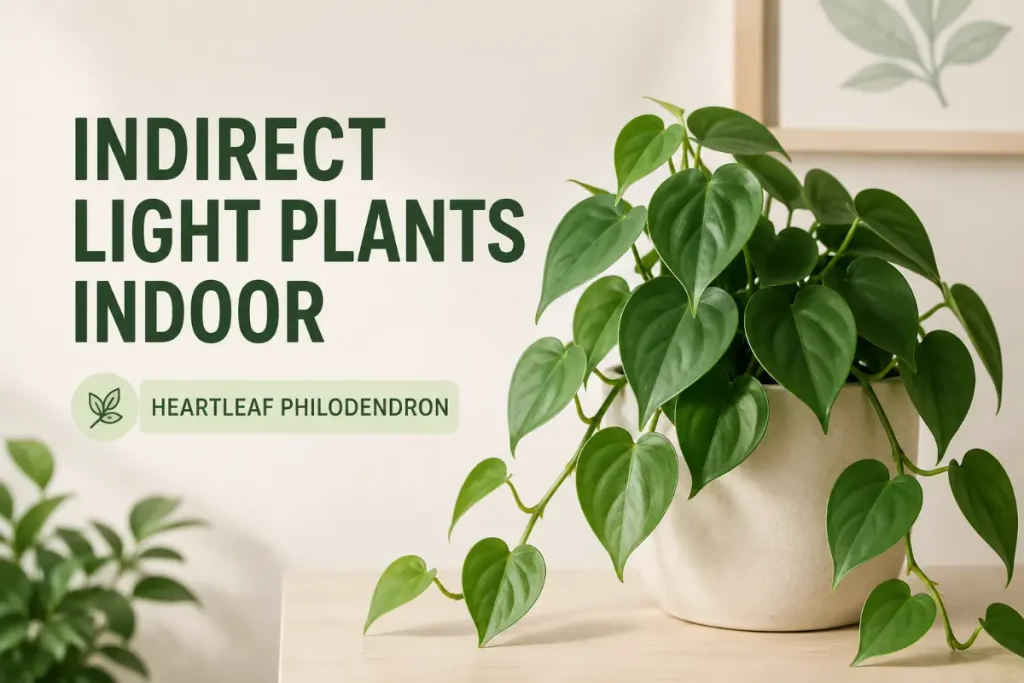
6. Heartleaf Philodendron (Philodendron hederaceum)
Heartleaf philodendron is one of the most reliably forgiving trailing plants for indirect light and significantly more shade-tolerant than many other popular trailing houseplants. Its glossy, heart-shaped leaves trail or climb and maintain good appearance in medium indirect light without the rapid etiolation that affects more demanding trailing plants.
In bright indirect light heartleaf philodendron grows vigorously with closely spaced, large leaves. In medium indirect light growth slows but the plant remains healthy and continues trailing or climbing persistently.
Best position: Medium to bright indirect light. Handles the lower end of the medium indirect range better than most other trailing plants.
Care: Water when the top inch feels dry. Train upward on a moss pole for dramatically larger leaves than trailing produces. Minimal fertilizing through the growing season. Very low pest pressure in most indoor environments.
7. Spider Plant (Chlorophytum comosum)
Spider plant’s arching, variegated leaves and cascading runners of baby plantlets create one of the most charming indirect light displays available at any price point. Its forgiving nature and near-indestructibility make it one of the most commonly recommended starter plants for indirect light positions including offices, kitchens, and bedrooms.
In bright indirect light spider plant produces vigorous growth and abundant runners. In medium indirect light it grows more slowly but maintains its characteristic form and continues producing occasional runners. Variegation fades toward solid green in low indirect light.
Best position: Bright to medium indirect light for best appearance and runner production. The green variety without white marking maintains better appearance in lower light than the variegated forms.
Care: Water when the top inch of soil dries out. Remove brown tips with clean scissors cutting at an angle to maintain a natural appearance. Propagate freely from the plantlets on runners by placing them in water or moist soil. One of the most propagation-friendly plants available for indirect light positions.
8. Rubber Plant (Ficus elastica)
Rubber plant is the most dramatic large-leaved plant for bright indirect light positions, producing large, glossy leaves in dark green, burgundy, or variegated combinations on upright stems that reach six to ten feet over several years in appropriate conditions.
Unlike fiddle leaf fig which has a reputation for difficulty, rubber plant is relatively forgiving of imperfect conditions while still requiring bright indirect light for the vigorous growth and rich leaf color that makes it so visually impressive. It handles the transition to a new position better than fiddle leaf fig and drops fewer leaves from environmental changes.
Best position: Bright indirect light. Does not perform well in medium or low indirect light where it becomes sparse and new leaves stay small.
Care: Water when the top two inches of soil feel dry. Wipe large glossy leaves monthly to remove dust. Keep away from cold drafts. Does best with consistent temperature without large fluctuations. For complete guidance on choosing between rubber plant and the more demanding fiddle leaf fig for a bright indirect position, the care approach for rubber plant is more forgiving at every step.
9. Fiddle Leaf Fig (Ficus lyrata)
Fiddle leaf fig has become one of the most photographed houseplants in interior design over the past decade for the striking visual impact of its large, violin-shaped leaves on upright stems. It genuinely delivers on that visual promise in the right position but is significantly more demanding than most other plants in this guide.
Bright indirect light from an east or north-facing window, or filtered light from a south or west-facing window, is the correct position. Too much direct sun bleaches the leaves. Too little light causes rapid leaf drop. The plant is notorious for dropping leaves from any significant environmental change including repotting, position changes, or even rotating it to face a different direction.
Best position: Bright indirect light consistently. This plant rewards a committed position near a good window and punishes frequent moving.
Care: Water when the top two inches of soil feel dry. Wipe leaves monthly. Maintain consistent temperature above 60 degrees. Avoid cold drafts. Fertilize every two weeks through spring and summer. Do not move once it has acclimated to a position unless necessary. For guidance on the arrowhead plant which suits similar bright indirect positions with far more flexibility than fiddle leaf fig, arrowhead plant care indoors covers a comparable aesthetic option with significantly more forgiving care requirements.
10. Dracaena Varieties
Dracaena covers a range of species and varieties most suited to indirect light positions from bright to medium. Mass cane (Dracaena fragrans ‘Massangeana’) and corn plant bring large, dramatic tropical presence. Marginata (Dracaena marginata) creates a striking tree-like form with spiky, colored-edged leaves. Janet Craig in solid dark green is the most low-light tolerant of the genus.
The consistency of the genus, relatively forgiving care requirements, excellent indoor air quality performance documented in research, and wide range of sizes from compact table plants to eight-foot statement pieces, makes dracaena one of the most versatile choices for indirect light positions.
Best position: Bright to medium indirect light for most varieties. Janet Craig handles low indirect light better than any other dracaena.
Care: Water when the top two inches dry out. Filtered or distilled water prevents fluoride accumulation that causes brown tips. Monthly fertilizing through the growing season. Very low pest pressure.
11. Cast Iron Plant (Aspidistra elatior)
Cast iron plant earns its name through its remarkable tolerance of genuinely challenging conditions. For medium to low indirect light positions where most plants in this guide would struggle over months, cast iron plant maintains itself reliably year after year with minimal intervention.
It is the plant for the truly dark corner, the dim hallway, the interior room where every other plant has failed. Growth is slow, reaching three to four feet over several years, but the glossy, deep green, strap-like leaves maintain their appearance without the yellowing, etiolation, or leaf drop that affects most other plants in genuinely low light.
Best position: Medium to low indirect light. The most tolerant plant in this guide for genuinely dim conditions.
Care: Water when the top two inches of soil dry out. Tolerates irregular watering without dramatic stress responses. No significant pest pressure. Minimal fertilizing. The most low-maintenance plant in this guide for challenging indirect light positions.
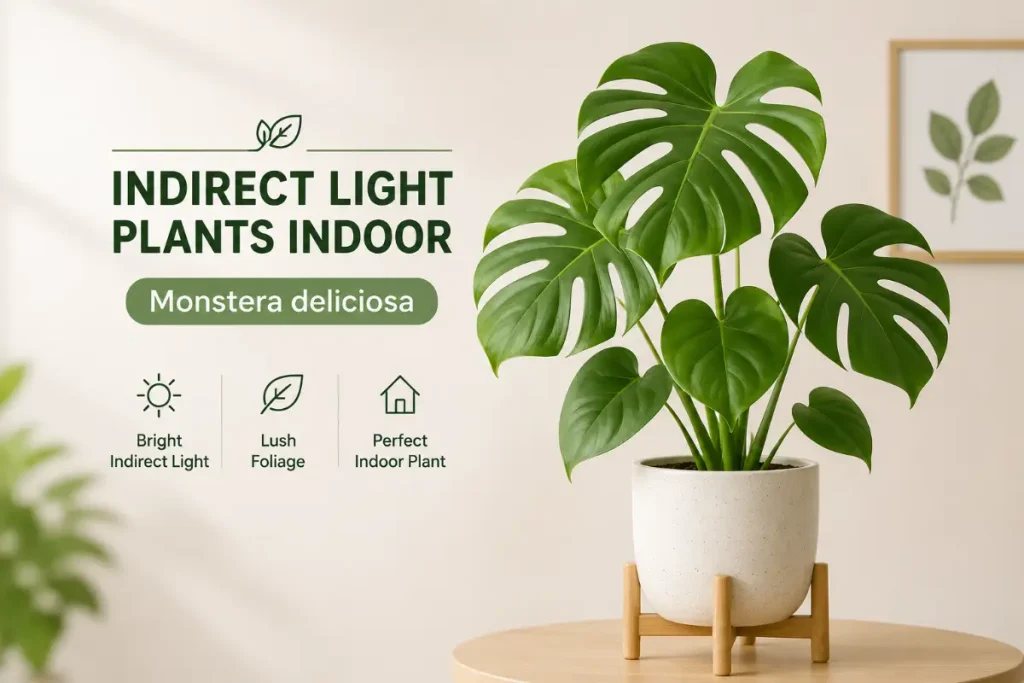
12. Monstera deliciosa
Monstera has become one of the most recognizable and widely desired houseplants in interior design. The large, dramatically perforated leaves on thick stems reach impressive sizes in the right conditions, and the characteristic split-leaf pattern that develops on mature leaves makes it one of the most distinctively tropical-looking plants for indirect light positions.
Monstera needs bright to medium indirect light for its best growth. In bright indirect light it produces large, fully fenestrated leaves rapidly. Growth slows and leaves may develop fewer or smaller splits in medium indirect light. In low indirect light it declines slowly.
Best position: Bright indirect light from an east or large north-facing window for most impressive growth. Medium indirect light produces acceptable growth with slower leaf development.
Care: Water when the top two inches of soil feel dry. Provide a moss pole for climbing since mature leaves are dramatically larger on climbing stems than trailing ones. Wipe large leaves monthly. Fertilize every two weeks through spring and summer. For complete care guidance, white bird of paradise indoor plant covers the comparison between monstera and white bird of paradise for bright indirect positions where both are commonly considered.
Matching Plants to Your Specific Indirect Light Position
The practical question most plant owners face is not whether a plant needs indirect light but which indirect light level their specific position provides and which plants from this guide suit it.
East-facing windows: Receive morning direct sun for one to three hours depending on obstructions, then bright indirect light through the day. This is excellent bright indirect light that suits fiddle leaf fig, rubber plant, monstera, and the colorful Chinese evergreen varieties, alongside all the medium-light plants in this guide.
North-facing windows: Receive no direct sun and provide medium indirect light from ambient daylight. Most appropriate for pothos, heartleaf philodendron, peace lily, ZZ plant, snake plant, and green Chinese evergreen varieties. Fiddle leaf fig and rubber plant need brighter indirect light than most north-facing windows provide.
Interior positions with ambient light: If you can comfortably read a book by the natural light, snake plant, ZZ plant, cast iron plant, pothos, and heartleaf philodendron are the most reliable choices. Peace lily and Chinese evergreen in green varieties are also appropriate.
Rooms adjacent to bright south or west-facing windows: Reflected and ambient light from bright adjacent rooms can provide very good indirect light for the rooms immediately connecting. Peace lily, monstera, and the more light-demanding plants in this guide often perform well in these positions without direct window access of their own.
Conclusion
Indirect light plants indoor span a wider range of care requirements and light tolerances than the single “indirect light” category label suggests. Matching the specific indirect light level of your position to the appropriate plant from this guide produces far better results than choosing any indirect light plant for any indirect light position.
For bright indirect light from an east-facing window, fiddle leaf fig, rubber plant, and monstera reward the good light quality with impressive growth and dramatic leaf size. Peace lily, pothos, and heartleaf philodendron grow reliably and attractively without the demanding specificity of the bright-light tropical plants for medium indirect light in north-facing rooms. For genuinely dim medium to low indirect light, ZZ plant, snake plant, and cast iron plant maintain themselves where almost nothing else will.
Frequently Asked Questions
What counts as indirect light for indoor plants?
Indirect light means the plant receives ambient light from a window or room without direct sun rays touching it. An east-facing window provides indirect light after the morning sun has moved. A north-facing window provides indirect light throughout the day. A position several feet from a south-facing window where direct sun does not reach provides bright indirect light. The quality of indirect light varies from bright (near a large window) to dim (far from any window or in a north-facing room with limited ambient light).
Can indirect light plants go near a window?
Yes, and most indirect light plants perform better near windows than far from them. The distinction is that indirect light plants should not have direct sun rays touching their leaves for extended periods, not that they need to be kept away from windows. An east-facing window provides excellent indirect light from morning sun that passes to indirect after the sun moves. A north-facing window provides consistent indirect light all day without any direct sun. Positioning indirect light plants near the largest available window, while avoiding direct south or west afternoon sun on sensitive species, produces the best results.
How do I know if my indirect light plant is getting enough light?
Signs of adequate light include consistent new leaf production with leaves that are similar in size to existing mature leaves, upright and healthy stem growth without leaning toward the light source, and maintained color intensity in variegated plants. Signs of insufficient light include very slow or stopped new growth, new leaves that are smaller and lighter colored than existing ones, dramatic leaning toward the nearest light source, and fading of variegation toward solid green in plants that were previously colorful.
Do indirect light plants need grow lights?
Many indirect light plants grow adequately without grow lights in homes with medium natural light access. Plants in very dim positions, windowless rooms, or dark interior spaces benefit significantly from supplemental LED grow lights running eight to twelve hours daily. Even a modest grow light positioned above an indirect light plant in a dim corner can make the difference between a declining plant and one that maintains itself or grows slowly. For the full guide to grow light selection and UV considerations, UV light for plants indoor covers what to look for in a supplemental grow light for indirect light positions.
Which indirect light plants are best for beginners?
Pothos, snake plant, and heartleaf philodendron are the most forgiving indirect light plants for beginners because they clearly signal when they need water, tolerate occasional missed waterings, handle a wide range of indirect light levels, and resist common pests. ZZ plant is even more tolerant of irregular watering and low light but is slower to show problems, which makes it harder to learn from as a first plant. Peace lily is excellent for beginners who want a flowering plant since its dramatic wilt when thirsty and equally dramatic recovery after watering makes watering feedback immediate and clear.
How often should I water indirect light plants?
Watering frequency for indirect light plants depends primarily on pot size, soil type, temperature, and light intensity. As a general guideline, check soil moisture at one to two inches depth before every watering. Water when that depth feels dry for moisture-preferring plants like peace lily and heartleaf philodendron. Water when two to three inches feel dry for drought-tolerant plants like snake plant, ZZ plant, and cast iron plant. Indirect light positions require less frequent watering than the same plants in brighter light because lower light means slower growth and reduced water uptake.