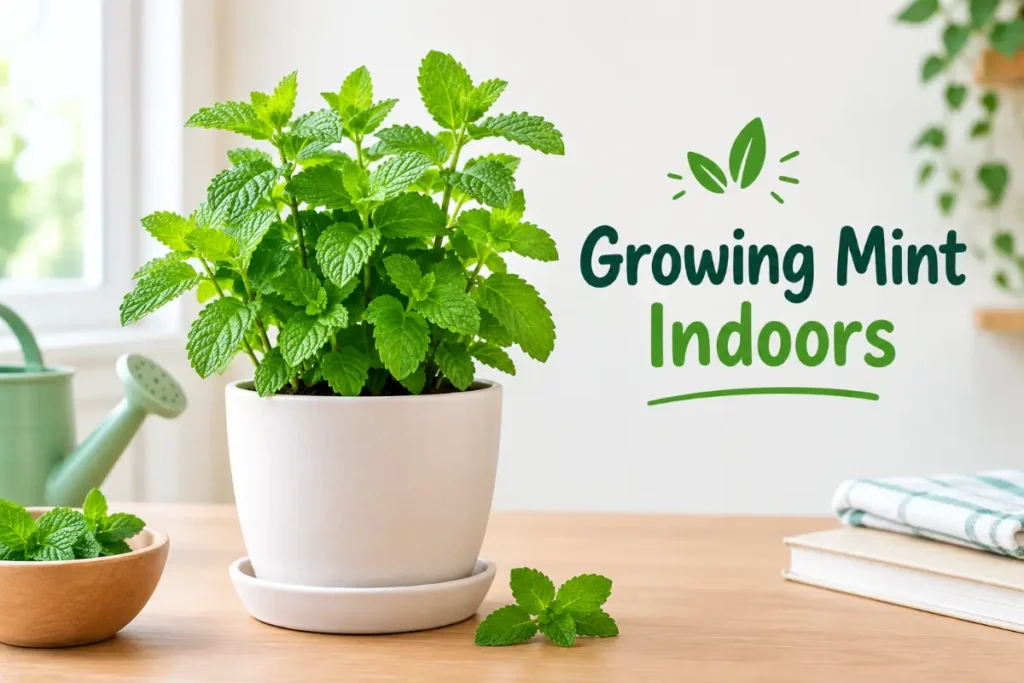
Growing mint indoors is one of the most practical and most frequently attempted indoor herb projects, and one where the results range from an impressively lush, continuously productive herb to a leggy, sparse, struggling plant depending on a few specific care decisions. Mint is not difficult to grow indoors, but it has specific preferences around moisture, light, container management, and harvesting technique that determine which outcome you get.
The appeal is obvious: fresh mint is more intensely flavored than dried, produces all the secondary compounds responsible for its distinctive scent and flavor only when freshly harvested, and has dozens of culinary and beverage applications from cocktails to teas to Southeast Asian cooking that make a productive kitchen mint plant genuinely useful rather than merely decorative.
Quick Answer
Growing mint indoors requires bright indirect light from an east or south-facing window, consistent moisture that keeps the top inch moist without waterlogging, cool to moderate temperatures between 60 and 75 degrees Fahrenheit, a wide shallow container rather than a deep narrow one, regular harvesting from stem tips to prevent legginess, and monthly dividing or replacing of plants that become root-bound to maintain productivity. Mint in appropriate conditions is one of the most vigorous and most productive indoor herbs available.
Understanding Mint as an Indoor Plant
Mint (Mentha species) is a spreading perennial native to Europe and the Mediterranean that grows naturally in consistently moist, partially shaded conditions along streams and in damp meadows. This origin explains most of its indoor care requirements: it prefers moisture and does not need the intense direct sun that Mediterranean herbs like rosemary and lavender require. The partially shaded stream bank habitat that wild mint occupies makes it more suited to typical indoor light conditions than most other culinary herbs.
The vigorous spreading habit that makes mint invasive in outdoor gardens is an asset indoors where it can be contained in a pot and harvested frequently. The same aggressive root and stem growth that gardeners warn against outdoors makes mint produce more harvestable material faster than most other indoor herbs.
The variety question: Multiple Mentha species and hybrids are available with distinct flavors:
- Spearmint (Mentha spicata): The classic culinary mint for cooking, cocktails, and tea. Mildest and most versatile flavor.
- Peppermint (Mentha × piperita): Stronger, more cooling menthol flavor. The variety used for peppermint tea and candy.
- Chocolate mint: Peppermint variety with a distinct chocolate note. Excellent in desserts and hot chocolate.
- Apple mint: Fruity, mild mint flavor. Less assertive than spearmint.
- Mojito mint (Cuban mint): Spearmint variety specifically suited for cocktails with slightly less pungency than standard spearmint.
All varieties share the same care requirements. Choose based on your primary culinary use.
Step 1: Choose the Right Container
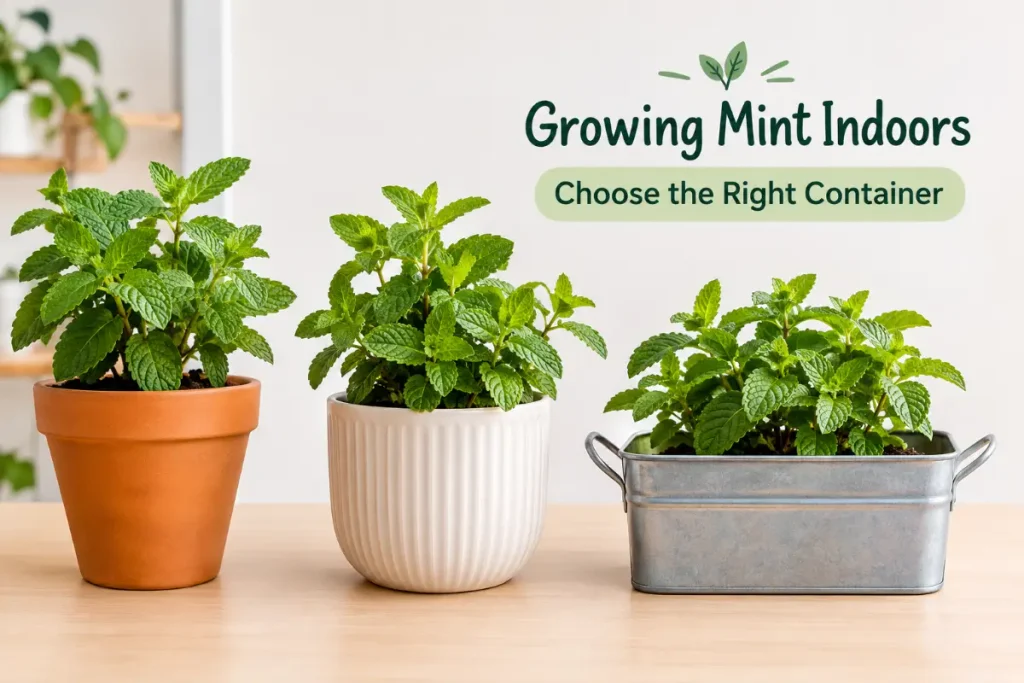
Container selection is more important for mint than for most other herbs because of how mint grows and what happens when it runs out of root space.
Wide over deep: Mint spreads horizontally through rhizomes (underground stems) rather than rooting deeply. A wide, shallow container like a window box or a standard ten-inch diameter pot suits mint’s growth habit better than a tall, narrow pot. More horizontal root space means more stems, which means more harvest.
Size for productivity: A six-inch pot produces a modest harvest. An eight-to-ten-inch pot produces significantly more. A twelve-inch pot or window box produces enough mint for regular cocktails, cooking, and tea from a single planting.
Drainage: Essential. Mint prefers moist soil but develops root rot quickly in waterlogged conditions. Multiple drainage holes and a saucer emptied within thirty minutes of watering prevent the standing water that kills mint roots despite the plant’s moisture preference.
The contained growth advantage: Outdoors mint escapes any container eventually if not managed. Indoors in a pot, the contained growth actually suits its management better. The pot is the natural limit that prevents the invasive spread while the harvest keeps the plant compact and productive.
Step 2: Source Plants or Cuttings
From a garden center: The most practical starting point. A small mint plant from a garden center or grocery store herb section provides immediate harvesting potential and establishes quickly in a larger container. Transplant from the small grocery store pot into a wider, deeper container with fresh potting mix immediately since grocery store herbs are typically root-bound and over-fertilized for quick growth.
From cuttings: Mint roots from stem cuttings in water within seven to ten days, faster than almost any other herb. Cut a four-to-six-inch stem just below a leaf node, remove lower leaves, and place in a glass of water in bright indirect light. Roots emerge within a week. Once roots are one inch long, plant in moist potting mix. This is the most economical way to multiply mint from a single starting plant.
From seed: Possible but significantly slower than cuttings or purchased plants. Mint seeds are tiny and germinate erratically. Starting from cuttings or a purchased plant is recommended for most indoor growers.
Step 3: Provide the Right Light
Mint’s light requirements are more flexible than those of Mediterranean herbs, making it one of the most practical indoor herbs for east-facing windows and bright north-facing positions.
Ideal light: Bright indirect light from an east or south-facing window. Four to six hours of bright indirect or some direct morning light produces the most vigorous, most flavorful mint growth.
Tolerated light: North-facing windows with medium indirect light. Mint maintains acceptable growth in lower light than most other culinary herbs, though growth slows and stems become more widely spaced than in brighter conditions.
What insufficient light produces: Leggy growth with widely spaced leaves on weak, thin stems. Reduced essential oil concentration resulting in less intense flavor and fragrance. Increased susceptibility to the powdery mildew that establishes most readily on light-stressed mint in poor air circulation.
Direct afternoon sun caution: Unlike Mediterranean herbs that thrive in direct afternoon sun, mint can bleach and struggle in intense direct south-facing afternoon sun, particularly in summer. Morning direct sun from an east-facing window suits mint better than intense afternoon sun from a south or west-facing window.
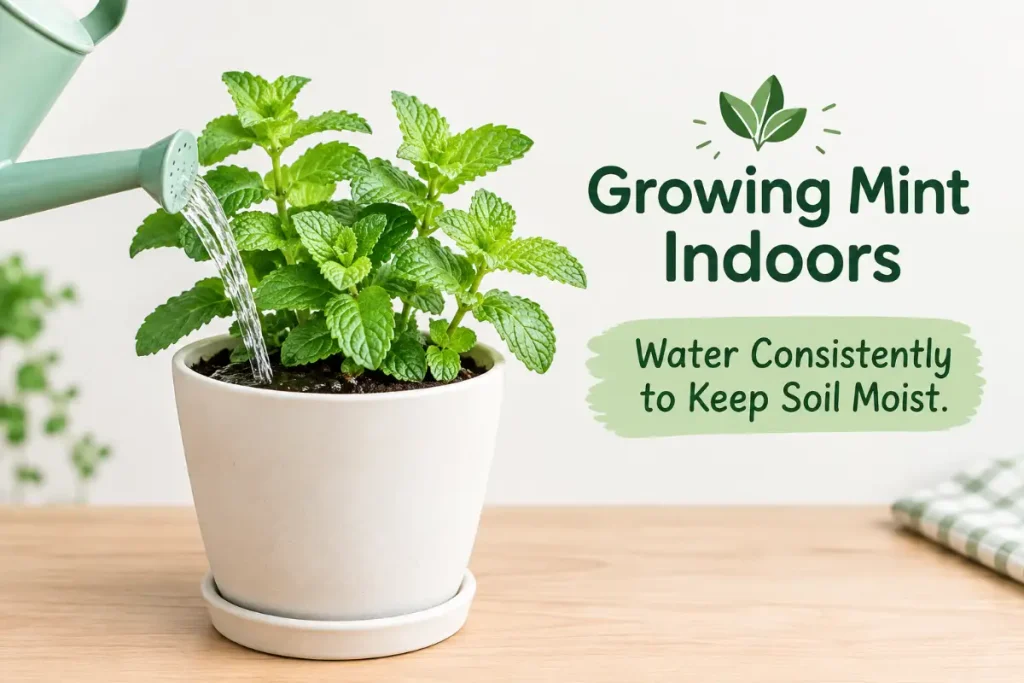
Step 4: Water Consistently to Keep Soil Moist
Mint’s stream-bank origin means it prefers consistently moist soil — more moisture than most other indoor herbs. This is the most common mismanagement point for growers used to the drier conditions that rosemary and thyme need.
The correct approach: Water when the top half inch of soil dries out. In typical indoor conditions this means checking every two to three days and watering every three to four days. Mint should never dry out completely as this stresses the plant and causes rapid leaf drop.
Signs of underwatering: Wilting leaves and stems that recover after watering but indicate the plant has been allowed to dry too much. Repeated wilting episodes reduce mint’s vigor and harvest quality over time.
Signs of overwatering: Yellow lower leaves. Soft, mushy stem bases near the soil. Despite mint’s preference for moisture, it still needs drainage since anaerobic waterlogged conditions cause root rot even in moisture-loving plants.
The misting option: Lightly misting mint foliage every few days provides brief additional moisture to the leaves and helps maintain the surface humidity that reduces powdery mildew risk in indoor conditions. Do not mist in the evening since wet overnight foliage in still indoor air creates conditions for fungal problems.
Step 5: Fertilize Lightly for Flavor
Mint does not need heavy fertilizing and is actually harmed by it in a specific way: high-nitrogen fertilizing drives rapid vegetative growth but dilutes the essential oil concentration in the leaves that provides mint’s distinctive flavor. Heavily fertilized indoor mint grows fast but tastes weaker than lightly fertilized mint.
The right approach: A balanced liquid fertilizer at one-quarter to half the label rate every three to four weeks through spring and summer. This is less frequent and less concentrated than most houseplant fertilizer recommendations and reflects mint’s adaptation to the relatively lean riparian soils of its natural habitat.
Organic options: Worm casting tea applied every three to four weeks provides gentle, burn-safe nutrition that maintains flavor concentration better than synthetic fertilizers at comparable rates. The slow-release organic nitrogen in worm castings suits mint’s preference for steady, moderate nutrition over the rapid delivery of synthetic fertilizers.
What to avoid: High-nitrogen fertilizers at full rate. Monthly or biweekly fertilizing at any significant rate. Both produce the rapid, flavor-diluted growth that makes mint less useful culinarily despite looking vigorous.
Fall and winter: Reduce to every six to eight weeks or stop entirely when growth slows. Mint naturally slows in fall and winter even indoors.
Step 6: Harvest Correctly for Continuous Production
This is the most critical ongoing care practice for indoor mint and the one that determines whether the plant stays productive for months or becomes leggy and sparse within weeks.
How to harvest correctly: Cut stems back to just above a pair of leaves, removing the top one-third to one-half of the stem length. Do not pull individual leaves from stems. Cutting at a leaf node stimulates two new stems to branch from that node, creating a progressively denser, more branching plant with each harvest.
How often to harvest: Every one to two weeks through the active growing season. Regular harvesting is not just for kitchen use — it is the primary management practice that prevents the legginess that makes mint unattractive and less productive. Even if you do not need mint immediately, trimming the stem tips every one to two weeks maintains the compact, bushy growth that produces the most harvestable material per plant.
What happens without regular harvesting: Mint allowed to grow without harvesting shoots upward on thin stems, producing flower buds at the top and shedding lower leaves. Once mint flowers, the essential oil concentration in the leaves drops significantly and the flavor becomes less intense. Regular harvesting prevents flowering by consistently removing the growing tips before they can set flower buds.
Pinching flower buds: If flower buds appear despite regular harvesting, pinch them off immediately. Allowing mint to flower signals the plant to divert energy from leaf production to seed production, reducing the culinary quality and harvest volume of the plant significantly.
Step 7: Divide and Refresh Plants Regularly
Mint in a container becomes root-bound faster than most other indoor herbs. An overcrowded root system produces increasingly sparse, weak growth even with adequate water, light, and fertilizing. Regular dividing or replanting maintains the vigorous productivity that makes indoor mint genuinely useful.
Signs of a root-bound mint plant: Roots emerging from drainage holes in quantity. The plant drying out within one to two days of thorough watering. Leaves that stay small despite adequate care. Growth that has become noticeably slower than earlier in the plant’s life.
How to divide: Remove the root ball from the pot. Separate it into two to four sections using your hands or a clean sharp knife, ensuring each section has both roots and multiple stems. Repot each section in fresh potting mix in a container appropriate to its size. Each division produces a fresh, vigorously growing plant within two to three weeks.
Replacement from cuttings: An alternative to dividing is taking cuttings from the healthiest stems, rooting them in water, and starting a fresh plant in new potting mix. This produces a cleaner restart than dividing an old, potentially exhausted root ball and is the preferred approach when the existing plant has been growing for more than one year.
Frequency: Plan on dividing or refreshing your indoor mint every six to twelve months. More frequent dividing for very productive plants in warm, bright conditions. Less frequent for slower-growing plants in lower light.
For the complete guide to indoor herb growing that covers the range of culinary herbs from the moisture-loving mint covered here to the dry-preferring Mediterranean herbs that require completely different care approaches, how to care for a rosemary plant indoors covers the opposite end of the indoor herb moisture spectrum that helps growers understand why mint and rosemary cannot be managed with the same approach despite both being kitchen herbs.
Mint Varieties for Specific Uses
For cocktails and beverages: Mojito mint (Cuban spearmint) or standard spearmint. The clean, moderately intense flavor of spearmint suits beverage applications where you want mint presence without the intensity that peppermint would provide.
For tea: Peppermint for the classic strong mint tea flavor. Spearmint for a milder, more subtly sweet tea. Chocolate mint for a dessert-oriented hot beverage experience.
For cooking: Spearmint is the most versatile culinary variety for savory applications including Middle Eastern salads, Southeast Asian dishes, and lamb accompaniments. Its relatively mild flavor integrates into complex dishes better than the more assertive peppermint.
For aromatherapy and fragrance: Peppermint produces the highest concentration of menthol and is the most effectively aromatic variety for the pleasant scent that makes mint a uniquely sensory indoor herb experience. Simply brushing the leaves of a healthy peppermint plant as you walk past releases its fragrance into the immediate environment.
Common Indoor Mint Problems and Solutions
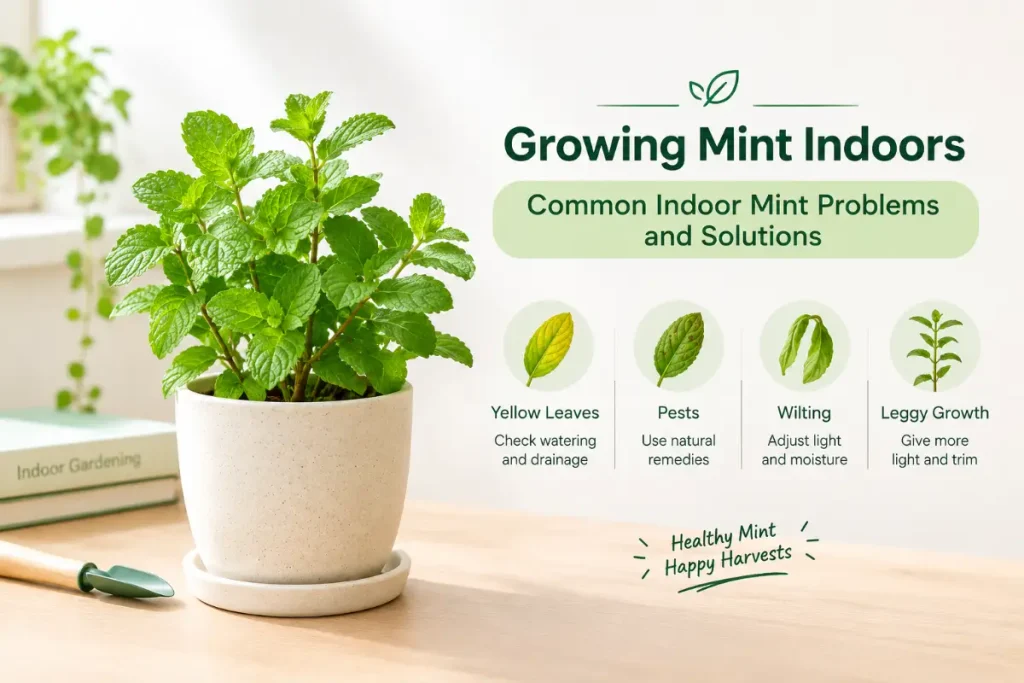
Leggy, sparse growth: Not harvesting frequently enough. Begin cutting the top third of every stem every one to two weeks immediately, even if not using the harvested material right away.
Powdery mildew (white coating on leaves): Poor air circulation combined with moderate humidity. Improve airflow around the plant. Remove affected leaves immediately. Apply diluted neem oil spray every seven days for three weeks. Prevent recurrence by running a small fan nearby.
Yellow lower leaves: Normal aging of oldest leaves at the base of stems as the plant puts growth energy into upper stems. Remove cleanly. If yellowing progresses throughout the plant rather than just the lowest leaves, check for overwatering causing root stress.
Wilting despite moist soil: Root rot from chronic overwatering or a root-bound plant unable to support its leaf mass. Remove from pot and inspect roots. Trim any dark mushy roots and repot in fresh mix. Divide if severely root-bound.
Loss of flavor intensity: High-nitrogen fertilizing, insufficient light, or the plant preparing to flower. Reduce fertilizer concentration. Improve light. Pinch any emerging flower buds immediately.
Conclusion
Growing mint indoors rewards consistent harvesting more than any other single practice. A mint plant that is cut regularly stays compact, bushy, and vigorously productive for months. A mint plant allowed to grow unchecked becomes leggy, weak, and eventually flowers, dramatically reducing the culinary quality that makes it worth growing in the first place.
Wide container, consistent moisture, bright indirect light, light fertilizing, harvesting every one to two weeks, and dividing every six to twelve months. Those seven practices produce the lush, abundantly fragrant, continuously productive indoor mint plant that makes fresh herbs from your own kitchen genuinely superior to anything available from a grocery store shelf.
Frequently Asked Questions
How often should I water mint indoors?
Water when the top half inch of soil dries out, typically every three to four days in typical indoor conditions. Mint prefers consistently moist soil and wilts quickly from drought. It is significantly more moisture-demanding than Mediterranean herbs like rosemary and thyme. Maintain consistent moisture without waterlogging by ensuring good drainage and emptying saucers within thirty minutes of watering.
Why is my indoor mint plant leggy?
Leggy mint with widely spaced leaves on thin stems is caused by two factors working together: insufficient harvesting frequency and often insufficient light. Begin cutting the top third of every stem every one to two weeks regardless of whether you need the mint immediately. Improve light by moving to a brighter east or south-facing window. The combination of regular harvesting and adequate light produces the compact, bushy growth that makes indoor mint most productive and attractive.
Can mint grow in a north-facing window?
Yes, with reduced vigor compared to brighter positions. Mint is more shade-tolerant than Mediterranean herbs and maintains acceptable growth in medium indirect light from a north-facing window. Growth is slower and stems more widely spaced than in brighter conditions but the plant survives and produces harvestable amounts of mint. A small supplemental grow light running twelve to fourteen hours daily significantly improves north-facing window mint production.
How do I keep my indoor mint from flowering?
Harvest or pinch the top third of every stem every one to two weeks through the growing season. This removes the growing tips before they develop flower buds. If flower buds appear, pinch them off immediately. Once mint begins flowering, essential oil concentration in the leaves drops and flavor becomes less intense. Preventing flowering through consistent harvesting maintains culinary quality through the entire growing season.
How long does an indoor mint plant last?
An individual mint plant becomes root-bound and progressively less productive after six to twelve months in a container. Rather than trying to maintain aging plants indefinitely, divide the root ball into sections every six to twelve months and repot each section in fresh growing medium, or take cuttings from the healthiest stems and start fresh plants. This regular renewal maintains a perpetually vigorous, productive indoor mint operation without replacing the variety or starting completely from scratch.
Is indoor mint safe for cats and dogs?
Mint is generally considered mildly toxic to cats and dogs, causing gastrointestinal upset if consumed in significant quantities. The essential oils responsible for mint’s distinctive flavor, particularly menthol in peppermint, are the components that cause digestive symptoms in pets. Keep mint plants out of reach of pets that regularly consume plant material. The ASPCA database should be consulted for the most current toxicity information on specific mint species since toxicity varies somewhat across the Mentha genus.