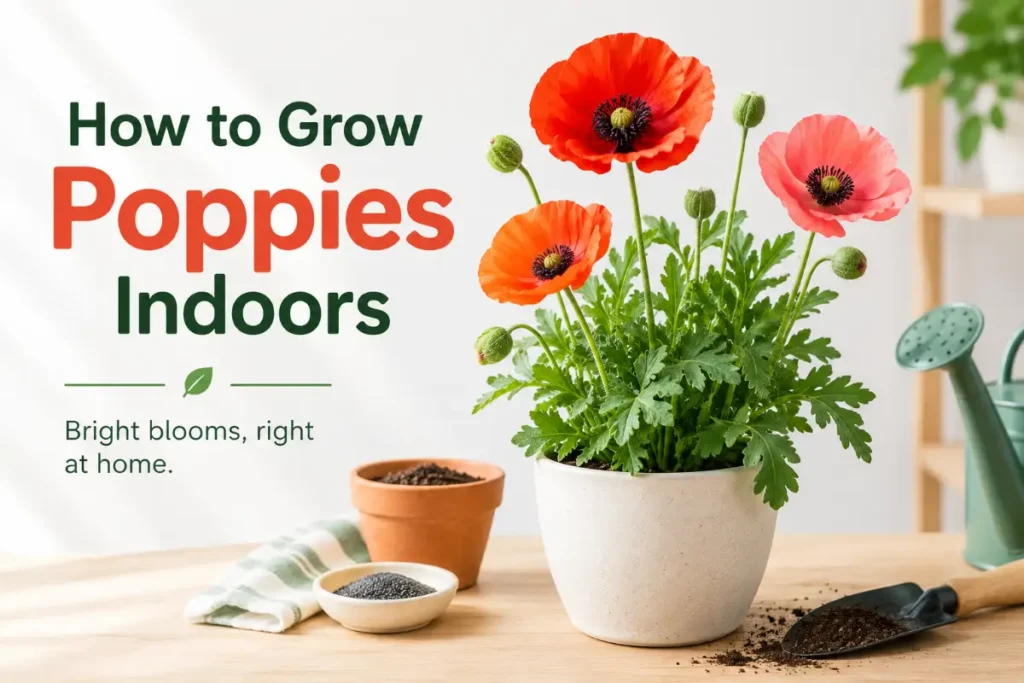
Growing poppy plants indoors is a project that rewards patience and the right expectations. Poppies are not the easiest indoor flowering plant — they are naturally suited to open ground and full outdoor sun — but with the right variety, a genuinely bright growing position, and an understanding of what these plants need at each stage of their development, you can bring their distinctive, papery blooms into your home successfully.
The most important thing to understand before starting is that poppies prefer cool, bright conditions. They are not tropical houseplants that thrive in warm, centrally heated rooms. They are cool-season flowers that do best where temperatures remain moderate and light is generous. If you can provide those conditions — a bright, cool conservatory, a south-facing window in an unheated room, or a very well-lit indoor growing space — poppies will reward you. In a warm, dim living room, success will be more difficult.
This guide covers which varieties work best for indoor growing, how to sow and establish plants, what care they need through their growing cycle, and how to manage the challenges that commonly arise.
Which Poppy Varieties Grow Best Indoors
Not all poppies are equal candidates for indoor growing. The genus Papaver contains dozens of species, ranging from the enormous perennial Oriental poppies that reach a metre or more in height outdoors to compact annual varieties well suited to container growing. Choosing the right species is essential for indoor success.
Papaver somniferum (Opium Poppy / Breadseed Poppy) is one of the best choices for indoor growing. It is an annual that grows at a manageable size of 60 to 90 centimetres in open ground but stays more compact in containers. It produces large, showy flowers in a wide range of colours including white, pink, red, purple, and bicolours, and the distinctive ornamental seed pods that follow flowering are attractive in their own right. The seeds are also edible and widely used in baking — hence the common name breadseed poppy.
Papaver rhoeas (Field Poppy / Corn Poppy) is the classic scarlet annual poppy familiar from wildflower meadows. It stays relatively compact, self-seeds freely, and the Shirley series offers softer, more varied colour forms including pale pink, white, and bicolours. It grows quickly from seed and tolerates container conditions reasonably well in bright, cool positions.
Papaver nudicaule (Iceland Poppy) is a short-lived perennial that works well as an annual for indoor growing. It produces large, vivid flowers in yellow, orange, pink, and white on long, wiry stems, typically staying compact enough for medium-sized containers. Iceland poppies are among the most floriferous of the genus and produce a longer flowering season than many other species.
Eschscholzia californica (California Poppy) is not technically a true poppy but is closely related and behaves similarly in cultivation. It is compact, fast-growing, and produces cheerful orange and yellow flowers that tolerate container conditions better than many Papaver species. It is arguably the most practical choice for indoor flowering.
Avoid large perennial species like Papaver orientale (Oriental Poppy) for indoor growing. These develop extensive root systems that do not suit containers and produce growth at a scale that is difficult to manage indoors.
Sowing Poppy Seeds Indoors
Poppies have long taproots and dislike root disturbance, which means they germinate and grow best when sown directly into their final container rather than started in seed trays and transplanted. Transplanting disrupts the taproot and often causes plants to fail or produce significantly reduced growth.
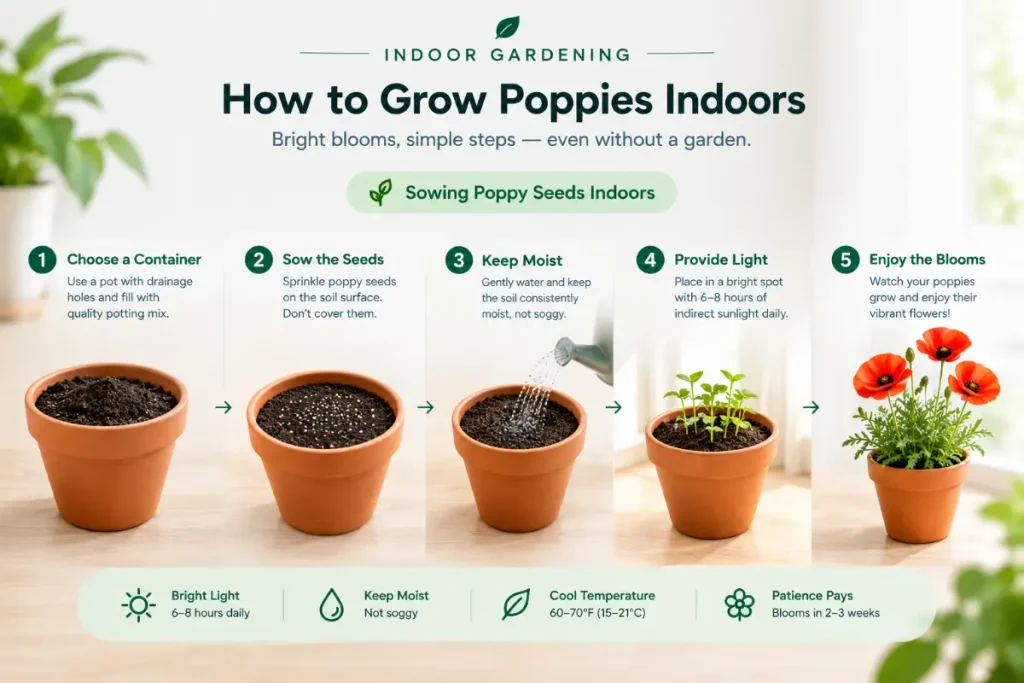
Choose your container first. A pot at least 20 to 25 centimetres in diameter and 25 centimetres deep suits most annual poppy varieties. Ensure there are adequate drainage holes in the base.
Fill the container with a mix of multipurpose compost and 20 to 30 percent horticultural grit or perlite to ensure free drainage. Poppies dislike heavy, moisture-retentive compost. Firm the surface lightly but do not compact it.
Scatter seeds thinly across the surface. Poppy seeds need light to germinate and should not be buried — simply press them lightly onto the compost surface with the flat of your hand to ensure good contact. Water gently using a fine rose attachment or a misting bottle to avoid washing seeds to one side.
Cover the container loosely with a clear plastic bag or propagator lid to maintain humidity while seeds germinate. Place in a bright, cool position — 10 to 15 degrees Celsius is ideal for germination. Most poppy species germinate within 10 to 21 days under these conditions.
Once seedlings are 2 to 3 centimetres tall, remove the cover and thin them to leave the strongest seedling every 10 to 15 centimetres. Thinning is important — crowded seedlings compete for light and air and are more susceptible to fungal disease. Remove unwanted seedlings by snipping at the base with scissors rather than pulling, to avoid disturbing the roots of the seedlings you are keeping.
Light: The Non-Negotiable Requirement
If growing poppies indoors comes down to one factor, it is light. Poppies are full-sun plants outdoors, and indoors they need the closest equivalent you can provide. A south-facing window that receives direct sun for several hours daily is the minimum for reliable results. East or west-facing windows with good light can work but may produce more elongated, weaker stems than a south-facing position.
In a genuinely bright south-facing window in spring or early summer, poppies can grow well without supplemental lighting. In autumn and winter, or in any position that does not receive direct sun, a full-spectrum LED grow light set for 14 to 16 hours daily is essential. Without adequate light, poppy seedlings will etiolate — stretching rapidly upward in search of light, producing thin, weak stems that collapse before flowering.
Position grow lights 20 to 30 centimetres above the plant canopy and use a timer to maintain consistency. The combination of bright natural light from a window and supplemental grow light hours in morning or evening gives the best results in most home environments.
As covered in this guide to grow lights for indoor tomato plants, the same principles of light intensity and duration that support fruiting plants apply equally to flowering plants like poppies — adequate intensity and consistent daily duration are both essential for productive, compact growth.
Temperature and Air Circulation
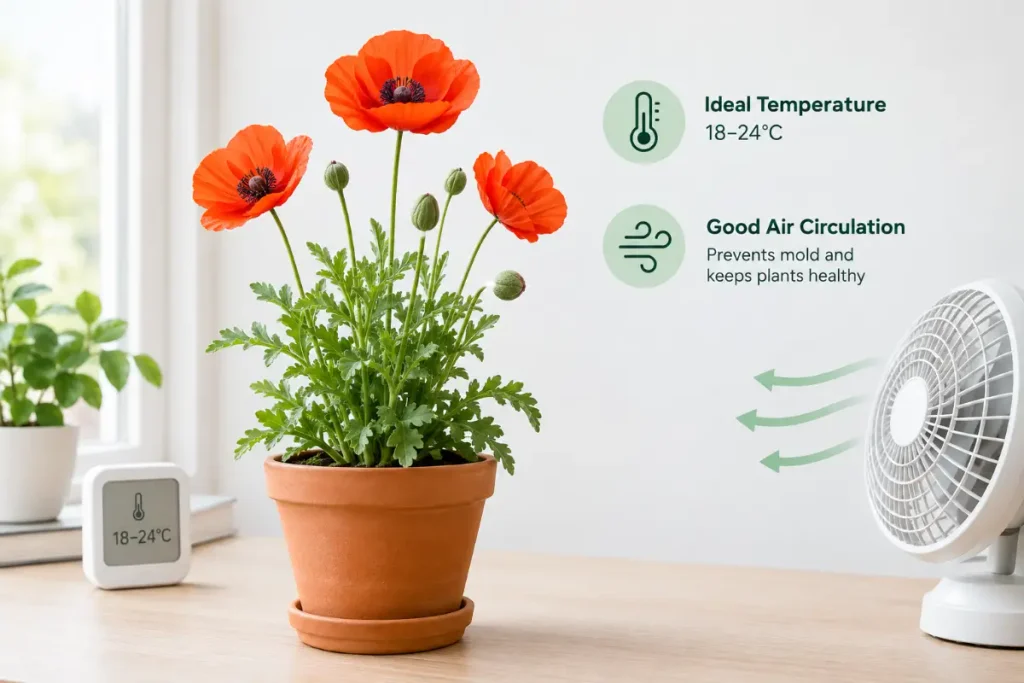
Poppies grow best in cool conditions. Most annual species prefer temperatures between 10 and 18 degrees Celsius during their growing period. They tolerate brief warm periods but sustained warmth above 22 degrees Celsius shortens the growing season, promotes early bolting, and reduces the number of flowers produced.
This preference for cool conditions actually makes poppies a good choice for rooms that are difficult to heat well — a bright conservatory, a cool utility room with a good window, or an unheated room that stays moderate in temperature through spring. In a warm living room at 22 to 25 degrees Celsius, expect a shorter growing season and fewer flowers.
Good air circulation is important for preventing fungal disease, particularly downy mildew, which poppies are susceptible to in warm, humid, still conditions. A small fan running on low for a few hours daily improves airflow around plants and significantly reduces disease incidence indoors.
Avoid placing poppies directly beside radiators or heat vents. The dry, hot air desiccates foliage and accelerates the plant through its life cycle faster than is ideal for flowering. A position near a window where natural temperature variation occurs is preferable to a spot near a constant heat source.
Watering and Feeding
Poppies prefer consistently moist but well-drained compost. They are more tolerant of occasional dryness than of waterlogging — overwatering is a far more common cause of failure than underwatering. Allow the top layer of compost to dry between waterings, then water thoroughly until water drains freely from the base of the pot.
Water at the base of the plant rather than over the foliage. Wet leaves in still indoor air create ideal conditions for fungal disease. In humid rooms or during periods of reduced air circulation, this is particularly important.
During the early vegetative growth phase, feeding is not necessary if you started with good quality fresh compost. Once plants reach 15 to 20 centimetres in height and are growing strongly, a diluted balanced liquid fertiliser every two weeks supports continued development. When flower buds begin to form, switch to a high-potassium fertiliser — tomato feed works well — to support flower development and longevity.
Avoid overfeeding with nitrogen. Excessive nitrogen produces large, dark-green leafy growth at the expense of flowers. The goal is a plant that flowers abundantly, and potassium rather than nitrogen drives that outcome once the vegetative phase is complete.
Deadheading and Extending the Flowering Season
Deadheading — removing spent flowers before they set seed — extends the flowering period of annual poppies significantly. When a poppy plant is allowed to set seed, it redirects all its energy into seed development and stops producing new flower buds. Removing spent flowers promptly keeps the plant in flowering mode for longer.
For Papaver somniferum specifically, you face a choice: deadhead for more flowers, or leave some spent flowers to develop into the ornamental seed pods that are themselves highly decorative. A practical compromise is to deadhead the first flush of flowers to encourage more blooms, then allow the final flush to set seed pods for display and seed collection.
California poppies (Eschscholzia) self-seed readily even indoors. If seeds fall onto the compost surface, small seedlings will appear around the parent plant within a few weeks, effectively providing a second generation of plants without any effort on your part. This self-seeding habit makes California poppies particularly good value for ongoing indoor growing.
Managing Pests and Disease Indoors
Indoor poppies face a narrower range of pest and disease problems than their outdoor counterparts, but a few issues occur with enough frequency to be worth anticipating.
Aphids are the most common pest on indoor poppies. They congregate on soft new growth and flower buds, sucking sap and causing distorted, sticky foliage. Check plants regularly, particularly around growing tips and undersides of leaves. A blast of water from a spray bottle dislodges small infestations effectively. For larger infestations, neem oil spray applied to all plant surfaces every five to seven days controls aphids reliably without harming the plant.
Downy mildew appears as a pale, dusty coating on leaf surfaces and is caused by fungal spores thriving in humid, still conditions. Improve air circulation by running a small fan near the plants and reducing humidity around the growing area. Remove affected leaves promptly and avoid watering over the foliage. Good prevention through adequate airflow is far more effective than treating established infections.
Root rot occurs when compost remains waterlogged for extended periods. Symptoms include wilting despite moist compost, yellowing leaves, and a foul smell from the pot. There is no reliable recovery from advanced root rot — the best approach is prevention through free-draining compost, pots with adequate drainage holes, and disciplined watering that avoids saturation.
Legginess without obvious pest or disease cause usually points to insufficient light or overcrowding. Ensure plants are thinned adequately, positioned in the brightest available spot, and receiving supplemental light if natural light is limited.
Companion Planting and Mixed Indoor Displays
Poppies combine well with other cool-season indoor plants, creating mixed container arrangements that extend the visual interest of any display beyond what a single species provides.
Planting poppies alongside violas, pansies, or nemesias in a large container creates a colourful cool-season indoor display that works from late winter through spring. These companions share the same preference for cool, bright conditions and free-draining compost, making care management straightforward across the whole arrangement.
For a more naturalistic arrangement, combine Papaver somniferum with cornflowers (Centaurea cyanus) and nigella (love-in-a-mist). All three are cool-season annuals that tolerate container growing in bright positions, and together they produce the kind of relaxed, wildflower-inspired display that is difficult to achieve with more formal indoor plants.
In a dedicated food-growing indoor setup, the edible seeds of Papaver somniferum make it a practical companion to culinary herbs. A large container housing a breadseed poppy alongside parsley, chives, and a compact basil creates both an attractive display and a genuinely functional kitchen garden arrangement.
Keep in mind that mixed containers require regular monitoring to ensure one species does not outcompete others. Poppy seedlings grow relatively quickly and can shade smaller companion plants if allowed to develop unchecked. Thin and manage growth across the whole container to maintain balance.
Saving Seeds for Next Season
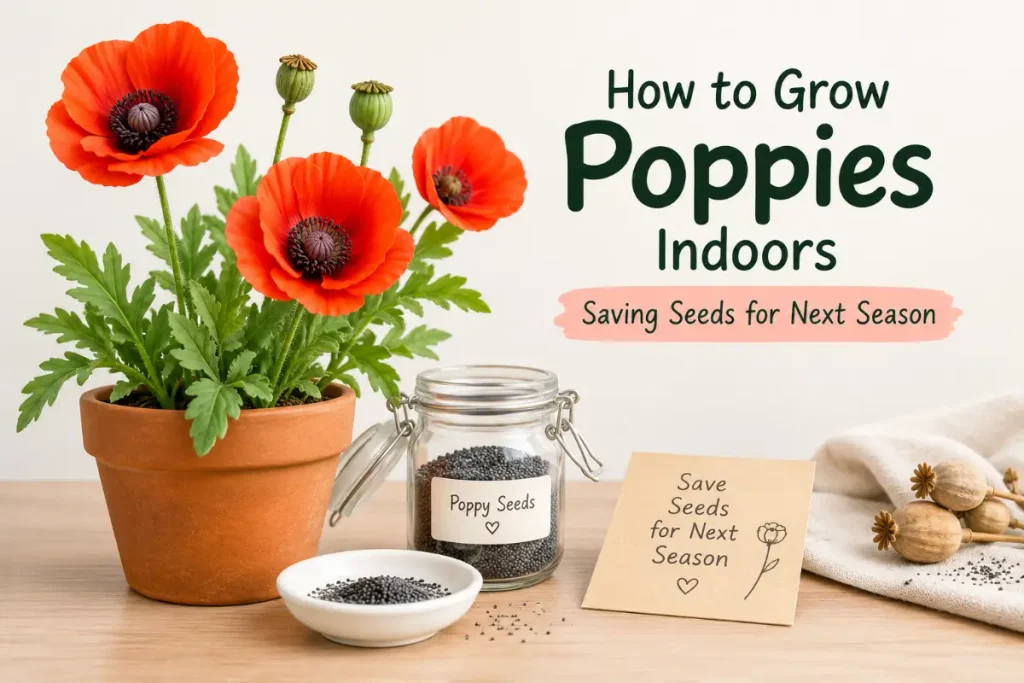
One of the most rewarding aspects of growing Papaver somniferum indoors is the ability to collect seeds from your own plants and sow them the following season. Breadseed poppies self-select readily — plants that flourish in your specific indoor conditions pass those qualities to their offspring, meaning each generation adapts incrementally better to your growing environment.
Allow a selection of the best plants — those that flowered most abundantly, grew most compactly, or produced the colours you prefer — to develop seed pods fully. Watch pods carefully as they ripen. The small holes around the crown of the pod open as seeds mature, and a gentle shake of the ripe pod releases seeds in a light shower. Harvest pods just before this stage to collect seeds cleanly.
Dry collected seeds on a sheet of paper in a warm, dry room for one to two weeks. Store in a labelled paper envelope in a cool, dry location away from direct light. Poppy seeds remain viable for two to three years under good storage conditions, so a single season’s collection can supply several subsequent years of planting.
Conclusion
Growing poppy plants indoors is achievable with the right variety, a genuinely bright position, cool temperatures, and careful attention to watering. Annual species — particularly Papaver somniferum, Papaver rhoeas, and California poppies — are the most practical for indoor containers and reward the effort with distinctive flowers that few other indoor plants replicate. For authoritative guidance on poppy cultivation and variety selection, the Royal Horticultural Society’s guide to growing poppies covers species, sowing techniques, and seasonal management in depth.
The key to indoor poppy success is matching the plant to your available conditions rather than trying to force poppies into an unsuitable environment. In a bright, cool space with good air circulation, these plants will surprise you with their willingness to flower.
FAQs
What is the easiest poppy to grow indoors?
California poppy (Eschscholzia californica) and Iceland poppy (Papaver nudicaule) are the most practical for indoor growing. Both stay relatively compact, tolerate container conditions, and produce flowers reliably in bright positions. Papaver somniferum (breadseed poppy) is also an excellent choice and offers attractive ornamental seed pods after flowering.
Do poppies need full sun to grow indoors?
Yes, poppies need as much light as possible indoors. A south-facing window with several hours of direct sun daily is ideal. In positions with less direct light, supplementing with a full-spectrum grow light for 14 to 16 hours daily is essential to prevent weak, etiolated growth.
Can I transplant poppy seedlings into bigger pots?
Poppies have long taproots and strongly dislike root disturbance. Transplanting frequently causes failure or significantly reduces plant vigour. Sow seeds directly into the final container to avoid the need for transplanting altogether.
Why are my indoor poppy seedlings tall and weak?
Tall, spindly seedlings indicate insufficient light. The plant is stretching upward in search of brighter conditions. Move to the brightest available window or add a grow light positioned 20 to 30 centimetres above the plant canopy. Thin seedlings to reduce competition for light if multiple plants are growing close together.
What temperature is best for growing poppies indoors?
Poppies prefer cool conditions between 10 and 18 degrees Celsius during their growing period. They tolerate brief warmer periods but sustained temperatures above 22 degrees Celsius shorten the growing season and reduce flowering. A cool conservatory, unheated room with good light, or north-facing bright position suits them well.
How long do indoor poppies take from seed to flower?
Most annual poppy species flower 60 to 90 days from sowing under good indoor conditions. Iceland poppies can flower in as little as 50 to 60 days from seed in bright conditions. Sowing in late winter for spring flowers or in late summer for autumn blooms gives the best results.
Should I deadhead indoor poppies?
Yes, deadheading spent flowers extends the flowering period by preventing the plant from redirecting energy into seed production. Remove faded flowers promptly for the longest display. For Papaver somniferum, you can allow the final flowers to develop into ornamental seed pods for display and seed saving.
Can I grow poppies indoors in winter?
Yes, with a grow light providing 14 to 16 hours of bright full-spectrum light daily. Cool temperatures actually suit poppies well, so winter indoor conditions in a bright room are not unfavourable. The main challenge in winter is providing adequate light intensity — natural light alone is rarely sufficient from October to February.
Are indoor poppies toxic to pets?
Yes. Most Papaver species contain alkaloids that are toxic to cats and dogs. California poppy (Eschscholzia) is less toxic but still potentially irritating if ingested. Keep indoor poppies out of reach of pets, particularly cats that browse on plant foliage.
How do I collect poppy seeds from indoor plants?
Allow seed pods to ripen fully on the plant until they turn brown and papery. Cut the stems with the pods attached and place upside down inside a paper bag in a dry location. The seeds will fall into the bag as the pods dry completely. Store collected seeds in a cool, dry, dark location in a labelled paper envelope until planting the following season.