
Finding an effective indoor plant spray for bugs that is safe to use inside your home, around your family, and on the specific pests you are dealing with is harder than most people expect. The garden center shelf is full of products making impressive claims, but many of them are formulated for outdoor use, contain chemicals that linger on indoor surfaces, or simply do not match the pest causing the damage on your plants. Use the wrong spray and you waste two weeks of treatment time while the infestation grows. Use the right one with the right technique and most indoor pest problems clear within two to three weeks.
This guide covers the 8 most effective indoor plant sprays for bugs available right now, how each one works, which pests it targets, and exactly how to apply it for complete coverage. Whether you are dealing with aphids, spider mites, fungus gnats, whiteflies, or mealybugs, there is a spray on this list that handles it safely and effectively inside your home.
Quick Answer
The best indoor plant sprays for bugs are neem oil spray, dish soap spray, insecticidal soap spray, rubbing alcohol spray, hydrogen peroxide spray, garlic spray, peppermint oil spray, and commercial ready-to-use neem products like Bonide. Each targets different pests and suits different situations. Neem oil is the most broadly effective organic option. Dish soap spray is the best immediate zero-cost treatment. Always cover leaf undersides thoroughly and repeat every 3 to 4 days for two full weeks for complete control.
What Makes an Indoor Plant Spray Different From an Outdoor One
Not every bug spray sold at a garden center is safe or appropriate for use inside your living space. This distinction matters more than most people realize before they buy.
Outdoor pesticides frequently contain synthetic pyrethroids, organophosphates, and other compounds that break down safely in open air and sunlight but accumulate to harmful concentrations in an enclosed room. A spray that is perfectly safe on a patio becomes a health risk when applied in a bedroom or kitchen with limited ventilation.
Indoor plant sprays need to meet a higher standard. They should kill on contact without leaving harmful residue on surfaces you touch. They should be safe to use around children and pets once dry. And they should not produce fumes that linger in a closed room for hours after application.
Every spray on this list meets these requirements. Every one is safe for indoor use at the recommended concentrations with basic precautions like opening a window during application and keeping children and pets out of the room until the spray dries.
8 Best Indoor Plant Sprays for Bugs
1. Neem Oil Spray — Best Broad Spectrum Organic Option
Neem oil spray is the most versatile and broadly effective organic bug spray you can use on indoor plants. It works differently from every other spray on this list, which is what makes it so valuable for persistent or multi-pest situations.
Most sprays are contact killers. They hit an insect, break down its protective coating or nervous system, and kill it immediately. Neem oil does that too through its physical oil properties, but its active compound azadirachtin adds a second layer of action by disrupting the hormonal system of surviving insects. Insects exposed to azadirachtin cannot feed, molt, or reproduce normally. Even survivors of the initial spray application cannot reproduce, which means the infestation collapses over the following week rather than rebuilding from surviving eggs and nymphs.
What it kills: Aphids, spider mites, whiteflies, mealybugs, thrips, fungus gnats, scale crawlers, leafhoppers, and more across a range of over 200 insect species
How to make it: Mix 2 tablespoons of pure cold-pressed neem oil with 1 teaspoon of plain dish soap and 1 quart of warm water. Add the soap first, stir briefly, then add the neem oil. The soap acts as an emulsifier that keeps the oil suspended in the water. Shake the bottle thoroughly before each use since the mixture separates within minutes of standing.
How to apply it: Spray every surface of the plant thoroughly in the evening rather than during bright daylight hours. Neem oil concentrates under intense light and can cause leaf burn on sensitive species when applied mid-day. Cover all leaf surfaces including undersides, every stem, and the top layer of soil. The soil application is absorbed through roots and provides a degree of systemic protection that above-ground sprays alone cannot match.
How often: Every 5 to 7 days for two to three weeks for active infestations. Monthly as a preventive application across your entire plant collection during spring and summer when pest pressure is highest.
Where to buy: Garden Safe Pure Neem Oil and Bonide Neem Oil Concentrate are two of the most consistently available options at Home Depot, Lowe’s, and on Amazon.
Limitations: Strong smell that some people find unpleasant indoors, though it dissipates within a few hours. Needs to be mixed fresh before each application since the emulsion breaks down over time.
2. Dish Soap Spray — Best Immediate Zero-Cost Treatment
Before spending money on any commercial product, a dish soap spray made from what is already in your kitchen handles the majority of soft-bodied pest problems on indoor plants quickly and safely. It is the first thing to reach for when you spot an infestation and want to act immediately without waiting for a delivery or making a trip to the store.
The mechanism is straightforward. The fatty acids in dish soap penetrate and break down the waxy protective cuticle on the outer surface of soft-bodied insects, causing rapid dehydration. It also blocks the breathing pores on the insect body, accelerating death. Once the spray dries on the plant surface it loses its killing power entirely, which makes it one of the safest options for use in a home environment.
What it kills: Aphids, spider mites, whiteflies, mealybugs (young crawlers), thrips, fungus gnat adults
How to make it: Mix 1 teaspoon of plain Dawn Original dish soap with 1 quart of room temperature water in a clean spray bottle. Use plain dish soap without added moisturizers, antibacterial agents, bleach, or degreasers. Shake gently to combine without creating excessive foam that clogs the nozzle.
How to apply it: Spray the entire plant from top to bottom, working slowly and methodically to ensure complete coverage of every leaf surface. Leaf undersides are the most critical area since this is where aphids, spider mites, and whiteflies concentrate. Spray until the solution drips freely from the leaves. Rinse with plain water after 2 to 3 hours to prevent leaf spotting on sensitive species.
How often: Every 3 to 4 days for a minimum of two full weeks. The two-week schedule is not optional. Soap kills on contact and has zero residual effect, meaning eggs that survive the first application will hatch within days and need to be caught by the next application before they mature.
Test first: Spray one leaf and wait 24 hours before treating the whole plant. Ferns, succulents, orchids, and African violets occasionally show sensitivity to soap spray even at correct dilutions.
For a detailed breakdown of which commercial soap products perform best on sensitive plants versus standard houseplants, insecticidal soap for indoor plants covers every option with specific product comparisons and application guidance.
3. Commercial Insecticidal Soap Spray — Best for Sensitive Plants
Commercial insecticidal soap products use potassium salts of fatty acids specifically pH-balanced for plant safety. This makes them significantly less likely to cause leaf burn or spotting on sensitive plant species than a homemade dish soap version, while performing comparably on pest control for most common houseplant insects.
What it kills: Aphids, spider mites, whiteflies, mealybugs, thrips, soft scale crawlers
Top products available nationwide:
Safer Brand Insect Killing Soap is the most widely recommended commercial option and available at Home Depot, Lowe’s, Walmart, Target, and Amazon in both ready-to-use and concentrate forms. The concentrate is more economical for larger collections.
Bonide Insecticidal Soap performs comparably to Safer Brand and is equally widely available. Both are OMRI listed for organic use on edible plants including indoor herbs and vegetables.
Garden Safe Insecticidal Soap is the third widely available option and a strong choice for anyone growing edible plants alongside ornamental houseplants since it is specifically marketed for organic food crop use.
How to apply: Follow label instructions, which typically recommend applying every 4 to 7 days for two weeks, covering all plant surfaces including undersides thoroughly. Rinse with plain water 2 to 3 hours after application on sensitive species.
Best for: Anyone whose plants have shown sensitivity to homemade dish soap spray, households with edible herbs or indoor vegetables, or anyone who prefers the consistency of a purpose-formulated product over a homemade mix.
4. Rubbing Alcohol Spray — Best for Dense Clusters and Tight Spots
Rubbing alcohol kills insects on contact by dissolving the waxy protective coating on their outer surface, the same mechanism as soap spray but faster and more penetrating for dense clusters on stems and tight growing points that a regular spray nozzle cannot reach effectively.
It is particularly useful as a spot treatment during a broader spray program rather than as a standalone whole-plant treatment, since it can cause leaf damage on some species at full strength.
What it kills: Aphids, mealybugs, scale insects, spider mites, whitefly adults
How to make it: Mix 1 part 70% isopropyl rubbing alcohol with 1 part water in a spray bottle. For spot treatment of individual clusters, dip a cotton swab or cotton ball in the solution and apply directly to the pest cluster.
How to apply it: For spot treatment, apply directly to visible clusters with a cotton swab and wipe away dead insects and debris with a clean cloth. For whole-plant treatment, spray all surfaces and rinse with plain water after 30 minutes.
Test first: Apply to a single leaf and wait 24 to 48 hours before treating the whole plant. Most common houseplants tolerate diluted rubbing alcohol without damage but some thin-leaved tropical species show sensitivity.
Best for: Dense mealybug colonies on stems, aphid clusters in leaf joints that spray nozzles cannot penetrate, and scale insects on woody stems where other sprays fail to make good contact.
5. Hydrogen Peroxide Spray — Best for Soil Pests and Root Zone
Hydrogen peroxide spray serves a different function from the other sprays on this list. Rather than targeting above-ground insects on leaves and stems, it addresses pests living in the soil and root zone where conventional sprays cannot reach.
When hydrogen peroxide contacts organic matter in the soil, it releases oxygen rapidly through an oxidation reaction. This oxygen burst kills fungus gnat larvae, soil mite eggs, and other soil-dwelling pest organisms on contact. The reaction leaves no harmful residue. The hydrogen peroxide breaks down into water and oxygen, both of which benefit rather than harm the root environment.
What it kills: Fungus gnat larvae, shore fly larvae, soil-dwelling pest eggs, some harmful soil bacteria and fungi
How to make it: Mix 1 part 3% hydrogen peroxide (standard drugstore variety, the brown bottle) with 4 parts water. Do not use higher concentrations since they can damage plant roots.
How to apply it: Water the plant with the hydrogen peroxide solution as you would with normal watering, applying enough to thoroughly soak the root zone. You will see bubbling in the soil as the oxidation reaction occurs. This is normal and indicates the treatment is working. Apply once weekly for three weeks for complete control of larval populations.
Best for: Fungus gnat infestations, used alongside yellow sticky traps for adult gnats and proper watering practices to eliminate the moist soil conditions gnats require for egg laying. For the complete picture of soil pest identification and treatment, bugs in indoor plant soil covers every soil-dwelling species and the full treatment approach for each one.
6. Garlic Spray — Best Natural Repellent Spray
Garlic spray works differently from every other option on this list. Rather than killing insects on contact, it acts as a repellent that makes the plant environment inhospitable to pest insects through the strong sulfur compounds in garlic that insects find overwhelming.
It is most effective as a preventive spray applied to plants that are currently pest-free rather than as a treatment for active infestations, though it adds useful repellent value as a companion to a soap or neem treatment on actively infested plants.
What it repels: Aphids, spider mites, whiteflies, caterpillars, thrips
How to make it: Blend 4 to 6 garlic cloves with 2 cups of water in a blender until smooth. Strain the liquid through a fine mesh strainer or cheesecloth to remove all solid particles that would clog a spray nozzle. Add the strained liquid to 1 quart of water with half a teaspoon of dish soap as an emulsifier and transfer to a spray bottle.
How to apply it: Spray all plant surfaces in the evening. The smell is strong immediately after application but dissipates within a few hours as it dries. Apply every 5 to 7 days as a preventive measure or every 3 to 4 days during an active infestation alongside a contact-killing soap spray.
Limitations: The smell, while temporary, is noticeable during application. Does not kill insects already present as effectively as soap or neem oil. Works best as a preventive layer in a broader pest management approach.
7. Peppermint Oil Spray — Best for Ant and Fly Deterrence
Peppermint oil contains high concentrations of menthol which overwhelms the sensory receptors of several common indoor pest species, particularly ants, flies, and aphids. Like garlic spray, it works primarily as a repellent rather than a contact killer, making it most valuable as a preventive and complementary treatment rather than a standalone solution for established infestations.
The advantage of peppermint spray over garlic spray for indoor use is the smell. Peppermint smells pleasant to most people and leaves a fresh scent in the room rather than the strong sulfur odor of garlic application.
What it repels: Ants, flies, aphids, spider mites, fungus gnats
How to make it: Add 15 to 20 drops of pure peppermint essential oil to 1 quart of water with half a teaspoon of dish soap. Shake well before each use as the oil separates from the water quickly without an emulsifier.
How to apply it: Spray all plant surfaces and the surrounding area including windowsills and entry points where insects enter. Apply every 3 to 4 days as part of a broader treatment program. Pay particular attention to the soil surface and pot base where ants and fungus gnats concentrate.
Best for: Homes dealing with ant trails near indoor plants, kitchen plants where flies are a consistent problem, and as a pleasant-smelling preventive spray used between applications of neem oil or soap spray.
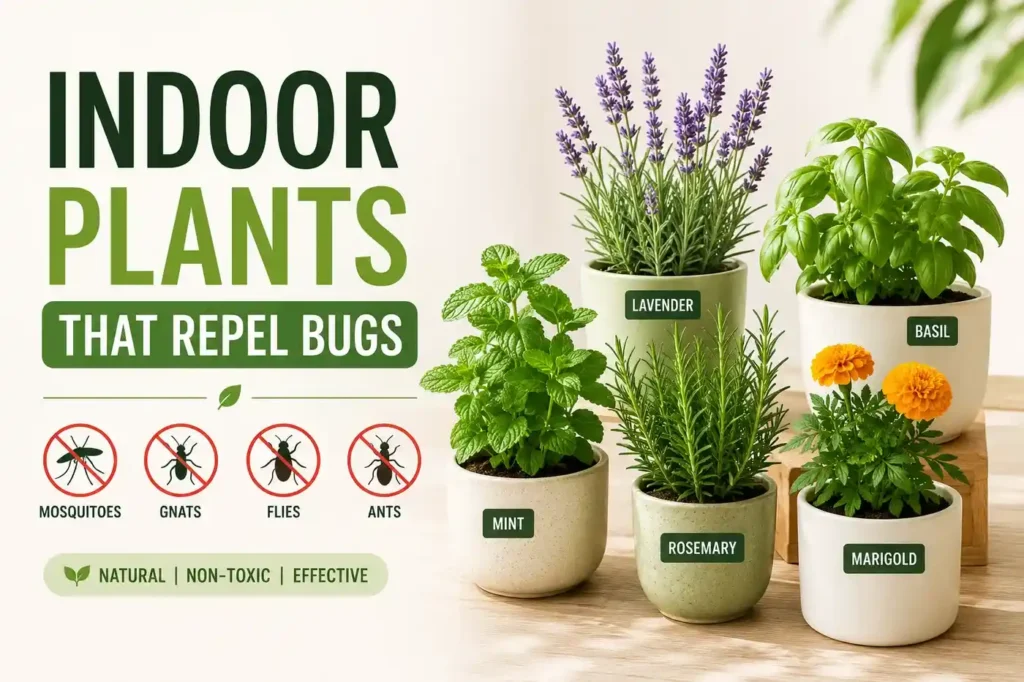
The complete guide on which plants produce these repellent compounds naturally and work as living deterrents rather than sprays you need to reapply regularly is covered in indoor plants that repel bugs, which pairs well with a peppermint spray routine for maximum natural pest deterrence.
8. Spinosad Spray — Best for Thrips and Hard-to-Kill Pests
Spinosad is a naturally derived compound produced by a soil bacterium called Saccharopolyspora spinosa. It targets the nervous system of insects that ingest or contact it, killing them within one to two days of exposure. What makes spinosad particularly valuable is its effectiveness against pest species that develop resistance to soap and neem oil treatments, particularly thrips and certain beetle species.
Captain Jack’s Deadbug Brew is the most widely available spinosad product at garden centers across the country and comes in both ready-to-use and concentrate forms.
What it kills: Thrips at all life stages, caterpillars, leafminers, spider mites, fruit flies, fungus gnats, beetles
How to apply it: Spray all plant surfaces thoroughly including undersides. Apply every 7 to 10 days. Spinosad breaks down in sunlight within a few days, leaving no long-term residue, which makes it one of the most environmentally responsible options for persistent pest problems.
Where to buy: Home Depot, Lowe’s, and Amazon carry Captain Jack’s Deadbug Brew widely. It is also available at most independent garden centers that stock organic pest control products.
Best for: Thrips infestations that have not responded to two or more weeks of consistent soap or neem oil treatment. Thrips are notoriously resistant to most contact sprays and spinosad is one of the few organic options that targets them effectively at every life stage including the soil-dwelling pupal stage. For identifying whether thrips or another pest is causing the damage on your plants before choosing a treatment, do indoor plants attract bugs covers the identification of which conditions attract which pest species to indoor plants.
How to Apply Any Indoor Plant Spray for Maximum Results
The product matters less than the technique in most indoor pest situations. These principles apply to every spray on this list and are the difference between a treatment that works and one that does not.
Cover leaf undersides completely and thoroughly. This is where aphids, spider mites, and whiteflies feed and lay eggs. A spray that only hits the top surface of leaves leaves the majority of the pest population completely untouched. Work slowly under each leaf, making sure spray contacts every surface.
Apply in the morning or evening. Never apply any spray to plants sitting in bright direct sunlight. Spray solutions, particularly oil-based ones like neem, concentrate under intense light and cause leaf burn on many species. Morning and evening application allows the spray to contact pests fully before drying without heat-related damage.
Test on one leaf before full application. Spray a single leaf and wait 24 hours before treating the whole plant. This 30-second step prevents you from damaging an entire collection with a product or concentration that does not suit that particular species.
Treat every plant in the area simultaneously. Pests spread between neighboring plants faster than most people realize. Treating one plant while leaving infested neighbors untouched means reinfection within days of finishing treatment on the original plant.
Repeat consistently on schedule. Single applications almost never eliminate an infestation completely because eggs survive most contact sprays. Every product on this list requires consistent reapplication on schedule to catch newly hatched pest generations before they mature and reproduce.
Ventilate during application. Open a window or run a fan when applying any spray indoors. Even organic products produce fine mist particles that are better dispersed in moving air than concentrated in a closed room. Good ventilation also speeds drying time.
Matching the Right Spray to Your Pest
| Pest | Best First Spray | Best Follow-Up |
|---|---|---|
| Aphids | Dish soap spray | Neem oil spray |
| Spider mites | Neem oil spray | Commercial insecticidal soap |
| Whiteflies | Commercial insecticidal soap | Spinosad spray |
| Fungus gnats | Hydrogen peroxide soil drench | Neem oil soil drench |
| Mealybugs | Rubbing alcohol spot treatment | Neem oil spray |
| Thrips | Spinosad spray | Neem oil spray |
| Ants near plants | Peppermint oil spray | Diatomaceous earth barrier |
| Mixed pests | Neem oil spray | Spinosad spray rotation |
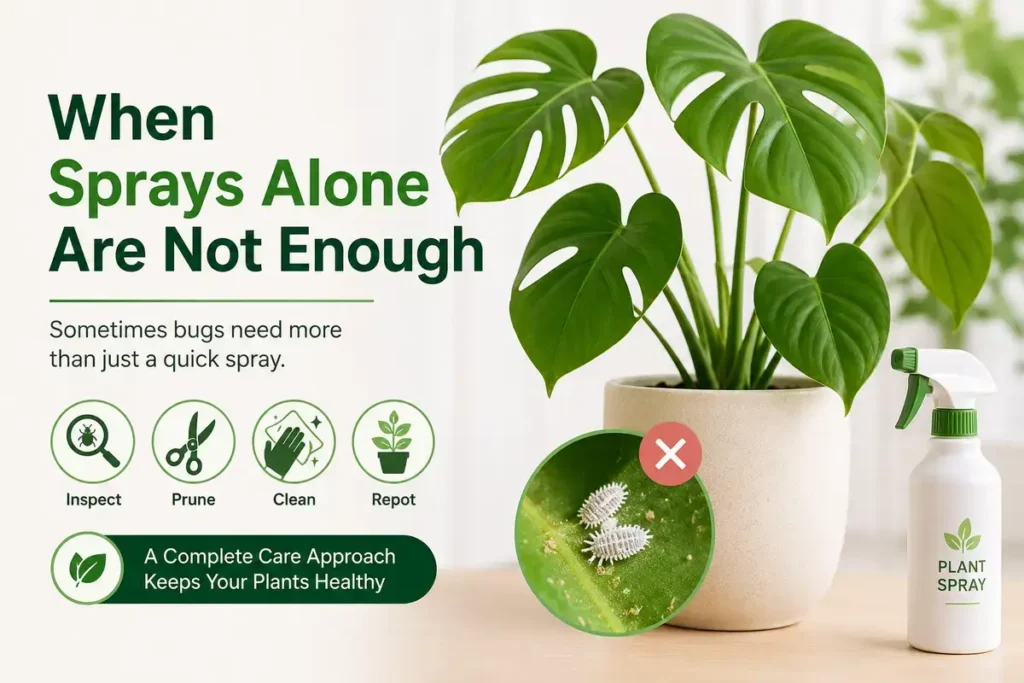
When Sprays Alone Are Not Enough
Sprays address the active pest population but do not address what is making your plants attractive to pests in the first place. Recurring infestations despite consistent spray treatment almost always point to an underlying condition that the spray cannot fix.
Overwatered soil creating ideal fungus gnat breeding conditions. Stressed or malnourished plants producing high amino acid sap that aphids and spider mites target preferentially. Neighboring plants that were not treated and continuously reinfest the ones you are treating. New plants introduced without quarantine bringing fresh pest populations into your collection.
When sprays are not producing lasting results, addressing these root conditions matters more than switching to a more powerful product. A plant growing in appropriate conditions with correct watering and adequate nutrition is genuinely more resistant to pest attack than a stressed one, regardless of which spray you are using. For the approach to keeping plants strong and pest-resistant between spray applications, bug spray for indoor plants covers how spray treatment fits into a complete pest management plan that addresses both the immediate infestation and the underlying conditions driving it.
Conclusion
The best indoor plant spray for bugs is always the one matched correctly to your specific pest and applied thoroughly enough to reach every insect and egg on the plant. Dish soap spray handles most soft-bodied pests immediately and at zero cost. Neem oil provides the broadest spectrum of coverage with residual hormonal disruption that contact sprays cannot match. Commercial insecticidal soap suits sensitive plants where dish soap risks leaf damage. Hydrogen peroxide targets the soil-dwelling stage of infestations that above-ground sprays miss entirely. Spinosad handles the hard cases where organic sprays have been tried and failed.
Pick the right spray for what you are dealing with, cover every leaf surface including undersides on a consistent schedule for a full two weeks, treat every plant in the area simultaneously, and most indoor plant pest problems clear completely without escalating to harsh chemical products.
Frequently Asked Questions
What is the safest bug spray for indoor plants around children?
Insecticidal soap spray and diluted dish soap spray are the safest options around children when dry. Both break down completely once dry and leave no harmful residue on plant surfaces or surrounding areas. Neem oil and hydrogen peroxide are also safe once dry. Keep children out of the room during application and for 30 minutes afterward while any spray dries, regardless of product.
How do I make my own indoor plant bug spray?
The simplest and most effective homemade spray is 1 teaspoon of plain Dawn dish soap mixed with 1 quart of water in a spray bottle. For a more powerful option, add 2 tablespoons of pure cold-pressed neem oil to this mixture for a combined contact and hormonal disruption effect. Both are safe, inexpensive, and effective against most common indoor plant pests when applied every 3 to 4 days for two full weeks.
Why is my indoor plant spray not working?
The four most common reasons a spray fails are incomplete coverage of leaf undersides where pests actually live, stopping treatment before the full two-week cycle needed to catch newly hatched eggs, using a spray not matched to the specific pest present, and leaving neighboring infested plants untreated so reinfection occurs continuously. Check all four before switching products since changing the spray is rarely the solution when technique and consistency are the actual problems.
Can I spray indoor plants every day?
Daily spraying is not necessary and can cause leaf damage through repeated soap or oil contact on sensitive species. Every 3 to 4 days is the optimal schedule for contact sprays like dish soap and insecticidal soap. Every 5 to 7 days works well for neem oil. More frequent application does not improve results and increases the risk of leaf burn and chemical stress on plants already dealing with pest pressure.
Is neem oil spray safe for all indoor plants?
Most common houseplants tolerate neem oil spray at the standard dilution of 2 tablespoons per quart of water. Some sensitive species including ferns, newly rooted cuttings, and stress-weakened plants can show leaf burn, particularly when sprayed in bright direct light. Apply in the evening, test on a single leaf first, and rinse with plain water a few hours after application on borderline-sensitive species to minimize risk.
How long does bug spray take to work on indoor plants?
Contact sprays like dish soap and rubbing alcohol kill insects within minutes of direct contact. Neem oil takes 24 to 48 hours to show full effect since part of its action works through hormonal disruption rather than immediate contact killing. Spinosad takes one to two days to kill insects that have ingested or contacted it. Regardless of how fast individual products work, the full infestation requires two to three weeks of consistent repeated applications to eliminate completely because eggs survive the initial treatment and hatch between spray sessions.
Should I spray the soil as well as the leaves?
For most above-ground pest problems, spraying the leaves and stems is sufficient. For fungus gnats and other soil-dwelling pests, treating the soil is essential since that is where larvae and eggs live. Apply hydrogen peroxide drench or neem oil soil drench to the potting mix when soil-dwelling pests are part of the problem, and continue treating the above-ground plant surfaces simultaneously for any adults present on leaves and stems.
Pingback: Soil Mites in Indoor Plants: 7 Facts Every Plant Owner Should Know - Plant Quill
Pingback: How to Get Rid of Flies in Indoor Plants: 9 Methods That Work - Plant Quill
Pingback: 10 Tiny Bugs on Indoor Plants: How to Identify and Get Rid of Them - Plant Quill