
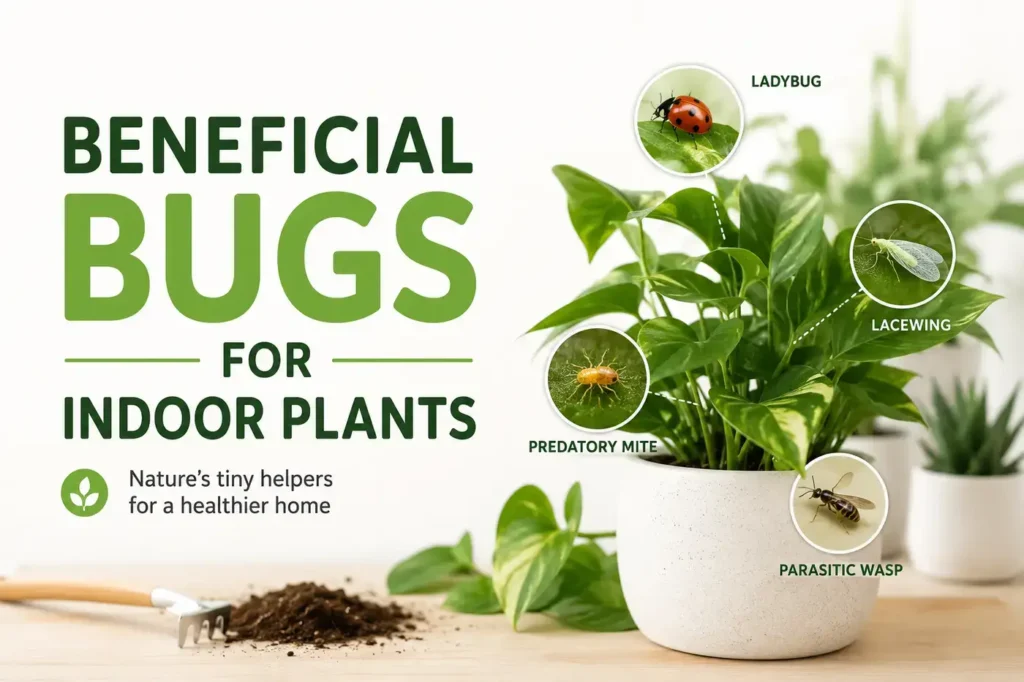
Beneficial bugs for indoor plants are one of the most underused pest control strategies available to home gardeners, and most people never consider them because the idea of intentionally introducing insects into their home sounds counterintuitive. But when chemical sprays are not fully clearing a stubborn infestation, or when you want a completely organic approach to pest management, predatory and parasitic insects do something no spray can do: they hunt, find, and eliminate pests in places you cannot reach with a nozzle.
This guide covers 9 beneficial bugs that work in an indoor plant environment, what each one eats, where to buy them, and exactly how to introduce them into your home without creating a new problem while solving the old one.
Quick Answer
The most effective beneficial bugs for indoor plants include ladybugs, lacewings, predatory mites, parasitic wasps, predatory midges, pirate bugs, rove beetles, nematodes, and springtails. Each targets specific pests: ladybugs and lacewings eat aphids, predatory mites eliminate spider mites, parasitic wasps target whitefly larvae, and nematodes destroy fungus gnat larvae in soil. Most can be ordered online and introduced directly to affected plants.
Why Beneficial Bugs Work Better Than Sprays in Some Situations
Before getting into the specific insects, it is worth understanding why predatory bugs sometimes outperform chemical and organic sprays for indoor pest control.
Sprays work on contact. They kill what they hit and nothing else. Pests hiding in furled leaves, deep in soil, or on the underside of densely packed foliage survive spray applications and rebuild the population within days. This is why so many indoor gardeners find themselves in a cycle of spraying, seeing improvement, then watching the infestation return two weeks later.
Beneficial bugs do not have this limitation. A hungry ladybug does not spray from a fixed distance and hope for coverage. It walks across every surface of a plant, pushes into furled leaves, and hunts actively for prey in exactly the places a spray nozzle cannot reach. A population of predatory mites covers an entire plant systematically over several days, eliminating spider mites in numbers and locations that no single spray application matches.
The other advantage is that beneficial insects reproduce and persist as long as prey is available. A spray application lasts one day. A population of introduced predatory mites keeps working for weeks.
The practical limitation for indoor use is that once the pest population is eliminated, the beneficial insects either die from lack of food or need to be removed. They are most effective as a targeted intervention for established infestations rather than as permanent residents of your indoor garden.
9 Beneficial Bugs for Indoor Plants
1. Ladybugs
Ladybugs are the most recognizable beneficial insect in the world and one of the most effective aphid predators available. A single adult ladybug consumes up to 50 aphids per day. A larval ladybug, which looks nothing like the adult and resembles a tiny dark alligator with orange spots, consumes even more aggressively, eating up to 400 aphids during its larval stage before pupating.
What they eat: Aphids primarily, also soft scale, mealybug crawlers, whitefly eggs, and small mites
How to use them indoors: Release ladybugs in the evening when they are less active and more likely to stay near the release point rather than immediately flying toward light sources. Mist the affected plant with water before release since ladybugs drink before feeding. Place them directly on the most heavily infested stems and leaves so they begin feeding immediately.
The main challenge with ladybugs indoors is their tendency to fly toward windows and light sources rather than staying on plants. Releasing them in a small enclosed space like a bathroom or greenhouse room where they cannot easily escape improves results significantly.
Where to buy: Amazon, Planet Natural, and Arbico Organics all carry live ladybugs. They are typically sold in quantities of 1,500 or more and shipped in mesh bags. Use them within 24 hours of receiving them for best results.
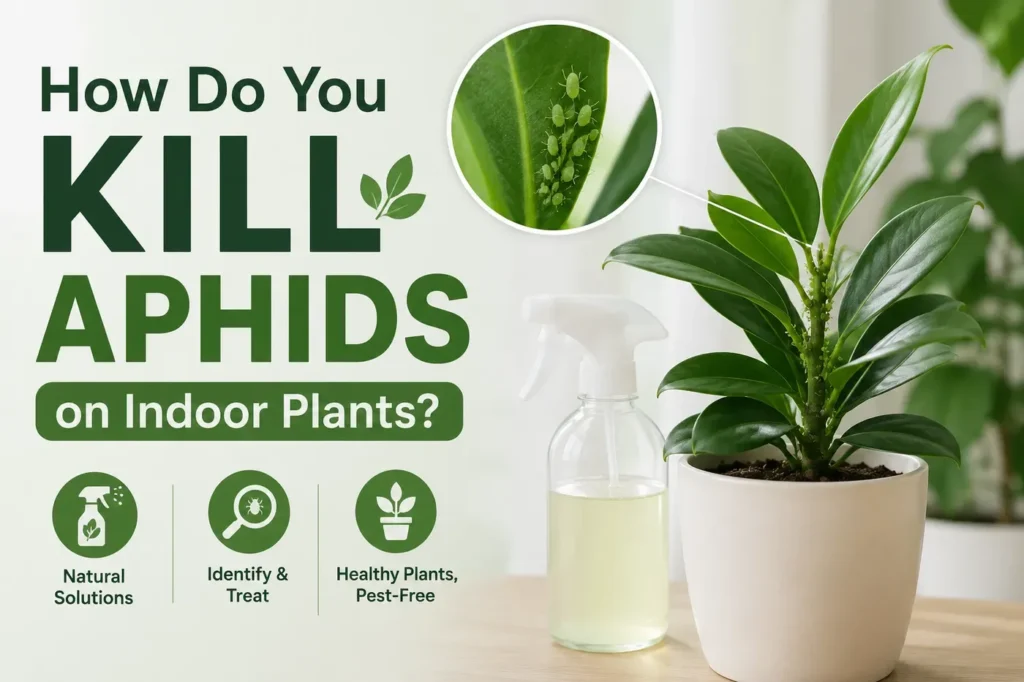
For context on the aphid infestations ladybugs handle most effectively, how do you kill aphids on indoor plants covers the full range of treatment options from manual removal through to predatory insects in order of infestation severity.
2. Green Lacewings
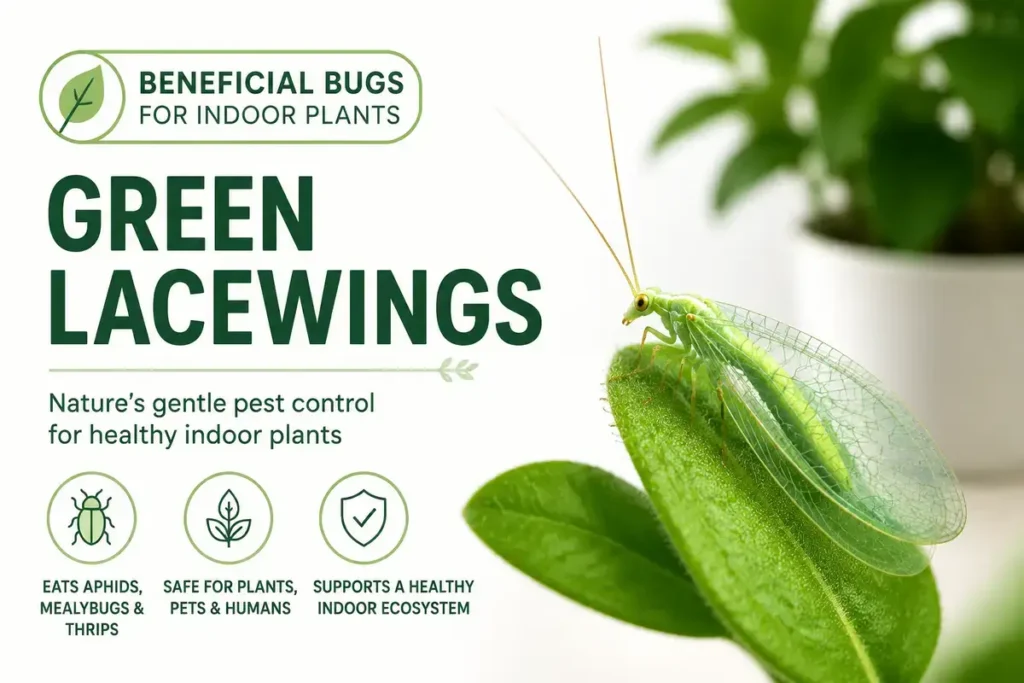
Lacewing larvae are arguably more effective than ladybugs for indoor use because they are less mobile, stay closer to where they are released, and have a broader appetite that covers more pest species. The adult lacewing is a delicate green flying insect with large transparent wings that is completely harmless. The larva is a small aggressive predator sometimes called an aphid lion that attacks and consumes prey many times its own size.
What they eat: Aphids, spider mites, thrips, whitefly eggs and larvae, mealybug crawlers, small caterpillars, leafhoppers
How to use them indoors: Lacewing eggs are sold on cards or in loose form and placed directly on affected plants. The eggs hatch within a few days and larvae begin feeding immediately. Unlike ladybugs, lacewing larvae are not strong fliers in their early stages and stay close to where they hatch, making them significantly more practical for indoor use in open rooms.
One container of lacewing eggs typically contains 1,000 or more eggs. Distribute them across multiple affected plants rather than concentrating them all on one.
Where to buy: Planet Natural, Arbico Organics, and Amazon carry lacewing eggs in various quantities. Eggs rather than adults are the recommended form for indoor use since they are easier to position precisely and larvae are more effective predators than adults.
3. Predatory Mites
Spider mites are among the most frustrating indoor plant pests to control with sprays because they reproduce extremely fast, develop resistance to repeated applications of the same treatment, and live on the undersides of leaves in dense colonies that sprays struggle to penetrate completely. Predatory mites solve all three of these problems.
Several predatory mite species are commercially available, each suited to slightly different environmental conditions.
Phytoseiulus persimilis is the most aggressive spider mite predator available and works best in warm, humid conditions above 60% humidity. It eats only spider mites and nothing else, consuming up to five adult mites or twenty eggs per day.
Neoseiulus californicus is more versatile, tolerates lower humidity and a wider temperature range, and persists longer after spider mite populations decline by feeding on pollen and other small arthropods.
What they eat: Spider mites exclusively (persimilis) or spider mites plus other small arthropods (californicus)
How to use them indoors: Predatory mites are shipped on carrier material like vermiculite or bean leaves and shaken directly onto affected plants. They begin hunting immediately. Unlike many beneficial insects, predatory mites are not strong fliers and stay on the plants where they are released, making them highly practical for indoor use.
Where to buy: Arbico Organics and Biobest carry both species. Specify your indoor humidity and temperature range when ordering since different species perform differently under different conditions.
For background on identifying spider mite infestations before introducing predatory mites, bugs in indoor plant soil and bug spray for indoor plants both cover identification and the spray options to try before escalating to biological controls.
4. Parasitic Wasps
The word wasp makes most people immediately uncomfortable, but parasitic wasps used in biological pest control are tiny, most under 1 millimeter long, do not sting humans, and are virtually invisible to the naked eye during normal plant observation. They work by laying eggs inside or on the body of pest insects. The eggs hatch and the larvae consume the host from the inside, killing it.
Encarsia formosa is the most widely used parasitic wasp for indoor use. It specifically targets greenhouse whitefly, one of the most common and difficult-to-control pests on indoor plants like tomatoes, hibiscus, and fuchsia.
Aphidius colemani targets aphids and is particularly effective for winged aphid species that spread quickly between plants.
What they target: Whitefly larvae (Encarsia), aphids (Aphidius)
How to use them indoors: Parasitic wasps are shipped on cards or in vials as pupae. Hang the cards near affected plants and the wasps emerge and begin searching for hosts within days. They are species-specific in their targets and completely harmless to plants, humans, and pets.
Where to buy: Arbico Organics and Koppert Biological Systems both carry multiple parasitic wasp species suited for indoor use.
5. Predatory Midges
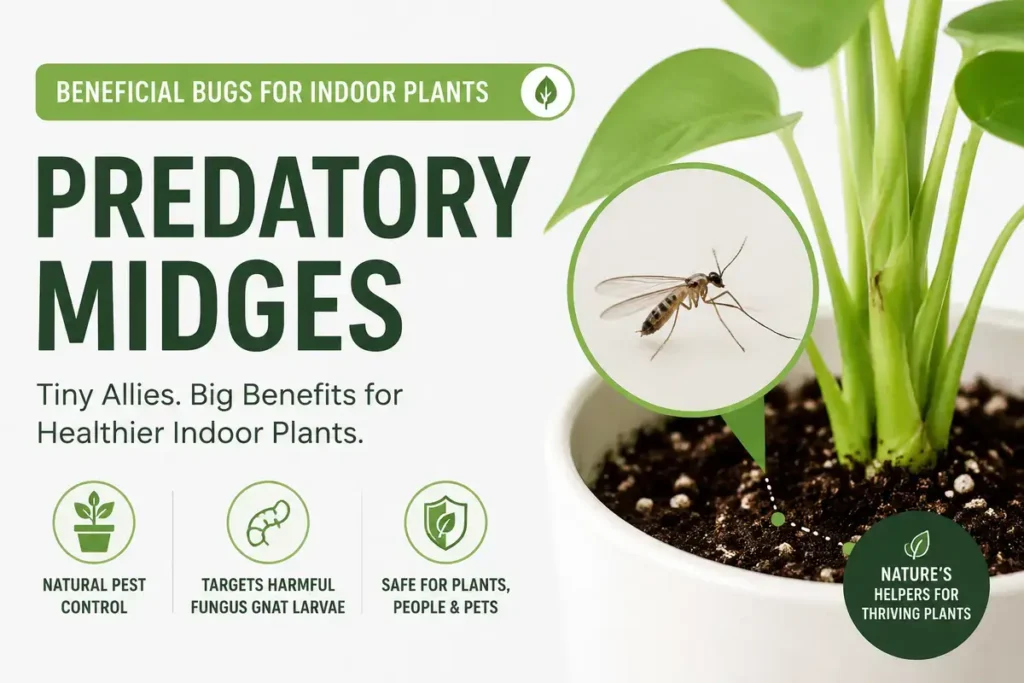
Aphidoletes aphidimyza, commonly called the aphid midge, is one of the most effective aphid predators available for enclosed indoor spaces precisely because it does not fly toward light sources the way ladybugs do. The adult midge lays eggs near aphid colonies and the larvae that hatch paralyze and consume aphids aggressively, with a single larva killing far more aphids than it actually eats.
What they eat: Aphids across more than 70 species, making them one of the most broadly effective aphid predators available
How to use them indoors: Aphid midge pupae are shipped in moist vermiculite and placed in small containers near the base of affected plants. Adults emerge within days and begin laying eggs near aphid colonies immediately. Larvae are more effective in enclosed or semi-enclosed spaces where adults are not lost to open windows.
Where to buy: Arbico Organics and Koppert carry Aphidoletes aphidimyza in various quantities suited for small indoor collections through large greenhouse operations.
For the complete picture of aphid treatment options that predatory midges complement most effectively, how to get rid of aphids on indoor plants covers every stage of treatment from immediate manual removal through to biological controls.
6. Pirate Bugs
Minute pirate bugs, Orius species, are small but exceptionally aggressive predators that punch well above their weight class in terms of pest consumption. They pierce the body of prey insects and suck out the contents, killing thrips, spider mite eggs, aphid nymphs, and whitefly larvae in numbers that make them one of the most cost-effective predatory insects for multi-pest indoor situations.
What they eat: Thrips at all life stages, spider mite eggs and nymphs, aphid nymphs, whitefly eggs
How to use them indoors: Pirate bugs are shipped as adults in bottles with carrier material and released directly onto affected plants. They establish quickly and begin feeding within hours of release. They tolerate a wide range of indoor temperatures and humidity levels better than most predatory mites.
Where to buy: Arbico Organics carries Orius insidiosus, the most widely available pirate bug species for indoor use.
Best for: Thrips infestations specifically, since thrips are notoriously difficult to control with sprays and pirate bugs target them at every life stage including the soil-dwelling pupal stage that sprays cannot reach.
7. Rove Beetles
Rove beetles are soil-dwelling predators that target fungus gnat larvae, shore fly larvae, and other soil-inhabiting pest insects. They live and hunt in the top layer of potting mix, making them uniquely suited to problems that above-ground beneficial insects cannot address.
Dalotia coriaria, the most widely used rove beetle species for indoor plant use, is a small, fast-moving brown beetle about 3 to 4 millimeters long that spends its entire life in the soil hunting prey.
What they eat: Fungus gnat larvae, shore fly larvae, other small soil-dwelling insects and their eggs
How to use them indoors: Rove beetles are shipped in moist carrier material and mixed into the top layer of potting soil. They establish quickly and reproduce in moist soil, maintaining their population as long as prey is available. They do not harm plant roots or leave the soil environment.
Where to buy: Arbico Organics carries Dalotia coriaria in quantities suited for small indoor collections. They are one of the most practical beneficial insects for indoor use because they stay in the soil and do not fly around the living space.
Best for: Fungus gnat infestations, used alongside yellow sticky traps for adults and hydrogen peroxide drenches for eggs. For complete fungus gnat treatment context, bugs in indoor plant soil covers the full lifecycle and every treatment layer needed for complete control.
8. Beneficial Nematodes
Beneficial nematodes are microscopic roundworms that live in soil and parasitize soil-dwelling insect larvae. They are invisible to the naked eye, completely harmless to plants, humans, and pets, and one of the most effective treatments available for fungus gnat larvae, soil-dwelling thrips pupae, and other soil-stage pest insects.
Steinernema feltiae is the species most effective against fungus gnat larvae and the one most widely recommended for indoor plant use.
What they target: Fungus gnat larvae, thrips pupae, shore fly larvae, other soil-dwelling insect larvae
How to use them indoors: Nematodes are shipped as a powder or gel concentrate mixed with water and applied as a soil drench. They are living organisms with a short shelf life, typically 2 to 4 weeks when refrigerated, so use them promptly after receiving them. Apply to moist soil in the evening since nematodes are sensitive to UV light and dry conditions.
Where to buy: Arbico Organics, Planet Natural, and Amazon carry Steinernema feltiae in quantities suited for indoor plant collections. They are typically sold in quantities treating 200 to 2,000 square feet, so a single pack handles most home plant collections several times over.
Best for: Fungus gnat problems that persist despite correct watering and hydrogen peroxide drenching, or as a preventive treatment when introducing new plants to an existing collection.
9. Springtails
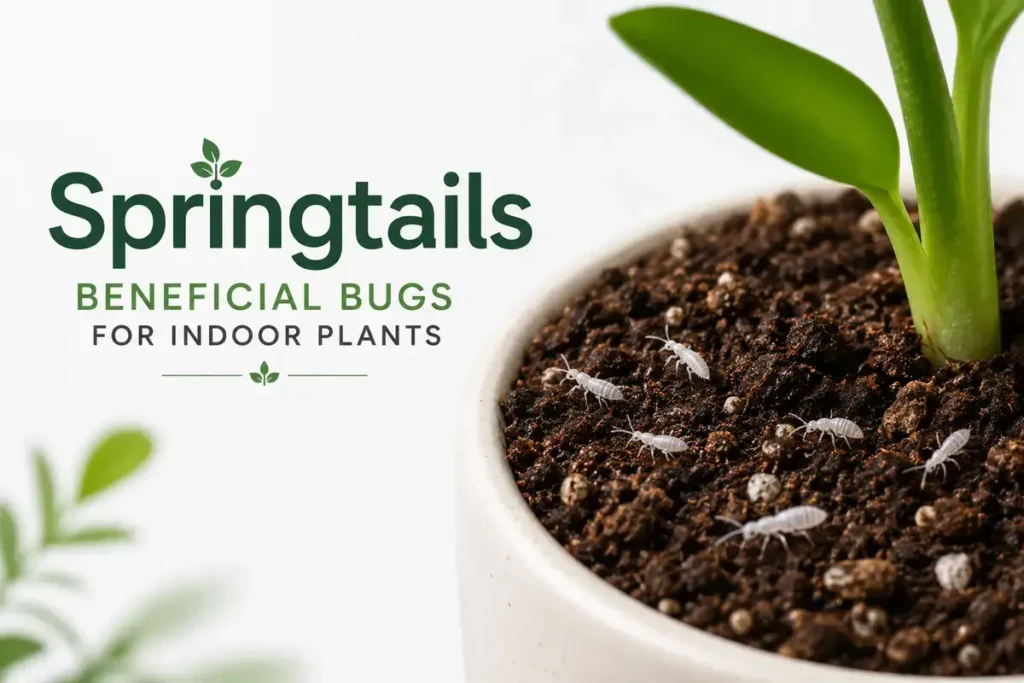
Springtails appear earlier in this series as a soil inhabitant that most plant owners mistake for a pest. In reality they are among the most beneficial organisms you can have in indoor plant soil. They feed on fungi, algae, and decaying organic matter, which directly reduces the food source that fungus gnat larvae depend on. In doing so they compete with and suppress fungus gnat larval populations naturally.
What they do: Consume fungi and decaying matter in soil, directly competing with and suppressing fungus gnat larval populations
How to introduce them: Springtail cultures are sold online as a starter culture in a small container. Add a small portion to the soil of affected plants and they establish and reproduce on their own. They require moist soil to survive, so they naturally regulate themselves in plants that dry out between waterings.
Where to buy: Josh’s Frogs and various bioactive terrarium suppliers carry springtail cultures. They are inexpensive and a single culture provides enough to treat multiple plants.
For a complete explanation of why springtails in your soil are a sign of healthy soil ecology rather than a pest problem, do indoor plants attract bugs covers the full distinction between harmful and harmless soil inhabitants.
How to Use Beneficial Bugs Effectively Indoors
Stop spraying before introducing beneficials. Any residual insecticide or organic spray on your plants will kill the beneficial insects you introduce. Stop all spray treatments at least one week before releasing predatory insects and do not resume spraying while the beneficials are active.
Introduce them early. Beneficial insects work best when pest populations are moderate rather than overwhelming. Waiting until an infestation is severe before introducing predators means the pests outnumber the beneficials and the predators cannot keep up. Introduce them when you first notice a problem rather than as a last resort.
Maintain appropriate conditions. Most predatory insects and mites have specific temperature and humidity requirements. Check the product specifications before ordering and confirm your indoor conditions match. Predatory mites in particular perform very differently at different humidity levels.
Accept that beneficials will eventually leave or die. Once pest populations collapse, predatory insects either leave through windows or die from lack of food. This is normal and expected. It means the treatment worked. Reintroduce as needed rather than expecting a permanent resident population.
Combine with non-chemical physical controls. Yellow sticky traps catch flying adult pests between predator feeding cycles. Manual removal of heavily infested leaves reduces pest numbers before introduction. These physical controls work alongside beneficials without harming them the way sprays do.
Conclusion
Beneficial bugs for indoor plants fill a gap that no spray product can fill: they hunt actively, reach pests in hidden locations, and continue working around the clock as long as prey is available. Ladybugs and lacewings for aphid infestations, predatory mites for spider mites, parasitic wasps for whiteflies, rove beetles and nematodes for soil-dwelling larvae, and springtails as ongoing soil health supporters cover the full range of common indoor plant pests without a single chemical application.
The key to success with beneficial insects indoors is timing and matching the right predator to the right pest. Introduce them before infestations become overwhelming, stop all spray treatments first, and accept that they will not establish as permanent residents once their food source is gone.
Used correctly as part of a broader pest management approach that includes proper watering, healthy plant maintenance, and regular inspection, beneficial insects make indoor plant pest control significantly more effective and far less dependent on repeated chemical applications.
Frequently Asked Questions
Are beneficial bugs safe to use indoors around children and pets?
Yes. Every beneficial insect covered in this guide is safe around children and pets. Parasitic wasps are too small to sting humans. Predatory mites stay on plants and soil. Ladybugs and lacewings are harmless to handle. Nematodes are microscopic and applied as a soil drench with no exposure risk. None of the beneficial insects used for indoor plant pest control pose any health risk to people or animals.
Where can I buy beneficial insects for indoor plants?
Arbico Organics is the most comprehensive source for beneficial insects in the country, carrying nearly every species mentioned in this guide with detailed guidance on which species suits each pest and environment. Planet Natural and Koppert Biological Systems are strong alternatives. Amazon carries several species including ladybugs, lacewings, and nematodes from various sellers, though quality varies more than with specialist suppliers.
How long do beneficial bugs last on indoor plants?
It depends on the species and the pest population available. Predatory mites and rove beetles can maintain populations in a plant collection for several weeks as long as prey is available. Ladybugs tend to disperse more quickly indoors, often within days. Nematodes remain active in moist soil for several weeks before populations decline. Once the target pest is eliminated, most beneficial insects die or disperse rather than persisting indefinitely.
Can I use beneficial bugs and spray treatments at the same time?
No. Contact sprays including organic options like insecticidal soap and neem oil kill beneficial insects on contact just as effectively as they kill pest insects. Stop all spray treatments at least one week before introducing beneficials and do not resume spraying while beneficial populations are active. Once the beneficial insects have completed their work and pest populations are eliminated, you can return to preventive spray applications if needed.
Which beneficial bug is best for aphids on indoor plants?
Green lacewing larvae are the most practical choice for indoor aphid control because they stay close to their release point rather than flying toward light sources like ladybugs do. Aphid midges are the most effective per individual insect, with each larva killing far more aphids than it eats. For a small indoor collection, lacewing eggs placed directly on affected plants provide the best combination of effectiveness and practicality.
Do I need to feed beneficial bugs after introducing them?
No. Beneficial insects introduced for pest control feed on the pest population already present on your plants. They do not need supplemental feeding. The pest population itself is their food source, which is why introducing them when pest numbers are moderate rather than minimal gives them enough prey to establish and reproduce before depleting their food supply.
Pingback: How to Get Rid of Flies in Indoor Plants: 9 Methods That Work - Plant Quill
Pingback: Insecticide Soap for Indoor Plants: 7 Things You Need to Know - Plant Quill