

Knowing how to care for a rosemary plant indoors is more specific than most herb care guides suggest, and that specificity is exactly why so many people buy a healthy rosemary plant and watch it slowly decline over the following months despite watering it regularly and keeping it in a reasonable spot. Rosemary is not a forgiving all-rounder like pothos or snake plant. It is a Mediterranean shrub with precise requirements that, when met, produces a vigorous, fragrant, nearly indestructible plant. When those requirements are not met, it declines in ways that look mysterious but trace back to one or two correctable causes.
This guide covers the 8 most important steps for keeping rosemary alive and healthy indoors, the specific mistakes that kill most indoor rosemary, and the difference between a plant that is thriving versus one that is slowly heading toward decline.
Quick Answer
Rosemary indoors needs at least six hours of direct sunlight daily through a south-facing window, fast-draining soil with perlite or coarse sand at 30 to 40% of the mix, watering only when the top two inches of soil are completely dry, temperatures between 60 and 80 degrees Fahrenheit, good air circulation to prevent fungal disease, and fertilizing lightly every four to six weeks through spring and summer. The most common cause of indoor rosemary death is overwatering combined with insufficient light and poor drainage.
Why Rosemary Is Difficult Indoors
Understanding rosemary’s natural habitat makes its indoor requirements make immediate sense.
Rosemary (Salvia rosmarinus, formerly Rosmarinus officinalis) is native to the rocky, sun-drenched hillsides of the Mediterranean coast. In its natural environment it grows in shallow, fast-draining rocky soil that dries completely between infrequent rainfall events. It receives intense direct sunlight essentially all day. It grows in open, breezy conditions with excellent air circulation. Winters are mild. Humidity is moderate.
Every care mistake that kills indoor rosemary is a departure from these native conditions. Overwatering replicates the waterlogged conditions the plant never experiences naturally. Poor drainage creates the root rot that its rocky native soil would never produce. Low indoor light creates the weak, stressed growth that makes the plant vulnerable to disease. Stagnant indoor air encourages the powdery mildew that open Mediterranean breezes would prevent.
Once you understand what rosemary expects, the care requirements stop feeling arbitrary and start feeling obvious.

Step 1: Get the Light Right First
Light is the most important and most commonly underestimated factor in indoor rosemary care. Most homes cannot provide what this plant truly needs, and the decline that follows insufficient light is the reason most indoor rosemary plants fail within six months of purchase.
Rosemary needs a minimum of six hours of direct sunlight daily. Not bright indirect light. Not a well-lit room. Direct sunlight through a window. A south-facing window that receives sun from late morning through afternoon is ideal. A west-facing window that catches afternoon sun works as a secondary option. East-facing windows that get only morning sun are marginal. North-facing windows make growing rosemary indoors essentially impossible without supplemental lighting.
In practice, this means the only windows in most homes where rosemary will genuinely thrive are the sunniest south and west exposures, ideally without trees or buildings blocking the light outside.
What insufficient light looks like: Long, thin, weak stems with widely spaced leaves rather than compact bushy growth. Pale green rather than rich deep green or grey-green foliage. Reduced fragrance since essential oil production drops in low light. Gradual decline over months rather than sudden collapse.
Grow light option: A high-output LED grow light positioned six to twelve inches above the plant and running fourteen hours daily supplements natural light effectively in spaces without adequate window sun. This is the realistic solution for plant lovers in apartments or north-facing homes who want to grow rosemary indoors.
Step 2: Get the Drainage Right Before You Do Anything Else
The second most important factor, and the one most directly responsible for sudden rosemary death rather than gradual decline, is drainage. Rosemary roots sitting in wet soil die quickly. Root rot in rosemary progresses faster than in most other houseplants because Mediterranean plants have essentially no adaptation to waterlogged conditions.
The right soil mix: Combine 60% standard potting mix with 30 to 40% perlite or coarse horticultural sand. This ratio drains freely after watering and returns the top two inches to dry within two to three days in typical indoor conditions. Standard potting mix alone, or any mix marketed as moisture-retaining, holds water too long for rosemary roots to tolerate.
The right pot: Always use a pot with drainage holes. Rosemary in a pot without drainage holes will develop root rot within months regardless of how carefully you water. Terracotta pots are particularly well-suited since they breathe through their walls and allow the soil to dry faster than plastic or glazed ceramic containers.
What root rot looks like: Leaves that turn grey, brown, or drop suddenly despite regular watering. Soil that stays wet for more than five to seven days after watering. A musty smell from the pot. Soft, dark roots rather than firm, white or tan roots when you check by removing the plant from its pot.
For the complete guide to building fast-draining soil mixes for Mediterranean herbs, soil mixture for indoor plants covers the exact ratios and components that create the drainage rosemary requires.
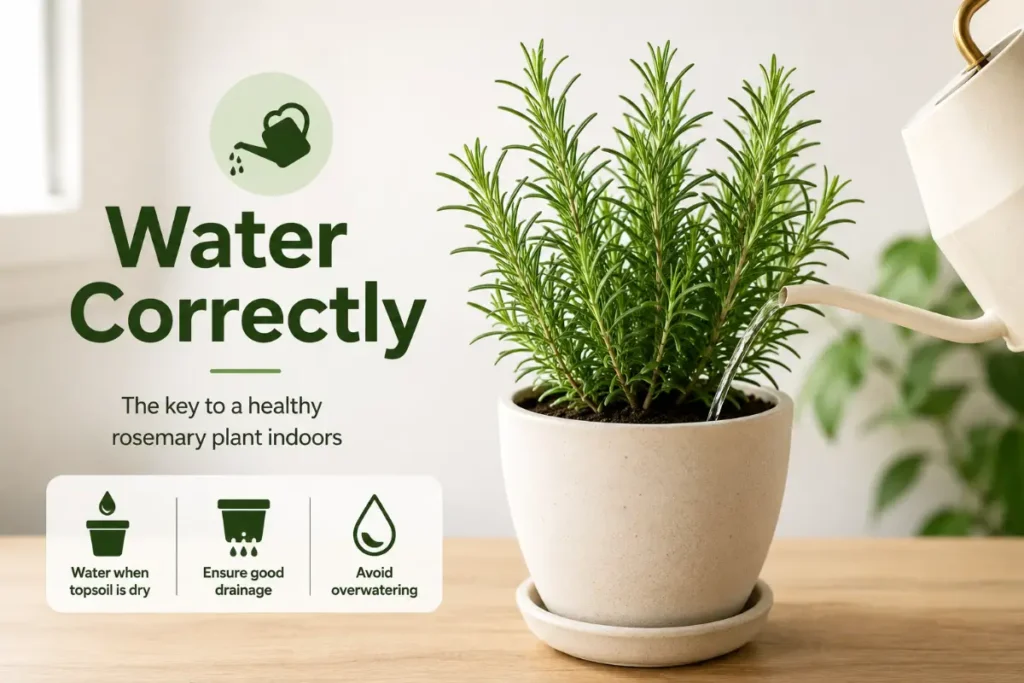
Step 3: Water Correctly — Less Than You Think
Rosemary is more likely to die from overwatering than from any other cause in a typical indoor setting. Its water storage in woody stems and deep tap roots in nature allow it to survive extended dry periods far better than most houseplants.
The correct approach: Push your finger two inches into the soil. Water only when that depth feels completely dry. In a sunny south-facing window in summer, this might mean watering every seven to ten days. In winter or in lower light, every fourteen to twenty-one days is more appropriate. There is no fixed schedule that works for all conditions.
How to water: Water thoroughly until water flows from the drainage holes, ensuring the entire root zone receives moisture. Then do not water again until the soil is dry two inches down. This thorough-then-dry cycle replicates the infrequent but complete rainfall events of the Mediterranean climate rosemary evolved in.
Seasonal adjustment: Rosemary needs significantly less water in fall and winter when growth slows and indoor light decreases. One of the most common mistakes is maintaining summer watering frequency through winter, which gradually overwaters the plant as its reduced growth rate decreases its water uptake.
Step 4: Provide the Right Temperature Range
Rosemary handles a wide temperature range but has specific limits that matter for indoor growing.
Ideal range: 60 to 80 degrees Fahrenheit covers the temperatures where rosemary actively grows and stays healthy indoors.
Cold tolerance: Rosemary can handle temperatures down to about 30 degrees Fahrenheit briefly outdoors, but cold drafts from windowpanes in winter create a problem indoors. The plant sitting in a sunny window during the day may experience the cold glass surface cooling its foliage at night when temperatures drop. Moving it a few inches from the glass in winter or placing a barrier between the plant and the cold glass prevents this cold stress.
Heat tolerance: Rosemary handles heat well when humidity is appropriate. Very high heat combined with low humidity stresses the plant more than heat alone.
What temperature stress looks like: Sudden leaf drop, yellowing, or browning particularly on the side of the plant facing the cold glass. This appears in winter when the plant was otherwise healthy through summer and fall.
Step 5: Ensure Good Air Circulation
In its Mediterranean native habitat, rosemary grows in open, breezy conditions. Stagnant indoor air creates the conditions for powdery mildew, a fungal disease that appears as white powdery coating on leaves and stems and spreads rapidly in still, moderately humid air.
Powdery mildew is one of the most common reasons indoor rosemary plants decline and is almost entirely preventable with adequate air circulation.
Practical solutions: Space rosemary away from other plants so air moves freely around all leaf surfaces. Run a small fan nearby on low setting for several hours daily, particularly in fall and winter when windows are closed and air movement is minimal. Open windows periodically in mild weather to introduce fresh moving air. Avoid placing rosemary in enclosed corners or against walls where air cannot circulate.
If powdery mildew appears: Remove affected stems immediately and improve air circulation. A diluted neem oil spray applied to remaining foliage every seven days for three weeks treats active infections. The best approach is prevention through consistent airflow since powdery mildew on rosemary, once established, is challenging to fully eliminate without removing significant plant material.
Step 6: Fertilize Lightly and Seasonally
Rosemary is not a heavy feeder. In its native poor, rocky soil it grows slowly and compactly without significant fertilizer inputs. Indoor rosemary benefits from light fertilizing during the growing season but responds poorly to heavy feeding with high-nitrogen products that drive the soft, lush growth that is attractive in some plants but creates weak, disease-prone growth in rosemary.
What works: A balanced liquid fertilizer at half the label rate applied every four to six weeks through spring and summer. Organic options including diluted fish emulsion or worm casting tea suit rosemary’s sensitivity well and do not drive excessive soft growth. For the complete guide to gentle organic fertilizer options that work for Mediterranean herbs without overstimulating growth, natural fertilizer for indoor plants covers every appropriate approach.
What to avoid: High-nitrogen synthetic fertilizers applied at full rate drive the soft, weak growth that makes rosemary vulnerable to mildew and pest problems. Fertilizing in fall and winter when the plant is not actively growing causes salt accumulation in the limited pot volume without any growth benefit.

Step 7: Prune Regularly to Maintain Shape and Health
Regular pruning does three things for indoor rosemary simultaneously: it maintains the compact, bushy shape that makes the plant attractive, it promotes the production of fresh new growth with the highest essential oil and flavor content, and it improves air circulation through the plant’s interior which reduces powdery mildew risk.
How to prune: Use clean, sharp scissors or pruning shears. Cut stems back by one-third of their length, cutting just above a leaf node where you can see two small leaves or buds. Never cut back into the woody brown stems below the green growth since rosemary does not regenerate from old wood the way many other herbs do.
Frequency: A light pruning every four to six weeks through the growing season maintains compact shape and continuously stimulates fresh growth. Harvest regularly for cooking since culinary use functions as pruning.
What not to do: Shearing the plant back by more than one-third at once stresses it significantly. Cutting into woody stems with no green growth above the cut produces sections that do not regrow. Irregular pruning that creates an unbalanced shape is cosmetically unattractive but not harmful to plant health.
Step 8: Know When to Bring It Outside
One of the most effective strategies for keeping indoor rosemary thriving is moving it outdoors during the warm months when conditions outside are closer to its natural Mediterranean habitat than any indoor space can provide.
Moving rosemary to a sunny patio, balcony, or outdoor windowsill from late spring through early fall provides the intense direct sun, natural air movement, and humidity levels that produce the vigorous growth that indoor conditions can only approximate. Plants that spend summer outdoors return indoors in fall noticeably larger, healthier, and more robust than those kept indoors year-round.
Transition carefully: Do not move an indoor-adapted plant directly into full outdoor sun. Give it one to two weeks of morning sun and afternoon shade before full-day outdoor sun exposure. The increased UV intensity outdoors compared to through glass can sunburn a plant acclimatized to indoor light levels even though rosemary is a sun-loving plant.
Before bringing it back inside: Inspect thoroughly for pests including aphids, spider mites, and mealybugs that may have established on outdoor rosemary during the warm season. For identification and treatment of any pests found on outdoor rosemary being brought indoors, indoor plants that repel bugs covers the pest species most likely to hitchhike indoors on rosemary and how rosemary itself functions as a pest deterrent for other nearby plants.
Rosemary as a Pest Deterrent Alongside Its Care Benefits
One underappreciated aspect of growing rosemary indoors is what it contributes to the broader plant environment beyond its own needs. The camphor and borneol compounds in rosemary that give it its distinctive resinous scent are the same compounds that deter mosquitoes, flies, and cabbage moths. A healthy, well-lit rosemary plant near a frequently opened window or door contributes to the natural pest management of the surrounding space while delivering its own culinary and aesthetic value.
This dual function makes positioning decisions for indoor rosemary easy when you think of it as a pest deterrent as well as an herb. The sunniest window in the kitchen near the door is often the best position both for the rosemary’s light needs and for its pest-deterring function in the room where flies and gnats are most likely to be a problem.
The pest deterrent benefit is most active when the plant is healthy and producing essential oils at full strength, which only happens in adequate light. A struggling rosemary in dim light produces fewer volatile compounds and therefore less deterrent effect. Another reason that getting the light right is the foundation of everything else in rosemary care.
Repotting Rosemary Indoors
Rosemary grows a substantial root system and benefits from repotting every one to two years as the root ball fills the current container.
Signs it needs repotting: Roots emerging from drainage holes. The plant drying out within two to three days of thorough watering indicating the root mass has displaced most of the soil. Significantly slowed growth in a plant that was previously vigorous.
How to repot: Choose a pot one to two inches larger in diameter. Use the fast-draining soil mix described in Step 2 of this guide. Terracotta is particularly beneficial for rosemary since the porous walls help the soil dry faster between waterings.
Timing: Spring is the ideal repotting time when the plant is entering its active growth period and roots establish quickly in new soil. Avoid repotting in winter when growth is slow and root establishment takes much longer.
After repotting: Wait four to six weeks before fertilizing since fresh soil contains starter nutrients and disturbed roots need the establishment period before additional fertilizer inputs. For the complete guide to post-repotting plant care timing, do you need nutrients after repotting a indoor plants covers exactly when to start and what approach suits recently repotted Mediterranean herbs specifically.
Conclusion
Caring for rosemary indoors successfully comes down to respecting its Mediterranean origin at every step. Maximum light through your sunniest window. Fast-draining soil that never stays wet. Watering only when the soil is truly dry two inches down. Good air circulation to prevent the mildew that stagnant indoor air encourages. Light, infrequent fertilizing. Regular pruning for compact, healthy growth.
The plants that fail indoors are almost always in positions too dim, in soil too moisture-retentive, and watered too frequently for a plant that evolved in sun-drenched, rocky, dry hillside conditions. Address those three factors and rosemary becomes one of the most rewarding indoor herbs you can grow. Fragrant, culinary, attractive, and nearly unkillable when its basic needs are actually met.
Frequently Asked Questions About How to Care for a Rosemary Plant Indoors
Why does my indoor rosemary keep dying?
The most common cause of indoor rosemary death is overwatering in combination with insufficient light and poor soil drainage. Rosemary roots rot quickly in consistently wet soil, and the plant’s decline from root rot looks similar to drought stress, which leads many owners to water more rather than less, accelerating the problem. Check that soil drains freely, allow the top two inches to dry completely between waterings, and ensure the plant receives at least six hours of direct sunlight daily.
How much light does rosemary need indoors?
A minimum of six hours of direct sunlight daily through a south or west-facing window. Bright indirect light is not sufficient for rosemary to thrive long-term indoors. In light below this threshold the plant survives initially but gradually weakens over months as it cannot photosynthesize enough to maintain vigorous growth. A grow light running fourteen hours daily is the practical solution for spaces without adequate natural direct sunlight.
Can rosemary survive indoors in winter?
Yes, with careful management. Reduce watering significantly in winter since growth slows and the plant needs far less water than during the active growing season. Maintain the best light you can provide. Keep it away from cold glass and drafty windows. Ensure good air circulation to prevent the powdery mildew that develops most readily in the still, dry air of heated winter homes. Many rosemary plants survive winter indoors that were thriving outdoors in summer.
Why are the leaves on my indoor rosemary turning grey or brown?
Grey or brown leaves on indoor rosemary most commonly indicate root rot from overwatering or powdery mildew from poor air circulation. Remove the plant from its pot and examine the roots. Dark, soft, mushy roots confirm root rot. Trim away affected roots, repot into fresh fast-draining soil, and reduce watering frequency. White powdery coating on leaves and stems indicates mildew. Remove affected growth, improve air circulation, and treat with diluted neem oil spray every seven days for three weeks.
How often should I water rosemary indoors?
There is no fixed schedule that applies universally. Water when the top two inches of soil feel completely dry, which typically means every seven to fourteen days in summer in a bright sunny position and every fourteen to twenty-one days in winter or in lower light. Following a fixed calendar schedule rather than checking soil moisture is one of the most common causes of indoor rosemary decline from overwatering.
Can I harvest rosemary from an indoor plant?
Yes, and regular harvesting functions as pruning that benefits plant health. Cut stems from the tips, taking no more than one-third of any stem’s length in a single harvest. The essential oil content and flavor are highest in the youngest growth at stem tips. Harvesting regularly from multiple stems rather than repeatedly from the same stems encourages balanced, bushy growth that keeps the plant both productive and attractive.


Pingback: Indoor Herb Garden: How to Set One Up and Keep It Producing - Plant Quill