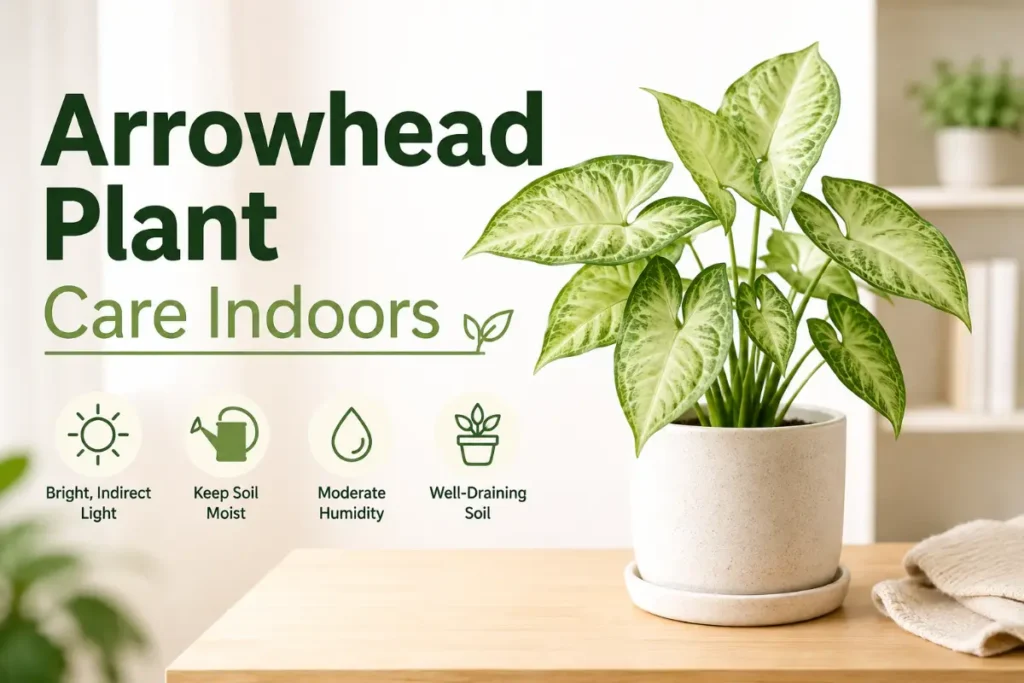
Arrowhead plant care indoors is genuinely straightforward once you understand that this plant goes through two distinct growth phases with different appearances and slightly different needs. When young, the arrowhead plant (Syngonium podophyllum) produces the distinctive arrow-shaped leaves that give it its name, staying compact and bushy. As it matures, it transitions to a vining habit with leaves that split into multiple lobes, trailing or climbing depending on what support you offer.
Most people buy an arrowhead plant during its compact juvenile phase and are surprised when it begins vining. This is not a problem. It is just the plant doing what it naturally does. Understanding both phases makes caring for arrowhead plant far less confusing than it seems when the plant suddenly starts behaving differently from what you expected.
Quick Answer
Arrowhead plant care indoors requires bright to medium indirect light for best leaf color, consistent moisture that never becomes waterlogged, temperatures between 60 and 85 degrees Fahrenheit, moderate to high humidity, fertilizing every two weeks through spring and summer, and regular pruning if you want to maintain the compact juvenile form rather than allowing it to vine. It is one of the most forgiving tropical houseplants available, tolerating a wide range of conditions while still looking attractive.
Understanding Arrowhead Plant Growth Phases
Syngonium podophyllum naturally transitions from a compact upright juvenile form to a trailing or climbing mature form as it grows. Both phases are healthy and attractive but look quite different.
Juvenile phase: Arrow-shaped leaves on short petioles. Compact and bushy. This is the form most commonly sold at garden centers. The plant stays in this phase longer when tips are pinched regularly and when it grows in moderate rather than very high light.
Mature vining phase: Leaves develop multiple lobes losing the simple arrow shape. The plant trails or climbs rather than staying upright. This phase produces larger individual leaves and a more lush dramatic appearance when supported on a moss pole.
Managing the transition: If you prefer the compact juvenile form, pinch stem tips regularly every two to four weeks. If you prefer the mature vining form, allow stems to extend naturally and provide a moss pole or trellis for the plant to climb.
Step 1: Choose the Right Light for Leaf Color
Light is the primary factor determining leaf color intensity in arrowhead plants. Many popular varieties come in pink, white, green, and tricolor combinations that are most vibrant in good light and fade toward plain green in insufficient light.
What works: Bright indirect light from an east or north-facing window produces the best color in variegated and pink varieties. A few feet back from a south or west-facing window works for variegated varieties. Grow lights running eight to ten hours daily maintain good color in interior spaces.
The color rule: The more colorful the variety, the more light it needs to maintain that color. Pink Syngonium varieties need significantly more light than all-green varieties to stay pink rather than fading toward green.
Step 2: Water Consistently for Moist Soil
Arrowhead plant prefers consistently moist soil and communicates when thirsty through drooping leaves similar to peace lily.
The correct approach: Water when the top inch of soil feels dry, typically every five to seven days in a bright position during summer and every seven to ten days in lower light or winter.
Signs of overwatering: Yellow lower leaves. Soil staying wet for more than ten days. A musty smell from the pot.
Signs of underwatering: Drooping stems and leaves. Brown dry leaf edges. Soil pulling away from pot sides.
Water quality: Arrowhead plant is moderately sensitive to fluoride and salt accumulation from tap water. Filtered or distilled water reduces brown tip issues in hard water areas.
Step 3: Maintain Temperature in the Comfort Zone
Ideal range: 60 to 85 degrees Fahrenheit. This aligns well with typical US home temperatures making temperature management straightforward.
Cold sensitivity: Below 55 degrees growth slows noticeably. Below 50 degrees the plant shows stress with yellowing and potential leaf drop. Keep away from cold windowpanes and exterior doors that let in cold drafts.
One practical advantage: Arrowhead plant tolerates temperature variation better than many tropical plants making it a good choice for rooms that experience temperature swings between day and night.
Step 4: Provide Moderate to High Humidity
As a tropical plant from humid forest environments, arrowhead plant prefers humidity above 50%.
Signs of low humidity: Brown leaf tips and edges. Crispy texture on leaf margins. Overall slower growth than expected.
Effective solutions: A pebble tray with water beneath the pot. Grouping with other tropical plants. A humidifier running nearby during winter heating season.
Misting tolerance: Arrowhead plant tolerates misting every two to three days without disease risk, though a pebble tray or humidifier provides more sustained results.
Step 5: Fertilize for Vigorous Growth and Color
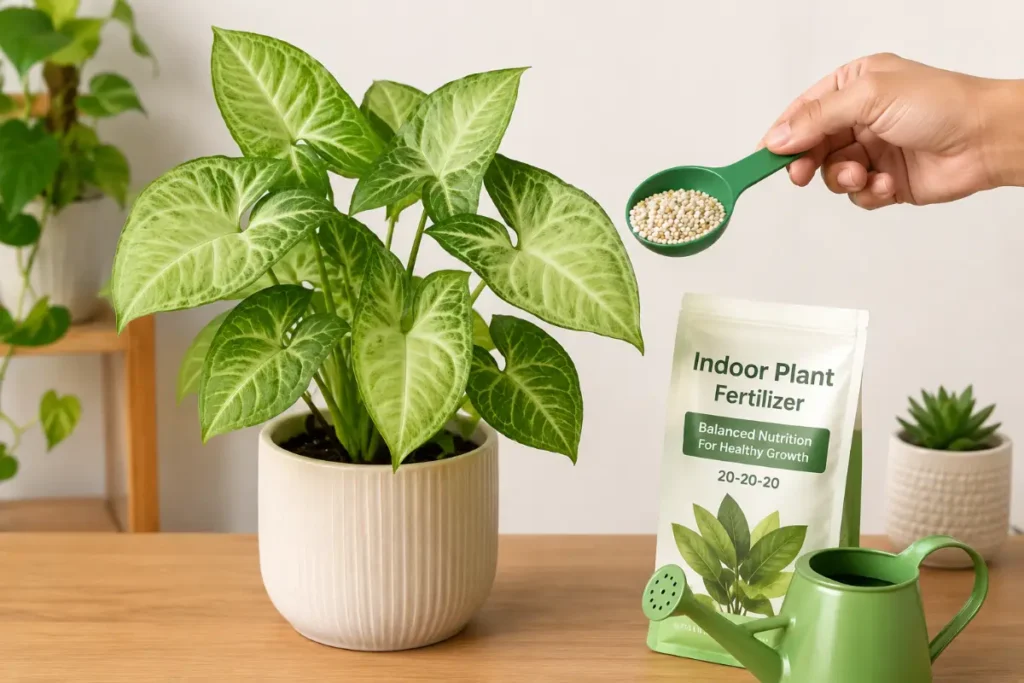
Through spring and summer: Feed every two weeks with a balanced liquid fertilizer at half the label rate.
For variegated varieties: Slightly lower nitrogen ratios with more balanced potassium may maintain better color in pink and white variegated varieties. Excessive nitrogen can drive lush green growth that dilutes colored variegation.
Organic options: Worm casting tea every two weeks provides gentle nutrition and soil biology benefits. For the complete guide to organic fertilizer approaches for tropical foliage plants, worm castings for indoor plants covers every method with timing guidance.
Fall and winter: Reduce to monthly feeding or stop entirely when growth slows.
Step 6: Prune to Maintain Your Preferred Form
For compact juvenile form: Pinch stem tips back to just above a leaf node every two to four weeks. Each pinched stem produces two new branches creating a fuller bushier plant over time.
For vining mature form: Allow stems to extend naturally and provide a moss pole or trellis. Clean sharp pruning to remove dead or damaged stems and manage overall size is all that is needed.
Propagating pruned cuttings: Stem cuttings from arrowhead plant root easily in water or moist potting mix within two to three weeks making pruning sessions an easy opportunity for propagation.
Step 7: Manage Pests and Common Problems
Spider mites appear in dry winter conditions. Neem oil spray every seven days for three weeks handles active infestations. Maintaining humidity above 50% prevents establishment.
Mealybugs appear as white cottony clusters at leaf nodes. Treat with rubbing alcohol applied directly to visible clusters followed by neem oil spray. For complete treatment guidance for soft-bodied indoor plant pests, how to get rid of aphids on indoor plants covers the escalation approach that applies equally to mealybug treatment.
Leaf reversion to green in variegated varieties: Almost always caused by insufficient light. Move to brighter indirect light and new growth emerges with better color within two to four weeks.
Arrowhead Plant Varieties Worth Knowing
Neon Robusta produces bright pink leaves with green margins. Needs the most light to maintain its color.
White Butterfly has soft grey-green and white variegated leaves. Maintains good color in medium to bright indirect light and is one of the most widely available varieties.
Bold Allusion has cream and green leaves with pink tones. More compact growing habit and tolerates slightly lower light while maintaining coloring better than fully pink varieties.
Green species form is the most light-tolerant and forgiving of all varieties. Grows vigorously in medium to low indirect light. The most appropriate choice for dimmer indoor positions.
Soil and Repotting
Arrowhead plant grows moderately fast and needs repotting every one to two years.
Soil mix: Standard potting mix with 20% perlite provides the right balance of moisture retention and drainage.
Pot size: Choose a container two inches larger in diameter than the current one. An oversized pot holds excess soil volume that stays wet and encourages overwatering.
After repotting: Wait four to six weeks before resuming fertilizing. For the complete guide on post-repotting care and nutrition timing, do you need nutrients after repotting a indoor plants covers exactly when to start and what rate to use.
Arrowhead Plant as an Air Purifier
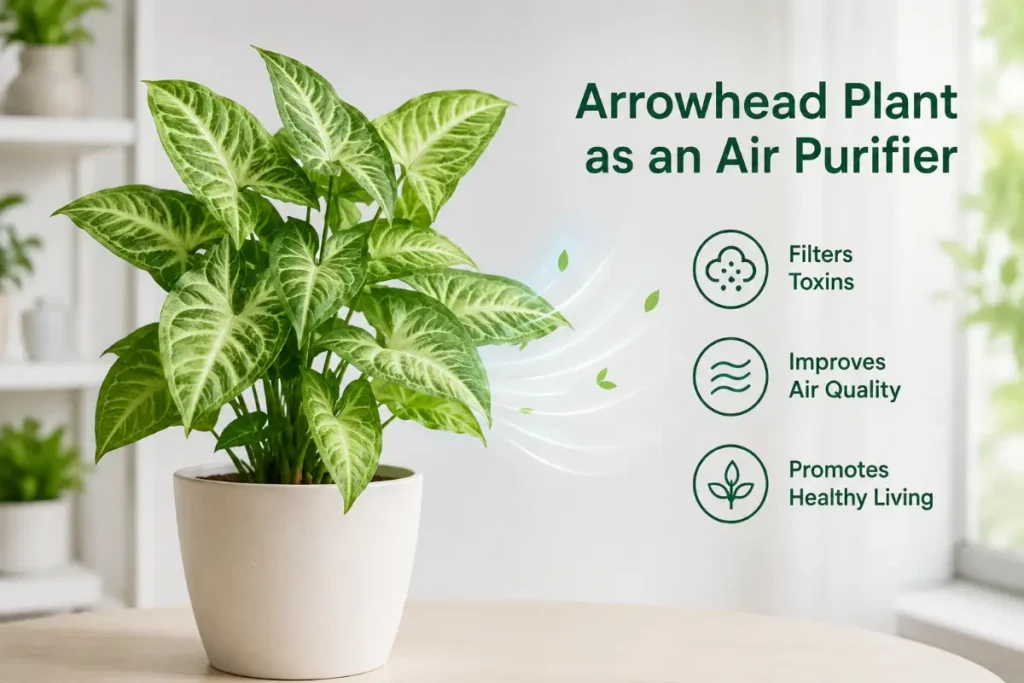
Research indicates arrowhead plant removes benzene, formaldehyde, and xylene from indoor air through leaf absorption and root zone microbial activity. Its relatively fast growth and large collective leaf surface area compared to its compact size make it one of the more efficient air purifiers per unit of floor space occupied among common houseplants.
Arrowhead Plant Toxicity
Arrowhead plant contains calcium oxalate crystals throughout its tissue that cause oral irritation, excessive drooling, and difficulty swallowing in cats and dogs that chew on the plant. Keep out of reach of pets that regularly chew houseplants.
Conclusion
Arrowhead plant care indoors is among the most accessible of all tropical houseplant care routines. It tolerates a wider range of light, temperature, and watering conditions than most comparable tropical plants while producing genuinely attractive foliage in a range of colors that suit any interior aesthetic.
Bright indirect light for best color in variegated varieties. Consistent moisture without waterlogging. Comfortable indoor temperatures away from cold drafts. Moderate humidity. Regular fertilizing through the growing season. And pruning decisions based on whether you want the compact juvenile form or the trailing mature form. Those practices produce the lush colorful growth that makes this affordable widely available houseplant one of the most satisfying additions to any indoor collection.
Frequently Asked Questions
Why is my arrowhead plant turning green and losing its color?
Color loss in variegated arrowhead plant varieties almost always indicates insufficient light. Move to a brighter indirect light position and new growth will emerge with full color within two to four weeks. Already-green leaves will not recover their original color but new growth in improved light shows full variegation.
How do I keep my arrowhead plant bushy rather than vining?
Pinch stem tips back to just above a leaf node every two to four weeks throughout the growing season. This removes apical dominance and stimulates two new shoots from the node below the cut. Stop pinching to allow vining whenever you prefer the trailing mature form.
How often should I water arrowhead plant indoors?
Water when the top inch of soil feels dry, typically every five to seven days in a bright position during summer and every seven to ten days in lower light or winter. Arrowhead plant prefers consistent moisture and droops noticeably when underwatered, though it recovers quickly after watering.
Can arrowhead plant grow in low light?
Green-leaved varieties tolerate medium to low indirect light better than most other tropical houseplants. Variegated and colored varieties need significantly more light than solid green varieties to maintain their distinctive coloring. In very low light all varieties survive but grow slowly and variegated forms revert toward solid green.
Is arrowhead plant safe for cats?
No. It contains calcium oxalate crystals that cause oral irritation, excessive drooling, and difficulty swallowing when chewed or ingested by cats or dogs. Keep out of reach of pets that regularly interact with or chew on houseplants.
How fast does arrowhead plant grow indoors?
Arrowhead plant is a moderately fast grower producing several new leaves per month through spring and summer in bright indirect light with regular fertilizing. Growth slows noticeably in fall and winter as light levels decrease. In lower light conditions growth is slower year-round but still occurs consistently, making it one of the few foliage plants that continues producing new leaves in medium to low light environments.