

Care for rosemary plant indoors trips up even experienced gardeners because rosemary behaves so differently from other common herbs. Basil, mint, and parsley are forgiving and grow vigorously in average indoor conditions. Rosemary is a Mediterranean shrub that evolved in some of the most demanding conditions on earth and has specific requirements that most indoor environments fail to provide by default.
The result is a familiar pattern: a healthy rosemary from the garden center looks beautiful for a few weeks, then gradually declines into a grey, dry, dropping plant that seems to resist every care attempt. Understanding exactly why this happens and what to do about it changes the outcome entirely.
Quick Answer
Care for rosemary plant indoors requires a minimum of six hours of direct sunlight daily through a south-facing window, fast-draining soil with 30 to 40% perlite or coarse sand, watering only when the top two inches of soil are completely dry, good air circulation to prevent powdery mildew, temperatures between 55 and 80 degrees Fahrenheit, light fertilizing every four to six weeks through spring and summer, and regular pruning to maintain compact bushy growth. The three most common causes of indoor rosemary failure are overwatering, insufficient light, and poor drainage.
Why Rosemary Struggles Indoors More Than Other Herbs
Rosemary (Salvia rosmarinus) is native to the rocky limestone hillsides of the Mediterranean coast where it grows in shallow, fast-draining, nutrient-poor soil under intense direct sun with excellent airflow from coastal breezes. The soil drains completely after rainfall and dries quickly between events.
Standard indoor conditions violate almost every one of these natural preferences simultaneously. Average potting mix holds far more moisture than Mediterranean rocky soil. Indoor light is a fraction of direct Mediterranean sun intensity. Indoor air is still compared to the coastal breezes that keep rosemary healthy outdoors.
Knowing this origin explains why care for rosemary indoors requires active adjustment of growing conditions rather than the benign neglect that works for tropical houseplants. Every tip below traces directly back to what the Mediterranean hillside provides that your living room does not.
Tip 1: Light Is Non-Negotiable
Rosemary needs a minimum of six hours of direct sunlight daily, not bright indirect light, not a well-lit room, but actual direct sun rays through a window.
The right window: South-facing windows that receive direct sun from late morning through afternoon are ideal. West-facing windows catching afternoon sun are acceptable. East-facing windows receiving only morning sun are marginal. North-facing windows make growing rosemary indoors essentially impossible without a grow light.
What insufficient light produces: Long, thin, widely spaced stems. Reduced essential oil content and fragrance. Vulnerability to powdery mildew. Gradual decline over months that no other care improvement can reverse without first fixing the light.
Grow light solution: A high-output full-spectrum LED grow light positioned eight to twelve inches above the plant and running fourteen hours daily is the practical solution for homes without adequate south-facing window exposure.
Tip 2: Drainage Is Life or Death for Rosemary
Rosemary root rot from overwatering in poorly draining soil is the most common cause of indoor rosemary death and progresses faster than most plant owners expect.
The right soil: Combine 60% standard potting mix with 30 to 40% perlite or coarse horticultural sand. This drains freely within minutes of watering rather than staying moist for days. Standard potting mix alone holds far too much moisture for rosemary roots.
The right pot: Terracotta pots are the best choice because their porous walls allow moisture to evaporate through the sides, producing a faster drying cycle. Always ensure drainage holes are present and unobstructed.
Testing drainage: After watering, water should flow from drainage holes within thirty seconds. If water pools on the surface for more than a minute before absorbing, the mix is too dense. Add more perlite or repot into the correct fast-draining mix.
For the complete guide to building fast-draining soil mixes for Mediterranean herbs, soil mixture for indoor plants covers every component and ratio with specific guidance for drought-adapted plants.
Tip 3: Water Less Than You Think Necessary
Watering frequency is the second most common rosemary killer indoors. Most people water rosemary on the same schedule as their tropical plants and chronically overwater it.
The correct check: Push your finger two full inches into the soil. Water only when that depth feels completely dry. In a sunny south-facing window during summer this might mean watering every ten to fourteen days. In winter or lower light, every fourteen to twenty-one days or longer.
The thorough-then-dry cycle: When you do water, water thoroughly until it flows from the drainage holes. Then allow the soil to dry completely to two inches depth before the next watering. This replicates the infrequent but complete rainfall of the Mediterranean climate rosemary evolved in.
Seasonal reduction: Rosemary needs dramatically less water in fall and winter when growth slows. Maintaining summer watering frequency through winter is one of the most reliable ways to kill indoor rosemary.
Signs of overwatering: Grey or brown needles that drop when touched. A musty smell from the pot. Soil staying wet for more than a week after watering.
Tip 4: Keep Air Moving Around the Plant
Powdery mildew is the most common disease problem for indoor rosemary and is almost entirely caused by stagnant air. In its native Mediterranean habitat rosemary grows in open breezy conditions where fungal spores cannot settle on plant surfaces.
Signs of powdery mildew: White powdery coating on leaves and stems. Affected leaves curl or distort. The infection spreads rapidly in still moderately humid air.
Prevention: Space rosemary away from walls and other plants so air circulates freely. Run a small fan nearby on low setting for several hours daily particularly in fall and winter. Open windows briefly during mild weather to introduce fresh moving air.
Treatment if mildew appears: Remove affected stems and leaves immediately. Apply diluted neem oil spray to remaining foliage every seven days for three weeks. Prevention through consistent airflow is more effective than treatment since established powdery mildew on rosemary is difficult to fully eliminate.
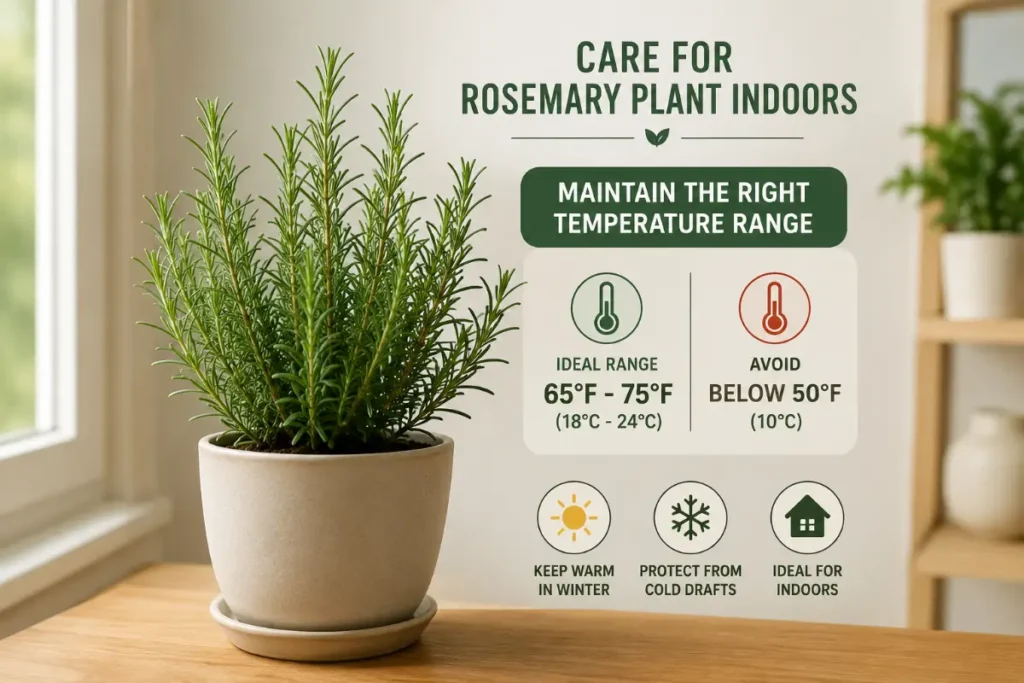
Tip 5: Maintain the Right Temperature Range
Rosemary prefers cooler conditions than most tropical houseplants, which makes it a good fit for spots that stay slightly cooler than average.
Ideal range: 55 to 80 degrees Fahrenheit. The cooler end of this range is actually preferred for best flavor and essential oil production.
Cold sensitivity: Rosemary tolerates temperatures as low as 30 degrees Fahrenheit outdoors but indoor cold drafts from windows create a specific problem. The combination of cold glass and still indoor air promotes condensation and powdery mildew. Move the plant a few inches from the glass in winter.
Heat and airflow: The combination of heat and stagnant air is more damaging than heat alone. In warm indoor environments, airflow becomes even more important.
Tip 6: Fertilize Lightly and Seasonally
Rosemary evolved in nutrient-poor Mediterranean soil. Heavy fertilizing drives the soft lush growth that creates weak disease-prone plants vulnerable to powdery mildew indoors.
What works: A balanced liquid fertilizer at half the label rate every four to six weeks through spring and summer only. This is less frequent than most herbs and houseplants need. Organic options including diluted fish emulsion or worm casting tea suit rosemary’s modest nutritional needs without driving excessive soft growth.
What to avoid: High-nitrogen synthetic fertilizers at full rate. Fertilizing in fall and winter. Both contribute to the weak mildew-prone growth that shortens indoor rosemary’s productive life.
For the complete guide to gentle fertilizer options suited to Mediterranean herbs, natural fertilizer for indoor plants covers every appropriate approach.
Tip 7: Prune Regularly for Compact Productive Growth
Regular pruning maintains the compact bushy shape, promotes fresh new growth with the highest essential oil content, and improves air circulation that directly reduces powdery mildew risk.
How to prune: Use clean sharp scissors. Cut stems back by no more than one-third of their length at any single session. Cut just above a leaf node where two small leaves or buds are visible. Never cut into the woody brown stems below the green growth since rosemary does not regenerate from old wood.
Frequency: Light pruning every four to six weeks through the growing season. Regular culinary harvesting functions as pruning since it removes stem tips in the same way.
The result: Fresh new growth from nodes below the cut within two to three weeks. This new growth has the highest concentration of essential oils responsible for rosemary’s culinary and aromatic value.
Tip 8: Move Outside for Summer When Possible
Moving rosemary outdoors during warm months provides conditions that indoor environments simply cannot replicate: intense direct sun, natural airflow, and appropriate humidity.
When to move outside: After the last frost date and once nighttime temperatures consistently stay above 45 degrees.
Where to place it outdoors: Full sun on a patio, balcony, or outdoor windowsill. Rosemary handles direct all-day sun outdoors once acclimatized.
Transition carefully: Acclimate over one to two weeks starting with morning sun and afternoon shade before full outdoor sun exposure. The UV intensity outdoors compared to through glass can sunburn a plant adjusted to indoor light levels even though rosemary is a sun-loving plant.
Before bringing back inside in fall: Inspect for any pests that established during the outdoor season and treat before introducing the plant to your indoor collection. For comprehensive guidance on pest treatment for herbs coming indoors from outdoor positions, indoor plant spray for bugs covers every effective spray approach for common hitchhiking pests.
Rosemary Varieties Best Suited to Indoor Growing
Not all rosemary varieties perform equally indoors. Compact varieties including Blue Boy and Spice Island stay naturally smaller and bushier than upright types, fitting indoor pot culture better with less frequent pruning. Upright varieties including Tuscan Blue produce more harvestable foliage but need larger pots and more aggressive pruning to maintain manageable size.
Arp is one of the most cold-hardy rosemary varieties and tolerates the occasional cold draft better than most, making it a good choice for gardeners who struggle to keep other varieties alive through winter indoors.
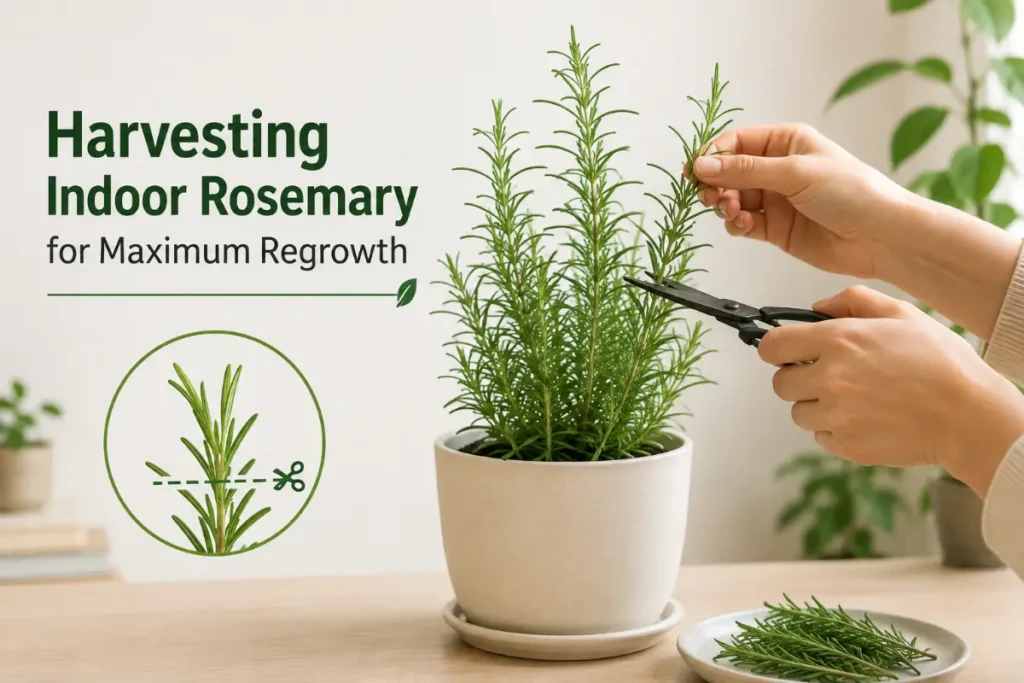
Harvesting Indoor Rosemary for Maximum Regrowth
Always harvest from stem tips rather than from the middle or base of stems. Tips contain the highest essential oil concentration and their removal stimulates the same branching response as pruning. Remove no more than one-third of any individual stem in a single harvest. Taking more significantly stresses the stem and slows recovery.
The more frequently you harvest in small amounts, the more new growth the plant produces in response, creating a positive cycle of stimulation and regrowth that keeps the plant actively productive through the growing season.
For understanding how rosemary’s pest-deterrent properties work alongside its culinary benefits to make it one of the most multifunctional indoor herbs available, indoor plants that repel bugs covers the specific compounds in rosemary that deter common indoor insect pests.
Companion Herbs That Grow Well Alongside Rosemary Indoors
Growing rosemary alongside other herbs in a sunny window requires matching companions that share its preference for bright light and lean well-draining soil rather than the moisture-loving conditions most culinary herbs prefer.
Thyme is the most compatible companion for indoor rosemary. It shares rosemary’s Mediterranean origin, preference for well-draining soil, tolerance for drying between waterings, and requirement for direct sun. The two can share a pot or grow side by side on the same south-facing windowsill with essentially identical care requirements.
Lavender shares rosemary’s Mediterranean preferences including full sun, fast-draining soil, and tolerance for dry conditions. It is somewhat more cold-sensitive than rosemary indoors but thrives in the same conditions when positioned correctly.
Oregano is more moisture-tolerant than rosemary but handles drier conditions well enough to share a sunny windowsill without the dramatically different watering schedules that make pairing rosemary with basil or parsley impractical.
What not to pair with rosemary: Basil, mint, cilantro, and parsley all prefer consistently moist soil and cannot be watered on the same dry schedule that rosemary needs. Growing these together inevitably means either overwatering the rosemary or underwatering the moisture-loving herbs.
Repotting Indoor Rosemary
Rosemary grows slowly and does not need frequent repotting. Repot only when roots emerge from drainage holes in quantity or when the plant dries out within two to three days of thorough watering indicating the root mass has displaced most of the soil.
Spring is the best repotting time when the plant is entering its active growth phase. Choose a terracotta pot only one to two inches larger than the current one and fill with the fast-draining mix described in Tip 2. Avoid the temptation to use a significantly larger pot since excess soil volume stays wet far longer than rosemary roots tolerate.
After repotting, wait four to six weeks before fertilizing since the disturbed root system needs the establishment period before additional nutrient inputs. For the complete guide on post-repotting nutrition timing, do you need nutrients after repotting a indoor plants covers exactly when to start and what rates suit recently disturbed Mediterranean herb root systems.
Seasonal Care Calendar for Indoor Rosemary
Spring: Resume fertilizing at half rate every four to six weeks as growth accelerates. Begin regular pruning cycle. Move to the sunniest available window as day length increases. This is the best time to repot if needed.
Summer: Full light and pruning schedule. Consider moving outdoors if possible. Monitor for spider mites and aphids that occasionally appear on outdoor-placed rosemary before bringing it back inside. Watch for powdery mildew if temperatures are high and airflow is insufficient.
Fall: Stop fertilizing as growth slows. Reduce watering frequency significantly. Move away from cold windowpanes as outdoor temperatures drop. If the plant was outdoors, inspect for pests and bring inside before nighttime temperatures drop below 40 degrees.
Winter: Very infrequent watering, every two to three weeks or longer. No fertilizing. Maintain the best available light. Run a fan to prevent the stagnant air that encourages powdery mildew in winter conditions. Monitor for powdery mildew more closely than in other seasons since the combination of still air, reduced light, and occasional condensation from windows creates the most favorable conditions for this disease.
Rosemary grown with consistent care indoors rewards patient growers with one of the most aromatic and useful plants in any herb collection. The specific requirements are real but so are the rewards of fresh rosemary available year-round for cooking, fragrance, and the satisfaction of keeping a Mediterranean shrub thriving far from its native hillside.
Conclusion
Care for rosemary plant indoors succeeds when every decision reflects what this Mediterranean shrub evolved to need. Maximum available direct sunlight. Fast-draining soil that never stays wet. Watering only when soil is dry two inches down. Good airflow to prevent powdery mildew. Light infrequent fertilizing. Regular pruning for compact productive growth. And outdoor summer placement whenever possible.
These are not arbitrary rules. They are translations of the rocky sun-drenched wind-swept Mediterranean hillside into an indoor pot. Match those conditions as closely as your home allows and rosemary becomes one of the most rewarding indoor plants you can grow, producing continuous fragrant harvests through the growing season.
Frequently Asked Questions
Why does my indoor rosemary keep dying?
The most common cause of indoor rosemary death is overwatering combined with poorly draining soil and insufficient light. Rosemary roots evolved in fast-draining rocky Mediterranean soil and rot quickly in standard potting mix kept consistently moist. Check that your soil drains freely, allow the top two inches to dry completely between waterings, and ensure the plant receives at least six hours of direct sunlight daily.
How much sun does rosemary need indoors?
A minimum of six hours of direct sunlight daily through a south or west-facing window. Bright indirect light is not sufficient for rosemary to thrive long-term indoors. In light below this threshold the plant gradually weakens over months. A grow light running fourteen hours daily is the practical solution for spaces without adequate direct natural sunlight.
How often should I water rosemary indoors?
Water only when the top two inches of soil feel completely dry, typically every ten to twenty-one days depending on season and light levels. In winter, water even less frequently. Following a fixed calendar schedule leads to overwatering in fall and winter when the plant needs significantly less water than during active summer growth.
What causes white powder on my rosemary plant?
White powdery coating is powdery mildew caused by poor air circulation. Remove affected growth immediately, improve airflow with better plant spacing and a small fan, and apply diluted neem oil spray every seven days for three weeks. Prevention through consistent airflow is more effective than treatment since established powdery mildew on rosemary is difficult to fully eliminate.
Can I grow rosemary indoors year round?
Yes, with the right conditions. A south-facing window with direct sun, fast-draining soil, careful watering, and good air circulation support year-round indoor rosemary growth. The plant grows more slowly in winter but maintains health with appropriate care adjustments. Moving outdoors for summer produces noticeably better plant health than strict year-round indoor growing.
Why is my rosemary turning grey and dropping needles?
Grey dropping needles indicate advanced root rot from overwatering in poorly draining soil. Remove from the pot and examine roots. Dark soft mushy roots confirm root rot. Trim all affected roots, dust cuts with cinnamon or sulfur powder, and repot into fresh fast-draining mix with 30 to 40% perlite. If most roots are affected the plant may not recover. Early detection is critical since rosemary root rot reaches a fatal stage faster than most other houseplants.