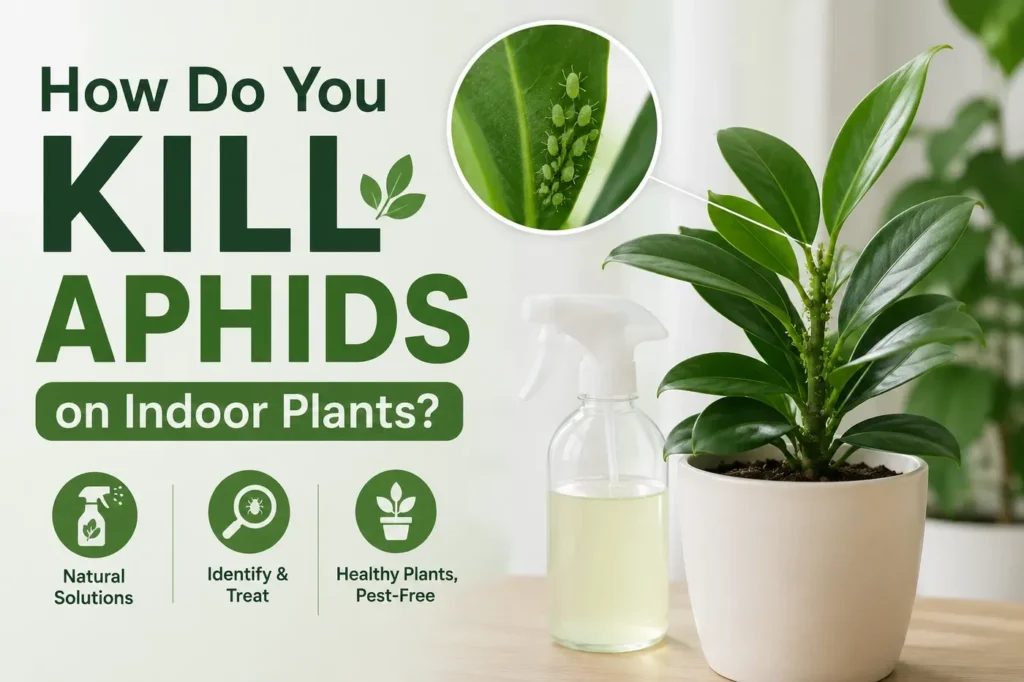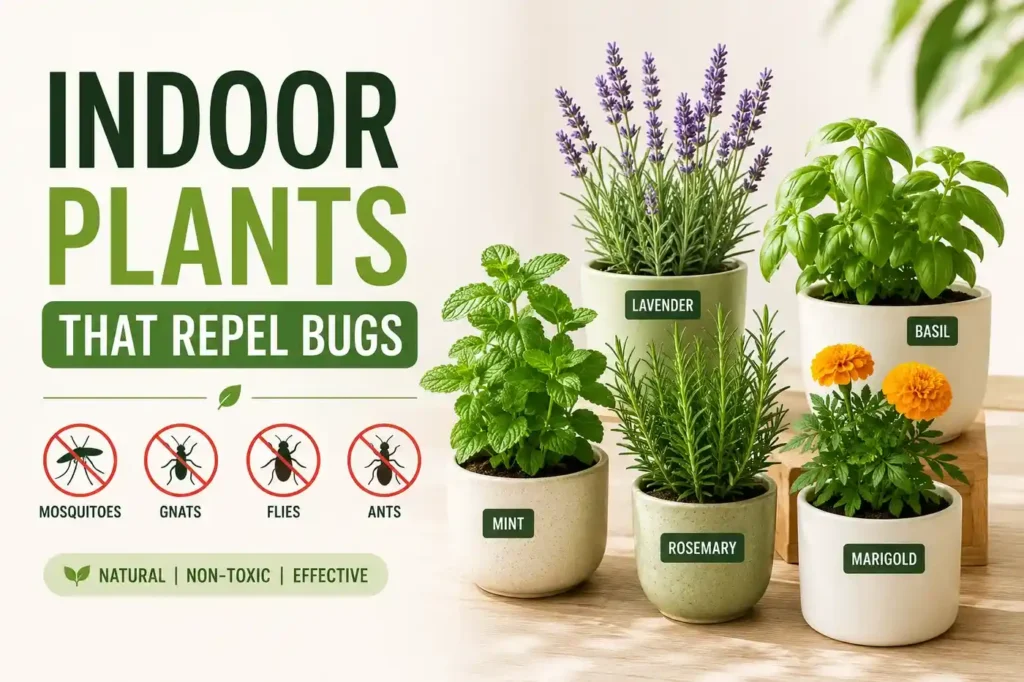
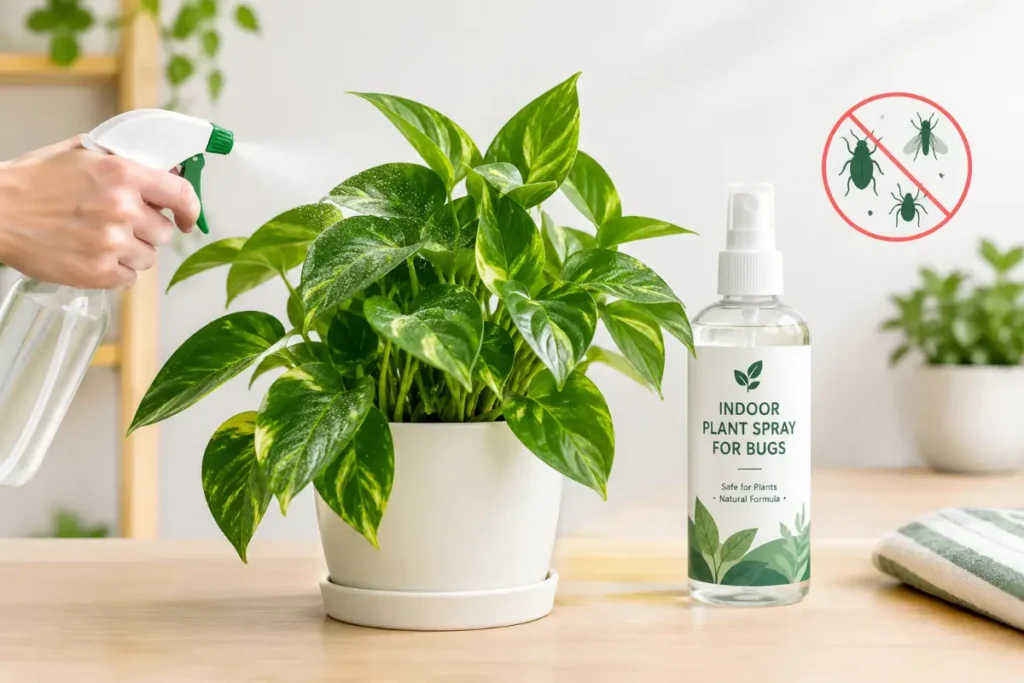
Bugs on houseplants are one of the most common frustrations indoor gardeners face. A single overlooked infestation can spread across an entire collection within weeks, and by the time the damage is visible, populations are often already well established. The right indoor plant spray for bugs applied at the right time is your most effective tool — but with dozens of products on the market, knowing which spray works for which pest, and how to use it correctly, makes all the difference between a quick fix and a recurring problem.
This guide covers every major type of indoor plant spray for bugs — from natural neem oil and insecticidal soap to horticultural oils and targeted synthetic treatments — with exact dilution ratios, application frequency, plant safety considerations, and a clear guide to which spray works best for each pest type.
Why Sprays Are the Primary Treatment for Indoor Plant Pests
Most common houseplant pests — spider mites, aphids, mealybugs, thrips, scale, whitefly — spend part or all of their lifecycle on leaf surfaces or in the soil immediately around the plant. Contact sprays work by coating these surfaces and either suffocating insects directly (oils and soaps), disrupting their nervous systems (pyrethrins), or interfering with growth cycles (neem’s active compound azadirachtin). Because houseplant pests reproduce rapidly in warm indoor conditions, the spray needs to reach every surface the pest occupies — undersides of leaves, stems, soil surface — not just the visible top of the plant.
Sprays also allow targeted application, keeping treatment precisely where pests are rather than saturating the root zone with systemic chemicals that persist in the growing medium.
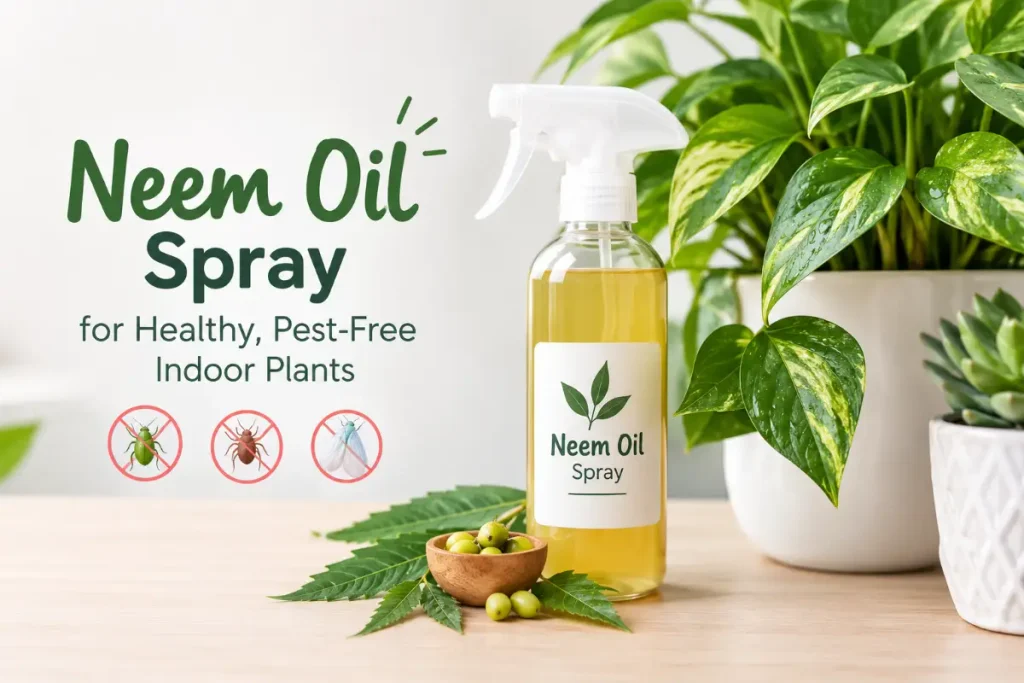
1. Neem Oil Spray
Neem oil is extracted from the seeds of the neem tree (Azadirachta indica) and is one of the most widely used organic indoor plant sprays for bugs. Its primary active compound, azadirachtin, disrupts insect hormone systems — preventing larvae from maturing, inhibiting egg laying in adults, and acting as a feeding deterrent — as well as having direct contact effects on soft-bodied insects.
What it treats: Spider mites, aphids, mealybugs, whitefly, fungus gnats (soil drench), thrips, scale (immature crawlers).
How to use: Pure neem oil needs emulsifying before mixing with water — it does not dissolve on its own. The standard method:
- Add 5 ml of mild washing-up liquid to 1 litre of warm water
- Add 5 ml of pure neem oil (or follow the label if using a pre-emulsified product)
- Shake well immediately before each application — the mixture separates quickly
- Spray all leaf surfaces — top and underside — stems, and the soil surface
- Apply in the evening to avoid direct sun on treated plants (neem oil can cause leaf scorch on wet leaves in strong sunlight)
Frequency: Every 7 days for active infestations, for a minimum of three applications. Continue for 4–6 weeks for persistent pests like spider mites and thrips.
Plant safety: Generally safe for most houseplants. Test on a small area first with sensitive species (ferns, succulents, very thin-leaved plants) and wait 48 hours before full application. Avoid on orchid flowers — neem can brown delicate petals.
2. Insecticidal Soap Spray
Insecticidal soap is a potassium salt of fatty acids — essentially a very concentrated, purified soap formulated to kill soft-bodied insects on contact by disrupting their cell membranes. It breaks down rapidly and leaves no persistent residue, making it one of the safest options for use on edible plants grown indoors.
What it treats: Aphids, mealybugs, spider mites, whitefly, thrips. Less effective on hard-bodied insects like scale.
How to use: Use a proprietary insecticidal soap (such as SB Plant Invigorator or Provanto Bug Killer), or make a DIY version using pure liquid castile soap — note that dish soap with added degreasers, fragrance, or moisturisers is not equivalent and can damage plants.
For a DIY insecticidal soap spray:
- Mix 5–7 ml of pure castile soap per litre of water
- Spray thoroughly, ensuring full coverage of undersides of leaves
- The soap must contact the insect directly to be effective — it has no residual action after drying
Frequency: Every 4–7 days for active infestations. Because soap has no residual effect, more frequent application than neem oil is often needed to stay ahead of fast-reproducing pests.
Plant safety: More likely to cause phytotoxicity (leaf burn) than neem, particularly on plants with waxy coatings (succulents, some orchids) or very soft, thin leaves. Always test first. Do not apply to plants already under heat or drought stress.
3. Horticultural Oil Spray
Horticultural oils — refined mineral oils or plant-based alternatives — work by coating insects and their eggs in a thin film that blocks the spiracles (breathing pores) through which insects respire, causing suffocation. They are particularly effective against scale, where the waxy coating that protects adults from other sprays is penetrated more easily by oils.
What it treats: Scale (all stages), spider mites, mealybugs, aphids, thrips eggs.
How to use: Dilute to 1–2% solution — typically 10–20 ml per litre of water, following the specific product label. Apply with a fine mist sprayer, ensuring thorough coverage. As with neem, avoid applying in bright direct sunlight.
Frequency: Every 7–14 days. Horticultural oil can be combined with insecticidal soap for broader spectrum coverage — the oil handles scale and eggs while the soap treats mobile adults.
Plant safety: Do not apply to drought-stressed plants. Sensitive to sulphur — if you have applied a sulphur-based fungicide, wait at least two weeks before applying horticultural oil. Generally safe on most common houseplants.
4. Pyrethrin Spray
Pyrethrins are naturally occurring insecticides derived from chrysanthemum flowers. They act on insect nervous systems, causing rapid paralysis and death on contact. Pyrethrins degrade quickly in light and air, leaving minimal residue — an advantage for edible plants but also a limitation, as there is no lasting protective effect.
What it treats: Rapid knockdown of aphids, thrips, whitefly, and most flying insects. Less effective for persistent pests like spider mites or deep-seated mealybug infestations on their own.
How to use: Follow the product label for dilution. Apply in the evening when pollinators are not active — pyrethrins are highly toxic to bees and other beneficial insects.
Note: Pyrethrins are often combined with synergists (such as piperonyl butoxide) to increase their persistence and effectiveness — look for these on product labels. Synthetic versions (pyrethroids) have longer residual effects but are less appropriate for use on edible crops.
Plant safety: Generally safe on most houseplants. Can be phytotoxic to very soft new growth in high concentrations.
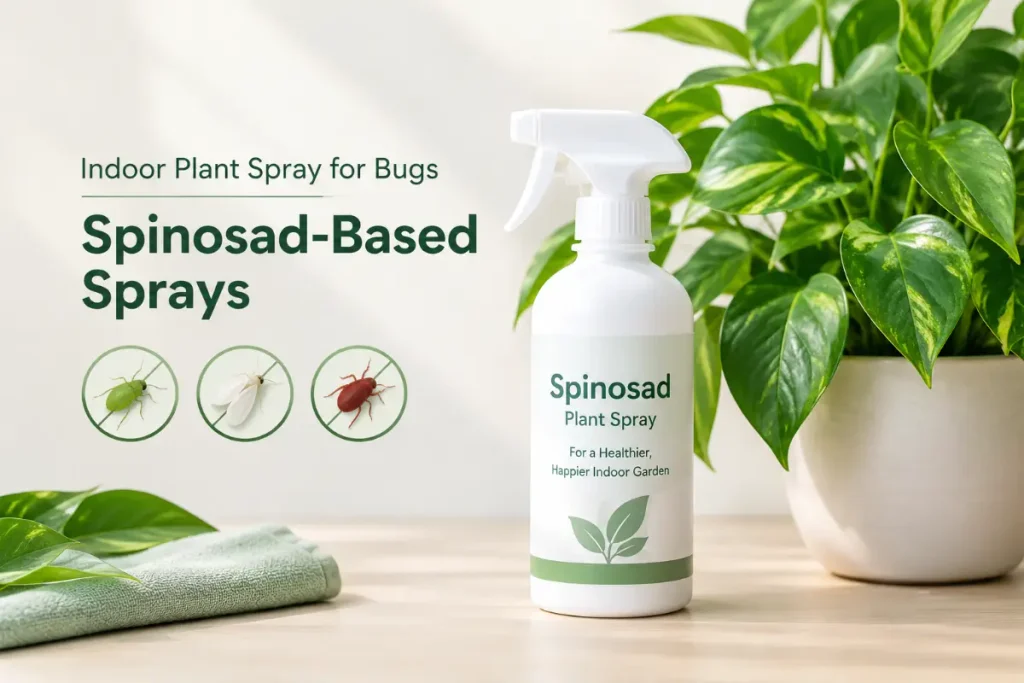
5. Spinosad-Based Sprays
Spinosad is a biological insecticide derived from a naturally occurring soil bacterium (Saccharopolyspora spinosa). It is particularly effective against thrips — arguably the hardest indoor plant pest to eliminate — and fungus gnats, making it a valuable component of an integrated pest management approach.
What it treats: Thrips (highly effective), fungus gnats (soil drench), some caterpillars and leaf miners.
How to use: Apply as a foliar spray per label instructions, targeting undersides of leaves where thrips congregate. For fungus gnats, apply as a soil drench — pour the diluted solution directly onto the compost surface.
Frequency: Every 7 days for thrips, alternating with neem oil or insecticidal soap to reduce resistance development.
Plant safety: Low phytotoxicity. Safe for most houseplants including edibles. Avoid overuse — resistance can develop in thrips populations with repeated exposure.
6. DIY Garlic and Chilli Sprays
For gardeners who prefer entirely home-made solutions, garlic and chilli sprays act as deterrents rather than direct killers — the compounds irritate soft-bodied insects and discourage feeding, making them useful as preventative measures or supplements to more targeted treatments.
Garlic spray: Blend 4–5 garlic cloves with 500 ml water, strain through muslin, dilute to 1 litre, add a few drops of castile soap, and spray. Effective deterrent for aphids and spider mites.
Chilli spray: Simmer 2–3 chopped fresh chillies in 500 ml water for 10 minutes, cool, strain, dilute to 1 litre with a drop of castile soap. Irritant effect on most soft-bodied insects.
These sprays are most valuable as part of a preventative routine on plants not currently infested — they lack the direct killing action of the proprietary options above and are insufficient as standalone treatments for established infestations.
Pest-Specific Guide: Which Spray to Use
Spider Mites
Spider mites thrive in hot, dry conditions and reproduce extremely rapidly — a generation from egg to reproducing adult takes as little as one week in warm conditions. A single female can lay 100+ eggs.
Best sprays: Neem oil (disrupts egg hatching and adult reproduction), horticultural oil (suffocates all stages), insecticidal soap (contact kill of mobile stages). Approach: Rotating treatments is essential — use neem one week, insecticidal soap the next — to reduce resistance. Apply every 5–7 days for at least 6 weeks. Increasing humidity is a key environmental control alongside sprays, as spider mites struggle above 60% humidity.
Aphids
Aphids are among the easiest pests to treat — their soft bodies are vulnerable to almost every contact spray, and populations are often visible before they reach damaging levels.
Best sprays: Insecticidal soap, neem oil, pyrethrin for rapid knockdown. A strong jet of water to dislodge colonies before spraying improves treatment penetration. Approach: Two or three applications at 5-day intervals usually suffice for aphids. Check for ant activity — ants “farm” aphids and will actively protect colonies from predators.
Mealybugs
Mealybugs are among the more persistent pests — their waxy coating protects them from many sprays, and they hide in leaf axils and at the base of stems where sprays struggle to reach. For information on identifying and managing plants that attract them, see the guide on do indoor plants attract bugs.
Best sprays: Neem oil (best for accessibility to hidden colonies), isopropyl alcohol 70% applied directly with a cotton bud to individual colonies (contact treatment), horticultural oil. Approach: Individual adults should be removed with alcohol-dipped cotton buds before spray application. Spray thoroughly and repeat weekly for 6–8 weeks — mealybug egg sacs protected in fluffy white wax can survive single-treatment approaches.
Thrips
Thrips are tiny, fast-moving, and spend time in the soil as pupae — making them difficult to eliminate with foliar sprays alone.
Best sprays: Spinosad (most effective), neem oil (soil drench plus foliar), pyrethrin for knockdown. Approach: Combine foliar sprays with neem oil soil drench to target soil-stage pupae. Remove heavily infested leaves. Yellow or blue sticky traps catch adult thrips and help monitor population levels. Expect 6–8 weeks of treatment.
Scale
Scale insects — both hard scale and soft scale — attach to stems and leaf midribs and are protected by a hard waxy shell in adult form.
Best sprays: Horticultural oil (penetrates the waxy shell), neem oil (effective against crawlers — the mobile juvenile stage), insecticidal soap. Approach: Adult scale can be scraped off manually with a soft toothbrush before spraying. Target the crawler stage (when young scale first emerge and migrate across the plant) for the most effective treatment — crawler activity is often heaviest in late spring and early summer.
Fungus Gnats
Fungus gnat adults are a nuisance but harmless — it is the larvae in the soil that damage roots by feeding on root hairs and organic matter. A good indoor plant spray for bugs approach for fungus gnats targets the larval stage.
Best treatments: Neem oil soil drench (pour diluted solution onto compost surface), spinosad soil drench, Bacillus thuringiensis var. israelensis (Bti) sold as Gnatrol or similar. Approach: Allow compost to dry more between waterings — larvae need consistently moist compost to survive. Yellow sticky traps near the soil surface catch adults and reduce egg-laying.
Application Best Practices
The most common reason indoor plant sprays fail is incomplete application. Follow these practices consistently:
- Spray in the evening — avoids leaf scorch from sun on wet foliage and protects any beneficial insects.
- Coat every surface — undersides of leaves are where most pests congregate and where eggs are laid. The top of the leaf is often the last place they are found.
- Repeat on schedule — most products have no residual effect after drying. If you spray once and wait three weeks, the next generation has already established.
- Isolate affected plants — move infested plants away from healthy ones during treatment.
- Clean the area — fallen leaves and debris around the pot harbour pest eggs. Remove and dispose of regularly.
- Rotate products — alternating between different spray types (neem one week, soap the next) reduces the chance of resistance developing, particularly important with spider mites and thrips.
For plants grown in self-watering systems or on drip irrigation, ensure spray applications target the foliage rather than the reservoir. A self watering system for indoor plants does not need pest treatment added to the water supply — foliar sprays are always the correct application route.
Preventative Spraying
The most effective use of an indoor plant spray for bugs is as a preventative measure — applied to healthy plants on a regular schedule before pests establish. A monthly application of neem oil to all houseplants, regardless of visible pest presence, dramatically reduces the likelihood of infestation taking hold.
This is particularly valuable:
- When introducing new plants to a collection (always quarantine and preventatively treat new arrivals)
- After a previous infestation in the same space
- In spring and early summer, when pest populations naturally increase
- For plants moved outdoors in summer and brought back in — they almost always bring pests with them
Healthy plants are also inherently more resistant to pests — strong cell walls, robust immune responses, and good vigour make plants less appealing to insects and better able to withstand minor infestations. Consistent care — appropriate watering, correct light, regular feeding — is the foundation that makes any spray programme more effective.
Conclusion
Choosing and using the right indoor plant spray for bugs comes down to matching the product to the pest, applying it thoroughly and repeatedly, and pairing chemical control with good cultural practices. Neem oil is the most versatile all-rounder for the majority of common houseplant pests; insecticidal soap provides rapid contact control; horticultural oil targets scale effectively; and spinosad is the gold standard for thrips. For most indoor pest problems, rotating between two or three of these products over six to eight weeks produces reliable results.
The RHS provides comprehensive pest identification and treatment guidance — a useful reference for confirming pest identification before selecting your treatment approach.
FAQs
What is the best indoor plant spray for bugs overall?
Neem oil is the most broadly effective single product — it treats the widest range of pests, works across all life stages (eggs, larvae, adults), has preventative as well as curative action, and is safe to use on edible crops. It requires correct preparation (emulsifying with a drop of washing-up liquid) and consistent repeat application, but it is the closest thing to a universal houseplant pest spray.
Can I use washing-up liquid as an insecticidal spray?
Standard washing-up liquid is not the same as pure castile soap and can contain degreasers, fragrances, and other additives that may damage plant foliage. For a DIY insecticidal soap spray, use pure liquid castile soap such as Dr. Bronner’s unscented. At very low concentrations (1–2 ml per litre), regular washing-up liquid is unlikely to cause serious harm, but proprietary products or pure castile soap are more reliable.
How often should I spray my indoor plants for bugs?
For active infestations, every 5–7 days for a minimum of 3–6 weeks depending on the pest. For prevention, once a month across the whole collection is effective. Never spray once and consider the problem resolved — most sprays target only the stage present at application, and eggs or pupae require subsequent applications as they hatch.
Is neem oil safe for edible plants grown indoors?
Yes — neem oil is approved for use on edible crops and has a short breakdown time in light and air. Apply at least 24 hours before harvesting from treated plants, and wash harvested produce before eating. Avoid applying directly to flowers on fruiting plants.
Can I mix neem oil and insecticidal soap together?
Yes — this is a common and effective combination. The soap acts as both an emulsifier for the neem oil and an independent insecticide. Mix 5 ml neem oil, 5 ml castile soap, and 1 litre of warm water. Shake before each application as the mixture separates.
Why do my plants keep getting bugs indoors?
Recurring infestations usually indicate a reservoir of pest activity — eggs or pupae in soil, neighbouring untreated plants, or plants brought in from outdoors. Preventative monthly neem oil sprays across the whole collection break this cycle. Also review environmental conditions: spider mites proliferate in hot, dry air; fungus gnats in consistently wet compost. Addressing conditions that favour pests reduces the frequency of infestations.
Are there any houseplants sensitive to insecticidal sprays?
Yes. Ferns, orchid flowers, succulents and cacti, and plants with very thin or waxy leaves can be sensitive to soaps and oils at standard concentrations. Always spot-test on a small area and wait 48 hours before full application. Apply to stressed, drought-affected, or very young plants with extra caution.
Do indoor plants with red and green leaves attract more pests?
Pest preference is driven by plant health and environment more than foliage colour. However, plants with dense, closely packed foliage create humid microclimates that suit pests like mealybugs and mites. Keep foliage open and well-ventilated. For more on choosing attractive foliage plants, see the guide on indoor plant red and green leaves varieties.
How do I know if my spray is working?
After 7–10 days you should see a reduction in mobile adults and fresh damage. Sticky traps near affected plants give a clearer picture of adult populations declining over time. Improvement in new leaf growth — healthy and undistorted — is the best long-term indicator. If no improvement after three applications, switch to a different spray type or combination.
Should I remove bugs by hand before spraying?
Yes, wherever possible. Manually removing visible mealybug colonies with alcohol-dipped cotton buds, dislodging aphid clusters with a water spray, or scraping scale with a soft brush before applying your chosen spray significantly improves treatment effectiveness — you are reducing the population that the spray then needs to finish off.