Indoor plants on a shelf are one of the most effective ways to integrate living plants into a home without dedicating floor space to large specimens or clustering plants at window level. A well-chosen shelf plant fills vertical wall space with life and color, trails downward in a way that ground-level plants cannot, and integrates plants into the living architecture of a room rather than treating them as separate decorative objects placed around the furniture.
The challenge is that shelf positions present some of the most variable light conditions in any home. A shelf directly below a south-facing window gets more light than a shelf on the opposite wall of the same room. A high shelf near the ceiling in a well-lit room may receive less light than a lower shelf closer to the window because ceiling height reduces ambient light quality. Getting the plant-to-shelf match right requires thinking about the specific light each shelf receives rather than generalizing from the room’s overall brightness.
Quick Answer
The best indoor plants for shelves include pothos (trailing), heartleaf philodendron (trailing), string of pearls (trailing from bright shelves), spider plant (trailing with runners), ZZ plant (upright, low-light shelves), snake plant (compact varieties, upright), Chinese evergreen (compact, low-light shelves), peperomia varieties (compact, medium-light shelves), tradescantia (trailing, bright shelves), and small succulents (compact, bright south-facing shelves). Match the plant to the specific light the shelf receives rather than the room’s general brightness.
Assessing the Light Your Shelf Actually Receives
Before choosing plants, honestly assessing the light at the specific shelf position produces better results than choosing based on the room’s general description.
The distance-from-window rule: Light intensity decreases with the square of distance from the source. A shelf one foot from a bright window receives dramatically more light than a shelf five feet from the same window, not just proportionally less. In practical terms, shelves directly adjacent to or below windows are bright indirect light positions. Shelves on walls perpendicular to windows are medium indirect light. Shelves on the wall opposite the window are low indirect light in most rooms.
Height matters too: Higher shelves in a room with windows set at standard height may receive less light than lower shelves since the window angle provides light to lower positions more directly. This counterintuitive relationship between shelf height and light level is worth checking with a light meter app before positioning plants.
The test: Place your hand flat on the shelf surface and look at the shadow it casts. A sharp, well-defined shadow indicates bright indirect or some direct light. A soft, indistinct shadow indicates medium indirect light. No visible shadow indicates low indirect light. This simple test provides immediate practical guidance on which plants are appropriate for that specific position.
Trailing Plants for Shelves: The Most Visually Impactful Category
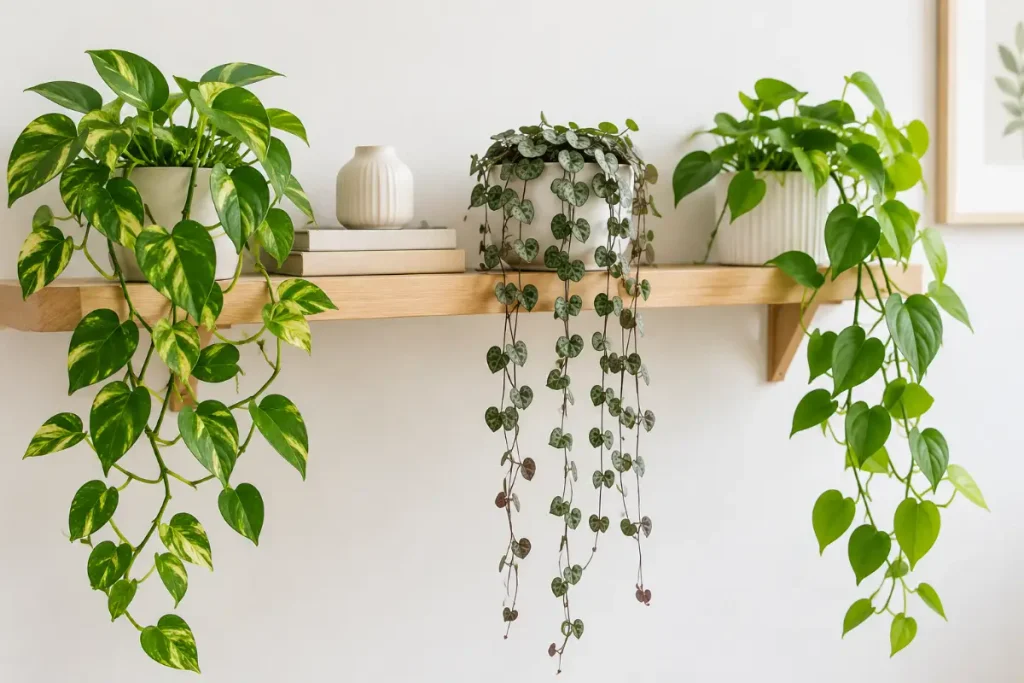
Trailing plants are the most distinctively suited to shelf positions because their trailing growth habit displays most beautifully when the plant is elevated and the vines hang freely downward rather than spreading across a floor surface or requiring a support structure.
1. Pothos (Epipremnum aureum)
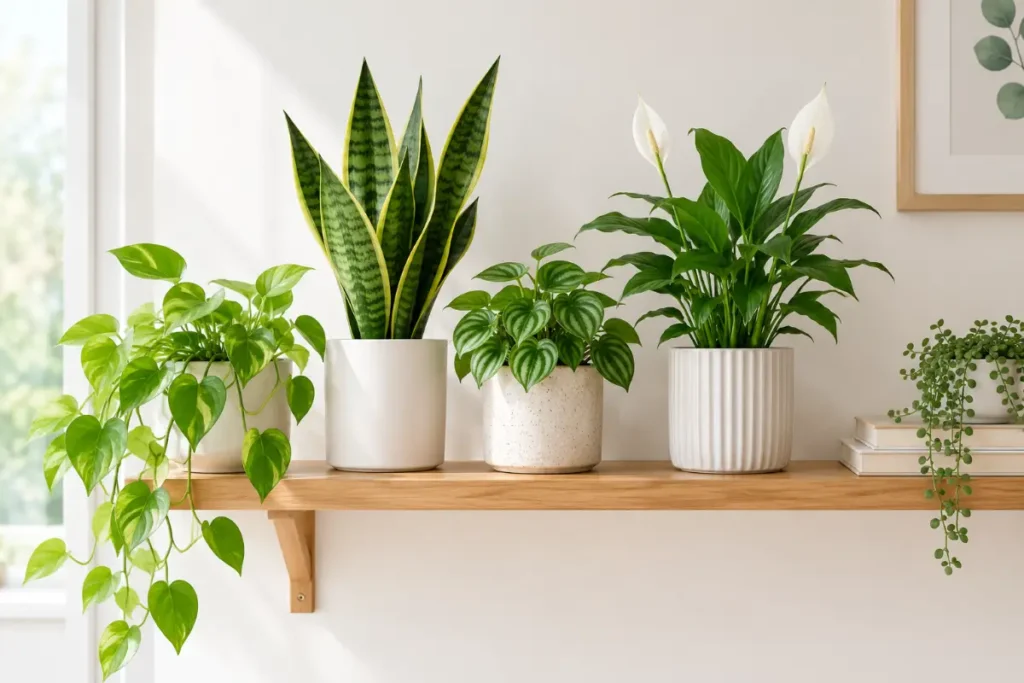
Pothos is the quintessential shelf plant. Its vigorous trailing vines, tolerance of a wide range of light conditions, and essentially indestructible nature make it the most reliably successful shelf plant across the full range of shelf light levels.
For bright shelves near windows: Golden pothos and marble queen pothos maintain their vivid variegation and grow vigorously, producing long trails that can reach several feet within a single growing season. In bright indirect light the leaves stay large and closely spaced on vigorous stems.
For dim shelves away from windows: Neon pothos maintains its chartreuse color better in lower light than the variegated varieties which fade toward plain green. All pothos varieties survive in genuinely low indirect light though growth slows significantly.
Styling on shelves: Allow pothos to trail freely downward from the shelf rather than training it along the shelf surface. Vines trailing two to three feet below the shelf edge create the most dramatic visual effect. For very long shelves, position two or three pothos plants at intervals along the shelf to create a cascading green curtain effect across the full shelf width.
Care: Water when the top inch of soil dries out. The small pot volumes typical of shelf plants dry out faster than floor-level plants in larger containers, which typically means more frequent watering than the same plant in a larger pot would need.
2. Heartleaf Philodendron (Philodendron hederaceum)
Heartleaf philodendron trails from shelf positions with a slightly different character than pothos: its heart-shaped leaves on slightly more delicate-looking stems create a softer, more romantic trailing effect compared to the bold, glossy pothos leaves.
Light range: Handles the same wide light range as pothos, from bright indirect down to genuinely low indirect. Maintains better leaf size in medium indirect light than in very low light but does not dramatically etiolate the way more light-demanding plants do.
The companion display: A shelf with heartleaf philodendron trailing on one side and pothos trailing on the other creates a mixed display where the different leaf forms and growth habits complement each other. The heart-shaped philodendron leaves alongside the pointed, sometimes variegated pothos leaves create visual variety without requiring plants with very different care needs.
Care: Same as pothos. Water when the top inch dries out. Wipe leaves periodically in dusty shelf environments.
3. String of Pearls (Senecio rowleyanus)
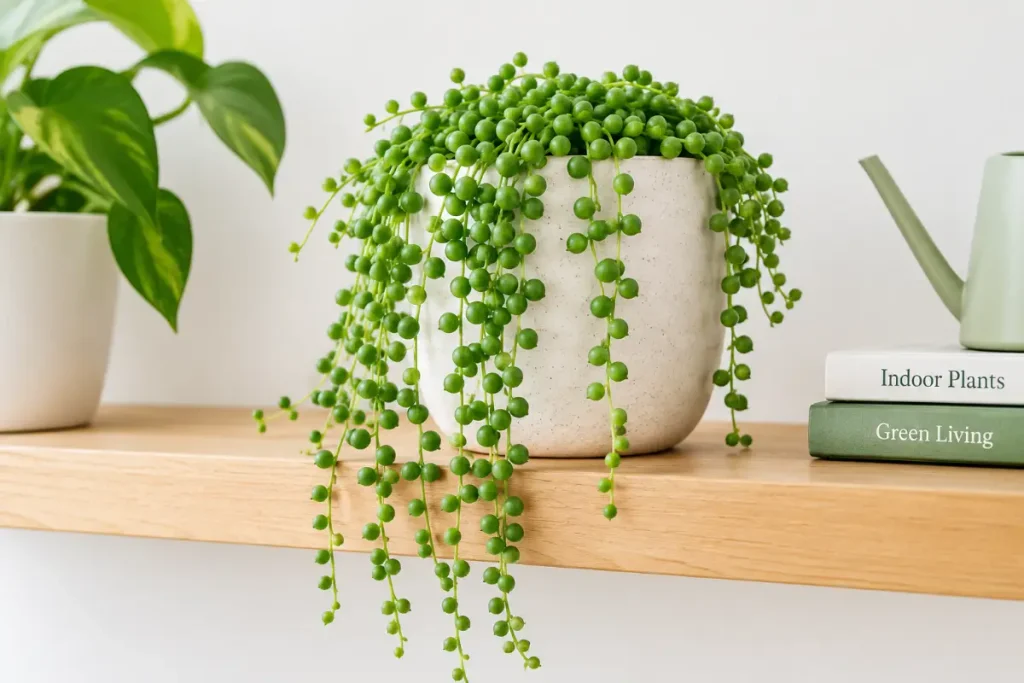
String of pearls is the most visually distinctive trailing shelf plant available, producing perfect spherical bead-like leaves on thread-thin stems that cascade from shelf positions in a way no other plant replicates. It is also the most demanding of good light in the trailing category and does not perform in the lower-light shelf positions where pothos and heartleaf philodendron excel.
Light requirement: Bright indirect to some direct morning sun. A shelf directly below or adjacent to a bright east or south-facing window. In insufficient light string of pearls produces widely spaced, smaller beads on weak stems rather than the tight, plump, closely-spaced bead strings that make it so distinctive.
The display at its best: In appropriate bright light, string of pearls trails in plumb-line straight cascades of tightly spaced spheres that look like living jewelry. The visual effect is unlike any other shelf plant and justifies the more specific light requirement.
Care: Water only when the soil feels completely dry. String of pearls is significantly more drought-tolerant than pothos and heartleaf philodendron and rots quickly in overwatered or poorly draining conditions. Fast-draining cactus mix. Small terracotta pots that dry quickly. For the complete guide to succulent care in shelf positions, full sun indoor plants covers the bright-light requirements that string of pearls and similar succulents share with the other high-light plants in this guide.
4. Spider Plant (Chlorophytum comosum)
Spider plant on a shelf creates a distinctive display through the cascading runners of baby plantlets that trail below the parent plant on long arching stems. Unlike the stem-trailing effect of pothos and philodendron, spider plant’s runners produce this cascading effect through a series of small plantlets that hang at different distances below the shelf, creating a layered, organic display.
Light range: Medium to bright indirect light produces the most runner production and the most vigorous growth. In low indirect light the plant maintains its foliage well but produces fewer runners.
The self-refreshing quality: As older spider plant runners produce plantlets that root in their own small pots, the parent plant simultaneously produces new runners. This self-generating quality creates a perpetually refreshing display without requiring regular purchase of new plants.
Care: Water when the top inch of soil dries out. Remove brown tips cosmetically. One of the lowest-maintenance shelf plants available.
5. Tradescantia (Wandering Jew / Spiderwort)
Tradescantia varieties including Tradescantia zebrina (purple and silver striped leaves) and Tradescantia fluminensis (green and white) trail vigorously from shelf positions with some of the most vivid leaf coloration of any trailing plant. The purple and metallic silver stripes of Tradescantia zebrina create a striking visual effect that plain-green trailers cannot match.
Light requirement: Medium to bright indirect light for maintaining vivid color. In insufficient light the purple and silver tones fade toward plain green-grey as the plant increases chlorophyll production. For the most vivid coloration, position on shelves that receive bright indirect light from nearby windows.
Fast growth: Tradescantia grows faster than most other shelf trailing plants, which means both more frequent pruning to maintain a manageable display and more cutting material available for propagation to share or multiply.
Care: Water when the top half inch dries out. Tradescantia prefers more consistent moisture than the drought-tolerant trailing plants. Prune tips regularly to prevent legginess. For the complete guide covering the specific care of this plant group, wandering jew plant care indoors covers every consideration including the color maintenance that depends specifically on adequate light.
Upright Plants for Shelves: Structure and Architecture
Not all shelf plants need to trail. Compact upright plants provide structure and vertical interest on shelves, particularly on wider shelves where trailing plants would look sparse rather than dramatically cascading.
6. ZZ Plant (Zamioculcas zamiifolia) — Compact Forms
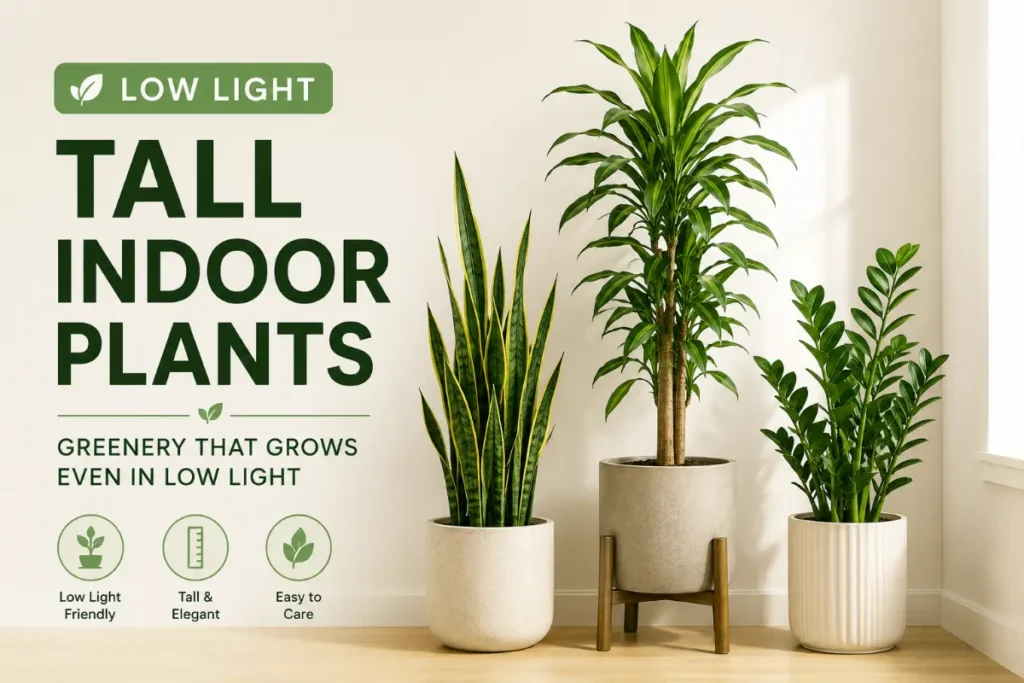
Compact ZZ plant varieties including ‘Raven’ (near-black leaves) and ‘Zenzi’ (compact growth habit) suit shelf positions where the glossy, architectural leaves create a clean, contemporary aesthetic in low-light positions that most colorful plants cannot tolerate.
The low-light advantage: ZZ plant’s genuine tolerance for dim indirect light makes it one of the most reliable choices for shelves on walls away from windows. In positions where other plants would decline within months, ZZ plant maintains its appearance and health for extended periods through stored rhizome energy reserves.
The Raven variety: ‘Raven’ ZZ plant with its deep purple-black leaves provides one of the most distinctive shelf plant appearances available in low-light tolerance. The near-black coloration creates a dramatic contrast against white or light-colored walls that standard green ZZ plant does not.
Care: Water only when the top two to three inches of soil are completely dry. The small pot volume of shelf plants dries out faster than floor-level containers, so check more frequently than standard ZZ plant watering guidance suggests.
7. Snake Plant — Compact Varieties
Compact snake plant varieties including ‘Hahnii’ (bird’s nest form reaching six to eight inches) and ‘Moonshine’ (silver-grey upright form reaching twelve to eighteen inches) suit shelf positions where the standard four to six-foot varieties would be impractically large.
The architectural, upright form of snake plant provides strong structural interest on a shelf that trailing plants and more rounded compact plants cannot replicate. In positions where trailing plants would look too informal, a compact snake plant provides a more intentional, curated aesthetic.
Care: Same as standard snake plant. Water when the top two to three inches of soil are dry. Extremely drought-tolerant. Thrives in low to medium indirect light.
8. Peperomia Varieties
Peperomia is one of the most diverse genera for shelf plant use, with varieties ranging from trailing (Peperomia rotundifolia) to compact upright (Peperomia caperata) to rosette-forming (Peperomia obtusifolia). The range of leaf textures, colors, and forms within the genus allows considerable variety across a multi-shelf display while maintaining essentially identical care requirements for all.
The small size advantage: Most peperomia varieties stay under twelve inches, making them ideal for the smaller pot volumes of shelf displays without the need for pruning that fast-growing trailing plants require.
Light range: Medium indirect light for most varieties. Not as low-light tolerant as ZZ plant or snake plant but handles the medium indirect light of shelves near but not immediately adjacent to windows well.
Care: Water when the top inch of soil feels dry. Peperomia stores water in its semi-succulent leaves and tolerates brief drought better than most tropical plants. Minimal fertilizing. Low pest pressure.
9. Chinese Evergreen — Compact Varieties (Aglaonema)
Compact Chinese evergreen varieties including ‘Silver Bay’ and ‘Maria’ suit shelf positions where a plant with medium-sized, attractively marked leaves creates more visual interest than plain green options in comparable light and size ranges.
For medium to low-light shelves: Green and silver varieties handle genuinely medium to low indirect light on shelves away from windows. For brighter shelf positions with indirect window light, the pink and red varieties provide vivid color that few other low-care plants match.
Care: Water when the top inch of soil dries out. Keep above 60 degrees. Avoid cold air from nearby windows in winter.
10. Small Succulents — For Bright Shelves Only
A collection of small succulent varieties including echeveria, haworthia, and gasteria in small terracotta pots creates one of the most visually appealing multi-plant shelf displays available for shelves that receive bright indirect to some direct light. The variety of forms, colors, and textures within the succulent category allows complex, curated displays from plants with essentially identical care requirements.
The light requirement is firm: Small succulents on shelves away from windows do not perform. In insufficient light they etiolate rapidly, losing the compact rosette form that makes them attractive within weeks. Reserve this approach for shelves directly below south-facing windows, shelves in sunrooms, or shelves supplemented with a small shelf-mounted grow light.
The display approach: Arrange three to seven small succulents in different but complementary species and forms across a shelf section. Vary heights slightly with small pot raisers. Combine rosette forms with columnar or trailing forms. The visual complexity of a well-assembled succulent shelf display exceeds what any single plant in the same space can achieve.
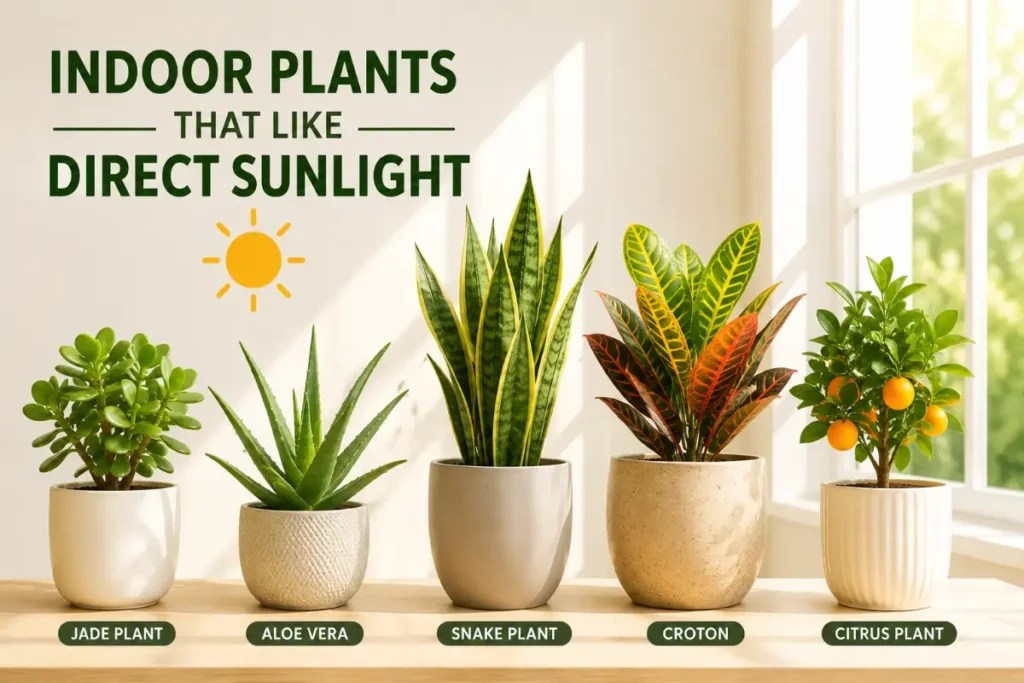
Care: Water only when completely dry throughout the pot. The small pot volumes of shelf succulents dry very quickly in bright light and may need checking every five to seven days in summer. Fast-draining cactus mix. For the complete care guide to bright-shelf succulents and their light requirements, indoor plants that like direct sunlight covers every high-light succulent and cactus species with specific placement guidance.
Styling Principles for Shelf Plant Displays
Beyond species selection, how plants are arranged on shelves significantly affects how successful the display looks.
The odd-number rule: Groups of three, five, or seven plants read more naturally to the eye than even-numbered groupings. On a single shelf, three plants of varying heights and forms typically look more intentional than two identical plants or four plants in a row.
Vary pot height for visual rhythm: Use small ceramic risers, stacked books, or decorative objects to vary the height of pots on a shelf. A trailing plant at the front edge of the shelf, a taller upright plant at the back, and a compact plant at medium height creates a layered profile that reads as a composed display rather than random pot placement.
Mix trailing and upright on the same shelf: The most visually dynamic shelf displays combine trailing plants at the shelf edge where vines cascade downward with upright or compact plants toward the back of the shelf. This combination uses the full depth and height range of the shelf rather than spreading plants flat across a single plane.
Consider pot color and material: Terracotta provides a warm, natural aesthetic that suits most plant styles. White or matte ceramic creates a contemporary, clean look. Darker pots in matte black or charcoal make plant foliage visually pop. Matching all pots on a single shelf in the same material while varying size creates a cohesive display. Mixing many different pot styles on a single shelf creates visual noise that competes with the plants themselves.
Leave negative space: Not every section of a shelf needs a plant. Leaving clear space between plant groupings, or leaving some shelves entirely plant-free, makes the planted shelves read as more intentional than filling every available surface uniformly.
Watering Shelf Plants Without Mess
The practical challenge of shelf plant care is watering without dripping onto shelves, books, or items stored below.
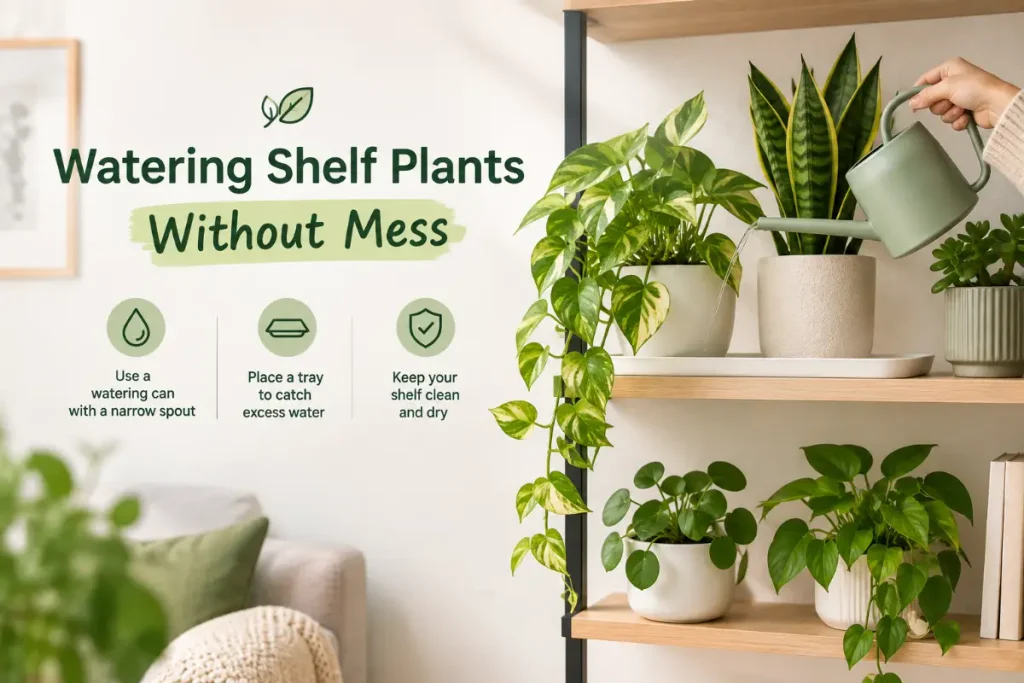
Use pots with drainage and saucers: Every shelf plant should have a saucer beneath it that catches drainage water. Empty saucers within thirty minutes of watering to prevent the standing water that causes root rot.
Water in place carefully: Use a narrow-spout watering can that delivers water directly to the soil surface without splashing onto the shelf or adjacent items. Water slowly until you see the first drop appear in the saucer, then stop.
The sink method: Take shelf plants to the sink for watering every two to three waterings to flush accumulated salts and ensure thorough saturation. Allow to drain completely in the sink before returning to the shelf. This prevents the gradual mineral buildup that occurs from repeated in-place watering that never fully saturates the root zone.
Self-watering pots: Self-watering shelf pots with integrated reservoirs reduce watering frequency and mess for plants that prefer consistent moisture including pothos and heartleaf philodendron. The reservoir is filled from above and provides a week or more of water uptake through a wick system without dripping.
Conclusion
Indoor plants on a shelf succeed most reliably when the specific light each shelf position receives is matched honestly to plants that genuinely perform at that light level. Pothos and heartleaf philodendron for the widest range of shelf light levels in trailing form. String of pearls and small succulents for bright shelves near windows where their specific requirements are met. ZZ plant and compact snake plant for dim shelves where few other attractive plants perform. Spider plant and tradescantia for medium-light shelves where their specific characters, cascading runners and vivid coloration respectively, display most effectively.
Style with odd-numbered groupings, vary pot heights, combine trailing and upright plants on the same shelf, and leave negative space between groupings. Water carefully with narrow-spout cans and saucers that catch drainage. The result is one of the most effective ways to integrate living plants throughout a home without requiring floor space or clustering plants at window level.
Frequently Asked Questions
What plants trail best from a shelf?
Pothos is the most reliable trailing shelf plant across the widest range of light conditions. Heartleaf philodendron trails with a softer aesthetic in comparable light ranges. String of pearls provides the most visually distinctive trailing effect in bright indirect light. Spider plant creates a uniquely layered display through its runner-hanging plantlets. Tradescantia provides the most vivid coloration of the trailing options in medium to bright indirect light.
Can plants survive on a bookshelf away from windows?
The most shade-tolerant plants including ZZ plant, cast iron plant, compact snake plant, and pothos survive on bookshelves away from windows with medium to low indirect ambient light from the room. Very deep shelf positions with genuinely no ambient light access are not suitable for any plant without supplemental grow lighting. Adding a small clip-on or shelf-mounted LED grow light running eight to ten hours daily enables plant display in genuinely dim shelf positions. For the full guide to plants that handle dark spaces best, indoor plants for dark spaces covers every option with care guidance.
How do I keep shelf plants from dripping on books and shelves below?
Always use pots with drainage holes and saucers that catch excess water. Water slowly with a narrow-spout watering can aimed at the soil surface. Empty saucers within thirty minutes of watering. Periodically take shelf plants to a sink for thorough watering and allow to drain completely before returning. Self-watering pots with integrated reservoirs eliminate drip risk entirely for moisture-preferring shelf plants.
How many plants look good on a shelf?
Odd numbers, three, five, or seven plants, generally look more natural than even groupings. The specific number depends on shelf length and plant size. A standard 36-inch floating shelf typically suits three to five plants depending on pot size. Leave clear negative space between groupings rather than filling every inch of shelf surface since empty space makes the planted sections read as more intentional than wall-to-wall plant coverage.
Do shelf plants need bigger pots as they grow?
Yes, eventually. Most shelf plants need repotting every one to two years as roots fill the pot and growth slows from root restriction. The limited space of shelf positions means keeping plants in appropriately sized containers rather than the largest possible pot, since oversized pots hold excess wet soil that causes root rot problems in the reduced air circulation of enclosed shelf positions.
What is the best shelf position for plants in a north-facing room?
In a north-facing room, shelves on or immediately adjacent to the window wall receive the most light from the north-facing window. Shelves on perpendicular walls receive medium indirect light from the reflected ambient light of the room. Shelves on the south wall directly opposite the north window receive the least light. For north-facing rooms, choose pothos, ZZ plant, heartleaf philodendron, and compact Chinese evergreen in green or silver varieties for the dimmest shelf positions, and supplement with a small LED grow light for any shelf that receives less than comfortable reading light from natural sources.