
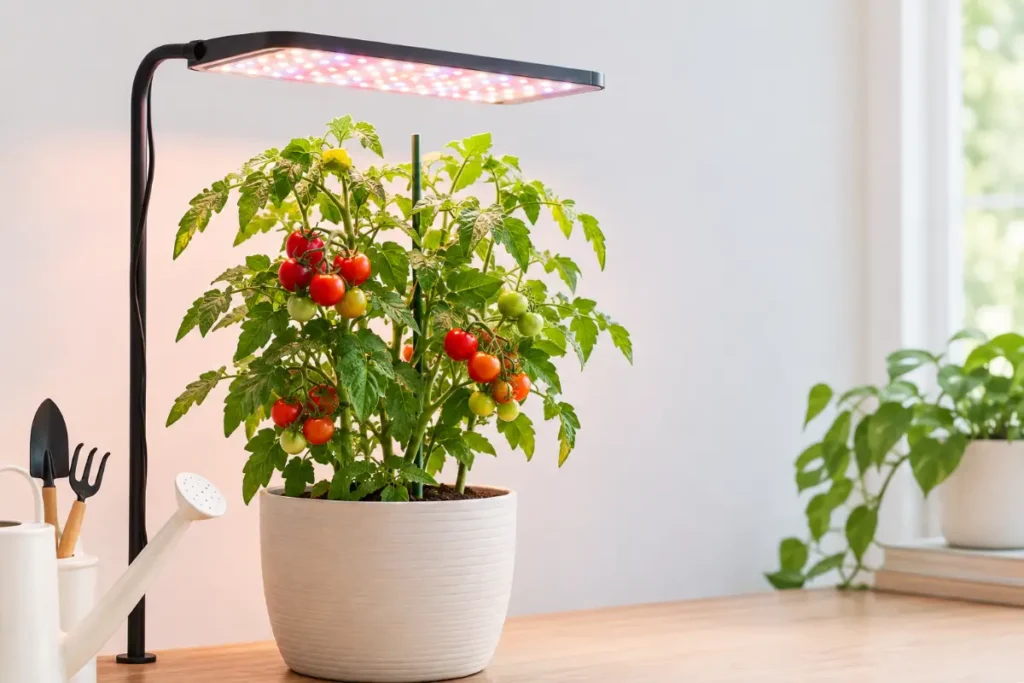
Grow lights for indoor tomato plants represent the most demanding application of supplemental indoor plant lighting covered in this cluster, and the one where equipment selection, setup, and management make the most direct difference between a productive harvest and a disappointing collection of flowers that never set fruit. Tomatoes are full-sun crops that need more light intensity, more daily light hours, and more precise nutritional management than any decorative houseplant in this cluster.
Getting indoor tomatoes right requires understanding what light intensity tomatoes actually need, which grow light types deliver it, how long to run them, and which tomato varieties are realistic for indoor growing. This guide covers all of it with the practical specificity that generic grow light guides avoid.
Quick Answer
Growing tomatoes indoors under grow lights requires LED full-spectrum grow lights delivering 400 to 600 micromoles per square meter per second (PPFD) at the plant canopy for 14 to 18 hours daily, compact or dwarf tomato varieties specifically bred for container growing, consistent temperatures between 65 and 80 degrees Fahrenheit, hand pollination since there are no insects indoors, biweekly high-phosphorus and potassium fertilizing, and calcium supplementation to prevent blossom end rot. The varieties that realistically produce indoors are dwarf and compact types, not standard full-sized garden varieties.
Why Indoor Tomatoes Specifically Need Grow Lights
Tomatoes are among the highest-light-demand crops commonly grown. Outdoors in peak summer, tomatoes receive 8 to 10 hours of full sun at light intensities of 1,500 to 2,000 micromoles of photosynthetically active radiation per second. No indoor window position comes close to providing this, even the sunniest south-facing window which delivers approximately 200 to 500 PPFD at best.
The result is that window-grown indoor tomatoes without supplemental lighting invariably produce weak, leggy plants with minimal fruit set. The plant grows vegetatively in insufficient light but cannot produce the photosynthate needed for the energy-intensive fruiting process.
Grow lights that deliver the right intensity for the right duration change this equation by providing the light energy that fruiting requires. This is not supplemental lighting as it is used for decorative houseplants but a primary light source that needs to meet or approach the light intensity that outdoor summer sun provides.
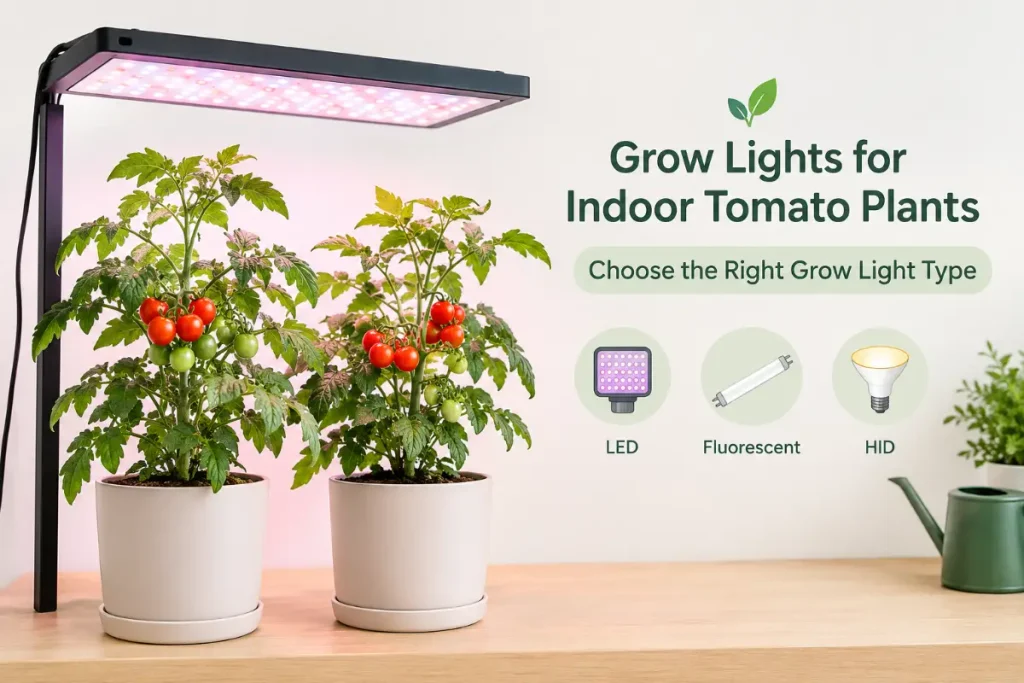
Step 1: Choose the Right Grow Light Type
The grow light market offers several technologies with meaningfully different performance for tomato growing specifically.
Full-spectrum LED grow lights: The current best option for indoor tomato growing. Modern quantum board LED grow lights produce the highest efficiency (most light output per watt of electricity) of any grow light technology, generate significantly less heat than older technologies, and produce a spectrum covering the full photosynthetically active range alongside some UV-A content. Look for lights with specific PPFD ratings at your intended mounting distance rather than just wattage claims.
The PPFD requirement for tomatoes: Tomatoes need 400 to 600 PPFD at the plant canopy for active growth and fruiting. Some sources recommend up to 800 PPFD for maximum productivity. Consumer-grade LED grow lights that achieve 400 to 600 PPFD at twelve to eighteen inches mounting height are widely available in the $80 to $200 range from brands including Mars Hydro, Spider Farmer, and similar quality manufacturers.
What does not work well: Standard LED bulbs marketed as full spectrum. T5 fluorescent tubes which provide adequate light for seedlings and herbs but insufficient intensity for fruiting tomatoes at practical mounting heights. Very cheap blurple LED panels with limited actual output despite high claimed wattage. Single small grow bulbs screwed into standard lamp sockets which provide far less than the 400 PPFD tomatoes need over the canopy area they require.
Wattage as a rough guide: For a two-square-foot growing area (one or two compact tomato plants), a quality LED grow light drawing 100 to 200 actual watts from the wall provides approximately the right output at appropriate mounting distances. Manufacturer-stated wattage often overstates actual draw, so check the actual power draw specification rather than the panel’s theoretical maximum.
Step 2: Set Up Lighting Duration and Schedule
Tomatoes need more daily light hours than almost any decorative plant covered in this cluster.
Vegetative growth phase: 16 to 18 hours of light daily during seedling and early vegetative growth stages. Tomatoes are day-neutral plants, meaning unlike some crops they do not require a specific dark period to flower, and extended light periods drive faster vegetative growth.
Flowering and fruiting phase: 14 to 16 hours daily is adequate for most compact indoor tomato varieties through the flowering and fruiting stage. Some growers reduce slightly from the maximum vegetative hours to reduce electrical costs during the longer fruiting phase without meaningfully impacting productivity.
Consistent scheduling: Use an automatic outlet timer for consistent daily scheduling. Tomatoes benefit from predictable light-dark cycles even though they are not photoperiod-sensitive. Consistent timing also simplifies management by creating a predictable watering and checking schedule around the light cycle.
The dark period: Even for day-neutral crops, a minimum six-hour dark period in each twenty-four-hour cycle supports the plant’s metabolic rest processes. Running grow lights twenty-four hours daily is not beneficial and increases electricity costs without corresponding yield improvement.
Step 3: Choose the Right Tomato Variety
This is the most critical decision for indoor tomato success and the one most frequently made incorrectly when growers attempt to grow standard full-sized garden varieties indoors.
Why variety selection is so important: Standard indeterminate tomato varieties including beefsteak, Better Boy, and most heirloom varieties grow vigorously, reach five to eight feet, and require the extended growing season and light intensity of an outdoor summer garden. Under grow lights in a typical indoor space they become unmanageable before producing significant fruit.
The varieties that work indoors:
Tumbling Tom (red and yellow) is one of the most reliable indoor grow-light tomato varieties. It produces one to two inch cherry tomatoes on compact, naturally cascading plants that suit hanging baskets or shelf positions below grow lights. Highly productive relative to plant size.
Tiny Tim stays under twelve inches tall and produces small cherry tomatoes reliably under grow lights. One of the most compact true tomato varieties available.
Micro Tom is the smallest commercially available tomato variety, reaching only six to eight inches. Specifically developed for container and indoor growing. Produces tiny but genuine tomatoes reliably under adequate grow lights.
Patio and Bush Early Girl are compact determinate varieties that stay under three feet and produce cherry to small slicing tomatoes on manageable plants suited to five-gallon container growing under grow lights.
Red Robin and Yellow Canary are compact cherry tomato varieties specifically bred for indoor container growing with good track records under artificial lighting.
Step 4: Hand Pollinate Every Flower
This is the most important and most commonly omitted step in indoor tomato growing. Without insect pollinators that are present outdoors but absent indoors, tomato flowers must be pollinated manually or fruit will not set.
Why tomatoes need pollination: Tomato flowers contain both male and female parts (they are self-fertile) but require the vibration of a bee’s flight muscles (sonication or buzz pollination) to release pollen from the anthers and deposit it on the stigma in the natural outdoor setting. Indoors without bees or wind, this vibration does not occur and flowers fall off without setting fruit.
How to hand pollinate: Using an electric toothbrush, a battery-powered plant pollinator tool, or a small artist’s paintbrush, apply gentle vibration or physical contact to each open flower daily. The electric toothbrush method is the most effective: hold the vibrating toothbrush against the back of the flower stem or directly on the flower for one to two seconds. Do this daily to every open flower.
When to pollinate: Mid-day when flowers are fully open is the ideal time. Pollinate every flower every day during the bloom period since each flower has a limited window of receptivity.
Signs of successful pollination: The flower base begins swelling within five to seven days of successful pollination, developing into the small green tomato that grows to full size over the following weeks.
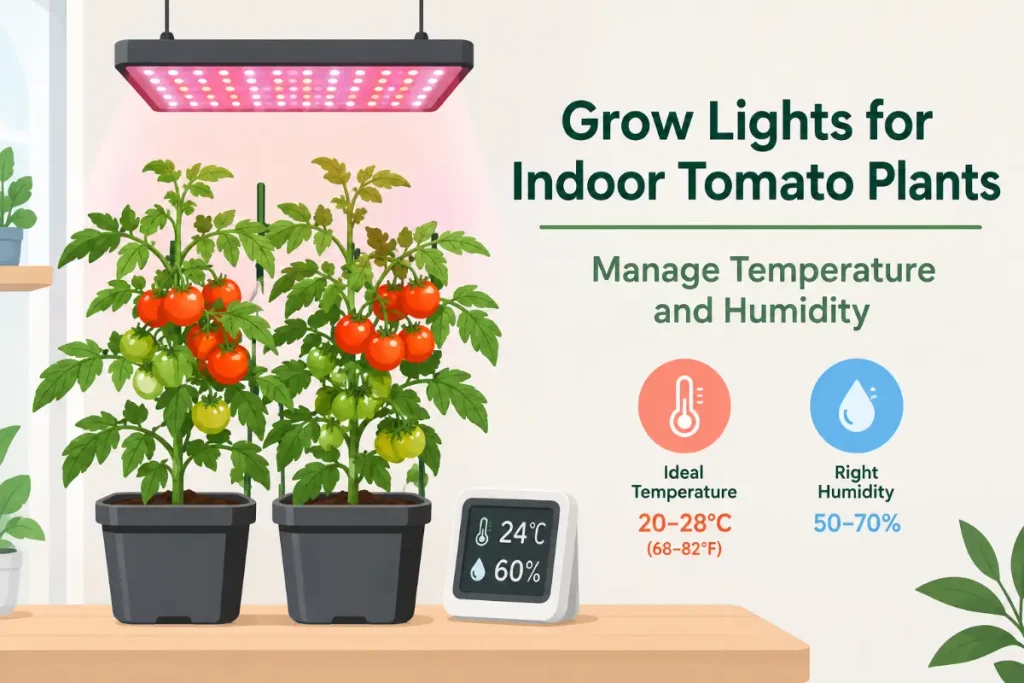
Step 5: Manage Temperature and Humidity
Temperature for fruiting: Tomatoes set fruit most reliably when daytime temperatures are between 65 and 80 degrees Fahrenheit and nighttime temperatures are between 55 and 70 degrees. Temperature above 85 degrees causes pollen sterility and fruit set drops significantly. And temperature below 55 degrees slows growth and can also impair fruit set.
The grow light heat factor: Quality LED grow lights generate less heat than older HID grow lights but still raise temperatures in enclosed growing spaces. Monitor the temperature at plant canopy level rather than room temperature since the space immediately below the grow light can be significantly warmer than the rest of the room. Adequate ventilation prevents heat accumulation that impairs fruit set.
Humidity for fruit set: Tomatoes set fruit best in moderate humidity between 40 and 70%. Very high humidity above 80% creates conditions for fungal diseases including botrytis that specifically affect tomato flowers and developing fruit. Good air circulation around the plants prevents the high-humidity microclimate that still, enclosed indoor growing spaces create around dense plant foliage.
Step 6: Fertilize Precisely for Fruit Production
Tomatoes are among the most nutritionally demanding plants commonly grown and require precise fertilizing management across different growth stages to produce the fruit that justifies the grow light investment.
Vegetative stage (first four to six weeks): A balanced fertilizer with moderate nitrogen to support leafy growth. Too much nitrogen at this stage drives excessive vegetative growth at the expense of eventual flower and fruit development.
Flowering stage: Switch to a lower-nitrogen, higher-phosphorus and potassium formula when the first flower buds appear. Formulas marketed as tomato fertilizer or bloom fertilizer with NPK ratios like 5-10-10 or 4-18-38 support flower initiation and development. For the complete natural fertilizer options that suit tomato fruiting stages, natural fertilizer for indoor plants covers the phosphorus and potassium sources including banana peel water and bone meal that complement synthetic fertilizing programs.
Calcium supplementation: Calcium deficiency is the most common nutritional problem in indoor container tomatoes and produces the blossom end rot (dark, sunken patches on the fruit base) that ruins otherwise developing fruit. Regular calcium supplementation through a calcium-magnesium liquid fertilizer applied every two to three weeks prevents blossom end rot more reliably than attempting to adjust soil pH or using crushed eggshells after the deficiency appears.
Fertilizing frequency: Every seven to ten days through the active growing and fruiting period. Container-grown tomatoes under grow lights leach nutrients more rapidly than garden-bed tomatoes and need more frequent replenishment.
Step 7: Manage Containers, Watering, and Pruning
Container size: Compact indoor tomato varieties need at least a five-gallon container for adequate root space and moisture retention. Smaller containers dry out too quickly under grow lights and limit root development that constrains fruit production. Fabric grow bags in five-gallon size are excellent for indoor tomatoes since they provide air pruning of roots and prevent the overwatering that solid-sided plastic pots enable.
Watering: Tomatoes under grow lights need consistent moisture. Check soil moisture daily in warm growing conditions. Water when the top inch of soil feels dry, ensuring thorough saturation to the bottom of the container. Inconsistent moisture causes blossom drop, fruit cracking, and the calcium uptake problems that lead to blossom end rot.
Pruning suckers: Compact indoor varieties need less pruning than indeterminate garden varieties but removing suckers (the shoots that emerge in the joint between the main stem and leaf branches) on larger compact varieties maintains airflow and directs energy toward existing fruit development rather than new vegetative growth.
Staking: Even compact varieties producing fruit need light staking to support fruit-laden branches. Bamboo stakes or small tomato cages sized for container plants prevent branches from breaking under fruit weight.
Realistic Expectations for Indoor Tomatoes Under Grow Lights
Setting honest expectations prevents the disappointment that results from applying standard outdoor tomato productivity expectations to indoor growing conditions.
Yield comparison: A well-managed outdoor tomato plant in a productive garden produces dramatically more fruit than any indoor grow-light tomato in a comparable time period. Indoor tomatoes under quality grow lights produce modest but genuine harvests from compact plants, typically one to three pounds of cherry tomatoes per plant per month from productive compact varieties in good conditions.
The value proposition: Indoor tomatoes under grow lights are most rewarding for growers who want the experience of growing and harvesting their own food year-round, who live in climates with very short outdoor growing seasons, or who specifically want fresh cherry tomatoes in winter when outdoor growing is impossible. They are not a cost-effective alternative to purchasing tomatoes from a grocery store when grow light electricity costs and equipment investment are accounted for.
The learning curve: The first indoor tomato growing attempt under grow lights typically involves mistakes in light intensity, pollination, and fertilizing that reduce yield below potential. Second and subsequent attempts with refined technique produce significantly better results. Treating the first growing cycle as a learning experience rather than expecting maximum productivity immediately produces more satisfying long-term outcomes.
For the complete guide to UV-A content in grow lights and how it affects indoor plant and crop performance beyond the visible spectrum that PPFD measurements capture, UV light for plants indoor covers the spectrum considerations that matter specifically for maximizing fruit quality and essential compound production in crops grown under artificial lighting.
Grow Light Setup for Small-Space Indoor Tomato Growing
Most people growing indoor tomatoes under grow lights do so in limited space: a closet, a corner of a room, or a dedicated shelf unit. Setting up efficiently in small spaces reduces costs while maximizing the productive area under the grow light.
Reflective surfaces: Lining the walls of a grow space with reflective mylar film or white-painted surfaces increases the effective light reaching plants by reflecting light that would otherwise be lost. In a small grow tent or closet setup, reflective walls can increase effective PPFD by 20 to 30% without additional lighting.
Adjustable-height mounting: Mounting the grow light on an adjustable rope ratchet system allows raising the light as plants grow taller and lowering it for seedlings that need more intensity from a closer distance. This flexibility is essential since the same light at twelve inches provides twice the intensity at the canopy as the same light at twenty-four inches.
Dedicated grow tents: Commercial grow tents in two-by-two-foot or two-by-four-foot sizes with built-in reflective interiors, ventilation ports, and light-hanging frames are the most efficient small-space indoor tomato growing setup. They consolidate the reflective surfaces, temperature management, and light control that improve yield over open-room growing at a cost of $50 to $150 for entry-level setups.
Conclusion
Grow lights for indoor tomato plants deliver genuine results when the right light intensity is provided for adequate daily hours, compact varieties matched to indoor conditions are chosen from the start, hand pollination is performed daily without fail, and nutritional management accounts for the calcium deficiency that container-grown tomatoes specifically develop.
A 100 to 200-watt actual-draw full-spectrum LED grow light. Fourteen to sixteen hours of daily light on a timer. Compact cherry tomato varieties. Daily hand pollination with an electric toothbrush. Biweekly fertilizing with calcium supplementation. And consistent moisture management in a five-gallon container. Those seven elements produce the indoor tomato harvest that rewarding grow light growing delivers.
Frequently Asked Questions
What wattage grow light do I need for indoor tomatoes?
For one to two compact tomato plants in a two-square-foot area, a quality LED grow light drawing 100 to 150 actual watts from the wall is appropriate, delivering 400 to 600 PPFD at twelve to eighteen inch mounting height. Larger growing areas need proportionally more wattage. Always look for PPFD specifications at your intended mounting distance rather than relying on wattage claims alone since efficiency varies significantly between grow light manufacturers.
Why are my indoor tomato flowers falling off without producing fruit?
Flower drop without fruit set in indoor tomatoes is almost always caused by failure to hand pollinate. Indoor tomatoes have no bee access and require manual vibration of each flower to release and deposit pollen. Use an electric toothbrush held against the back of the flower stem for one to two seconds on every open flower daily. Temperature problems above 85 degrees or below 55 degrees also cause pollen sterility and flower drop. Check grow light heat accumulation at canopy level if all flowers are dropping despite regular hand pollination.
How many hours of grow light do indoor tomatoes need?
14 to 18 hours daily. During vegetative growth 16 to 18 hours drives the fastest establishment. During flowering and fruiting 14 to 16 hours is adequate for most compact varieties. Always maintain at least six hours of darkness in each 24-hour cycle. Use an automatic timer for consistent scheduling since irregular light periods can confuse the plant’s physiological processes even though tomatoes are not strictly photoperiod sensitive.
Can I grow tomatoes indoors year-round under grow lights?
Yes. This is one of the primary advantages of grow-light indoor tomato growing. In a controlled indoor environment with appropriate grow lights, temperature management, and hand pollination, compact tomato varieties produce fruit continuously year-round without the seasonal limitation of outdoor growing. Winter indoor tomatoes are one of the most satisfying applications of grow light gardening for people in cold climates.
What is the best compact tomato variety for growing indoors?
Tumbling Tom is consistently one of the most productive compact varieties for indoor grow-light growing, producing cherry tomatoes on compact naturally cascading plants suited to containers. Tiny Tim and Micro Tom are the most compact options for very limited space. Red Robin produces well in five-gallon containers under adequate grow lights. For first-time indoor tomato growers, Tumbling Tom or Tiny Tim are the most recommended starting points due to their consistent indoor productivity under artificial lighting.
How do I prevent blossom end rot in indoor tomatoes?
Blossom end rot is caused by calcium deficiency in developing fruit, usually from inconsistent watering that impairs calcium uptake even when calcium is present in the growing medium. Prevent it by watering consistently when the top inch of soil dries, applying a calcium-magnesium liquid fertilizer every two to three weeks, and ensuring the growing medium drains freely without waterlogging. Once blossom end rot appears on a fruit it cannot be reversed, but correcting watering and calcium supplementation prevents future fruits from being affected.
Pingback: Can You Grow a Tomato Plant Indoors? Step By Step Guide (2026) - Plant Quill
Pingback: How to Grow Garlic Indoors: 7 Steps to Fresh Greens and Bulbs - Plant Quill