Underwatering indoor plants kills fewer houseplants than overwatering but causes more stress to plant owners who watch their plants droop and worry they are doing something fundamentally wrong. The good news about underwatering is that most plants recover completely from mild to moderate drought stress once watered correctly. The challenging aspect is that chronic underwatering — repeated drought cycles that plants never fully recover between — accumulates damage that eventually affects long-term plant health even if no single event causes dramatic visible harm.
This guide covers how to recognize underwatering accurately (since the symptoms overlap with overwatering in ways that confuse diagnosis), how to correctly rehydrate a drought-stressed plant, and how to build the consistent watering practice that prevents the cycle from repeating.
Quick Answer
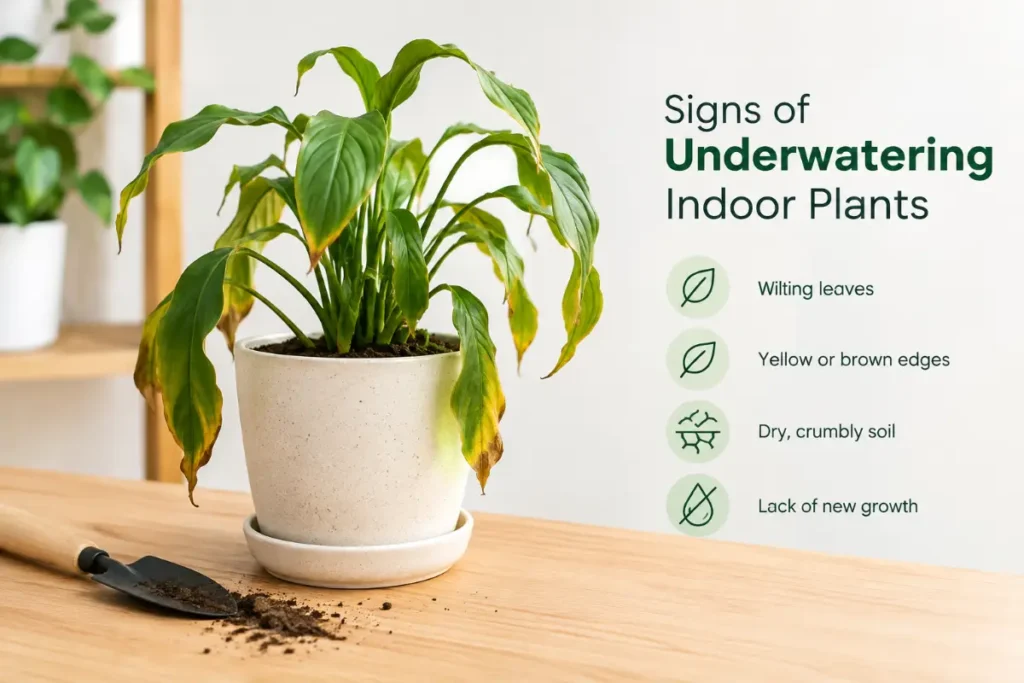
Signs of underwatering include wilting with dry soil at the checking depth, brown crispy leaf tips and edges, soil pulling away from pot sides, and leaves that feel slightly soft or papery. Fix by watering thoroughly until water flows from drainage holes, allowing the full root zone to rehydrate over several hours, and implementing the soil check method going forward to water before stress occurs rather than in response to it.
Understanding Drought Stress in Indoor Plants
Plants manage water loss through a system of tiny pores called stomata on their leaf surfaces. When adequately hydrated, stomata open to allow gas exchange (carbon dioxide in, oxygen and water vapor out) that supports photosynthesis. When water in the root zone becomes insufficient, plants close their stomata to prevent further water loss.
Closed stomata stop photosynthesis. The plant’s sugar production halts, reducing the energy available for growth, repair, and all metabolic functions. This is why chronically underwatered plants grow slowly, produce small leaves, and look generally unhealthy despite any other care being adequate.
The wilting mechanism: When root water uptake falls below the rate of water loss through leaves, the water pressure (turgor) within leaf cells drops. This turgor pressure is what keeps leaves firm and upright. When turgor drops, leaves droop and wilt. Restoring soil moisture allows roots to absorb water, turgor pressure rebuilds, and wilted leaves recover their firm, upright position.
The recovery rate: Mild wilting in most common houseplants recovers within one to four hours of thorough watering as roots absorb water and redistribute it through the plant. Severe wilting from extended drought takes twelve to twenty-four hours for full visible recovery even after thorough watering. Permanent leaf damage (brown dry areas, curled edges that do not uncurl after watering) indicates cells that experienced irreversible damage from water loss.
Signs of Underwatering: Reading Them Accurately
Wilting with dry soil: The most diagnostic sign of underwatering. Unlike overwatering where wilting accompanies moist soil, underwatering wilting always accompanies soil that feels dry at the appropriate checking depth. Before responding to any wilting plant, check soil moisture at one to two inches depth. Dry soil confirms underwatering. Moist soil suggests overwatering or root damage — not drought.
Brown, crispy leaf tips and edges: Unlike the yellow, soft browning associated with fluoride sensitivity or overwatering, underwatering produces brown that is dry and crispy to the touch. The browning typically starts at leaf tips and progresses inward along leaf edges. Already-browned areas do not recover after watering — they remain brown permanently. New growth after correct watering resumes emerges healthy without browning.
Soil pulling away from pot sides: When potting mix dries severely, it shrinks and pulls away from the sides of the container, leaving a visible gap between soil and pot wall. This visible gap is a clear sign of significant soil dryness beyond the normal drying cycle.
Leaves curling inward: Many plants curl their leaves inward in response to drought as an adaptation to reduce the leaf surface area exposed to evaporation. This is distinct from overwatering-related curling and is confirmed by accompanying dry soil.
Lightweight pot: A pot that feels dramatically lighter than when last watered indicates the soil has dried significantly. This is a useful quick check for experienced plant owners who have developed a feel for the weight of their pots at appropriate moisture levels.
Slow growth and small new leaves: Chronic mild underwatering that never reaches dramatic wilting still produces visible effects over time. New leaves that are smaller than existing mature leaves, very slow growth during the active growing season, and generally reduced plant vigor without other obvious cause may indicate chronic mild drought rather than acute drought stress.
The Difference Between Underwatering and Overwatering Symptoms
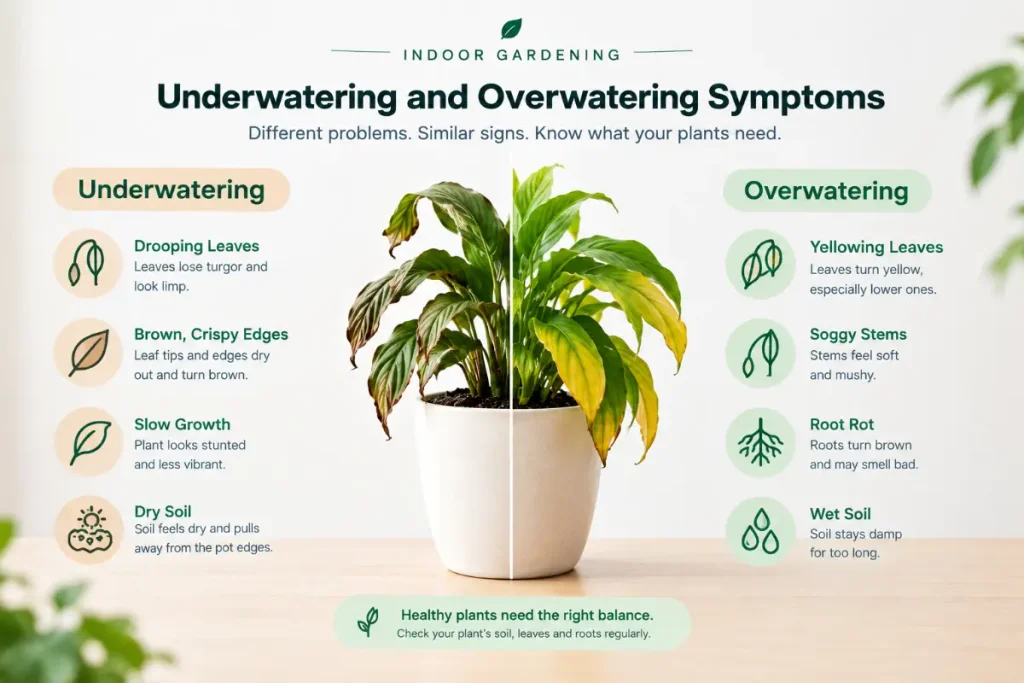
Because wilting and leaf color changes occur in both conditions, accurate diagnosis before treatment is essential.
| Symptom | Underwatering | Overwatering |
|---|---|---|
| Soil moisture | Dry at check depth | Moist or wet at check depth |
| Leaf browning | Dry, crispy, starts at tips | Soft, yellow, starts in older leaves |
| Stem bases | Firm, normal | Soft, possibly mushy |
| Smell | No unusual odor | Musty or sour from soil |
| Leaf drop | Leaves typically stay on plant | Leaves may drop while still green |
| Recovery after watering | Quick (1 to 4 hours) | No improvement or worsening |
The single most reliable differentiator is soil moisture. Check before drawing any diagnostic conclusions. Two minutes of soil assessment saves plants that would otherwise be treated for the wrong problem.
Step-by-Step: Rehydrating a Severely Underwatered Plant
For plants showing mild to moderate wilting from underwatering, thorough top watering until drainage occurs is typically sufficient. For plants showing severe wilting, dry soil that has pulled from pot sides, or plants that do not recover within several hours of normal watering, the following rehydration approach is more effective.
Step 1 — Bottom soaking: Place the pot in a basin or sink with two to three inches of room temperature water. Allow the pot to sit in the water for thirty to sixty minutes. Severely dried potting mix has become hydrophobic (water-repelling) and does not absorb water applied from the top effectively. Bottom soaking allows water to be drawn up slowly through the drainage holes, rehydrating the soil from below.
The hydrophobic soil problem: When potting mix dries severely, the organic matter (peat moss, bark, coco coir) becomes hydrophobic — it repels rather than absorbs water. Water poured on top of severely dried soil runs down the gap between soil and pot sides and out the drainage holes without penetrating the dry root zone. This is why a severely drought-stressed plant may not recover after a single top watering that appears thorough — the water ran around rather than through the dried root ball.
Step 2 — Top watering after soaking: After the bottom soak, remove the plant from the water basin. Water thoroughly from the top until water flows freely from the drainage holes. This combination of bottom and top watering ensures the full root zone has been rehydrated, not just the lower portion reached by the soak.
Step 3 — Drain completely: Allow the plant to drain completely for thirty minutes before returning to its display position. Empty the saucer after draining.
Step 4 — Allow several hours for recovery: Wilted leaves that were severely dehydrated may not spring back immediately. Give the plant four to twelve hours after thorough rehydration to assess recovery. Mild wilting typically resolves within one to two hours. Severe wilting may take twelve to twenty-four hours for full visible recovery.
Step 5 — Trim irreparably damaged leaves: After the plant has recovered and you can clearly see which leaf areas remain brown and dry versus which have recovered to firm, green growth, trim the permanently damaged sections with clean scissors at an angle that matches the natural leaf shape. Removing dead tissue reduces the aesthetic impact of drought damage and removes material that could harbor fungal problems.
Which Plants Recover Best From Underwatering
Not all plants respond to drought stress with equal resilience. Understanding which plants bounce back quickly and which accumulate lasting damage from drought episodes helps you prioritize watering attention.
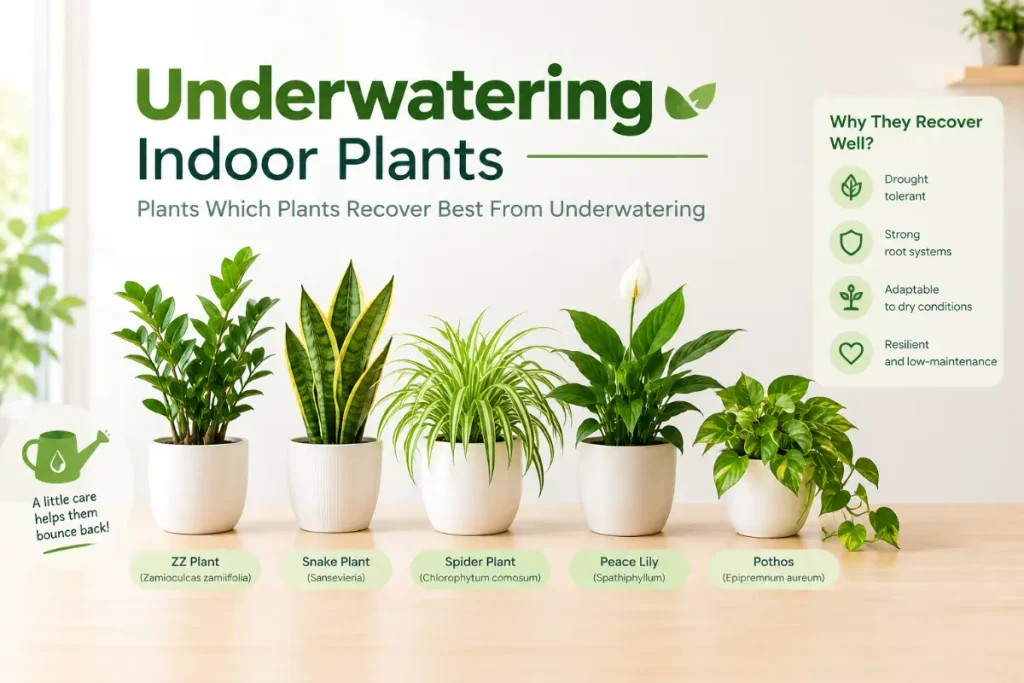
Best drought recovery: Pothos, snake plant, ZZ plant, spider plant, philodendron, and most common tropical foliage plants recover fully from mild to moderate drought stress with no lasting visible damage after thorough watering. These plants are forgiving of the occasional missed watering without accumulating significant harm.
Moderate recovery: Peace lily and calathea wilt dramatically and visibly from drought but typically recover fully from moderate drought events. Severe or repeated drought causes leaf browning and damage that does not reverse. Peace lily recovers most reliably when watered before the full dramatic wilt reaches its most extreme stage.
Slower or incomplete recovery: Ferns are among the most drought-sensitive common houseplants. Maidenhair fern in particular shows frond browning from relatively mild drought that does not reverse after recovery. Boston fern recovers better than maidenhair but fronds damaged by drought remain brown while new growth emerges healthy. Calathea similarly may retain evidence of drought stress in damaged leaves while new growth is healthy.
Plants where underwatering causes permanent damage quickly: Orchid roots desiccate and die from relatively brief drought periods in bark medium. Damaged orchid roots appear grey-silver and shriveled rather than plump and white or green. Herbs including basil collapse dramatically from drought and may not recover from severe wilting. For the complete guide to basil care including its specific watering needs, growing basil indoors covers the moisture management that prevents the drought collapse basil is particularly susceptible to.
Building a Watering Habit That Prevents Underwatering
Underwatering typically results from one of three causes: forgetting to check, checking but misjudging dryness, or deliberately underwatering out of fear of overwatering after past negative experiences.
For forgetting: Set a recurring weekly reminder to check all plants. The reminder is not to water — it is to check. After the check, water the plants that the check indicates need it. This habit separates the checking from the watering, preventing both the forgetting that causes underwatering and the automatic watering that causes overwatering.
For misjudging dryness: Use the finger test consistently at the appropriate depth for each plant type. The surface can look dry when an inch down is still moist (leading to unnecessary watering) or look deceptively normal when two inches down is completely dry (leading to underwatering). Commit to the depth-appropriate check for each plant rather than relying on surface appearance.
For deliberate underwatering from fear of overwatering: The soil check method resolves this by providing objective information rather than requiring judgment about whether “it’s time to water.” If the check says dry at the appropriate depth, water. If it says moist, wait. The check removes the uncertainty that makes fear-based underwatering feel safer than it is.
For the complete guide to the soil check method and appropriate checking depths for every common indoor plant type, how often to water indoor plants covers the foundational watering practice that makes both underwatering and overwatering consistently avoidable.
Chronic Underwatering Versus Acute Underwatering
Understanding the difference between a single drought event and a pattern of chronic mild underwatering helps you assess and address the full picture of your watering practice.
Acute underwatering: A single drought event where a plant reaches dramatic wilting before being watered. Most common tropical houseplants recover fully from a single acute drought event with appropriate rehydration. The plant may lose some leaves or show brown tips but resumes normal growth after recovery.
Chronic underwatering: A repeated pattern where plants are consistently watered slightly too infrequently, never reaching dramatic wilting but never fully recovering to optimal hydration between each watering cycle. This pattern is more difficult to recognize because the plants never look dramatically stressed, but it produces consistently slower growth, smaller new leaves, and reduced overall vigor compared to appropriately watered plants.
The chronic underwatering diagnostic: Compare the size of new leaves to existing mature leaves on the same plant. New leaves in a chronically underwatered plant are consistently smaller than existing mature leaves. In appropriately watered plants, new leaves reach the same size as or slightly larger than existing leaves. This progressive reduction in leaf size is one of the clearest visible indicators of chronic mild drought stress that does not produce dramatic wilting.
Seasonal Underwatering Patterns
Underwatering follows predictable seasonal patterns that help you anticipate when your collection is most at risk and adjust checking frequency proactively.
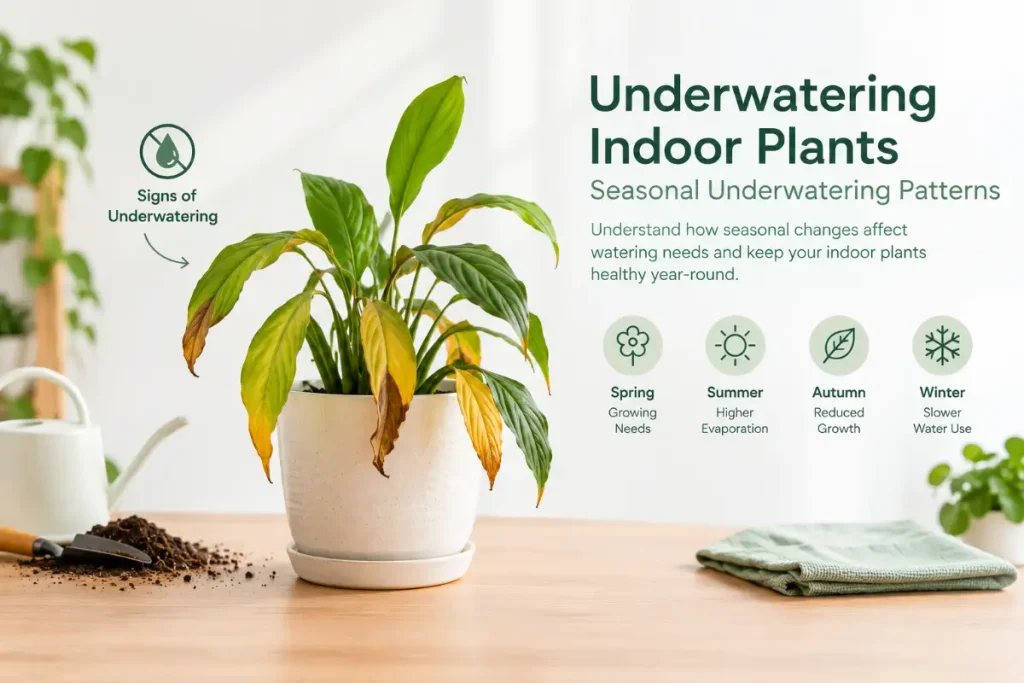
Summer underwatering risk: The combination of increased plant growth, higher transpiration in warm temperatures, and lower humidity from air conditioning creates the highest water demand of any season for most indoor plants. Plants that needed water every seven days in spring may need water every four to five days in peak summer conditions. If you maintain spring watering frequency through summer without checking whether plants have dried faster, summer underwatering becomes systematic rather than occasional.
Post-repotting underwatering: Immediately after repotting, plants in fresh potting mix with abundant air pockets and undisturbed drainage actually dry out faster than established plants in older, somewhat compacted mix. New plant owners who repot and then maintain the watering frequency of the previous pot often find the new larger container drying out faster than expected, creating unexpected drought stress in freshly repotted plants.
Winter underwatering in specific positions: While winter generally reduces water demand for most plants, specific indoor positions change dramatically in winter. Plants near south-facing windows receive more intense direct sun at the lower winter sun angle than in summer, potentially increasing their water demand at the very time of year when most plant owners are reducing watering frequency across the collection. Check south-facing window plants individually rather than assuming winter means reduced watering for all positions.
Moving plants: Any time a plant moves to a brighter, warmer, or drier position, its water demand increases relative to the previous position. Moving a plant from a north-facing shelf to a south-facing windowsill and maintaining the same watering frequency that suited the dimmer position underwatering the plant in its new, higher-demand location within days. Immediately reassess watering frequency after any significant position change.
Special Considerations for Underwatering in Terracotta Pots
Terracotta pots dry significantly faster than plastic or glazed ceramic pots of equivalent size and position because moisture evaporates through the porous clay walls rather than only from the soil surface and drainage holes. This property, which is an advantage for drought-tolerant plants, requires adjustment for moisture-loving plants in terracotta.
The drying rate difference: The same plant in a six-inch terracotta pot may need water thirty to fifty percent more frequently than in a six-inch plastic pot in the same position because terracotta loses moisture through its walls continuously. New plant owners who move plants from plastic nursery pots to terracotta display pots without adjusting their watering frequency routinely find the plants underwatered within the first two weeks.
The recalibration approach: After any pot material change, check soil moisture daily for the first two weeks to establish the actual drying rate of the new container in that specific position before extending the interval between checks. Once you have observed two or three complete dry cycles (from freshly watered to the appropriate dryness level) in the new container, you have the information needed to set a realistic checking frequency.
When terracotta underwatering is most common: Terracotta pots in low-humidity heated homes during winter, near heat sources, and in direct sun positions dry most quickly — sometimes within two to three days of thorough watering for smaller pots. In these conditions daily checking is not excessive for moisture-loving plants in terracotta. For the complete guide to how self-watering pots address the challenge of rapidly drying terracotta by providing reservoir moisture between waterings, self-watering pots for indoor plants covers every aspect of self-watering pot selection and use that is most relevant for moisture-loving plants in fast-drying positions.
Conclusion
Underwatering indoor plants is more recoverable than overwatering in most cases, but the pattern of chronic mild underwatering that never causes dramatic distress accumulates plant health damage over months that reduces vigor, leaf size, and overall plant quality in ways that are not obvious until you compare the plant’s current state to photos from six months earlier.
The solution to underwatering is not watering more — it is watering more consistently and with better timing. The soil check method that tells you when to water rather than requiring you to guess or schedule provides the consistent moisture that prevents both underwatering and overwatering simultaneously. Check at the appropriate depth for your plant type. Water when that depth is dry. Repeat. That practice produces healthy plants without the drama of drought stress or the slow damage of overwatering.
Frequently Asked Questions
How do I know if my plant is underwatered?
The clearest signs of underwatering are wilting combined with soil that is dry at one to two inches depth when you check. Brown crispy leaf tips and edges, soil pulling away from pot sides, and leaves that feel slightly soft or papery rather than firm also indicate drought stress. Confirm by checking soil moisture before treating — moist soil with the same symptoms indicates overwatering rather than underwatering.
How do I fix an underwatered plant?
Water thoroughly by bottom-soaking severely dried plants (sitting the pot in two to three inches of water for thirty to sixty minutes) to rehydrate hydrophobic soil, then following with top watering until drainage occurs. Allow four to twelve hours for wilted plants to recover. Trim permanently browned leaf areas after recovery. Adjust watering frequency going forward using the soil check method to water before drought stress occurs.
Can underwatered plants recover?
Most common houseplants recover fully from mild to moderate underwatering after thorough rehydration. Plants showing severe wilting take longer to recover but typically do fully within twelve to twenty-four hours of appropriate watering. Permanently damaged tissue (dry, brown areas) does not recover but new growth after correct watering resumes is healthy. Ferns and some other sensitive plants retain more permanent evidence of drought stress than robust tropical plants.
Why do my plants keep getting underwatered?
The most common causes are watering on a fixed schedule that does not account for seasonal changes in plant water demand, forgetting to check regularly enough, or deliberately underwatering out of fear of overwatering. Set a weekly plant-checking reminder and commit to the soil check method at the appropriate depth for each plant type. Water when the check indicates dryness rather than on a calendar schedule.
Is it better to over or underwater indoor plants?
For most common houseplants, mild underwatering is less harmful than overwatering because plants recover more completely from drought stress than from the root rot that overwatering causes. However, the ideal is neither — consistent appropriate watering using the soil check method produces healthier plants than erring toward either extreme. For drought-tolerant plants like cacti and succulents, underwatering is much less harmful than overwatering. For moisture-loving plants like peace lily and ferns, even mild chronic underwatering causes noticeable damage.
How long does it take for an underwatered plant to recover?
Mild wilting typically recovers within one to four hours of thorough watering. Severe wilting may take twelve to twenty-four hours for full visible recovery. New healthy growth replacing damaged leaves and tips takes two to four weeks to become apparent. The underlying plant health recovers fastest when appropriate soil moisture is maintained consistently after the initial rehydration rather than returning to the infrequent watering pattern that caused the drought stress.