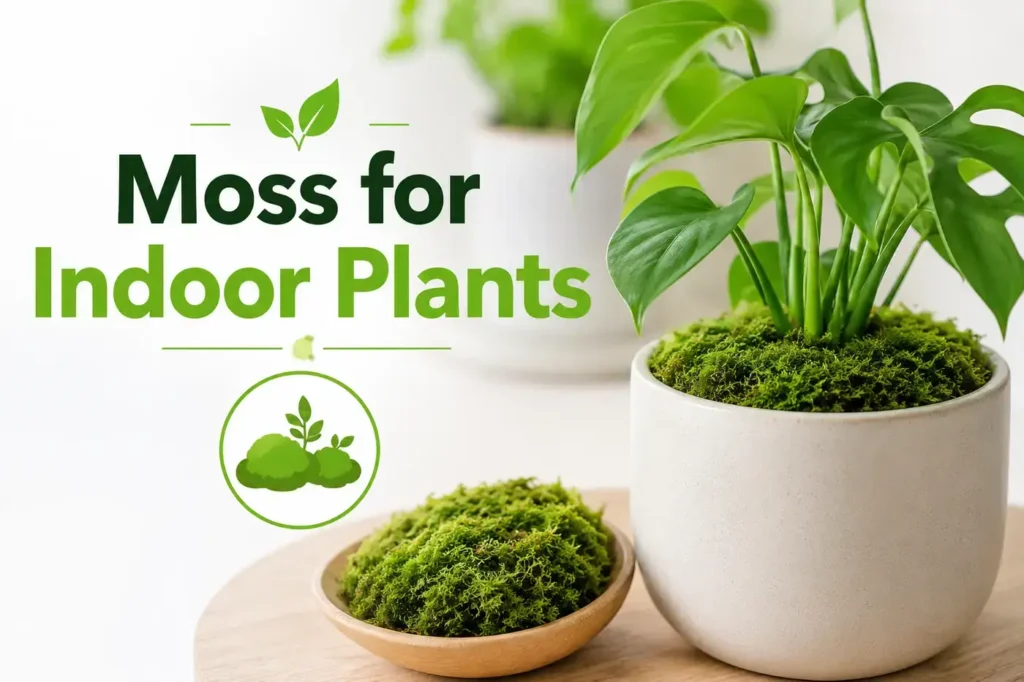
Moss for indoor plants does more than just look beautiful. Depending on the type you use and how you use it, moss improves moisture retention, creates ideal conditions for orchid and terrarium roots, provides a living humidity indicator for moisture-sensitive plants, and creates the lush, natural aesthetic that makes tropical plant displays genuinely striking. The challenge is that several very different materials get sold under the broad label of moss, and they perform entirely differently in practice.
Sphagnum moss, sheet moss, peat moss, preserved decorative moss, coco moss, and reindeer moss each have specific strengths and specific uses where they deliver real value. Using the right type in the right application produces excellent results. Using the wrong type creates problems that feel like plant care failures when they are actually just a product mismatch.
This guide covers the 6 most useful moss types for indoor plants, what each one is best suited for, and how to use each one correctly.
Quick Answer
The best mosses for indoor plants are long fiber sphagnum moss for orchids and moisture-loving plants, sheet moss for terrariums and soil surface coverage, peat moss for acidic soil mixes, preserved decorative moss for aesthetics without maintenance, coco moss for moisture-retaining hanging baskets, and reindeer moss for decoration and light moisture coverage. Each type suits different applications. Sphagnum and sheet moss require moisture management to stay effective. Preserved and reindeer moss require no care at all.
Why Moss Works So Well With Indoor Plants
Moss has been evolving alongside plants for hundreds of millions of years. In natural forest environments, mosses form the ground cover layer that keeps soil surface conditions stable: consistently moist, protected from direct sunlight, and teeming with microorganism activity that supports the plants growing above.
Bringing that function into an indoor plant setup, even in simplified form, replicates the stable growing conditions that tropical plants evolved expecting. A moss-covered soil surface stays more consistently moist, experiences less temperature fluctuation, and provides a more hospitable environment for surface roots than bare potting mix exposed to dry indoor air.
Beyond function, moss does something most other plant additions cannot: it makes a collection of houseplants look like a cohesive, intentional display rather than individual pots sitting separately. The visual continuity of moss across multiple pots or throughout a terrarium creates the sense of a natural plant community that individual decorative elements rarely achieve.
6 Types of Moss for Indoor Plants
Type 1: Long Fiber Sphagnum Moss
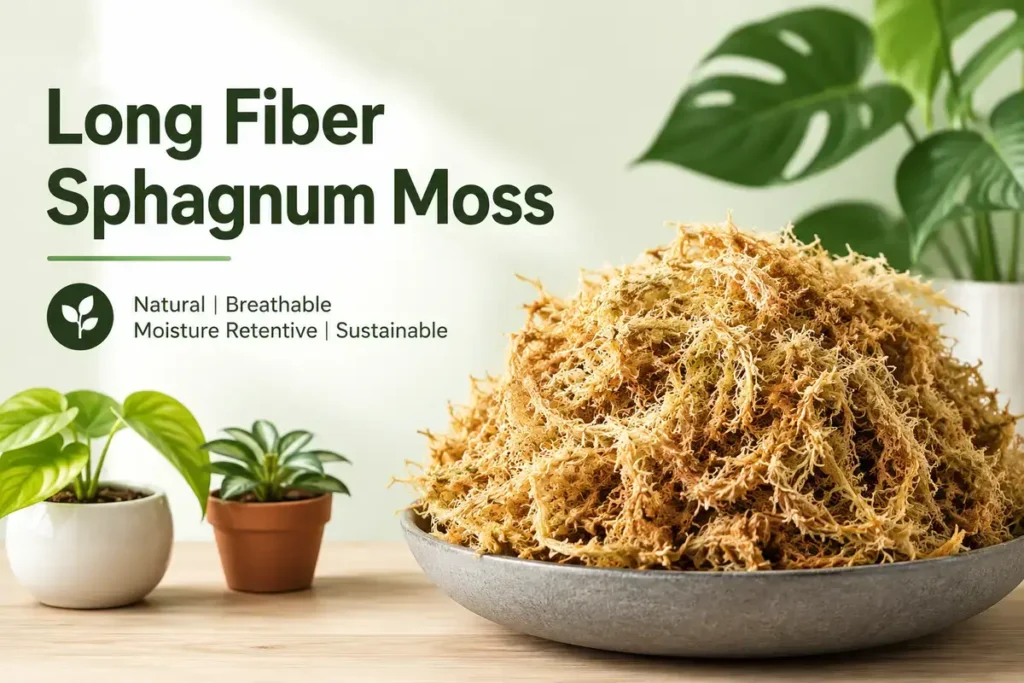
Long fiber sphagnum moss is the most versatile and most broadly useful moss for indoor plant applications. It is the natural growing medium for many epiphytic orchids, anthuriums, and aroids in their native habitats, and it performs the same role in cultivation that it does in nature: providing excellent moisture retention alongside exceptional aeration that allows roots to breathe between waterings.
Sphagnum’s natural antibiotic properties, which allowed it to be used as wound dressing in the World Wars before antibiotics were widely available, also make it resistant to mold and bacterial decomposition, which is why it outlasts most other organic materials in moist growing conditions.
Best uses:
Orchid potting medium. Phalaenopsis and many other commonly grown orchid species root beautifully in moistened sphagnum packed loosely around their roots. The moss holds enough moisture to keep roots hydrated between waterings while the loose packing maintains the air spaces that prevent root rot.
Propagation medium. Cuttings rooted in moist sphagnum develop healthy root systems quickly. The moisture retention keeps cuttings hydrated during the critical rooting period while the natural antibiotic properties reduce the mold and rot risk that kills cuttings in other moist media.
Moisture moss poles for climbing aroids. Misting a sphagnum-covered moss pole keeps aerial roots of monsteras and pothos moist enough to attach and support the plant’s natural climbing growth habit.
Wrapping bare root plants during transit. Moistened sphagnum around bare roots keeps them viable for days during shipping or transport.
How to use it: Soak dry sphagnum in water for 15 to 20 minutes until fully hydrated. Squeeze out excess water until the moss feels damp but not dripping. Use immediately or store in a sealed bag in the refrigerator for up to one week. Replace every twelve to eighteen months in potting applications as it eventually breaks down and compacts.
Where to buy: Most garden centers carry sphagnum moss in various package sizes. Besgrow Spagmoss and Mosser Lee are two widely available brands. New Zealand sphagnum is consistently the highest quality available and worth seeking out for orchid applications specifically.
Type 2: Sheet Moss (Hypnum Moss)
Sheet moss is the flat, carpet-like moss most people picture when they think of a lush forest floor. It grows in thin sheets that can be pressed against soil surfaces, the sides of terrariums, or the base of moss poles. Unlike sphagnum, sheet moss is primarily a surface covering rather than a potting medium. Its value is in creating natural-looking ground cover and in the moisture stability it brings to the soil surface environment.
Best uses:
Terrarium ground cover. Sheet moss pressed against the soil surface of closed or open terrariums creates the lush miniature landscape that makes terrariums visually impressive. In closed terrariums it stays green indefinitely with the recycled moisture inside. In open terrariums it requires misting to maintain its living green color.
Soil surface coverage for tropical plants. Pressing sheets of living moss across the soil surface of tropical houseplant pots reduces evaporation from the soil surface and creates the consistently moist micro-environment that ferns, calatheas, and marantas prefer. The moss turns brown when the soil is drying, which acts as a visual moisture indicator before the plant itself shows stress.
Decorative displays and kokedama. Sheet moss is the standard material for kokedama (Japanese moss balls) and for wrapping decorative plant arrangements where visible green moss provides the natural aesthetic that no synthetic material replicates.
How to keep it alive: Sheet moss needs consistent moisture and indirect light to stay green and living. Mist it regularly for indoor use. Brown sheet moss has simply dried out and usually recovers with thorough wetting. If it remains brown after re-wetting, it has died and needs replacing with fresh material.
Where to buy: Garden centers, craft stores, and online retailers all carry sheet moss in various sizes. Living sheet moss is available from specialty terrarium suppliers. Dried sheet moss that can be rehydrated is available at most garden centers.
Type 3: Peat Moss
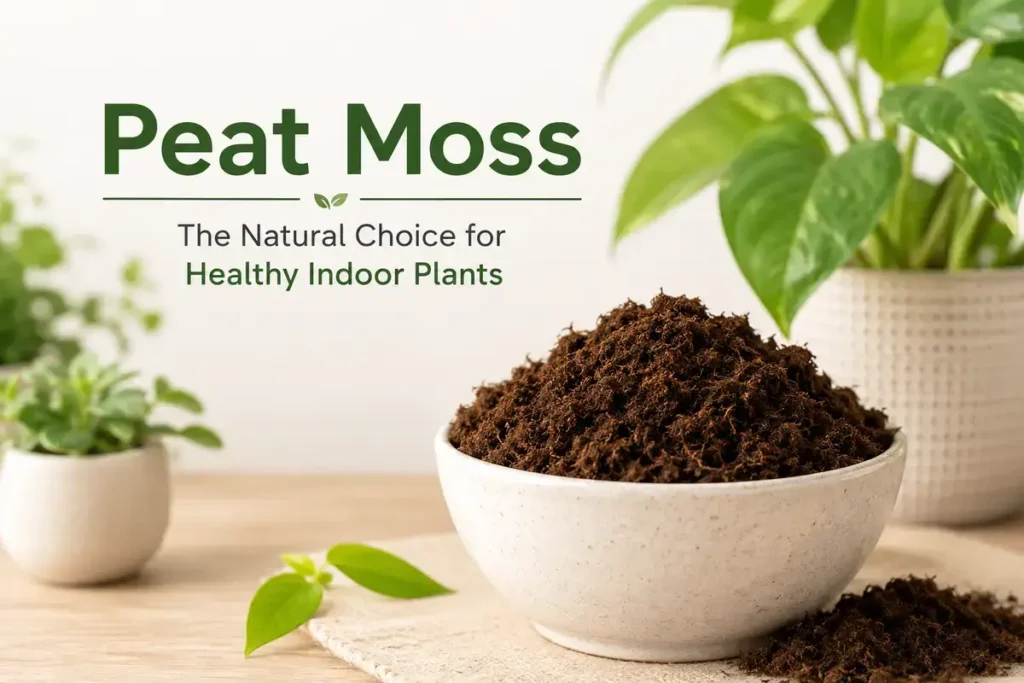
Peat moss is not technically a moss in the same visual sense as sphagnum or sheet moss but it is partially decomposed sphagnum and other moss material and it is one of the most widely used soil amendments for indoor plants. Its role is as a soil component rather than a surface covering or potting medium.
Peat moss improves moisture retention in potting mixes, lowers soil pH toward the acidic range that many tropical plants prefer, and creates the fine-textured, organic-rich growing environment that acid-loving plants evolved in. For a complete guide to how peat moss works in soil mixes and which plants benefit most, peat moss for indoor plants covers everything in full detail including when coco coir is the better sustainable alternative.
Best uses in brief: Soil amendment for acid-loving plants including ferns, gardenias, and African violets. Component of seed starting and propagation mixes. Moisture-retaining amendment in general tropical plant potting mixes.
Type 4: Preserved Decorative Moss
Preserved moss is natural moss that has been treated with glycerin to maintain its soft texture and green color without requiring any water or light to stay looking good. It does not grow, it does not die, and it requires zero care beyond occasional dusting. It is purely decorative.
Best uses:
Pot topping for displayed plants. A layer of preserved moss across the soil surface of displayed plants creates a finished, professional look that bare potting soil cannot match. It hides the visually messy soil surface without affecting plant care since the preserved moss allows water to pass through normally.
Wreaths and arrangements combining plants with decorative elements. Preserved moss is the standard material for living walls, plant shelving arrangements, and the decorative borders around displayed pots where the visual continuity of green coverage creates a designed look.
Kokedama and wabi-kusa bases where living moss is not practical. Preserved moss can substitute for living sheet moss in displays where the maintenance requirements of living moss are not manageable.
What it cannot do: Preserved moss provides zero moisture retention benefit, no nutritional contribution, and no soil biology benefit. It is entirely and only decorative. If a product’s function beyond appearance matters to you, preserved moss is not the right choice.
Where to buy: Craft stores including Michaels and Hobby Lobby carry preserved moss widely. Online sellers on Etsy and Amazon carry large quantities in various colors (natural green, dyed colors) and forms.
Type 5: Coco Moss (Coir Moss)
Coco moss is actually coco coir fiber pressed into sheet or pad form rather than true botanical moss. Despite the name, it behaves more like coco coir than like sheet moss. It provides the moisture retention and neutral pH of coco coir in a form that can be shaped, cut, and pressed against curved surfaces like hanging basket liners and moss pole wrappings.
Best uses:
Hanging basket liners. Pressed coco moss pads line the inside of wire hanging baskets, holding potting mix in while allowing drainage and airflow through the sides. The moss-like appearance suits the outdoor-inspired aesthetic of hanging planted displays better than plastic liners.
Moisture-retaining surface coverage. Coco moss sheets pressed across the soil surface of large indoor planters provide the same moisture retention benefit as coco coir with a more finished appearance than loose coir spread directly on soil.
Vertical plant displays. Coco moss panels cut to size work as the growing medium for small vertical plant arrangements where plants are positioned with their roots pressed into moistened coco moss held in a frame.
Where to buy: Gardening supply stores and online retailers carry coco moss in liner pads for specific basket sizes and in larger sheets that can be cut to custom sizes. For everything coco coir does as a soil amendment and how it compares to moss in various applications, coconut coir for indoor plants covers every use in full detail.
Type 6: Reindeer Moss (Cladonia)
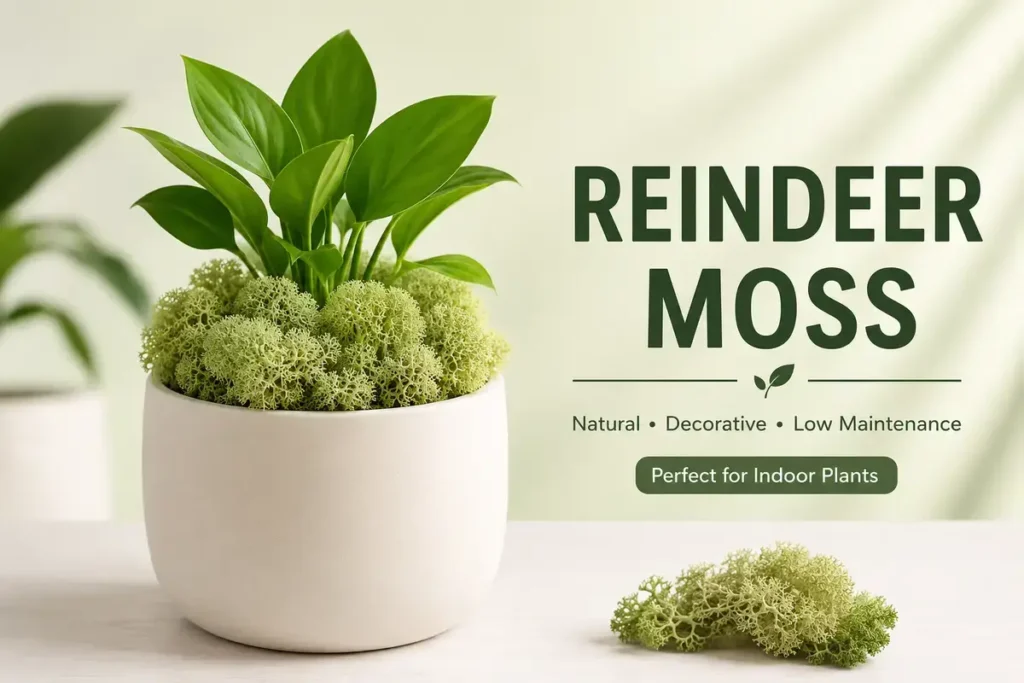
Reindeer moss is actually a lichen rather than a true moss, but it is sold and used widely in indoor plant applications for its distinctive, spongy, branching texture that looks dramatically different from sheet moss or sphagnum. It comes in both dried form and preserved form in an array of natural and dyed colors.
Best uses:
Decorative pot covering. Loose reindeer moss placed across the soil surface of displayed plants provides a more textured, dimensional appearance than flat preserved sheet moss. The branching structure creates visual depth that flat coverings cannot.
Fairy garden and miniature garden displays. The scale and texture of reindeer moss makes it ideal for miniature landscape compositions where it represents trees, shrubs, or ground cover at a miniature scale.
What it provides functionally: Very little. Reindeer moss in its preserved or dried form provides modest moisture retention compared to sphagnum or coco coir. Its primary value is decorative. In its living form it does not adapt well to most indoor conditions and typically dies within weeks of being brought inside unless very high humidity is maintained.
How to Choose the Right Moss for Your Application
Use this quick guide to match moss type to application.
| Application | Best Moss Type |
|---|---|
| Orchid potting medium | Long fiber sphagnum |
| Propagating cuttings | Long fiber sphagnum |
| Terrarium ground cover | Sheet moss |
| Soil surface coverage | Sheet moss or coco moss |
| Moisture indicator on pot | Living sheet moss |
| Decorative pot topping | Preserved moss or reindeer moss |
| Acidic soil amendment | Peat moss |
| Hanging basket liner | Coco moss |
| Moss pole covering | Long fiber sphagnum |
| Kokedama making | Sheet moss |
Keeping Living Moss Alive Indoors
Living moss (sphagnum and sheet moss) requires specific conditions to stay green and functional indoors. Most people who struggle with living moss are fighting against conditions too dry or too bright for moss to survive.
Moisture is the primary requirement. Living moss needs its surface to stay consistently moist rather than drying out between waterings. In typical indoor air, this means misting sheet moss every one to two days or placing it in a terrarium where condensation provides continuous moisture.
Indirect light works best. Moss does not require direct sunlight and most species actually decline in bright direct light that dries them out faster than they can absorb moisture. North or east-facing windows with indirect light or bright ambient light without direct sun rays suit most living moss species well.
Good air quality matters. Moss is sensitive to air quality and declines in environments with high levels of indoor air pollution including cigarette smoke, heavy cleaning product fumes, and poor ventilation. Most standard indoor plant environments with reasonable ventilation are appropriate for living moss.
Moss and Mulch: How They Work Together
Moss and mulch are often discussed separately but they work well in combination for certain indoor plant setups, particularly for moisture-loving tropical collections where creating a stable, humid surface environment makes the biggest difference.
A base layer of coco coir or fine gravel as primary mulch topped with a thin layer of sheet moss creates a layered surface system that combines the moisture retention of the organic base with the visual appeal and humidity-indicating function of living moss on top. The coco coir retains moisture beneath the moss, which keeps the living moss hydrated longer between mistings. The moss in turn shades the coco coir surface and slows its evaporation rate, creating a more stable moisture environment than either material provides alone.
For the complete guide to using mulch materials alongside moss in a combined surface management approach for indoor plants, mulch for indoor plants covers every material with specific guidance on depth, combinations, and which plants benefit most from each approach.
Conclusion
Moss for indoor plants covers a range of genuinely different materials that serve genuinely different purposes. Long fiber sphagnum is the essential choice for orchids, propagation, and moss poles. Sheet moss creates the living ground cover that makes terrariums and tropical plant collections look professionally natural. Peat moss improves soil acidity and moisture retention as a potting component. Preserved and reindeer mosses provide low-maintenance decoration that never needs watering or maintenance. Coco moss does the moisture-retaining work of coco coir in shaped form for baskets and vertical displays.
Choose the type that matches what you actually need. For orchids, sphagnum. Living sheet moss for soil coverage on tropical plants. For decoration without any maintenance commitment, preserved moss. Peat or the more sustainable coco coir alternative for a soil amendment that improves moisture retention and acidity. None of these is interchangeable with the others despite all being sold under the loose category of moss.
Frequently Asked Questions
What is the best moss for indoor plants?
Long fiber sphagnum moss is the most versatile and most broadly useful moss for indoor plant applications. It serves as a potting medium for orchids, a propagation medium for cuttings, a covering for moss poles, and a moisture-retaining surface layer for tropical plants. If you can only keep one type of moss on hand, sphagnum handles more indoor plant applications effectively than any other type.
Can I use outdoor moss for indoor plants?
Yes, with some preparation. Outdoor moss collected from your yard or local environment can be used for terrariums and pot surface coverage. Rinse it thoroughly before bringing it inside to remove insects, slugs, and soil debris. Note that outdoor moss may carry pest eggs or fungal spores that could introduce problems to your indoor plant collection. For critical applications like orchid potting medium, commercially prepared sphagnum moss is more reliable than foraged outdoor moss.
How do I keep moss alive on indoor plants?
Mist living moss every one to two days to maintain consistent surface moisture. Provide indirect light rather than direct sun which dries moss faster than it can absorb moisture. Maintain humidity above 40% if possible since the low humidity of heated indoor environments is the primary reason living moss dries out and dies indoors. Closed or semi-closed terrariums maintain the humidity levels that keep living moss thriving indefinitely without daily misting.
Does moss attract bugs to indoor plants?
Living moss that stays consistently moist can provide habitat for springtails and beneficial soil microorganisms, which are harmless or helpful. Overly wet moss that becomes waterlogged can provide conditions suitable for fungus gnat egg-laying on the surface. Keeping living moss appropriately moist rather than waterlogged and ensuring good drainage in the pot below prevents pest problems. Preserved and dried moss products attract no insects since they contain no living organic matter that pests can use as food or breeding habitat.
Is preserved moss safe for indoor plants?
Yes. Preserved moss treated with glycerin is completely non-toxic to plants and humans. It does not decompose, mold, or release compounds that affect plant health. It sits on the soil surface providing decorative coverage without affecting soil chemistry or plant root health. The only consideration is that preserved moss on the soil surface makes moisture assessment slightly harder since the preserved material itself does not indicate soil moisture levels the way living moss does.