Elephant ear plant care indoors is genuinely rewarding when you understand what drives those dramatic, oversized leaves that make this plant one of the most visually impactful houseplants available. When the conditions are right, elephant ears produce new leaves that unfurl in slow motion over several days, each one larger than the last. When conditions are wrong, the same plants sulk in the corner with yellowing leaves, refusing to produce anything new for months.
The challenge is that elephant ear is a common name covering several very different plants including Alocasia, Colocasia, and Xanthosoma species with slightly different preferences. This guide covers the care requirements that apply broadly across the most common indoor elephant ear varieties while noting where different species diverge.
Quick Answer
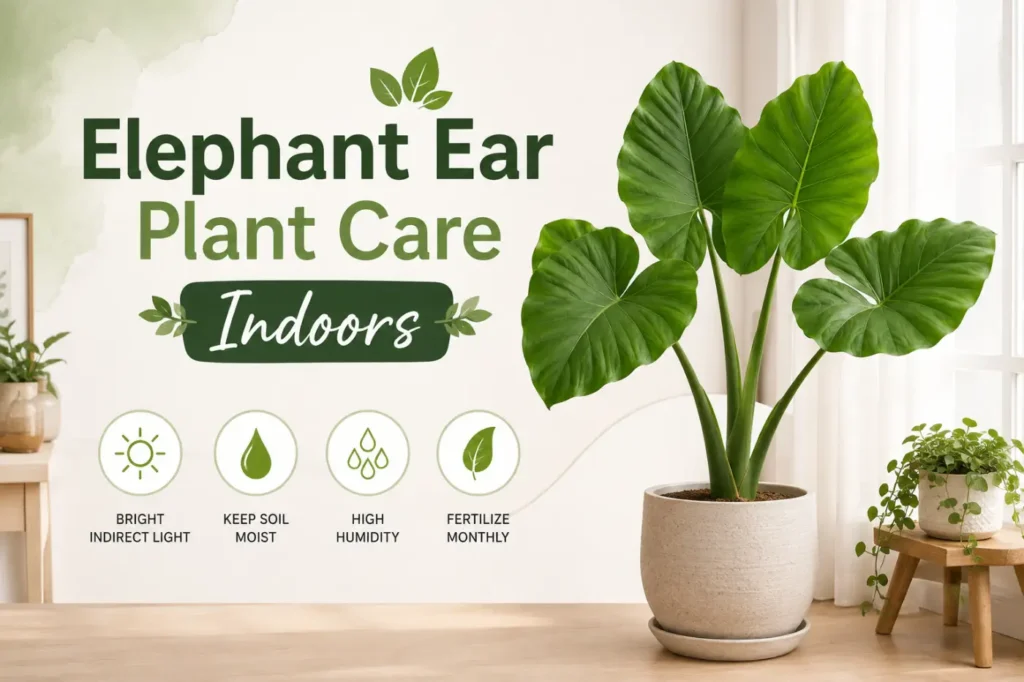
Elephant ear plants indoors need bright indirect light without direct harsh sun, consistently moist soil that never fully dries out or becomes waterlogged, high humidity above 60% when possible, temperatures above 60 degrees Fahrenheit, fertilizing every two weeks through spring and summer, and protection from cold drafts and dry air. Alocasia varieties prefer to dry slightly between waterings while Colocasia prefers consistently wet soil. Yellow leaves most commonly indicate overwatering, low humidity, or insufficient light depending on the pattern.
Understanding Your Specific Elephant Ear
Before getting into care steps, knowing which elephant ear you have matters because Alocasia and Colocasia have meaningfully different watering preferences despite similar appearances.
Alocasia (including Alocasia macrorrhiza, Alocasia amazonica, and many hybrid varieties) is the most common indoor elephant ear. It grows from a corm and prefers to dry out slightly between waterings. Its leaves point upward rather than drooping, and it enters a dormancy period in winter when it may drop most of its leaves even with good care.
Colocasia (taro) prefers consistently moist to wet soil and tolerates much more water than Alocasia. Its leaves tend to droop at the petiole tip rather than pointing upward. It is less commonly found as an indoor plant but does appear in large indoor tropical displays.
Xanthosoma is less common indoors and generally similar in care to Alocasia.
For most people reading this guide, the elephant ear in question is likely an Alocasia. The steps below apply primarily to Alocasia with specific Colocasia notes where they diverge.
Step 1: Get the Light Right
Elephant ears in their natural tropical and subtropical habitats grow in filtered light under larger trees and canopy plants. They receive bright, diffused light rather than direct intense sun.
What works indoors: Bright indirect light from a large east or north-facing window, or positioned three to five feet back from a south or west-facing window where direct sun rays do not hit the leaves. Morning sun from an east-facing window is generally well-tolerated.
What causes problems: Direct afternoon sun through south or west-facing windows bleaches leaves and causes brown scorching on the broad leaf surfaces. Very low light produces small, pale leaves and extremely slow growth.
The light-leaf size connection: Leaf size on elephant ears is directly related to light quality. Plants in bright indirect light produce leaves two to three times larger than the same plant in dim conditions. If small leaves are a concern, improving light before anything else is the first step.
Step 2: Water Correctly for Your Species
Watering is where Alocasia and Colocasia diverge most significantly.
For Alocasia: Water when the top one to two inches of soil feel dry. The plant prefers consistent moisture but needs a slight drying period between waterings to prevent the root rot that is one of the most common causes of Alocasia decline indoors. In a bright position during summer, this typically means watering every five to seven days. In winter or lower light, extend to ten to fourteen days.
For Colocasia: Keep the soil consistently moist to wet. Colocasia is much more tolerant of wet conditions and even grows in standing water outdoors in its native habitat. Allow only the very top of the soil to dry before watering again.
Water quality: Like areca palms, elephant ears are sensitive to fluoride and mineral salts in tap water. Brown leaf tips that appear despite adequate humidity often trace to tap water quality rather than any other care issue. Using filtered or rainwater when possible, or leaving tap water to sit overnight, reduces this problem significantly.
Signs of overwatering Alocasia: Yellowing leaves starting from the lower and middle sections of the plant. Mushy, soft spots at the base of petioles near the soil. Soil staying wet for more than ten days. The most common cause of indoor Alocasia death is chronic overwatering, not underwatering.
Signs of underwatering: Drooping leaves even in the morning. Brown, dry leaf edges rather than yellow. Soil pulling away from pot sides.
Step 3: Provide High Humidity
Elephant ears are humidity lovers from a genuinely tropical origin. They show their displeasure with dry air faster and more visibly than most houseplants through brown leaf edges and tips that appear within days of humidity dropping below comfortable levels.
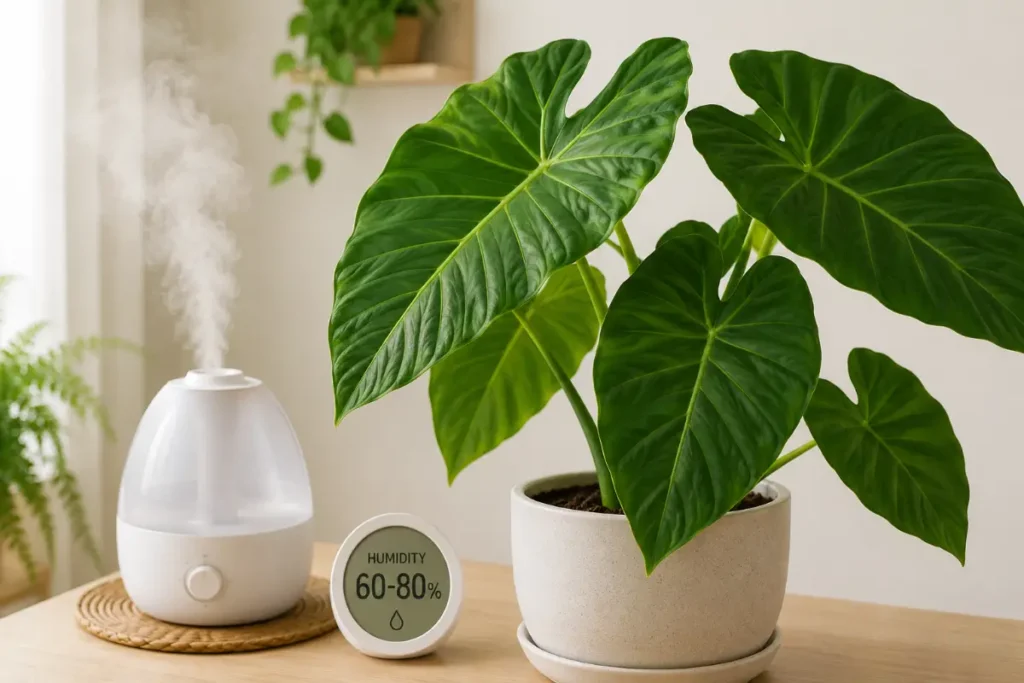
Target humidity: Above 60% for best leaf condition. Between 40 and 60% is tolerable but produces more brown tips than higher humidity. Below 40%, which is typical of heated homes in winter, causes significant browning on the broad leaf surfaces.
Effective solutions: A humidifier positioned nearby is the most effective approach for large elephant ear plants with significant leaf surface area. The broad leaves lose moisture to the air rapidly and a local humidifier replaces that moisture loss more effectively than any other method. Grouping with other large tropical plants raises collective humidity through combined transpiration. A large pebble tray with water beneath the pot provides modest local humidity increase.
What does not work: Misting provides humidity for only minutes before evaporating. For a plant with leaf surfaces as large as elephant ears, this is genuinely too brief to make a difference. Regular misting also creates conditions for fungal spots on the broad leaf surfaces without providing sustained humidity benefit.
Step 4: Maintain the Right Temperature
Elephant ears are tropical plants that shut down in cold conditions and never experience frost in their natural habitats.
Ideal range: 65 to 85 degrees Fahrenheit covers the temperatures where elephant ears grow actively and maintain good leaf health indoors.
Cold sensitivity: Temperatures below 60 degrees cause visible decline. Below 50 degrees, Alocasia enters dormancy or collapses entirely. Cold drafts from exterior doors and cold windowpanes in winter cause rapid browning and petiole collapse even when average room temperature is adequate.
Alocasia winter dormancy: Many Alocasia varieties, particularly those in less than ideal light, go through a dormancy period in fall and winter where they drop most or all of their leaves and appear dead. This is completely normal behavior rather than plant failure. The corm remains alive underground. Reduce watering significantly during dormancy and resume normal care in spring when new shoots emerge from the soil. For first-time Alocasia owners, this dormancy is one of the most alarming but ultimately harmless events in the plant’s care cycle.
Step 5: Use the Right Soil
The right soil mix for elephant ears balances the moisture retention the plant needs with the drainage that prevents the root rot Alocasia is particularly susceptible to.
The right mix for Alocasia: 50 to 60% quality potting mix combined with 20 to 30% perlite and 10 to 20% chunky orchid bark or coarse bark fines. The perlite provides drainage. The bark creates large pore spaces that allow roots to breathe between waterings. This combination retains enough moisture for consistent hydration while draining freely enough to prevent waterlogging.
The right mix for Colocasia: Standard potting mix with minimal or no perlite addition. Colocasia tolerates and prefers the moisture retention that standard mix provides without amendment.
For the complete guide to soil components and how they affect drainage and moisture retention for different tropical plants, soil mixture for indoor plants covers every ingredient with specific ratios for moisture-loving tropical plants.
Step 6: Fertilize for Maximum Leaf Size
The dramatic leaf size that makes elephant ears worth growing requires consistent nutrition through the growing season. Plants that are not fertilized regularly produce noticeably smaller leaves than their potential and grow more slowly between new leaf productions.
Through spring and summer: Feed every two weeks with a balanced liquid fertilizer at the label rate. Nitrogen is the nutrient most directly responsible for large leaf production, so a formula with a slightly higher first number (nitrogen) like 10-5-5 or similar suits elephant ears grown primarily for their foliage.
Organic options: Worm casting tea applied every two weeks provides gentle, burn-safe nutrition alongside the soil biology benefits that support healthy root development. For a plant as root-sensitive as Alocasia, the zero-burn-risk of organic options makes them particularly appropriate during the growing season. For the complete guide to worm castings and how they support tropical foliage plants, worm castings for indoor plants covers every application method.
Fall and winter: Stop fertilizing when growth slows or dormancy begins. Resume in early spring when new growth emerges.
Step 7: Pot Size and Repotting
Elephant ears grow rapidly when happy and need repotting more frequently than slower-growing tropical houseplants. But pot size affects watering behavior in ways that matter significantly for root health.
The right pot size: Choose a pot only two to three inches larger than the root ball. A much larger pot holds excess soil volume that stays wet far longer than the roots can absorb, creating the chronically wet conditions that cause root rot in Alocasia specifically.
When to repot: When roots emerge from drainage holes, when the plant dries out very rapidly after thorough watering indicating the root mass has displaced most of the soil, or annually in spring at the beginning of the growing season for rapidly growing young plants.
After repotting: Wait four to six weeks before fertilizing and allow the plant to establish in its new soil before resuming normal care. Some temporary leaf drooping or yellowing is a normal post-repotting stress response that resolves within two to three weeks in most cases.
Step 8: Manage Pests Proactively
Elephant ears attract a few specific pest species that take advantage of their broad, nutritious leaf surfaces and the humid conditions they prefer.
Spider mites are the most common. They thrive in warm, dry conditions and leave fine webbing between petioles and stippled, bronzy discoloration across broad leaf surfaces. Weekly neem oil spray for three weeks addresses active infestations. Maintaining high humidity above 50% prevents them from establishing since they specifically struggle in humid conditions.
Aphids cluster on new unfurling leaves where the tissue is most tender and sap concentration is highest. The unfurling stage when leaves are still tightly rolled is the most vulnerable period. Check inside rolled new leaves when you notice them for early-stage aphid clusters. For the complete treatment approach for aphids on indoor tropical plants, how to get rid of aphids on indoor plants covers every method from manual removal through neem oil treatment.
Scale insects appear on petioles and the undersides of mature leaves. Remove manually with rubbing alcohol on a cotton swab and follow with neem oil spray.
Why Elephant Ear Leaves Turn Yellow: Complete Diagnostic
Yellow leaves on elephant ears have multiple distinct causes requiring different responses.
Single lower leaf yellowing: Natural aging of the oldest leaf as the plant produces new ones. Normal and not a problem. Remove the yellowed leaf cleanly at the base.
Multiple simultaneous yellowing: Overwatering causing root damage is the most likely cause. Check soil moisture and drainage immediately. Let the soil dry more than usual before the next watering.
Pale overall yellowing: Insufficient light turning foliage from deep green to pale yellow-green. Improve light position.
Yellowing with green veins: Magnesium or iron deficiency from depleted soil or pH imbalance. A balanced fertilizer with micronutrients or an Epsom salt drench (one tablespoon per gallon) addresses magnesium deficiency specifically.
Brown edges with yellow transition zone: Low humidity combined with inconsistent watering. Increase humidity and establish more consistent watering frequency.
Propagating Elephant Ears Indoors
Elephant ears propagate through offsets and corm division rather than through stem cuttings, which makes the propagation process different from most other tropical houseplants.
Offsets: Mature Alocasia plants regularly produce small offset plants (pups) at the base of the main plant that can be separated and potted individually. Wait until an offset has developed at least two or three of its own leaves before separating it. Use a clean sharp knife to separate the offset from the parent plant at the point where it connects to the parent’s root system or corm. Pot the offset into the appropriate moist soil mix in a small container and maintain higher than usual humidity while it establishes its own root system over the following three to four weeks.
Corm division: When repotting a mature Alocasia, the main corm sometimes has developed secondary corm sections that can be separated and potted individually. Each section needs at least one visible growing point (a small bump or shoot) to produce a new plant. Dust cut surfaces with cinnamon or activated charcoal before potting to reduce the risk of rot developing at the cut surface.
Best time to propagate: Spring when the plant is entering its active growth phase gives separated offsets and corm divisions the best conditions for establishing quickly. Propagating in fall or winter produces slower results since the lower light and cooler temperatures of the dormant season slow root development significantly.
Elephant Ear Plants and Air Quality
Like peace lilies and areca palms, elephant ears contribute to indoor air quality through their large leaf surfaces that absorb VOCs from the surrounding air alongside their significant water transpiration.
The transpiration benefit of elephant ear plants is particularly notable. Their broad leaf surfaces release significant amounts of water vapor into the surrounding air, which naturally raises local humidity in their immediate environment. In a room with several large elephant ear plants, the combined transpiration measurably raises ambient humidity, which benefits both the plants themselves and the humans in the space who breathe that air.
For plant owners interested in the full range of air quality benefits different houseplants provide, the peace lily’s documented NASA-tested air purification abilities alongside the humidity contribution of large-leaved tropicals like elephant ears creates a compelling case for combining both plant types in the same indoor environment. For the complete breakdown of peace lily air purification benefits specifically, peace lily indoor plant benefits covers every documented benefit with the research behind each one.
Conclusion
Elephant ear plant care indoors comes down to creating a warm, humid, bright environment that mimics the tropical understory these plants evolved in. Bright indirect light for maximum leaf size. Correct watering for your specific species, slightly dry between waterings for Alocasia and consistently moist for Colocasia. High humidity above 60% maintained with a humidifier. Well-draining soil for Alocasia. Consistent fertilizing through the growing season. And patience through the winter dormancy period that most Alocasia varieties go through regardless of how well they are cared for.
The plants that produce the dramatic, oversized leaves elephant ears are known for are the ones receiving bright light, consistent humidity, and regular nutrition through their active growth period. Address those three factors and the visual payoff is one of the most impressive available from any indoor plant.
Frequently Asked Questions
Why are my elephant ear leaves turning yellow indoors?
Yellow leaves on indoor elephant ears most commonly indicate overwatering causing root damage, insufficient light, or natural aging of older leaves. Check which leaves are yellowing: a single lower leaf yellowing is normal aging. Multiple simultaneous yellowing of young and old leaves together points to overwatering or root problems. Overall pale yellowing suggests insufficient light. Identifying the pattern narrows down the cause accurately before any treatment.
How much light do elephant ear plants need indoors?
Bright indirect light without direct harsh afternoon sun. Morning sun from an east-facing window is tolerated well. Direct afternoon sun bleaches and scorches the broad leaf surfaces. Very low light produces small, pale leaves and very slow growth. Leaf size is directly correlated with light quality: plants in bright indirect light produce dramatically larger leaves than those in dim conditions.
Do elephant ear plants go dormant indoors?
Alocasia varieties commonly go dormant in fall and winter, dropping most or all of their leaves even with good care. This is normal behavior driven by decreasing day length rather than a sign of plant failure. The corm remains alive underground. Reduce watering significantly during dormancy, maintain temperatures above 60 degrees, and resume normal care in spring when new shoots emerge from the soil.
How do I make my elephant ear leaves bigger indoors?
The three factors that most directly affect indoor elephant ear leaf size are light quality, consistent fertilizing, and root space. Bright indirect light produces larger leaves than dim conditions. Fertilizing every two weeks through spring and summer provides the nitrogen that drives large leaf production. A pot sized appropriately for the root ball without excess soil volume ensures the roots are healthy and active rather than struggling with overwatering.
How often should I water elephant ear plants indoors?
For Alocasia, water when the top one to two inches of soil feel dry, typically every five to seven days in bright summer conditions and every ten to fourteen days in winter or lower light. For Colocasia, keep the soil consistently moist with only the very top drying before watering again. Never let Alocasia sit in standing water in the saucer and always empty drainage trays after watering.
Are elephant ear plants toxic to pets?
Yes. Elephant ear plants including Alocasia, Colocasia, and Xanthosoma species contain calcium oxalate crystals throughout their tissue that cause oral irritation, excessive drooling, difficulty swallowing, and vomiting if chewed or consumed by cats and dogs. Keep them elevated and inaccessible in pet households or choose pet-safe tropical alternatives.