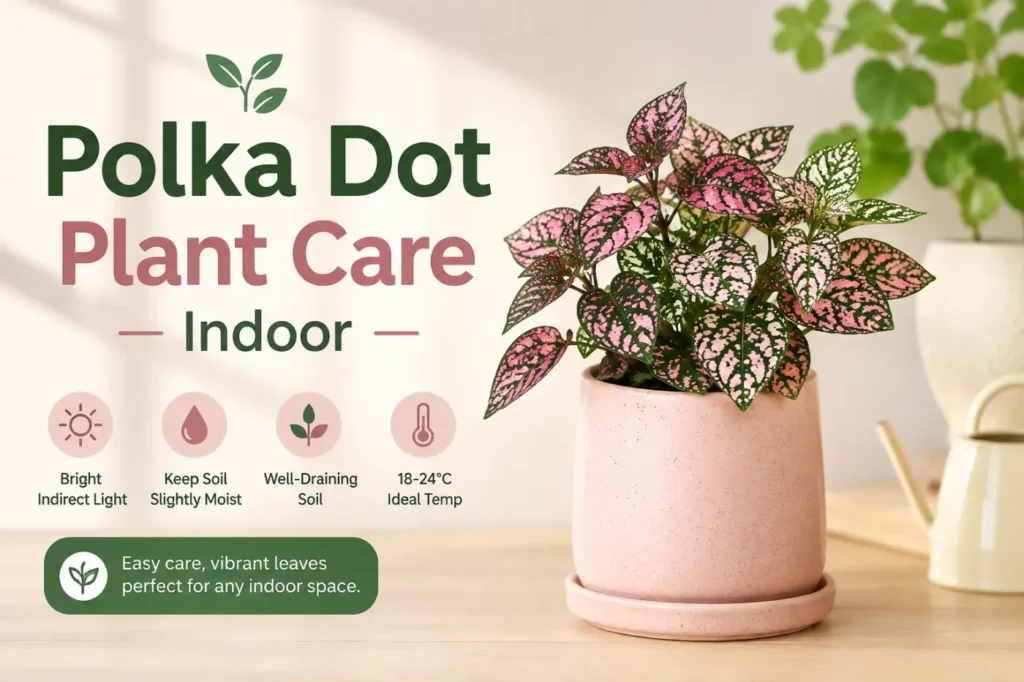
Polka dot plant care indoor is one of those topics where a few specific details make the difference between a plant that stays vibrantly colorful and bushy for years and one that becomes a leggy, faded shadow of what you brought home from the nursery within a few months. The polka dot plant (Hypoestes phyllostachya) is genuinely easy to keep alive, but keeping it looking its best requires understanding the two factors that affect it most: light and pruning.
Get those two things right and you have one of the most cheerful, colorful houseplants available. Get them wrong and you have a plant that stretches toward any available light source, loses its color intensity, and turns into something you feel vaguely guilty about every time you walk past it.
Quick Answer
Polka dot plant care indoor requires bright indirect light to maintain vibrant leaf coloring, consistent moisture without waterlogging, temperatures between 65 and 80 degrees Fahrenheit, moderate to high humidity, fertilizing every two weeks through spring and summer, and regular pinching back of stem tips to prevent the leggy stretching that makes the plant look sparse. Without regular pruning, polka dot plants become elongated and eventually flower, which signals the end of their most attractive growth phase.
Understanding Polka Dot Plant
Hypoestes phyllostachya is native to Madagascar and South Africa where it grows as a small bushy perennial in warm, humid, partially shaded environments. It is grown for its distinctive spotted and splashed leaf patterns that come in pink, red, white, and various combinations against a green background.
The natural growth habit is low and spreading, producing dense colorful foliage close to the ground. Indoors without the pinching that encourages bushiness, it tends to grow tall and narrow with increasing stem length between leaf nodes, a growth pattern called etiolation that results from reaching for available light.
One important characteristic: polka dot plants are technically short-lived perennials that flower after a period of active vegetative growth. Once they flower, the plant often declines and dies within weeks to months. Regular pruning delays flowering significantly by keeping the plant in active vegetative production rather than transitioning to reproductive mode.
Step 1: Provide Bright Indirect Light for Maximum Color
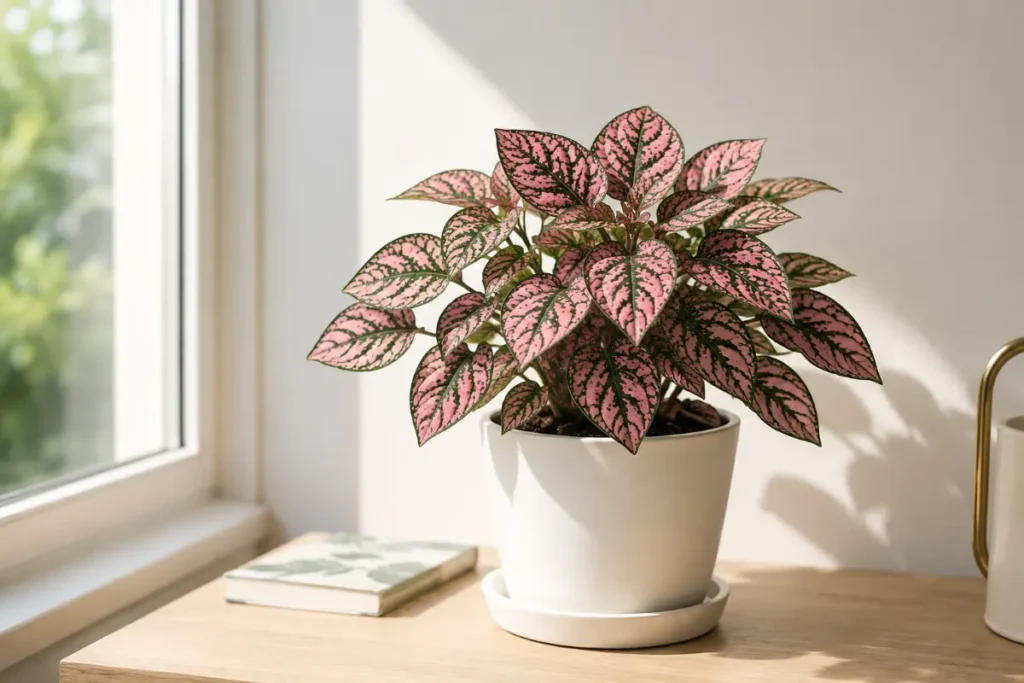
Light is the most critical factor for polka dot plant color intensity. The spots and splashes of pink, red, or white that make this plant distinctive are most vibrant in good bright indirect light and fade significantly in low light conditions.
What works: Bright indirect light from an east or north-facing window. A few feet back from a bright south or west-facing window. Under artificial lighting including standard indoor LED grow lights for six to eight hours daily.
What happens in low light: The colored spots fade toward green as the plant reduces pigment production. Stems become long and stretched with wide spacing between leaf nodes. The plant leans toward any light source creating a lopsided appearance.
What happens in too much direct sun: Direct harsh afternoon sun bleaches and scorches the delicate foliage. Leaves may curl or develop dry papery patches at the areas of most intense exposure.
The practical test: If your polka dot plant spots are fading toward green and stems are stretching, it needs more light. If leaves are developing dry bleached patches, it is getting too much direct sun.
Step 2: Water Consistently for Moist Soil
Polka dot plants prefer consistently moist soil and are less drought-tolerant than many other common houseplants. They wilt dramatically and visibly when underwatered with leaves drooping suddenly and stems going limp.
The correct approach: Water when the top half inch to one inch of soil feels dry. In a bright position during summer this means watering approximately every five to seven days. In lower light or winter every seven to ten days.
The good news about wilting: Unlike some plants where wilting indicates advanced stress, polka dot plant wilting from underwatering is almost entirely reversible. Water thoroughly and the plant typically recovers to full upright appearance within an hour or two.
Signs of overwatering: Yellow lower leaves. Stems that feel soft or mushy at the base. Soil staying wet for more than a week. Polka dot plants are susceptible to root rot in chronically wet soil despite preferring consistent moisture.
Soil: Standard potting mix with 20% perlite provides the balance of moisture retention and drainage this plant needs.
Step 3: Maintain Comfortable Temperature
Polka dot plants are warmth-loving tropical plants that decline in cool conditions.
Ideal range: 65 to 80 degrees Fahrenheit. This aligns well with typical US home temperatures making temperature management straightforward.
Cold sensitivity: Below 60 degrees growth slows dramatically. Below 50 degrees the plant shows visible stress with yellowing and leaf drop. Keep away from cold windowpanes, exterior doors, and air conditioning vents.
Heat tolerance: Polka dot plants handle heat well within the 80-degree range as long as humidity is adequate.
Step 4: Provide Moderate to High Humidity
Polka dot plants prefer humidity above 50%. Their delicate leaves show moisture stress faster than thicker-leaved plants.
Signs of low humidity: Brown dry leaf edges progressing inward from the margins. Crispy texture on leaf tips. Overall wilted appearance even when soil moisture is adequate.
Effective solutions: A pebble tray with water beneath the pot. Grouping with other tropical plants. A small humidifier running nearby during winter heating season.
Misting: Unlike cyclamen where misting is harmful, polka dot plant foliage tolerates misting every two to three days without disease risk. It provides brief humidity benefit and causes no harm though it is less effective than a pebble tray or humidifier for sustained results.
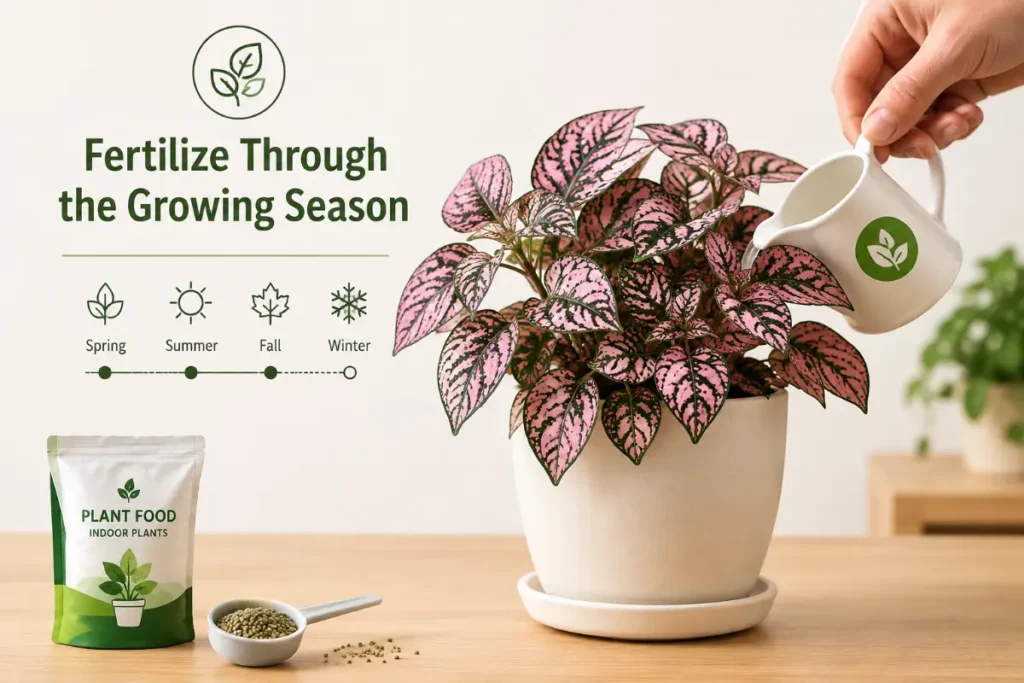
Step 5: Fertilize Through the Growing Season
Polka dot plants are moderate feeders that benefit from consistent fertilizing during active growth to maintain vigorous leaf production and vivid color.
Through spring and summer: Feed every two weeks with a balanced liquid fertilizer at half the label rate. The half rate is appropriate for the small pot volumes most polka dot plants occupy where full rates can accumulate and cause leaf tip burn.
What to look for: A balanced NPK ratio supports both foliage health and bright pigmentation. Very high nitrogen formulas can drive leafy growth at the expense of color intensity.
Organic options: Worm casting tea every two weeks provides gentle burn-safe nutrition appropriate for this compact plant’s relatively small root system. For the complete guide to gentle organic fertilizer options, worm castings for indoor plants covers application methods and timing.
Fall and winter: Reduce to monthly feeding or stop entirely when growth slows.
Step 6: Prune Regularly to Maintain Bushy Growth
This is the most commonly skipped step and the one that makes the biggest difference in long-term appearance. Without regular pruning, polka dot plants become leggy within months regardless of other care quality.
How to prune: Pinch or cut stem tips back to just above a leaf node every two to four weeks during the growing season. Remove the top two to four sets of leaves from each stem. This removes apical dominance and signals the plant to produce two new branching stems from the node below the cut.
The result: Each pruning creates two branches where there was one. Over multiple pruning sessions this doubling effect creates a dense full bushy plant rather than a sparse tall one.
What happens without pruning: Stems elongate continuously. Leaf spacing increases. The plant develops a sparse open appearance with less color coverage. Eventually the plant flowers and begins declining.
Removing flower spikes: When flower spikes appear, remove them immediately at their base. Allowing flowering to proceed redirects energy from vegetative growth to seed production, accelerating decline. Removing flower spikes promptly extends the vegetative most attractive phase significantly.
Step 7: Know When to Replace Rather Than Rehabilitate
Polka dot plants are relatively short-lived, typically looking their best for one to two years before becoming difficult to return to original compact colorful form.
Signs a plant needs replacing: Multiple aggressive pruning rounds have not restored compactness and remaining stems are mostly woody. Color has not recovered despite improved light. The plant has flowered and declined despite removing flower spikes.
Propagation is easy and cheap: Taking stem cuttings from the freshest most colorful growth gives you new compact plants from the best material. Cut four to six inch stem sections just below a leaf node, remove lower leaves, and place in water or moist potting mix. Roots develop within two to three weeks.
Starting new cuttings from a healthy parent plant every six to twelve months ensures you always have young compact polka dot plants in their most attractive phase.
Polka Dot Plant Varieties Worth Knowing
The polka dot plant comes in more varieties than most buyers realize, with slightly different color intensity and vigor across varieties.
Splash Series is the most widely available and includes heavy spotting in pink, red, white, and rose against green backgrounds. Generally the most vigorous and easiest to care for.
Confetti Series produces smaller more densely packed spots creating an almost solid colored appearance in good light. Slightly more compact growth habit than Splash Series.
Carmina produces deep red spots with high color saturation that maintains intensity better in slightly lower light than pink varieties. A good choice for positions where light is adequate but not optimal.
White Splash varieties show green reversion more readily in insufficient light than pink and red varieties. Prioritize the brightest available position for white polka dot plants.
Common Polka Dot Plant Problems and Solutions
Fading color: Insufficient light. Move to a brighter position immediately. New leaves emerge with full pigmentation within two to three weeks.
Leggy stretched growth: Insufficient light combined with lack of pruning. Improve light and begin pinching stem tips at every growth point. The plant responds with new branching growth within two to three weeks.
Sudden wilting: Underwatering in most cases. Water thoroughly and the plant recovers within hours. If wilting does not recover after watering check for root rot from chronic overwatering.
Yellow lower leaves: Overwatering or natural aging of oldest leaves. Check soil moisture and allow slight drying between waterings if overwatering is suspected.
Brown leaf edges: Low humidity or cold air damage. Increase humidity and move away from cold drafts or windowpanes.
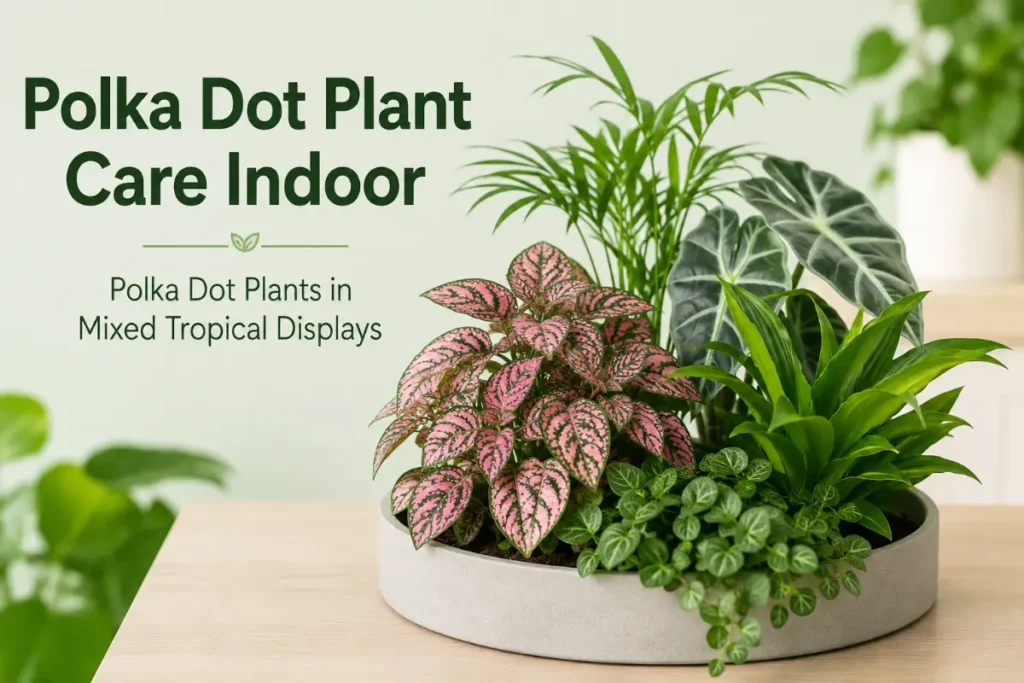
Polka Dot Plants in Mixed Tropical Displays
Polka dot plants work particularly well as companion plants in mixed tropical displays and terrariums where their low colorful growth fills spaces between taller plants and adds color contrast to predominantly green collections.
They pair well with plants sharing their moisture and light preferences including fittonia (nerve plant), small ferns, and compact peperomia varieties. In open terrariums the humid environment suits polka dot plants well and reduces humidity management needs significantly.
When combining with other species, monitor for faster-growing polka dot varieties outcompeting slower companions. Regular pruning keeps the polka dot plant from overgrowing neighbors in shared containers.
For the complete guide to other compact flowering and colorful-leaved plants that pair well with polka dot plants in mixed tropical displays, considering plants that share similar humidity and moisture preferences produces the most cohesive and easy-to-manage indoor garden combinations. For understanding what drives indoor pest attraction to the delicate foliage of plants like polka dot plants, do indoor plants attract bugs covers the plant health and environmental factors that make compact tropical plants more or less vulnerable to pest pressure.
Polka Dot Plant as a Pest-Resistant Companion
One practical advantage of polka dot plants in mixed tropical displays is that their dense, colorful foliage does not seem to attract the same intensity of pest pressure as some other common houseplants. That said, a few specific pests do target them when conditions allow.
Spider mites appear in very dry indoor air during winter heating season and show up as fine stippling on leaf surfaces with possible webbing between stems. The delicate leaves of polka dot plants show mite damage quickly and visibly. Increasing humidity with a pebble tray or humidifier prevents mite establishment since these pests specifically struggle in consistently humid conditions. Neem oil spray every seven days for three weeks treats active infestations.
Fungus gnats occasionally target the consistently moist soil that polka dot plants prefer. Allowing the top inch of soil to dry slightly between waterings reduces gnat attraction without stressing the plant. Yellow sticky traps catch adults. For the complete guide to identifying and treating every soil-dwelling pest that affects tropical houseplants with consistently moist soil preferences, bugs in indoor plant soil covers every species with specific treatment guidance.
Whiteflies sometimes appear on plants near open windows during warm months. The same neem oil spray approach used for spider mites handles whiteflies effectively. Check leaf undersides weekly during summer when whitefly pressure from outdoor populations is highest and treat immediately when any whitefly activity is detected before populations establish.
The best pest prevention for polka dot plants is the same as for any houseplant: keeping the plant healthy with adequate light, appropriate watering, and regular fertilizing through the growing season. Stressed plants showing pale color and leggy growth attract pest pressure more readily than vigorous, well-lit, regularly pruned specimens.
Seasonal Polka Dot Plant Care Calendar
Managing polka dot plant care through the year with a simple seasonal approach removes the guesswork from knowing when to adjust care routines.
Spring (March through May): Resume biweekly fertilizing as day length increases and new growth accelerates. Begin the regular pruning cycle pinching stem tips every two to four weeks. Move to the brightest available position to take advantage of increasing light intensity. Check for any pests that may have established during the lower-light winter months.
Summer (June through August): Full biweekly fertilizing and regular pruning schedule. This is peak growing season and the period when the most dramatic new leaf production occurs. Watch for spider mites as temperatures rise and monitor humidity levels. If the plant is showing strong growth, consider taking stem cuttings now for propagation while parent plant material is at its most vigorous.
Fall (September through November): Reduce fertilizing to monthly as day length shortens. Continue pruning to maintain shape but expect slower growth response than in summer. Move away from cold windowpanes as outdoor temperatures drop. Begin monitoring for the flower spike appearance that signals reproductive transition.
Winter (December through February): Stop fertilizing entirely or reduce to once every six to eight weeks for plants still showing slow growth. Water slightly less frequently as growth slows. Maintain humidity since winter heating drops indoor humidity significantly. Remove any flower spikes immediately as they appear. If the plant has been declining despite good care, consider starting fresh cuttings from the best remaining growth before the parent plant declines further.
Conclusion
Polka dot plant care indoor is fundamentally about two things: light and pruning. Without adequate bright indirect light the color fades and stems stretch regardless of other care quality. Without regular pinching of stem tips every few weeks the plant becomes leggy and eventually flowers itself into decline.
Get those two things right alongside consistent moisture, comfortable temperatures, and regular fertilizing through the growing season, and polka dot plant is one of the most reliably colorful compact houseplants available. Start cuttings from healthy growth every six to twelve months to always have young vibrant plants in their most attractive phase, and this low-cost widely available plant delivers consistent color that many more expensive houseplants cannot match.
Frequently Asked Questions
Why is my polka dot plant losing its color?
Fading color on polka dot plants almost always indicates insufficient light. The plant reduces pigment production in the spots and splashes when light is inadequate. Move to a brighter position and new leaves will emerge with full color intensity within two to three weeks. Color recovery in existing leaves is minimal but new growth in better light shows full pigmentation.
How do I keep my polka dot plant from getting leggy?
Pinch stem tips back to just above a leaf node every two to four weeks throughout the growing season. This removes apical dominance and stimulates two new branching stems from the node below the cut. Simultaneously improve light conditions since reaching for light is the primary driver of legginess. Regular pruning in adequate light maintains the compact bushy appearance that makes polka dot plants attractive.
How often should I water a polka dot plant indoors?
Water when the top half inch to one inch of soil feels dry, typically every five to seven days in a bright position during summer. Polka dot plants prefer consistently moist soil and wilt dramatically when underwatered though they recover quickly after watering. In lower light or winter extend to every seven to ten days as growth slows.
What does it mean when my polka dot plant flowers?
Flowering signals that the plant has transitioned from vegetative growth to reproductive mode which typically precedes plant decline. Remove flower spikes immediately by pinching at their base to extend the vegetative phase and delay decline. If flowers develop and set seed the plant declines more rapidly afterward.
Can polka dot plants grow in low light?
They survive but lose their distinctive coloring significantly with spots fading toward green in insufficient light. Stems also become leggy and stretched. For maintaining the vibrant color patterns that make this plant worth growing, bright indirect light is necessary. Under artificial lighting for six to eight hours daily works as a practical alternative.
How long do polka dot plants live indoors?
Polka dot plants typically look their best for one to two years with good care. Starting stem cuttings from healthy growth every six to twelve months provides continuous supply of young vibrant plants. The parent plant propagates easily in water or moist potting mix making the transition from aging to young plants straightforward and inexpensive.