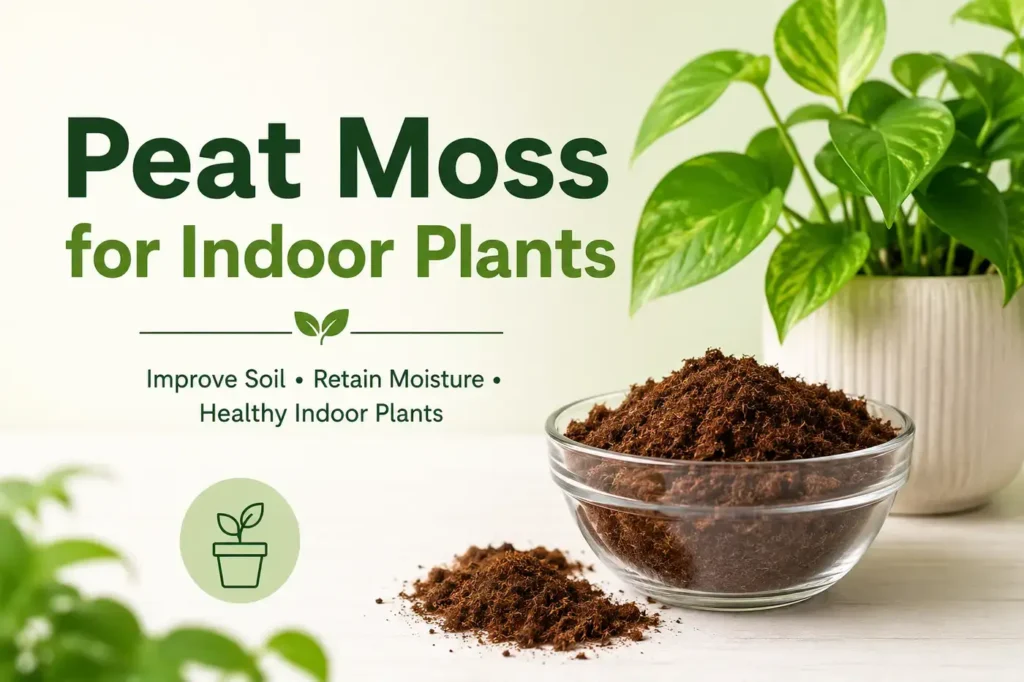
Peat moss for indoor plants is one of the most widely used soil amendments in commercial potting mixes, yet most plant owners have only a vague idea of what it actually does or why it is included. Understanding peat moss before you use it explains why it benefits certain plants dramatically, why it harms others, and why the simple instruction to “add peat moss” without knowing your plant’s soil preferences can produce the opposite result from what you were hoping for.
This guide covers 7 essential things to know about peat moss for indoor plants, which plant types benefit most, how to use it correctly in custom soil mixes, and when the more sustainable alternative of coco coir is the better choice.
Quick Answer
Peat moss improves moisture retention and lowers soil pH in indoor plant mixes. It benefits acid-loving plants including ferns, gardenias, blueberries, and carnivorous plants. It harms plants that prefer neutral to alkaline soil including succulents, cacti, lavender, and rosemary. Use it at 20 to 30% of your total soil mix volume for moisture-loving tropicals and up to 50% for plants needing high acidity. Always combine with perlite since peat alone compacts and drains poorly without a drainage-improving component.
1. What Peat Moss Actually Is
Peat moss is partially decomposed sphagnum moss harvested from ancient northern hemisphere bogs where cold, waterlogged, low-oxygen conditions slow decomposition over thousands of years. The resulting material is highly fibrous, lightweight, and has an enormous capacity to hold water relative to its weight, absorbing up to 20 times its dry weight in moisture.
The fibers in peat moss also create significant pore space in a soil mix, which initially improves aeration as well as moisture retention. Over time, however, peat moss breaks down and compacts more than other soil amendments, which is why potting mixes containing high peat ratios need refreshing every 12 to 18 months.
2. The pH Effect: Why It Matters for Your Plants
Peat moss is acidic, with a pH typically between 3.5 and 4.5. When added to potting mix, it lowers the overall pH of the growing medium toward the acidic range. This is the most significant chemical property of peat moss for plant health because soil pH determines whether nutrients already present in the mix are chemically available to plant roots.
Plants that evolved in acidic soil conditions absorb iron, manganese, and other trace minerals most effectively at a pH between 5.0 and 6.5. In neutral or alkaline soil, these minerals become chemically bound and unavailable even when present in adequate quantities, causing the yellowing between leaf veins (interveinal chlorosis) that characterizes iron deficiency.
For acid-loving plants, the pH contribution of peat moss is as nutritionally important as any fertilizer you add. For plants that prefer neutral soil, it creates the exact problem you are trying to avoid.
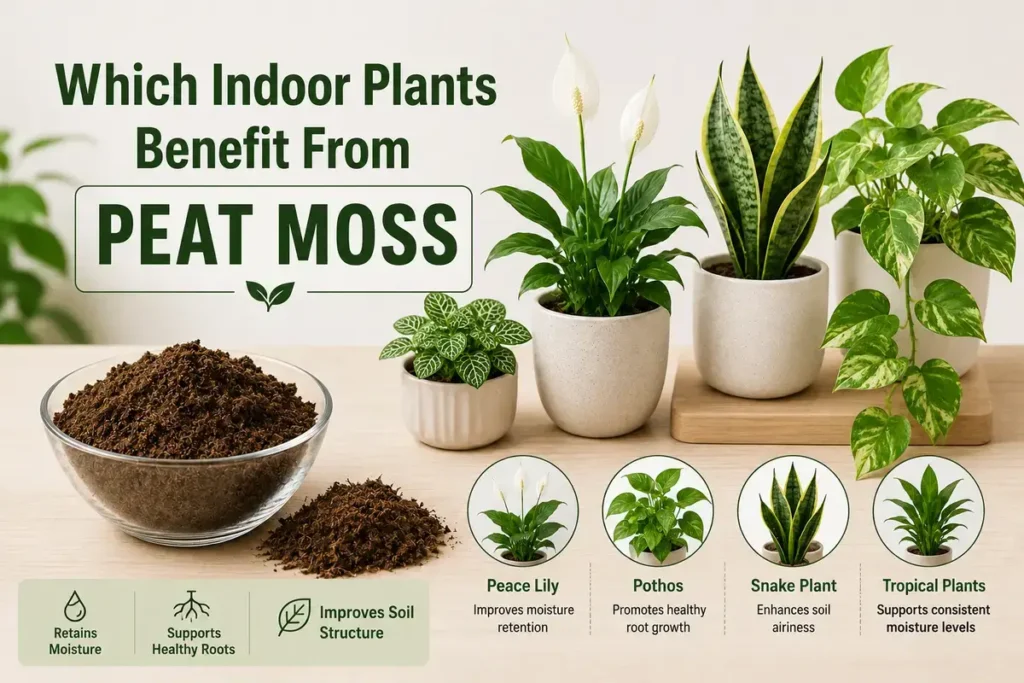
3. Which Indoor Plants Benefit From Peat Moss
Ferns are among the plants that respond most positively to peat-enriched mixes. Their naturally acidic soil preference and high moisture requirement match precisely what peat moss provides. Boston ferns, maidenhair ferns, and bird’s nest ferns all thrive in mixes with 25 to 30% peat moss.
Gardenias require consistently acidic soil between pH 5.0 and 6.0 to absorb iron effectively. Without sufficient acidity, gardenias develop yellowing leaves even with adequate fertilization. Peat moss in the soil mix is one of the most reliable ways to maintain this acidity long term.
Blueberries grown indoors need the most acidic conditions of any commonly grown indoor plant, between pH 4.5 and 5.5. High peat content at 40 to 50% of the total mix is appropriate for these plants specifically.
Carnivorous plants including pitcher plants and Venus flytraps require the nutrient-poor, highly acidic conditions of their native bog habitats. A 50/50 mix of pure sphagnum peat moss and perlite with no other amendments is the standard growing medium for these plants.
African violets prefer slightly acidic conditions around pH 6.0 to 6.5 and the fine-textured moisture retention of peat-based mixes suits their sensitive root systems well.
4. Which Indoor Plants Are Harmed by Peat Moss
Succulents and cacti require neutral to slightly alkaline, sharply draining soil. Peat moss lowers the pH toward conditions these plants cannot tolerate well and increases moisture retention in ways that drive root rot in drought-adapted species.
Lavender and rosemary are Mediterranean plants that evolved in alkaline, fast-draining conditions. Adding peat to their growing mix creates both the wrong pH and the wrong moisture level for their roots.
Orchids grow on tree bark rather than in soil. Peat-based mixes hold too much moisture around orchid roots and block the oxygen access these epiphytic root systems require.
Snake plants and ZZ plants prefer lean, well-draining conditions. While they tolerate a wider pH range than the plants above, high-peat mixes tend to stay wetter than these drought-tolerant species prefer.
5. How to Use Peat Moss in Indoor Plant Soil Mixes
For moisture-loving tropicals including peace lilies, calatheas, and ferns: Use 25 to 30% peat moss or coco coir combined with 50% standard potting mix and 20% perlite. This ratio creates the consistently moist but well-draining conditions these plants prefer.
For acid-loving flowering plants including gardenias and azaleas: Use 30 to 40% peat moss with 40% potting mix and 20% perlite. The higher peat ratio maintains the acidity these plants need without waterlogging the root zone.
For carnivorous plants: Use 50% pure sphagnum peat moss and 50% perlite with no other amendments whatsoever. These plants are harmed by the nutrients in commercial potting mix.
Always combine peat moss with perlite. Peat moss alone compacts into a dense, poorly draining block when wet. Perlite at a minimum of 20% of the total mix volume maintains the drainage channels and air spaces that root systems require regardless of how much peat the recipe includes.
6. The Environmental Concern and When to Use Coco Coir Instead
Peat bogs are slow-forming ecosystems that accumulate at approximately one millimeter per year. Commercial peat harvesting removes this material far faster than it regenerates, and peat bogs store significant amounts of carbon that releases into the atmosphere when the bog is disturbed.
Coco coir, made from coconut husk fibers that are a byproduct of coconut processing, performs almost identically to peat moss in soil mixes with a more neutral pH of approximately 6.0 and a genuinely sustainable sourcing story.
When to choose coco coir over peat moss: For the majority of moisture-loving tropical houseplants where the goal is moisture retention without the acidity of peat, coco coir is the direct substitute and the more sustainable choice. Use the same ratios described above with coco coir replacing peat moss measure for measure.
When to stick with peat moss: For strongly acid-loving plants including gardenias, blueberries, and carnivorous plants where the low pH of peat moss is not just beneficial but essential. Coco coir at neutral pH cannot replicate the pH-lowering effect of peat for these plants without adding acidifying amendments separately. For a complete guide to building soil mixes for every indoor plant type using the right combination of peat, coco coir, perlite, and other amendments, soil mixture for indoor plants covers every recipe with exact ratios and ingredient explanations.
7. Common Mistakes When Using Peat Moss Indoors
Using peat moss without wetting it first. Dry peat moss is highly hydrophobic and repels water rather than absorbing it until it has been thoroughly wetted. Before adding dry peat moss to a soil mix, wet it with warm water and allow it to absorb the moisture fully. Squeeze out excess water before incorporating it into the mix. Skipping this step results in dry pockets in the finished mix where water runs off rather than absorbing.
Adding peat moss to the wrong plants. The most common mistake is adding peat moss to any plant as a general improvement without checking whether that plant tolerates or needs acidic conditions. Check the pH preference of your specific plant before adding peat to its soil.
Using too much without adding drainage material. Mixes with more than 40% peat moss and no perlite or sand compact and drain poorly once established in a pot. Always balance high peat ratios with adequate drainage amendment.
Not refreshing peat-heavy mixes regularly. Peat breaks down faster than other soil components and peat-heavy mixes lose their structure and drainage capacity within 12 to 18 months. Repot into fresh mix on this schedule rather than waiting for obvious decline symptoms to appear.
Conclusion
Peat moss is a genuinely useful indoor plant soil amendment for the right plants used at the right ratios. Its moisture retention and pH-lowering properties benefit acid-loving, moisture-demanding plants in ways that other amendments cannot easily replicate. For the majority of common tropical houseplants without strong acid requirements, coco coir provides the same moisture retention benefits at a more neutral pH and with better environmental credentials.
Know your plant’s pH preference before choosing whether to include peat moss. Always combine it with perlite regardless of the ratio. Wet it before mixing. Refresh the mix every 12 to 18 months. Those four practices cover the most common peat moss mistakes and let you use it as effectively as commercial growers do for the plants that genuinely benefit from its unique properties.
Frequently Asked Questions
Is peat moss good for all indoor plants?
No. Peat moss benefits acid-loving, moisture-loving plants including ferns, gardenias, peace lilies, and carnivorous plants. It harms plants that prefer neutral to alkaline, fast-draining soil including succulents, cacti, lavender, rosemary, and orchids. Check your plant’s soil pH preference before adding peat to its growing mix.
Can I replace peat moss with coco coir for indoor plants?
Yes, for most common indoor plants. Coco coir performs similarly to peat moss in moisture retention and soil structure improvement but at a more neutral pH of approximately 6.0 compared to peat’s 3.5 to 4.5. For strongly acid-loving plants like gardenias and carnivorous plants where peat’s low pH is essential, coco coir alone is not a direct substitute without adding separate acidifying amendments.
How much peat moss should I add to indoor plant soil?
Use 20 to 30% peat moss for most moisture-loving tropical plants combined with standard potting mix and perlite. Use 30 to 40% for strongly acid-loving plants like gardenias and azaleas. Use 50% for carnivorous plants in a pure peat and perlite mix. Never exceed 40% without increasing perlite proportionally to maintain adequate drainage.
Why does my peat moss repel water instead of absorbing it?
Dry peat moss is naturally hydrophobic and repels water until it has been thoroughly pre-wetted. Before adding peat to any soil mix, wet it with warm water and allow it to absorb fully. Once established in a pot and regularly watered, peat holds moisture well. The problem of water repellency typically only occurs when peat-heavy soil dries out completely, after which it needs re-wetting by soaking the entire pot in water for 30 minutes to re-hydrate the peat fibers throughout.
How long does peat moss last in indoor plant soil?
Peat moss breaks down through microbial activity in potting mix over approximately 12 to 18 months of regular use, losing its fibrous structure and becoming a dense, fine-textured material that drains poorly and compacts around roots. Repot plants growing in peat-heavy mixes into fresh soil every 12 to 18 months to maintain the drainage and aeration properties that make peat-amended soil effective.
How Peat Moss Compares to Other Soil Amendments
Understanding how peat moss fits alongside other common soil amendments helps you build more effective custom mixes rather than guessing at ratios.
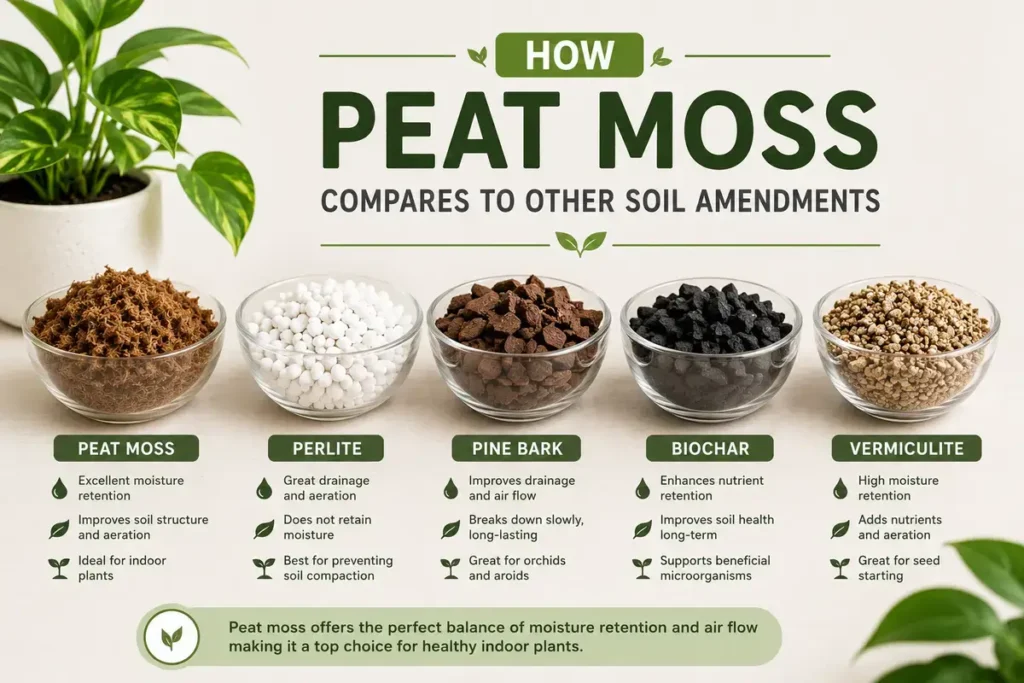
Peat moss vs perlite: These two work as a pair rather than alternatives. Peat retains moisture and lowers pH. Perlite creates drainage channels and air spaces. Together they balance moisture retention with adequate drainage. Neither performs as well alone as it does in combination with the other.
Peat moss vs vermiculite: Vermiculite retains both moisture and nutrients through its layered mineral structure. It is less acidic than peat and works well in mixes for African violets and seedlings where very fine texture and nutrient retention matter. Use vermiculite when you want moisture retention without pH adjustment. Use peat when the acidity is part of what you need.
Peat moss vs bark fines: Bark fines (small chip pieces of pine or fir bark) improve aeration and drainage rather than moisture retention, making them the opposite amendment from peat in functional terms. Bark-heavy mixes suit orchids and some aroids. Peat-heavy mixes suit ferns and gardenias. Combining small amounts of both creates a mix with complex pore structure that benefits plants needing both moisture retention and excellent root aeration simultaneously.
Peat moss vs worm castings: Worm castings improve soil nutrition and biology. Peat moss improves moisture retention and pH. They serve different purposes and work well together in the same mix. A mix combining potting soil, peat moss or coco coir, perlite, and worm castings at appropriate ratios for the plant type covers moisture management, drainage, nutrition, and soil biology in a single formula. For detailed guidance on incorporating worm castings alongside peat in complete soil mixes, worm castings for indoor plants covers application rates and the specific benefits castings add beyond what peat provides.
Signs Your Indoor Plant Soil Has Too Much or Too Little Peat Moss
Recognizing when the peat ratio in your soil mix is wrong saves time spent troubleshooting symptoms that are actually a soil composition problem.
Signs of too much peat moss:
Water takes more than two minutes to flow through and drain from the pot. This indicates the mix is too moisture-retentive and compacted, especially in older mixes where peat has broken down. Roots show signs of rot when examined during repotting: brown, soft, and with a musty smell rather than white, firm, and odorless. The soil develops a sour smell between waterings, indicating anaerobic conditions from excessive moisture retention.
Succulents show soft, mushy bases or leaves despite not being overwatered, which means the moisture-retaining environment of the peat is keeping the root zone too wet for their drought-adapted physiology.
Signs of too little peat moss for moisture-loving plants:
The soil dries out completely within one to two days of watering in standard sized pots, leaving no moisture buffer for plants that prefer consistent soil moisture. Fern fronds develop brown tips from dehydration stress despite regular watering because the mix cannot hold moisture long enough for the roots to access it between sessions. Calathea and maranta leaves curl or develop crispy edges despite adequate watering frequency because the mix dries faster than these sensitive plants can tolerate.
Correcting the ratio without full repotting:
For overly moisture-retentive mixes, create drainage channels by pushing a chopstick through the soil from surface to pot base at several points around the perimeter. Top-dress with a quarter inch of perlite to improve surface drainage. The full correction requires repotting into fresh mix with a better ratio at the next scheduled repot.
For mixes drying too fast, top-dress with a quarter inch of coco coir worked into the surface, which slows surface moisture loss without significantly changing the drainage characteristics of the underlying mix.
Peat Moss and Pest Management in Indoor Plants
The moisture level that peat-heavy mixes maintain has direct implications for the soil-dwelling pest species most commonly encountered in indoor plant collections.
High peat content mixes that stay consistently moist create ideal breeding conditions for fungus gnats, whose larvae require moist soil to develop. If you use peat-heavy mixes for moisture-loving plants, managing watering discipline becomes more important than with drier mixes since the peat reduces how quickly soil dries between waterings and narrows the margin for overwatering error.
Allowing peat-containing mixes to dry as much as the plant tolerates between waterings reduces gnat pressure. For ferns where significant drying between waterings is not appropriate, yellow sticky traps and hydrogen peroxide drenches address the larval population in peat-heavy soil without requiring the soil to dry out to levels that damage the plant. For the complete guide to managing fungus gnats and other soil-dwelling pests that commonly appear in moist, peat-heavy potting mixes, bugs in indoor plant soil covers every soil pest species with specific treatment approaches for each one.
The beneficial side of peat moss in this context is that its low pH creates a more acidic soil environment that some harmful soil pathogens find less hospitable than neutral soil. The incidence of certain root rot-causing fungi is lower in acidic peat-heavy mixes than in neutral soil, which partially offsets the increased fungus gnat risk that the moisture retention creates.
Where to Buy Peat Moss and What to Look For
Peat moss is widely available at garden centers and home improvement stores across the country, but quality varies between products in ways that affect performance in indoor plant mixes.
What to look for when buying:
Fibrous texture rather than a fine dusty powder. Quality peat moss retains its sphagnum fiber structure, which is what creates the pore spaces that make it effective as a soil amendment. Peat that has been over-processed into fine dust loses much of its structural value and compacts more quickly than fiber-intact peat.
Consistent medium to dark brown color throughout the bag. Very dark black peat indicates over-decomposition. Very light tan peat may indicate lower quality or incomplete processing.
Moisture content appropriate for bagged storage. Completely dry peat is difficult to wet and hydrophobic when first used. Slightly moist peat that has been packaged fresh is easier to incorporate into mixes and begins working more quickly.
Widely available brands:
Hoffman Canadian Sphagnum Peat Moss and Premier Pro-Mix are two of the most consistently available options at Home Depot, Lowe’s, and garden centers. Both maintain good fiber structure and are packaged at appropriate moisture levels for direct use.
Bag sizes for indoor plant use:
The smallest available bag sizes of 8 to 16 quarts are the most practical for indoor plant collections since peat moss stored in opened bags loses moisture over time and can develop mold in the bag if kept too long. Buy quantities you can use within one to two growing seasons rather than the large compressed bales typically sold for garden bed use.