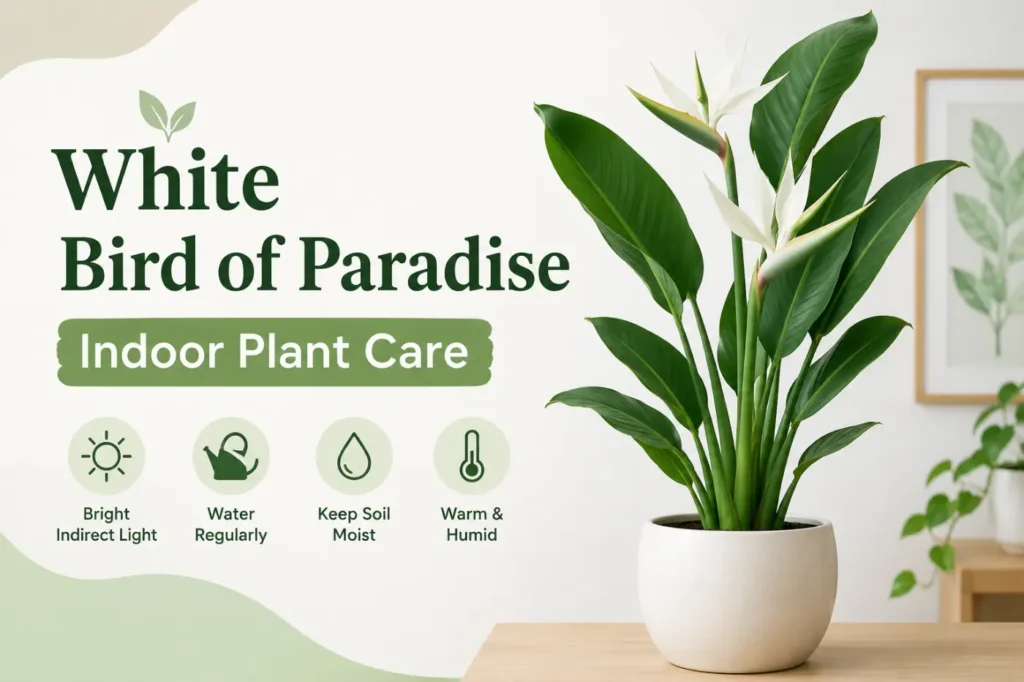
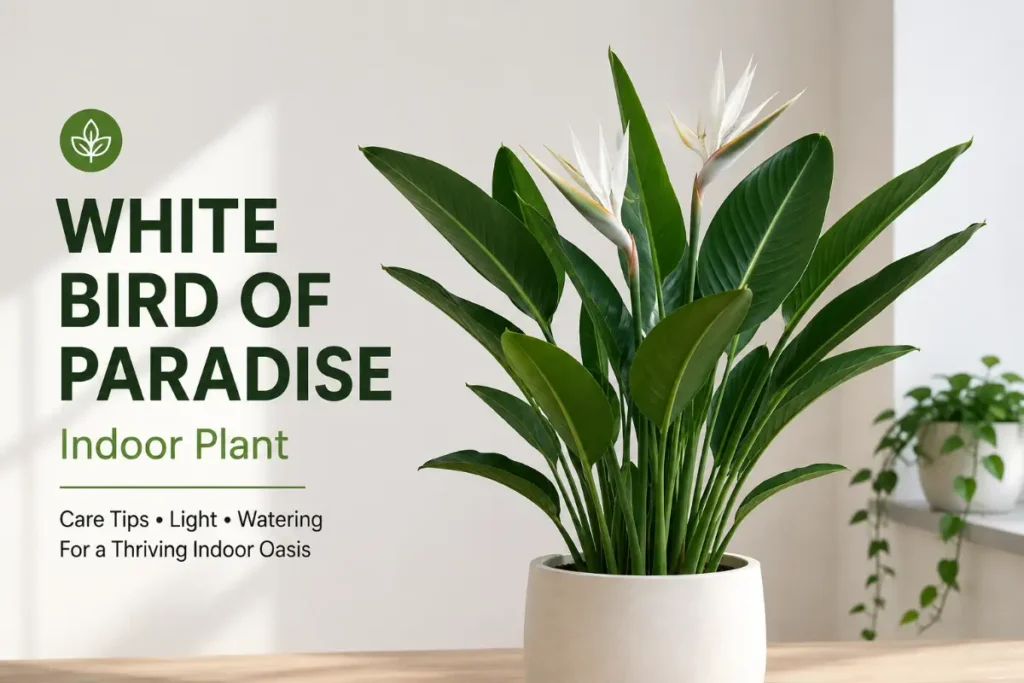
The white bird of paradise indoor plant care is one of the most sought-after statement plants in interior design, and for good reason. Strelitzia nicolai produces enormous paddle-shaped leaves on strong upright stems that create a tropical drama indoors that most other houseplants simply cannot match. A mature white bird of paradise in a sunlit corner transforms a room the way no piece of furniture or art can.
But the gap between what this plant looks like at its best and what it looks like in the average home after six months can be significant. The white bird of paradise is not a plant you can put in a dim corner and occasionally water. It has genuine, non-negotiable requirements around light and consistency that determine whether it thrives or merely survives. This guide covers everything, care, styling, troubleshooting, and the questions buyers most commonly have about this dramatic plant.
Quick Answer
The white bird of paradise indoor plant needs the maximum direct sunlight your home can provide, ideally four to six hours of direct sun through a south or west-facing window daily, watering when the top two inches of soil dry out, well-draining soil with 20 to 30% perlite, temperatures above 60 degrees Fahrenheit, humidity above 40%, biweekly fertilizing through spring and summer, and regular leaf cleaning since dust on the large surfaces significantly reduces photosynthetic efficiency. Leaf splitting indoors is less common than outdoors and indicates wind exposure rather than any problem.
What Makes White Bird of Paradise Different From Orange Bird of Paradise
Before getting into care specifics, understanding the difference between the two commonly sold Strelitzia species prevents the confusion that arises at the garden center.
White bird of paradise (Strelitzia nicolai) is the large species that grows to 20 or more feet outdoors and six to eight feet indoors. Its flowers are white and blue with a dark purple spathe, though indoor specimens rarely flower without exceptional light. The leaves are enormous, paddle-shaped, and carried on long arching petioles. This is the one most commonly sold as a dramatic indoor statement plant.
Orange bird of paradise (Strelitzia reginae) is the smaller species that grows to five or six feet and produces the iconic orange and blue flowers most associated with the bird of paradise name. It is more likely to flower indoors since it stays compact enough to fit in bright indoor positions. Leaves are smaller and more boat-shaped than the white variety.
For indoor use, most buyers seeking a statement plant choose Strelitzia nicolai (white bird of paradise) for its dramatic size potential. Most buyers who want blooming flowers choose Strelitzia reginae (orange bird of paradise) since it flowers more reliably indoors.
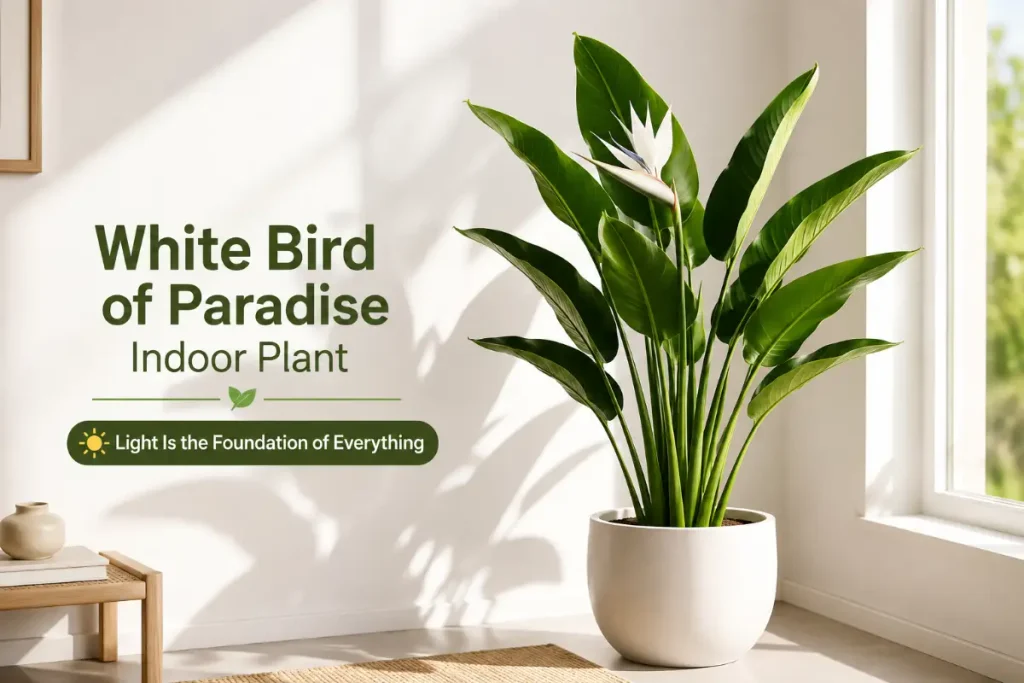
Step 1: Light Is the Foundation of Everything
This cannot be overstated: white bird of paradise is one of the most light-hungry houseplants commonly available, and the dramatic appearance that draws people to it requires that light to maintain.
What it genuinely needs: Direct sunlight for at least four to six hours daily. A south or west-facing window that receives unobstructed afternoon sun is ideal. A sunroom or conservatory with year-round direct light access is the best possible indoor position for this plant.
What happens without enough light: Growth slows to near zero. New leaves emerge smaller and narrower than mature leaves. The plant leans dramatically toward the light source. The petioles become elongated and weak. The leaf color shifts from rich deep green to a washed-out pale green. Over twelve to eighteen months in insufficient light, a formerly beautiful plant can become a sparse, leaning disappointment.
The grow light option: A very high-output LED grow light running twelve to fourteen hours daily positioned close to the plant supplements natural light effectively in homes without adequate direct sun. This is a meaningful investment of equipment and electricity but produces dramatically better results than struggling in insufficient natural light.
Seasonal adjustment: In winter when sun angle is lower and day length shorter, maximizing natural light access becomes even more critical. Move the plant closer to the window, clean windows to maximize light transmission, and consider supplemental grow lighting during the darkest months.
Step 2: Watering for the Size and Season
The large leaf surface area of white bird of paradise means it transpires significant water through its leaves, but its succulent, water-storing roots also give it meaningful drought tolerance. The watering balance is more toward drought tolerance than most people expect from such a large leafy plant.
The correct approach: Water when the top two inches of soil feel dry. In a sunny position during summer this means approximately every seven to ten days. In lower light or winter every twelve to sixteen days. The large pot volume typical of established white bird of paradise plants retains moisture longer than smaller pots, so the deeper check matters.
Thorough watering: When you water, water until it flows from the drainage holes. The large root system of mature white bird of paradise needs the entire soil volume moistened, not just the top portion. Light, frequent watering that only wets the top layer creates dry pockets deep in the pot where thick roots are active.
Drainage: White bird of paradise roots are thick and fleshy with moderate rot susceptibility in chronically wet soil. Always ensure excellent drainage through appropriate soil and pot hole size. A large decorative pot without drainage holes, which is a common styling choice for this plant, needs either a drainage liner inside or conversion to a pot with holes before planting directly.
Step 3: Soil and Repotting Considerations
White bird of paradise develops an impressive root system and needs appropriate soil and container management to maintain vigorous growth.
The right soil: 60 to 70% quality potting mix with 20 to 30% perlite. This drains more freely than standard potting mix alone while retaining adequate moisture for the large root system. The fleshy roots of this plant benefit from some moisture retention between waterings, making very fast-draining mixes like cactus mix less appropriate than for true drought-adapted plants.
Repotting frequency: White bird of paradise is fast-growing when happy and typically needs repotting every one to two years when young. Mature plants in large containers can go two to three years between repots. Signs it needs repotting: roots pushing out of drainage holes, the plant drying out within three to four days of thorough watering, or visible roots pressing against the sides of a flexible plastic pot.
Pot size: Choose a pot two to three inches larger than the current one. Unlike some plants that flower better when slightly root-bound, white bird of paradise grows most vigorously with adequate root space. Very large statement pots are appropriate for this plant’s size and aesthetic but ensure drainage holes are adequate for the volume.
One important note: White bird of paradise does not like having its roots disturbed. Repot carefully, keeping the root ball as intact as possible and minimizing breakage of the thick fleshy roots. Some temporary leaf drop or browning after repotting is normal as the plant re-establishes root contact with new soil.
For the complete guide to soil components and building appropriate mixes for large tropical plants, soil mixture for indoor plants covers every ingredient with specific guidance for plants with large root systems and moderate moisture requirements.
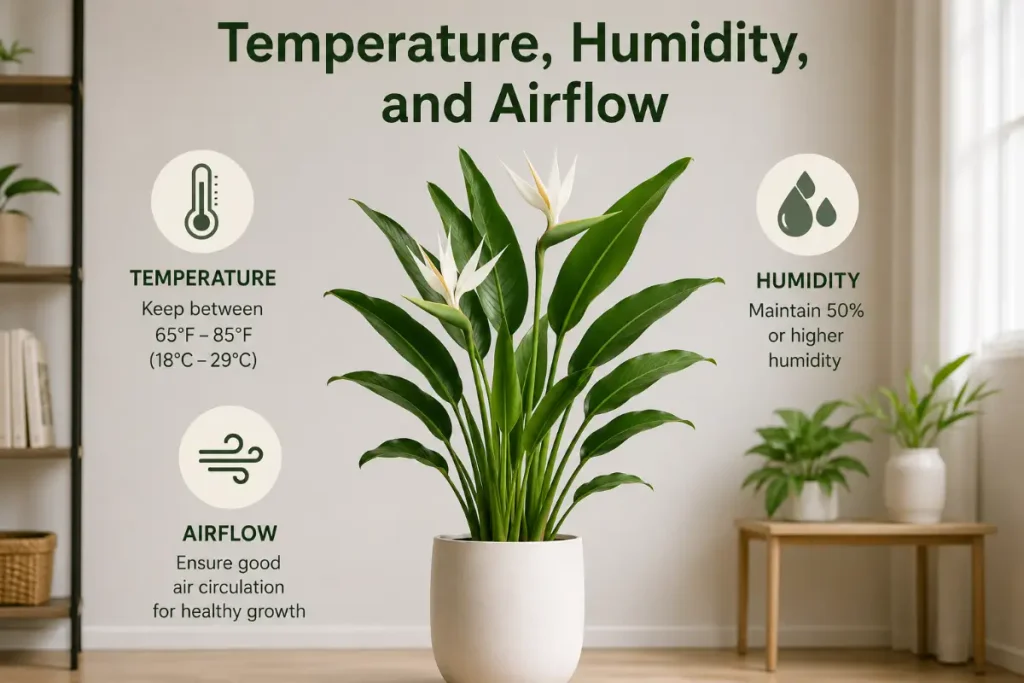
Step 4: Temperature, Humidity, and Airflow
Temperature: White bird of paradise is comfortable in the same temperature range that most people maintain in their homes. Between 65 and 85 degrees Fahrenheit for active growth. Above 60 degrees minimum to prevent cold stress. Keep away from cold exterior doorways, air conditioning vents that blow cold air directly on the plant, and cold windowpanes in winter.
Humidity: The plant tolerates the average humidity of most US homes (40 to 60%) without significant problems. Brown leaf tips, which are a common white bird of paradise complaint, are usually caused by fluoride in tap water or inconsistent watering rather than low humidity, though very dry heated air below 30% does cause visible tip browning.
Tap water sensitivity: Like areca palms and Hawaiian ti plants, white bird of paradise accumulates fluoride from tap water over time, producing the brown leaf tips that owners often mistake for other problems. Switching to filtered or distilled water significantly improves leaf tip condition in hard water areas.
Airflow: Natural airflow through open windows and doors benefits white bird of paradise by gently stimulating the stems and creating the natural movement that produces the physical strength adaptations (thicker, stronger stems and petioles) that make the plant look most impressive.
Step 5: Fertilizing for Impressive Growth
White bird of paradise produces large amounts of leaf tissue through the growing season and benefits from consistent nutrition to support that production.
Through spring and summer: Biweekly application of a balanced liquid fertilizer at the label rate or slightly above. This is a plant with significant nutritional demand compared to slower-growing tropical plants and it responds visibly to consistent feeding with larger, more frequent new leaf production.
Micronutrients: Include a fertilizer formula that contains iron and magnesium alongside the primary NPK. The interveinal chlorosis (yellowing between veins) that occasionally develops on white bird of paradise in older potting mix often indicates iron or magnesium deficiency addressable through a micronutrient-complete fertilizer formula.
Organic options: Worm casting top dresses every six to eight weeks alongside biweekly liquid fertilizing provides the slow-release organic nutrition and soil biology support that keeps large tropical plants performing at their best over multiple growing seasons. For the complete worm casting application guide for large tropical plants, worm castings for indoor plants covers every application method with timing guidance.
Fall and winter: Reduce to monthly application or stop entirely when growth slows. White bird of paradise maintains slow growth through winter in good light but does not need the nutritional support of its active summer growth period.
Step 6: Leaf Cleaning for Maximum Performance
This is one of the most neglected but most impactful care practices for large-leaved plants like white bird of paradise. The enormous leaf surfaces accumulate dust rapidly and dusty leaves photosynthesize significantly less efficiently than clean ones.
How to clean: Support each leaf from below with one hand and wipe the upper surface with a barely damp soft cloth in smooth strokes from the leaf base toward the tip. Do not use commercial leaf shine products since these coat the stomata and reduce gas exchange which directly impairs photosynthesis.
How often: Every two to four weeks. More frequently in dusty environments or near air vents that blow dust onto leaf surfaces.
The shower method: For large established plants that are difficult to clean leaf by leaf, taking the plant to the shower and rinsing with a gentle lukewarm water spray every four to six weeks accomplishes the same cleaning goal while also flushing accumulated minerals from the soil surface. Allow to drain completely before returning to its position.
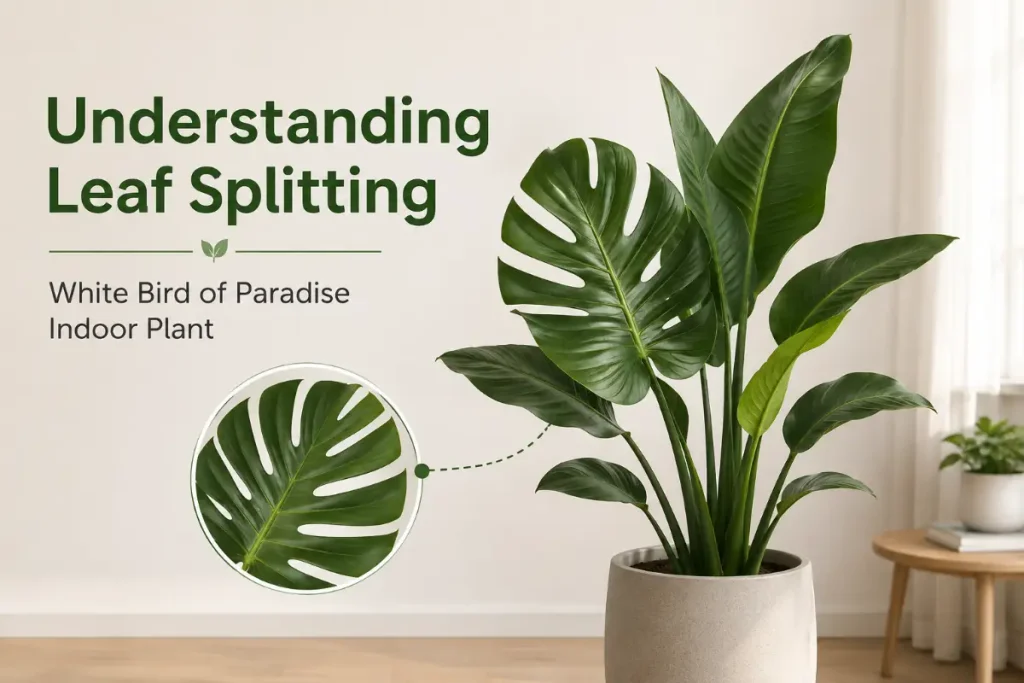
Step 7: Understanding Leaf Splitting
Leaf splitting on white bird of paradise is one of the most frequently asked questions about this plant and one of the most commonly misunderstood characteristics.
Why leaves split outdoors: In its native coastal South African habitat, white bird of paradise leaves develop natural splits along their lateral veins specifically as an adaptation to wind. The splits allow wind to pass through the large leaf surface without tearing the entire leaf from its petiole. The plant evolved this adaptive feature in consistently windy coastal conditions.
Why indoor leaves often do not split: Indoor air is still compared to outdoor wind. Without the wind stress that triggers splitting, the plant has no mechanical reason to develop the splits. Perfectly intact unsplit leaves on an indoor white bird of paradise are completely normal and healthy.
How to encourage splitting indoors: Running a fan nearby on low setting for several hours daily provides the gentle wind stimulus that encourages splitting. Increasing light intensity also contributes since higher light produces thicker, more mature leaf tissue that is more likely to split naturally. Placing the plant near an open window during mild weather provides the most effective natural wind stimulus.
Splits from other causes: Leaves can also split from physical damage (bumping against door frames during moving), from low humidity that makes leaf tissue brittle and prone to tearing, and from cold damage on the tissue closest to cold windows in winter. These splits differ from the natural wind-induced splits in their irregular pattern and torn rather than clean-edged appearance.
Styling the White Bird of Paradise Indoors
The white bird of paradise is as much a design element as a plant, and how you position and present it significantly affects how it reads in a space.
The solo statement: A single large white bird of paradise in a large simple terracotta or matte ceramic pot in a sunny corner is one of the most impactful interior plant displays available. Its size and dramatic leaf form mean it does not need companions to make a statement. The pot should be proportionate to the plant’s size and simple enough not to compete with the foliage.
Pairing with complementary plants: White bird of paradise pairs beautifully with lower-growing tropical companions that fill the space beneath its elevated canopy. Pothos trailing from a shelf nearby, peace lily in a grouping at its base, or wandering jew in a hanging basket at the same height create a layered tropical display where the bird of paradise anchors the arrangement as the dominant specimen.
Container choices: Oversized terracotta pots suit the plant’s tropical-meets-earthy aesthetic perfectly. Large woven basket liners create a natural, organic look that complements the paddle-shaped leaves. Matte white or black ceramic pots create a contemporary architectural contrast with the organic leaf form. Avoid highly decorative patterned containers since the plant’s own visual complexity is sufficient.
Room placement: The corner of a living room or bedroom where two walls meet and a large window provides light is typically the ideal placement. This position maximizes the plant’s presence without blocking traffic flow, keeps it near its essential light source, and creates the framed appearance that makes large plants look most intentional in a space.
Conclusion
The white bird of paradise indoor plant care delivers on its dramatic promise when its core requirements are genuinely met: maximum available direct sunlight, consistent appropriate watering, well-draining soil, regular cleaning of those enormous leaves, and biweekly fertilizing through the growing season. The gap between a thriving specimen and a struggling one almost always traces back to insufficient light or inconsistent care rather than any inherent difficulty with the plant.
Place it in your brightest window. Water when the top two inches dry out. Clean the leaves monthly. Feed every two weeks through summer. Give it a large enough pot. And then step back and let it do what it does naturally in the right conditions: grow into one of the most impressive, dramatic, and genuinely beautiful houseplants you can keep indoors.
Frequently Asked Questions
How fast does white bird of paradise grow indoors?
In optimal conditions with maximum available direct sunlight, consistent fertilizing, and warm temperatures, white bird of paradise produces one to two new leaves per month through the spring and summer growing season. In lower light or without regular fertilizing, growth slows to a few leaves per season. Indoor growth rate is significantly slower than outdoor growth in appropriate climates where the plant can grow several feet per year.
Why are my white bird of paradise leaves curling indoors?
Leaf curling in white bird of paradise most commonly indicates underwatering, low humidity, or cold air exposure. New unfurling leaves curl naturally before opening and should unfurl within one to two weeks of first appearing. Established older leaves that curl indicate a care problem, most commonly insufficient soil moisture or very dry indoor air. Water thoroughly and increase humidity. If curling occurs on the side of the plant nearest a cold window in winter, cold air from the glass is the cause and moving the plant slightly away from the window resolves it.
Will my white bird of paradise flower indoors?
Flowering in indoor white bird of paradise (Strelitzia nicolai) is rare but possible in specimens that receive four to six hours of direct sunlight daily for several years. The white and blue flowers emerge from within the large boat-shaped spathe and are unmistakably distinctive. Most indoor specimens produce only foliage since the light intensity of even the best home windows is significantly lower than the outdoor conditions the plant needs to support the energy-intensive flowering process.
How big does white bird of paradise get indoors?
Indoor white bird of paradise typically reaches six to eight feet in height over several years of growth in good conditions. In exceptionally large, well-lit indoor spaces with very large containers it can reach ten feet. Outdoor specimens in appropriate climates (USDA zones 10 to 12) grow to 20 or more feet. The combination of pot restriction, lower indoor light than outdoor conditions, and the natural effect of indoor temperature stability all contribute to significantly slower and smaller growth indoors than outdoors.
Why are the leaves on my white bird of paradise turning yellow?
Yellow leaves on white bird of paradise have several distinct causes. Yellow lower leaves that appear as the plant produces new growth from the top are normal aging of oldest leaves and require no intervention. Overall yellowing of multiple leaves indicates overwatering causing root damage. Pale yellow-green coloring throughout the plant indicates insufficient light. Interveinal chlorosis (yellow between veins with green veins remaining) indicates iron or magnesium deficiency from depleted soil or pH imbalance. Identifying which pattern matches your plant guides the appropriate response.
Is white bird of paradise safe for pets?
White bird of paradise is mildly toxic to cats and dogs. Ingestion of leaves or stems causes nausea, vomiting, and mild gastrointestinal symptoms. It is not considered severely toxic in the way that true lilies are to cats, but the discomfort it causes is sufficient to recommend keeping it out of reach of pets that regularly chew on houseplants. The large size of a mature white bird of paradise plant naturally elevates most of its foliage out of reach of most pets, which is an incidental practical advantage of growing it as a large specimen.