
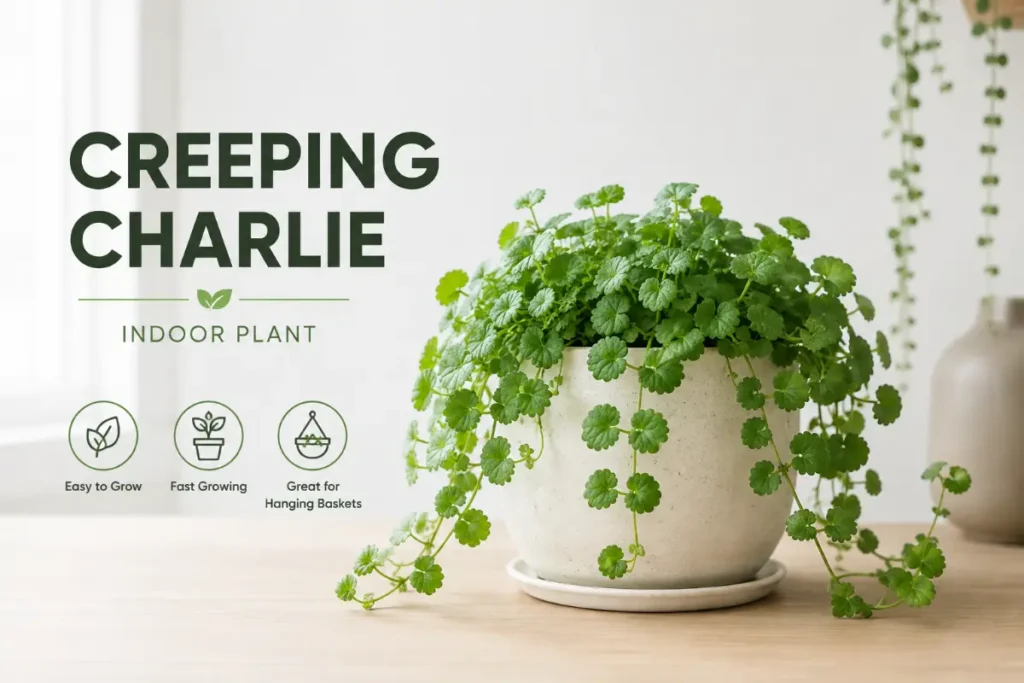
The creeping charlie indoor plant is one of those genuinely charming houseplants that most people have not heard of until they see it trailing from a hanging basket or spilling over the edge of a shelf, at which point they immediately want one. Creeping charlie (Pilea nummulariifolia) is a small-leaved, fast-growing, ground-hugging trailing plant from the Caribbean and South America that produces a dense mat of tiny rounded, textured leaves on fine stems that trail or cascade in exactly the way that makes elevated plant displays so appealing.
It is not the same plant as the outdoor weed called creeping charlie (Glechoma hederacea), which is a member of the mint family. Pilea nummulariifolia is a tropical indoor plant with distinctly different care requirements and appearance, though both share the trailing growth habit that gives them their common name.
Quick Answer
Creeping charlie indoor plant care requires bright to medium indirect light, consistent moisture keeping the top half inch moist without waterlogging, temperatures between 60 and 80 degrees Fahrenheit, moderate to high humidity above 50%, biweekly fertilizing through spring and summer, regular tip pruning to maintain density rather than long bare stems, and easy propagation from cuttings to refresh the display when stems age. One of the most forgiving and fastest-propagating trailing plants available for indoor use.
Understanding Creeping Charlie as an Indoor Plant
Pilea nummulariifolia grows naturally in the tropical forests of the Caribbean, Central America, and South America where it spreads along the ground as a low mat-forming groundcover in warm, humid, partially shaded conditions. The tiny rounded leaves have a slightly puckered or quilted texture that catches light and creates visual depth even at small individual leaf size.
The plant is a member of the Pilea genus which also includes the popular Chinese money plant (Pilea peperomioides) and aluminum plant (Pilea cadierei). Like its Pilea relatives, creeping charlie is fast-growing, easy to propagate, and tolerant of the range of conditions that most home interiors provide.
The name creeping charlie for this plant refers to its growth habit of spreading horizontally by producing roots at stem nodes wherever they contact moist soil, creating expanding mats of vegetation in its natural habitat. Indoors in a pot, this rooting tendency makes stem cuttings root with exceptional ease since the nodes that contact moist growing medium begin producing roots within days.
Step 1: Provide Bright to Medium Indirect Light
Creeping charlie is more light-flexible than many other popular trailing plants, which makes it practically useful in interior positions where other more light-demanding plants would decline.
What works: Bright indirect light from an east or north-facing window produces the most vigorous growth and most compact, dense stem coverage. Medium indirect light in a well-lit room with ambient window light is tolerated without significant decline. A few feet back from a south or west-facing window suits the plant well.
What causes problems: Direct harsh afternoon sun bleaches the small leaf surfaces and causes the brown dry patches that damage the plant’s appearance. Very deep shade produces slow, sparse growth with leaves spaced further apart along stems rather than the dense carpet texture that makes the plant appealing.
The practical range: Creeping charlie is among the more shade-tolerant of the commonly grown trailing plants, making it a good choice for positions where wandering jew or polka dot plant would fade from insufficient light. It maintains acceptable growth in conditions that are too dim for most colorful trailing plants.
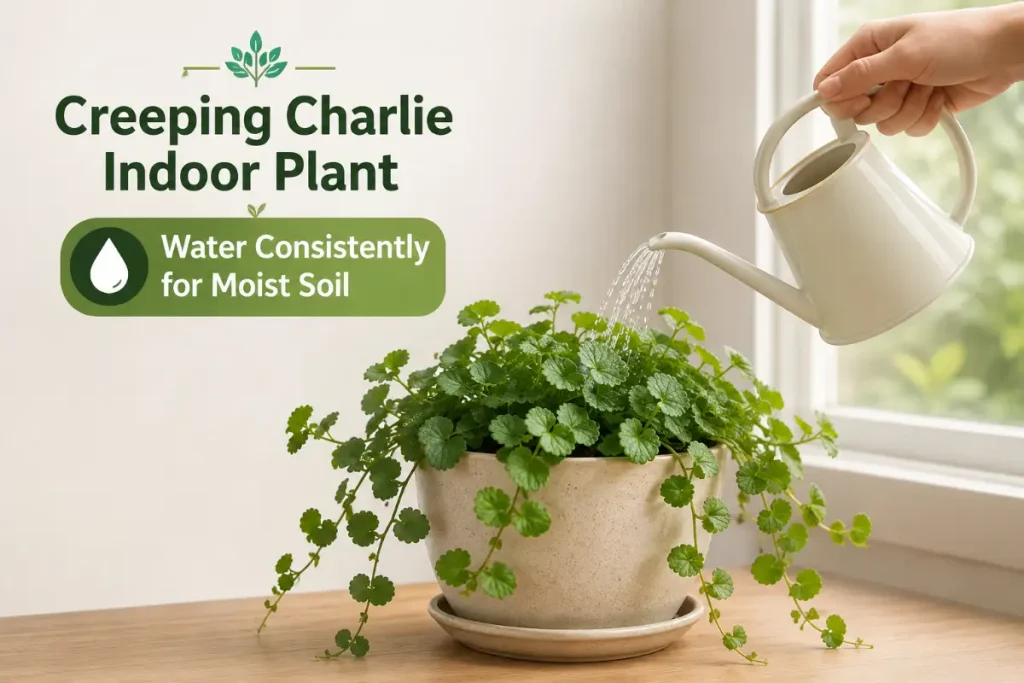
Step 2: Water Consistently for Moist Soil
Creeping charlie originates in the consistently moist, humid conditions of tropical forest floors and prefers soil that stays moist rather than experiencing the dry-then-water cycles that suit drought-adapted plants.
The correct approach: Water when the top half inch of soil feels dry. This is shallower than the one-inch or two-inch check used for more drought-tolerant plants. In a bright position during summer this means watering approximately every four to six days. In lower light or winter every six to eight days.
The wilting signal: Creeping charlie wilts noticeably when underwatered, with stems and small leaves drooping simultaneously. This wilting recovers quickly after watering but plants that wilt repeatedly experience cumulative stress that slows growth and reduces the density of the trailing display.
Signs of overwatering: Yellow lower leaves. Stems that feel mushy at the soil level. Soil staying wet for more than a week. Despite its preference for consistent moisture, creeping charlie is susceptible to root rot in genuinely waterlogged conditions. Always use pots with drainage holes.
Water quality: Like many fine-rooted tropical plants, creeping charlie is somewhat sensitive to fluoride and mineral accumulation from tap water in hard water areas. Brown tips on stems and leaves despite adequate humidity often trace to water quality. Filtered or distilled water reduces this issue.
Step 3: Maintain Comfortable Temperature
Ideal range: 60 to 80 degrees Fahrenheit. Creeping charlie is comfortable within the temperature range most people maintain in their homes without special management.
Cold sensitivity: Below 55 degrees the plant shows visible stress with slowed growth and potential stem softening. Cold drafts from exterior doors and cold windowpanes in winter damage the sensitive fine stems and small leaves. Keep away from cold airflow sources.
Heat tolerance: Creeping charlie handles typical indoor summer temperatures well with adequate moisture. In very warm conditions above 80 degrees, watering frequency becomes more critical since small leaves lose moisture to warm air more quickly than larger-leaved plants.
Step 4: Maintain Humidity Above 50%
As a tropical forest floor plant, creeping charlie prefers the consistently humid conditions of its native habitat and shows humidity stress through browning leaf tips and edges when indoor air is too dry.
Signs of inadequate humidity: Brown, crispy leaf edges. Stems that look slightly dull rather than fresh and vibrant. In severe low humidity, the small leaves may begin to curl upward at the margins.
Effective solutions: A pebble tray with water beneath the pot provides steady local humidity through evaporation. Grouping with other tropical plants raises collective humidity. A humidifier running nearby during winter heating season addresses the seasonal humidity drop that most affects creeping charlie.
Misting tolerance: Creeping charlie tolerates misting well since its small textured leaves do not retain surface moisture long enough to create significant disease risk. Misting every two to three days provides brief humidity benefit and is a practical supplemental approach.
Step 5: Fertilize Through the Growing Season
Creeping charlie is a fast grower that benefits from consistent nutrition to support the rapid stem and leaf production that creates the dense trailing display it is grown for.
Through spring and summer: Feed every two weeks with a balanced liquid fertilizer at half the label rate. The combination of nitrogen for leaf and stem production with balanced phosphorus and potassium maintains the overall plant health that supports vigorous growth through the season.
Organic options: Worm casting tea applied every two weeks provides gentle nutrition with soil biology benefits. For the complete guide to organic fertilizer applications for fast-growing trailing plants, worm castings for indoor plants covers every method with specific timing guidance.
Fall and winter: Reduce to monthly feeding or stop entirely. Growth slows noticeably in fall and winter even with adequate light and continuing summer fertilizing rates accumulates salts in the limited pot volume without corresponding growth benefit.
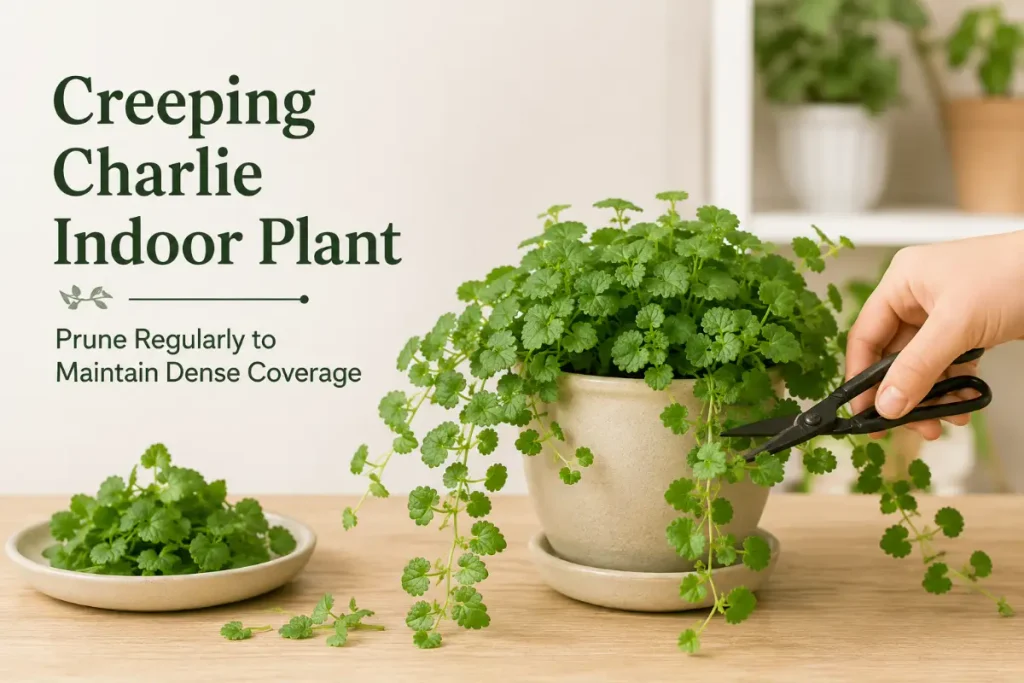
Step 6: Prune Regularly to Maintain Dense Coverage
Like all trailing plants that spread naturally along the ground rather than climbing, creeping charlie develops increasingly sparse coverage on older portions of stems without regular tip pruning.
How to prune: Pinch or cut stem tips back to just above a leaf node every two to four weeks through the growing season. The plant produces two new shoots from the node below each cut within seven to ten days. Over multiple pruning sessions this doubling effect creates a progressively denser mat of growth.
More aggressive rejuvenation: When a plant has developed many long, sparse stems, cut all stems back to within two to three inches of the soil. Creeping charlie regenerates rapidly from this level of pruning, producing a fresh dense flush of new growth within two to three weeks.
The propagation opportunity: Every pruned cutting is a propagation piece. Stem cuttings two to three inches long with at least one node root in water within five to seven days, faster than almost any other commonly grown houseplant. Potting rooted cuttings in fresh moist growing mix produces established plants within three weeks.
Step 7: Propagate Freely to Maintain Display Quality
Propagation from cuttings is the most effective long-term management strategy for creeping charlie displays. Stems age and become woody within one to two years. Starting fresh from cuttings annually maintains the vigorous growth and compact density that makes creeping charlie most attractive.
How fast propagation works: Cut two to three inch sections from actively growing stem tips just below a node. Place in a small container of water. Roots emerge from the node within five to seven days. Pot in moist growing mix within two weeks of the initial cutting. The resulting plant reaches display-worthy size within three to four weeks.
Building a larger display: A single creeping charlie plant provides enough cutting material to fill a hanging basket within one growing season through successive propagation rounds. Start with three to five cuttings per hanging basket pot, allow to establish for four weeks, then take cuttings from the resulting plants and add back to the same pot. Three to four rounds of this self-compounding propagation fills a standard hanging basket completely.
Sharing: Creeping charlie’s exceptionally fast propagation makes it one of the ideal plants for sharing in gardening communities. A mature plant provides literally unlimited cutting material at essentially zero cost, making it a natural candidate for plant swaps, school projects, and introductory propagation activities.
For context on how creeping charlie compares to other easy-propagating trailing plants for indoor displays and how to create mixed trailing arrangements combining different leaf textures and growth rates, swedish ivy indoor plant covers the care approach for a closely comparable easy trailing plant that pairs well with creeping charlie in mixed hanging basket arrangements.
Creeping Charlie in Terrariums
The fine scale of creeping charlie’s tiny leaves makes it one of the most effective plants for terrarium groundcover applications where its dense mat-forming growth habit creates the miniature landscape effect that makes terrariums visually compelling.
In closed terrariums: Creeping charlie thrives in the high humidity, stable temperature, and consistent moisture of a closed terrarium environment. The self-regulating moisture of a properly balanced closed terrarium matches creeping charlie’s preference for consistently moist conditions without the risk of overwatering that pot growing requires management of. In a closed terrarium, the plant can grow for months without any intervention beyond occasional opening for air exchange.
In open terrariums: Creeping charlie grows well in open terrariums with regular misting to maintain the higher humidity it prefers. Its low, spreading growth habit fills the foreground and midground of open terrarium compositions while taller plants occupy the background. The textured leaf surface creates visual interest at close range that flat-leaved groundcover alternatives cannot match.
Scale considerations: Creeping charlie’s tiny leaf size (leaves typically five to ten millimeters in diameter) is perfectly proportioned for the miniature landscape aesthetic of most terrariums. It pairs well with similarly fine-textured miniature plants including baby tears (Soleirolia soleirolii) and miniature mosses that share its preference for consistently moist, humid conditions.

Common Creeping Charlie Problems and Solutions
Leggy, sparse stems with leaves only at tips: Insufficient pruning combined with often insufficient light. Prune back aggressively to within two to three inches of soil and improve light simultaneously. Add fresh cuttings back to the pot for immediate density increase.
Yellow lower leaves: Overwatering or natural aging of the oldest growth. Check soil moisture and adjust watering to allow more drying between sessions if the former is suspected. Single lower leaf yellowing is normal aging.
Brown leaf tips and edges: Low humidity or tap water mineral accumulation. Increase humidity with a pebble tray and switch to filtered water. Flush soil monthly with excess water to leach accumulated minerals if tip browning persists.
Wilting despite moist soil: Root rot from chronic overwatering. Remove from pot, trim dark mushy roots, repot in fresh well-draining mix, and adjust watering to allow more drying between sessions.
Very slow growth despite adequate light: Nutritional deficiency from depleted older potting mix. Begin biweekly fertilizing or repot into fresh potting mix if the current mix has been in use for more than twelve to eighteen months.
Creeping Charlie Alongside Other Small-Leaved Trailing Plants
Creeping charlie works exceptionally well in mixed arrangements with other small-leaved trailing plants where the combination of different leaf textures and growth rates creates more visually interesting displays than any single plant achieves alone.
Baby tears (Soleirolia soleirolii) is the most compatible companion for creeping charlie in terms of leaf scale and care requirements. Both produce tiny leaves on fine stems and prefer consistent moisture and moderate to high humidity. The bright green of baby tears alongside the slightly more textured, slightly larger leaves of creeping charlie creates a subtle but visually appealing textural contrast at the same fine scale.
Artillery plant (Pilea microphylla) is a Pilea relative with even finer, more moss-like foliage that creates beautiful contrast with creeping charlie’s slightly larger leaves. Both are in the same genus and share essentially identical care requirements, making mixed arrangements genuinely manageable as a single-care group.
Miniature peperomia varieties including Peperomia rotundifolia (trailing jade or round-leaf peperomia) have similar leaf scale to creeping charlie and share its preference for bright indirect light and consistent moisture. The slightly succulent texture of peperomia leaves creates contrast with the thinner, more delicate creeping charlie leaves in mixed hanging basket arrangements.
The practical advantage of combining these small-leaved trailing plants is that their similar care requirements make the combined display as easy to maintain as a single plant while producing significantly more visual complexity and interest than any single species achieves alone.
Repotting Creeping Charlie
Despite its fast growth, creeping charlie does not need as frequent repotting as larger, more aggressively growing plants because its fine, relatively shallow root system does not fill pots as rapidly as the tuberous roots of asparagus fern or the large root masses of white bird of paradise.
When to repot: When roots emerge visibly from drainage holes, when the plant dries out within two to three days of thorough watering, or when the display has become so dense with cuttings added over multiple seasons that the soil volume has been significantly reduced. Annually at the start of each growing season is appropriate for actively managed plants.
Soil: Standard potting mix with 15% perlite added provides the balance of moisture retention and drainage appropriate for creeping charlie’s preference for consistent moisture without waterlogging. The slightly moisture-retentive standard mix suits this plant better than the very fast-draining mixes appropriate for drought-tolerant plants.
Pot choice: Hanging baskets with drainage holes and coco moss or coco coir liners suit creeping charlie’s growth habit and aesthetic well. The natural fiber liner allows air circulation through the basket sides which creeping charlie’s fine roots tolerate without the desiccation stress that affects plants with thicker, less adaptable root systems. For the complete guide to coco coir as both a soil amendment and basket liner material, coconut coir for indoor plants covers every application including hanging basket liner use with moisture-loving trailing plants like creeping charlie.
Conclusion
Creeping charlie indoor plant care is among the most rewarding of any small-leaved trailing plant because the combination of fast growth, easy propagation, consistent dense coverage with regular pruning, and genuine tolerance for a range of indoor conditions makes it approachable for plant owners at any experience level.
Bright to medium indirect light. Consistent moisture checking the top half inch before each watering. Comfortable room temperatures away from cold drafts. Moderate humidity above 50%. Biweekly fertilizing through the growing season. Regular tip pruning every two to four weeks. And annual propagation from cuttings to keep the display at its vibrant best. Those seven practices produce the dense, lush, trailing creeping charlie display that makes this underappreciated plant one of the most charming and satisfying trailing plants you can grow indoors.
Frequently Asked Questions
Is creeping charlie the same as the weed in my lawn?
No. Creeping charlie houseplant (Pilea nummulariifolia) is a tropical plant from the Caribbean and South America that is entirely different from the lawn weed creeping charlie (Glechoma hederacea), which is a member of the mint family. The two plants share only the trailing growth habit that gives them the same common name. The indoor houseplant Pilea has tiny rounded textured leaves on fine stems and requires tropical care conditions entirely different from the cool-climate weed.
How often should I water creeping charlie indoors?
Water when the top half inch of soil feels dry, typically every four to six days in a bright position during summer and every six to eight days in lower light or winter. Creeping charlie prefers consistently moist soil and wilts noticeably when underwatered, providing a clear signal before lasting damage occurs. Avoid both chronic overwatering that causes root rot and repeated complete drying that stresses the fine root system.
Can creeping charlie grow in low light?
Creeping charlie is more shade-tolerant than many trailing plants and grows acceptably in medium indirect light that would be insufficient for more light-demanding plants like polka dot plant or wandering jew. Very deep shade produces slow, sparse growth. Bright indirect light from an east or north-facing window produces the most vigorous and dense growth. It is a practical choice for interior positions with moderate ambient light from nearby windows.
How do I propagate creeping charlie indoors?
Cut two to three inch stem sections just below a leaf node. Place in a container of water. Roots emerge within five to seven days, faster than almost any other commonly grown houseplant. Pot in moist growing mix once roots are half an inch or longer and the plant establishes display-worthy size within three to four weeks. The rooting speed and success rate make creeping charlie one of the most accessible propagation projects for beginning plant owners.
Why is my creeping charlie losing its leaves?
Leaf drop in creeping charlie most commonly indicates underwatering allowing the soil to dry too completely between waterings, cold temperature shock from drafts or cold windows, or root rot from chronic overwatering. Water immediately if the soil is very dry. Check for cold air sources if wilting and dropping appears on one side of the plant. Remove from the pot and inspect roots if the soil has been consistently wet and root rot is suspected.
Is creeping charlie safe for cats and dogs?
Pilea nummulariifolia (indoor creeping charlie) is generally considered non-toxic to cats and dogs, which is one of its practical advantages for pet-friendly households. However, the ASPCA database should be consulted for the most current toxicity information on specific Pilea species since the broader Pilea genus includes members with variable toxicity. The outdoor weed Glechoma hederacea (lawn creeping charlie) is a different plant entirely and is considered mildly toxic to horses.