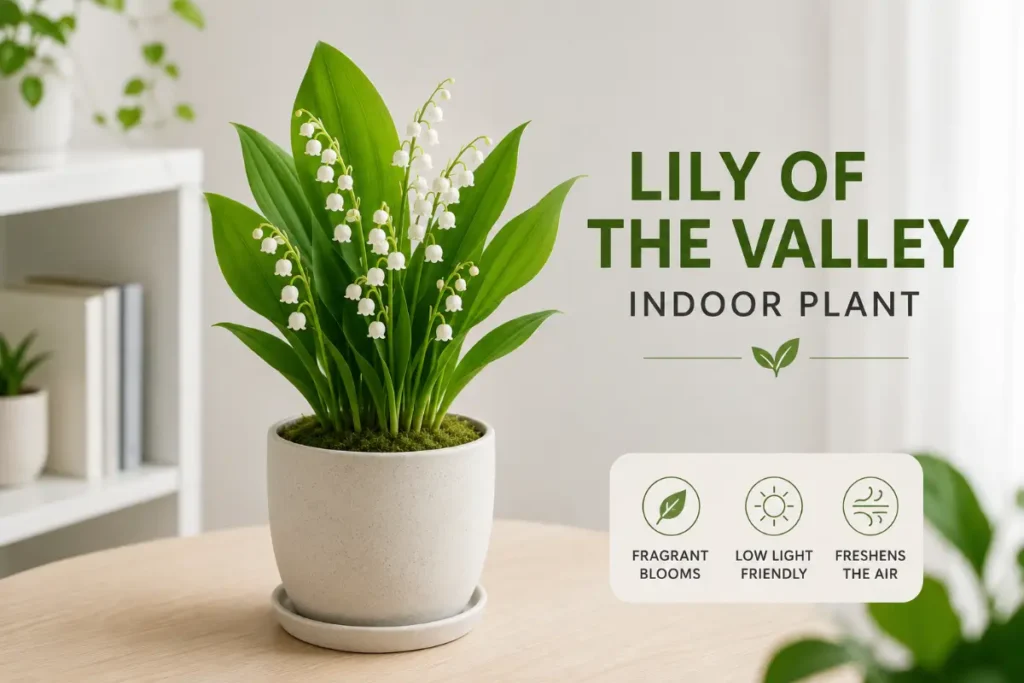
The lily of the valley indoor plant is one of the most rewarding short-season flowering experiences in indoor gardening. The delicate white bell-shaped flowers of Convallaria majalis produce one of the most intensely sweet and distinctive fragrances of any plant that can be forced into bloom indoors, and the entire process from preparing the pips (dormant rootstocks) to full bloom takes only three to four weeks.
The honest context for indoor lily of the valley care is that this is a forced bloom project rather than a permanent houseplant. Lily of the valley is an outdoor woodland perennial from temperate Europe and Asia that follows a rigid seasonal cycle of spring bloom, summer leaf growth, fall dormancy, and winter rest. Forcing it to bloom indoors is a manipulation of this cycle for a brief, spectacular display after which the plant needs to follow through its natural cycle.
Quick Answer
Lily of the valley indoor plant care involves purchasing pre-chilled pips or chilling your own for eight to twelve weeks at near-freezing temperatures, planting in moist growing medium with pips just below the surface, keeping in a warm location between 65 and 75 degrees Fahrenheit to trigger rapid growth and bloom, maintaining consistent moisture during the bloom period, keeping in cool indirect light to extend bloom duration, and transitioning the plant outdoors after blooming for naturalization or discarding if outdoor planting is not practical.
Understanding Lily of the Valley Indoors
Convallaria majalis is a rhizomatous perennial native to the cool, moist woodlands of Europe and Asia where it carpets the forest floor in spring with its characteristic paired leaves and arching stems of small white bell-shaped flowers. The intense, sweet fragrance that makes it famous is most concentrated in early spring conditions and is one of the most prized flower scents used in perfumery.
Forcing lily of the valley to bloom indoors works because the plant’s bloom trigger is the relief of cold dormancy followed by warming temperatures. By providing the required cold period artificially and then placing the pips in warm conditions, you replicate the natural spring signal that initiates growth and bloom.
Unlike many permanent houseplants in this cluster, lily of the valley is fundamentally a temporary indoor project. The bloom period lasts two to three weeks. After blooming the plant can be transitioned to outdoor garden use where it naturalizes into a spreading colony, or the pips can be discarded if outdoor planting is not an option.
Step 1: Source and Prepare Pips for Forcing
The pip is the dormant rootstock of lily of the valley that contains everything the plant needs to produce a full bloom stem when the cold-dormancy requirement is satisfied and warming temperatures signal the start of spring.
Buying pre-chilled pips: The easiest starting point is purchasing commercially prepared forcing pips that have already received the required cold treatment. These are available from specialty bulb suppliers and some online retailers from late fall through winter. Pre-chilled pips can be planted immediately and bloom within three to four weeks of planting.
Chilling your own pips: If you have an established outdoor lily of the valley planting, dig the pips in fall after the foliage has died back. Clean off soil, inspect for damage, and place in a paper bag with slightly moist peat moss or sawdust in the refrigerator (not freezer) for eight to twelve weeks before planting for indoor forcing. The refrigerator temperature of 35 to 40 degrees Fahrenheit provides the required cold treatment effectively.
What makes a good pip: Plump, firm pips with a visible pointed growing tip. Soft, shriveled, or moldy pips will not produce blooms. For the best bloom display, select the largest, firmest pips available since larger pips contain more stored energy for the blooming process.
Step 2: Plant Pips Correctly for Forcing
The planting method for indoor lily of the valley forcing is specific and differs from how you would plant outdoor perennial bulbs or rhizomes.
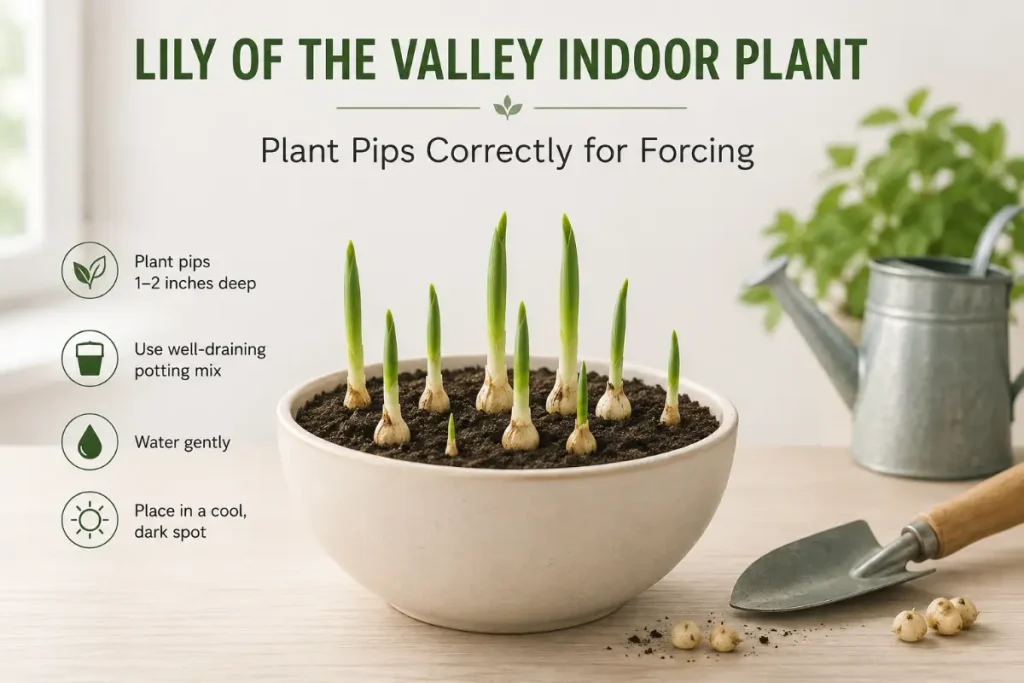
Growing medium: Use moist potting mix, peat moss, or a mixture of both. The growing medium needs to retain consistent moisture without becoming waterlogged. A blend of 60% potting mix and 40% peat moss provides excellent moisture retention appropriate for the rapid root development phase that precedes blooming.
Planting depth and spacing: Plant pips with the growing tip just at or slightly above the soil surface. Do not bury the tip since this slows the emergence of the bloom stem. Space pips two to three inches apart in the container. For a standard six-inch pot, five to seven pips create a full display.
Container choice: A wide, shallow pot or bowl suits lily of the valley forcing well since the rhizomes are horizontal rather than deep-rooting during the forcing period. The growing display looks most natural in a low bowl or trough rather than a tall narrow pot.
After planting: Water gently to settle the growing medium around the pips without dislodging them from their position. Do not water heavily since the pips have no active roots yet and sitting water causes rot.
Step 3: Provide Warm Conditions to Trigger Growth
After planting chilled pips, warm temperatures are the trigger that initiates rapid growth and bloom development.
The right temperature: 65 to 75 degrees Fahrenheit is ideal for initiating forcing. Within this range, growth typically begins within a week and bloom stems emerge within two to three weeks.
Darkness initially: Some forcing guides recommend starting pips in darkness for the first week to encourage rapid etiolated (elongated) growth toward the light, which produces longer bloom stems. A dark cupboard or closet at the right temperature for the first seven to ten days followed by moving to indirect light once stems are two to three inches tall is an optional but effective technique for maximizing stem length.
What too little warmth does: In cool conditions below 60 degrees, the forcing process slows dramatically. Pips planted in cool positions may produce very slow growth over weeks without the rapid bloom development that makes forcing so rewarding.
Step 4: Keep Cool and in Indirect Light During Bloom
Once bloom stems have developed and flowers begin to open, the goal shifts from triggering rapid growth to extending the bloom period as long as possible.
Temperature during bloom: Move to the coolest bright position available. The same cool temperatures that extend the bloom of other cool-preferring flowering plants discussed in this cluster, 55 to 65 degrees Fahrenheit, significantly extend the duration of individual flowers and the overall bloom period.
Light during bloom: Bright indirect light maintains the quality and color of the white flowers without the bleaching that direct sun causes. The flowers are most pristine in cool, bright indirect light without any direct sun exposure.
The fragrance peak: Lily of the valley fragrance is most intense in the morning in cool, moist conditions. A cool room with the plant near a slightly open window on mild days provides the best experience of the plant’s remarkable scent.
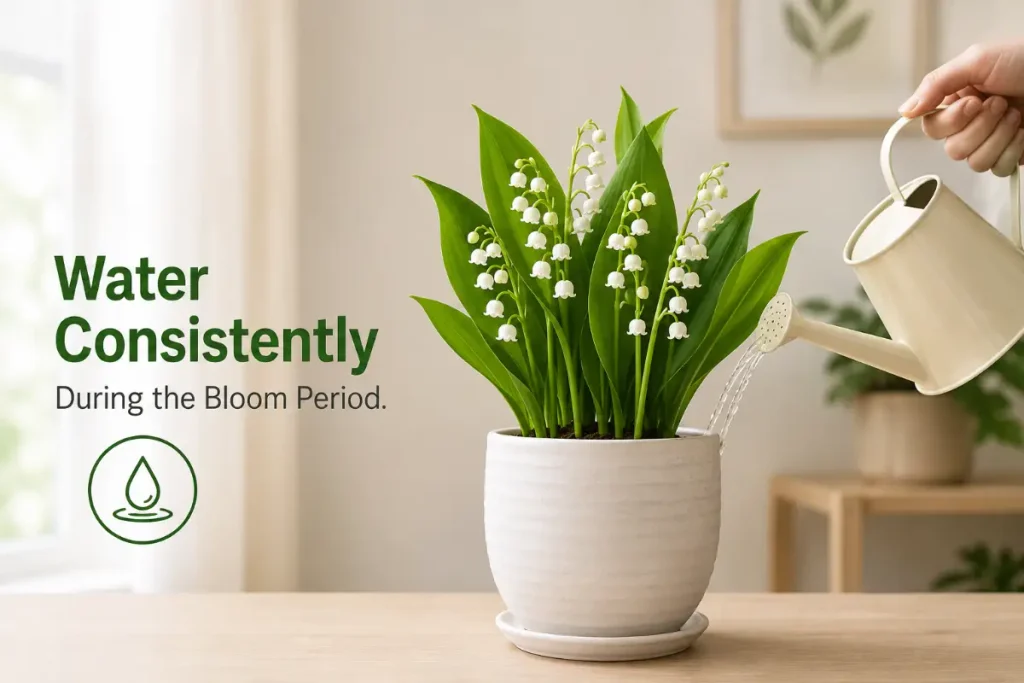
Step 5: Water Consistently During the Bloom Period
Lily of the valley in active bloom needs consistent moisture to maintain the quality of both foliage and flowers through the bloom period.
How to water: Water when the top half inch of growing medium feels dry. In a cool position during bloom this typically means every four to six days. Water gently at soil level without wetting the flowers since wet petals on bell-shaped flowers trap moisture and develop brown spotting quickly.
Signs of underwatering during bloom: Flowers that wilt or brown at the edges before their natural lifespan ends. Leaves that look slightly less upright than when growth was fresh.
Signs of overwatering: Yellow, soft stem bases near the soil. The delicate root system of lily of the valley during the forcing process is susceptible to rot in genuinely waterlogged conditions. Ensure drainage is adequate and empty any standing water from saucers promptly.
Step 6: Extend Bloom Duration
Several practices extend the lily of the valley indoor bloom period beyond what it would last without intervention.
Cool temperature is the most effective: Every degree cooler within the comfortable range extends individual flower life. A plant at 55 degrees maintains its flowers significantly longer than the same plant at 70 degrees.
Keep away from heat sources: Forced air heating vents, radiators, and any appliance that generates heat accelerates flower aging dramatically. Position specifically away from all heat sources.
Keep away from ripening fruit: Ethylene gas from ripening apples, bananas, and other fruit causes premature flower drop in many flowering plants including lily of the valley. The kitchen fruit bowl is a particularly poor location for a blooming lily of the valley during the harvest season.
Avoid drafts: While cool temperatures extend bloom, cold drafts cause rapid flower drop. Stable cool temperatures without air movement across the flowers produce the best results.
Step 7: After Blooming: Outdoor Transition or Discard
This step determines whether your lily of the valley experience is a one-time forcing project or the beginning of an outdoor perennial planting.
The outdoor transition (strongly recommended): After blooming completes, the pips still contain living plant material that will produce a full perennial planting in an appropriate garden location. Remove spent flower stems but leave all foliage in place. Move to a partially shaded outdoor position and plant in moist, humus-rich soil in partial shade. Lily of the valley naturalizes into spreading colonies over three to five years in appropriate conditions.
Where it grows outdoors: USDA hardiness zones 2 through 9. It performs best in cool, moist, partially shaded locations such as the north side of buildings, under deciduous trees, and in woodland garden settings. It spreads by underground rhizome into increasingly impressive colonies.
What to expect the first year: Plants forced for indoor bloom have used significant energy. The first year in the garden they focus on building root systems rather than blooming abundantly. By the second and third year, bloom improves dramatically and the colony begins expanding.
If outdoor planting is not possible: The pips can be discarded after indoor bloom if no outdoor garden space is available. Many gardeners simply purchase fresh pre-chilled pips each year for forcing and treat the experience as an annual temporary display rather than a permanent planting project. The low cost of lily of the valley pips makes this annual replacement approach practical.
For context on other forced bulb and rhizome plants that share the temporary indoor bloom display approach of lily of the valley, easter lily plant care indoor covers the very similar approach to extending a forced bulb bloom and the post-bloom outdoor transition strategy that applies equally to lily of the valley and Easter lily indoor projects.
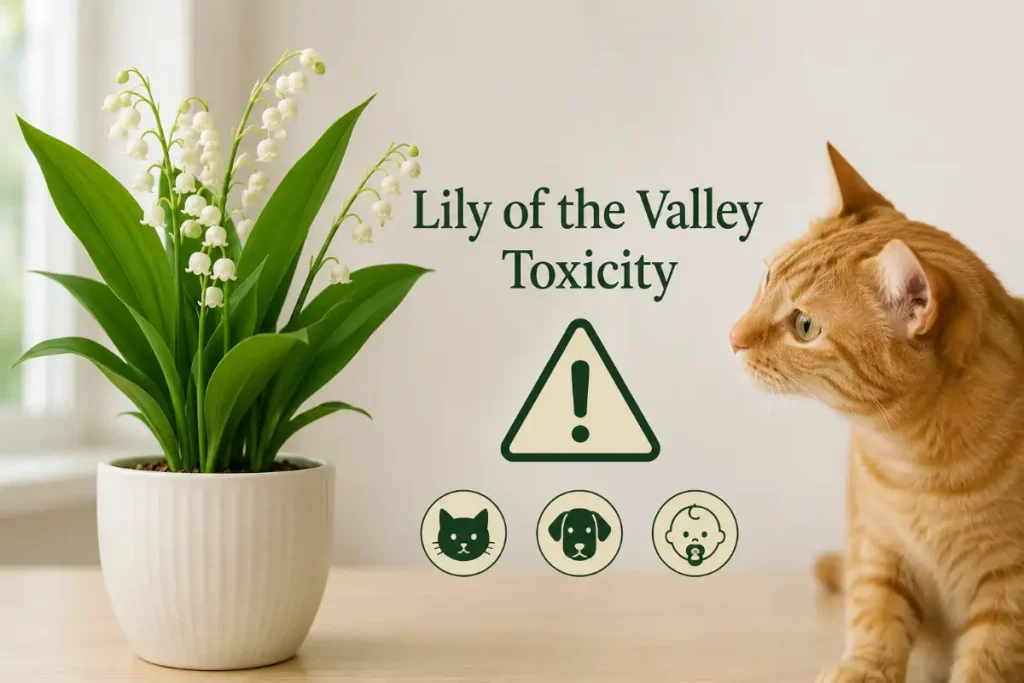
Lily of the Valley Toxicity
Lily of the valley is one of the most toxic common garden plants. Every part of the plant including leaves, flowers, stems, roots, and even the water in which cut flowers have been kept contains cardiac glycosides that are dangerous to humans, dogs, and cats.
Symptoms of ingestion include vomiting, heart arrhythmia, low blood pressure, and in severe cases cardiac failure. Even small amounts can cause serious symptoms in pets and children.
Keep lily of the valley in bloom completely out of reach of pets and children. Do not place it where curious animals can access it. Do not allow water from lily of the valley vases to be consumed by pets. Wash hands thoroughly after handling any part of the plant. This toxicity does not make it inappropriate for indoor use in adult households but requires explicit awareness and appropriate precautions.
Fragrance and Aromatherapy Value
Lily of the valley’s fragrance is one of the most intensely sweet and immediately recognizable of any flowering plant, making it one of the few plants grown specifically for olfactory experience rather than primarily for visual effect.
The fragrance compounds in lily of the valley include bourgeonal and other aldehydes that trigger the olfactory receptors associated with lily fragrance more intensely than almost any other natural source. This is why lily of the valley absolute is one of the most expensive and most prized components in fine perfumery.
Indoors, a blooming lily of the valley plant fills a room with its fragrance without any additional preparation. The fragrance is most intense in the morning when flowers are freshest and in cool, moist conditions that reduce the volatilization rate that depletes fragrance compounds from open flowers. A single pot of forced lily of the valley in a standard bedroom provides fragrance intense enough to notice from across the room during the peak of bloom.
For the complete comparison of aromatic indoor plants and how their scents compare across the range of plants commonly grown for fragrance, indoor lavender plant care covers the care and fragrance experience of another intensely aromatic plant that is grown as much for olfactory experience as for visual appeal, and whose cool-position preferences align with the lily of the valley care approach described in this guide.
Troubleshooting Common Lily of the Valley Forcing Problems
Even with correct technique, a few specific problems occasionally arise during indoor lily of the valley forcing. Knowing what causes each one produces faster resolution.
Pips that produce only leaves without bloom stems: The most common cause is insufficient cold treatment before forcing. If you chilled your own pips, they may not have received the full eight to twelve weeks at near-freezing temperatures needed to satisfy the cold requirement completely. Purchased pre-chilled pips rarely have this problem since commercial suppliers calibrate the cold treatment duration carefully. When growing from garden pips, err on the side of longer cold treatment rather than shorter.
Very short bloom stems: Insufficient darkness during the initial forcing phase produces shorter stems than the plant’s potential. Try starting the next batch of pips in a dark location for the first seven to ten days after planting before moving to light. The etiolated growth during this dark period extends stem length before flower development begins.
Flowers that brown quickly after opening: Warm temperatures and low humidity are the primary causes of rapid flower browning. Move to a cooler position immediately. Increase humidity with a pebble tray. Keep away from heating vents and ripening fruit. If the room cannot be kept below 65 degrees, the bloom period will be shorter than in cool conditions regardless of other management.
Pips that rot rather than sprout: Overwatering during the initial rooting phase before active growth begins. Allow the growing medium to approach dryness at half an inch depth before each watering during the first ten days after planting. Once active growth is clearly underway with visible stems extending upward, normal consistent moisture management resumes.
Lily of the Valley as a Cut Flower Indoors
Cut lily of the valley stems maintain their fragrance and bloom quality in water for five to seven days when handled correctly, making them one of the most rewarding short-vase-life cut flowers for indoor display.
Cutting: Harvest stems in the morning when flowers are in the early bud to partially open stage rather than fully open, which extends vase life compared to cutting fully open stems. Cut at the base of the stem with clean sharp scissors.
Vase life extension: Change water every two days and recut the stem base by half an inch at each water change. Keep in a cool location away from direct sun, heating vents, and ripening fruit. The same cool-temperature principle that extends bloom on living plants extends vase life for cut stems.
Fragrance in a vase: A small bud vase with three to five lily of the valley stems on a bedside table or bathroom shelf provides an intensely fragrant micro-display that concentrates the scent in a smaller space than a full pot of blooming plants would provide in a larger room.
The toxicity reminder for cut flowers: The water in which lily of the valley stems are kept becomes toxic as plant compounds leach into it. Keep vases out of reach of pets and children, and do not allow pets to drink from the vase water. Dispose of vase water carefully rather than using it to water other plants.
For the complete guide to other cut and forced indoor bulb plants that provide similar brief but spectacular fragrance experiences, how to keep a lily plant alive indoors covers the broader category of lily and lily-adjacent plants that are grown primarily for temporary indoor bloom rather than as permanent houseplants, and the specific techniques for extending each type of bloom as long as possible.
Conclusion
Lily of the valley indoor plant care is fundamentally about understanding the forcing process and managing the brief but spectacular bloom period that results from it. Pre-chilled pips planted in moist growing medium in warm conditions produce bloom stems within three to four weeks. Cool temperatures and bright indirect light extend the bloom once it begins. Consistent moisture maintains flower quality through the display. And outdoor garden transition after blooming converts a temporary forcing project into a permanent, naturalizing perennial planting.
The fragrance that fills a room during lily of the valley’s brief indoor bloom period is worth every bit of the straightforward management the forcing process requires. For plant owners willing to embrace the temporary nature of this display and plan for the outdoor transition that makes it most rewarding, lily of the valley provides an indoor fragrance experience that no permanent houseplant can match.
Frequently Asked Questions
How long does lily of the valley bloom indoors?
With cool temperatures between 55 and 65 degrees Fahrenheit and bright indirect light away from heat sources and ripening fruit, lily of the valley blooms for two to three weeks indoors. In warm conditions above 70 degrees the bloom period shortens to one to one and a half weeks. Cool temperature management is the single most effective way to extend the indoor bloom display.
How do I force lily of the valley to bloom indoors?
Purchase pre-chilled pips or chill your own for eight to twelve weeks at 35 to 40 degrees Fahrenheit in the refrigerator. Plant with the growing tip just at the soil surface in moist potting mix. Place in a warm location between 65 and 75 degrees. Growth and bloom stems emerge within two to three weeks. Once blooming begins, move to cool bright indirect light to extend the display.
Can I grow lily of the valley as a permanent indoor houseplant?
No. Lily of the valley is a temperate woodland perennial that requires an outdoor cycle of summer growth, fall dormancy, and winter cold before it will bloom again. It cannot be maintained as a permanent indoor houseplant that reblooms reliably without the outdoor seasonal cycle. After indoor forcing, transition the plant to outdoor garden use where it naturalizes and blooms annually in spring.
Is lily of the valley safe for cats?
No. Lily of the valley is highly toxic to cats, dogs, and humans. The cardiac glycosides throughout the entire plant including leaves, flowers, stems, and roots cause vomiting, heart arrhythmia, and potentially cardiac failure even in small amounts. Keep completely out of reach of pets. The water in which cut lily of the valley flowers are kept is also toxic. This is one of the most seriously toxic common ornamental plants and requires explicit precautionary measures in any household with pets or children.
When should I plant lily of the valley pips for indoor forcing?
Pre-chilled pips purchased from suppliers can be planted immediately upon receipt and typically produce bloom within three to four weeks. For home-chilled pips, calculate backward from your desired bloom date: eight to twelve weeks of cold treatment plus three to four weeks of forcing time gives you the planting-to-bloom timeline. Begin cold treatment in mid-October for Valentine’s Day or early February bloom. For late winter bloom, begin cold treatment in November.
What do I do with lily of the valley after it finishes blooming indoors?
The most rewarding option is transitioning the pips to an outdoor garden in partial shade where they naturalize into spreading perennial colonies. Remove spent flower stems but leave foliage. Plant in moist, humus-rich soil in a partially shaded location. Lily of the valley naturalizes reliably in USDA zones 2 through 9. If outdoor planting is not available, discard the pips and purchase fresh pre-chilled pips the following year. Annual purchasing of pre-chilled pips for forcing is a practical alternative to outdoor naturalization for apartment dwellers and gardeners without appropriate outdoor space.