
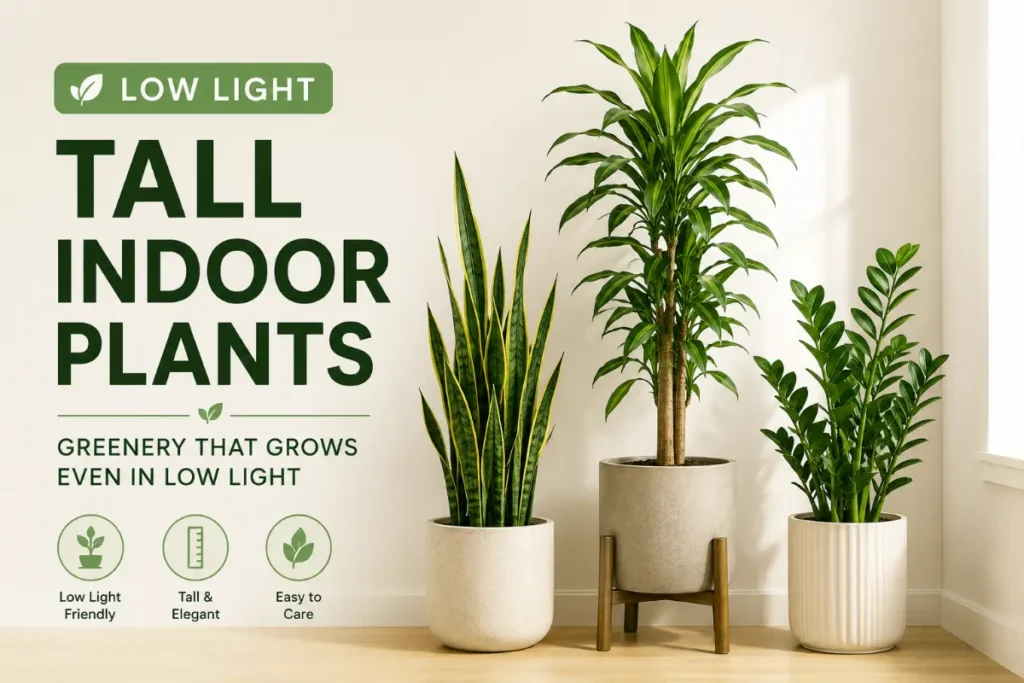
Low light tall indoor plants solve one of the most common indoor gardening problems: the dim corner, the interior room, the apartment hallway that needs visual presence but receives no natural window light worth speaking of. Most large, statement-making houseplants need bright indirect light at minimum. The plants in this guide are genuinely different. They grow to impressive heights and maintain good health in the lower light conditions that would steadily decline most other popular large plants.
The honest caveat is that very low light means different things to different people. The plants in this guide tolerate medium to low indirect light, meaning no direct sun and ambient light from windows in adjacent rooms or from artificial overhead lighting running for several hours daily. True darkness without any light at all supports no plant permanently, but the plants here perform well in conditions well below what most large houseplant guides consider adequate.
Quick Answer
The best low light tall indoor plants include cast iron plant, dracaena varieties including mass cane and corn plant, ZZ plant, Chinese evergreen, parlor palm, snake plant, pothos trained upward, philodendron varieties, and peace lily. These plants maintain healthy growth in medium to low indirect light and reach heights of three to eight feet or more in typical indoor conditions over several years of growth.
Understanding Low Light Indoors
Before choosing plants for a low-light position, understanding what that actually means in measurable terms helps you match the plant to the space accurately.
Medium indirect light: Ambient light from a window visible from the position, even if the plant itself is several feet from the window. A plant positioned across the room from a moderately sized window typically receives medium indirect light.
Low indirect light: Ambient room light without any visible window from the plant’s position. A dim hallway with overhead lighting or a room lit only by artificial light represents low indoor light conditions. Foot-candle measurements below 25 to 50 foot-candles.
Very low light: Essentially no natural light and minimal artificial light. Most plants including those in this guide cannot sustain themselves indefinitely in very low light conditions, though some can survive for months before declining significantly.
All nine plants in this guide perform acceptably in medium indirect light and most handle true low indirect light for extended periods. When natural light is entirely absent, supplemental lighting becomes necessary even for the most shade-tolerant species.
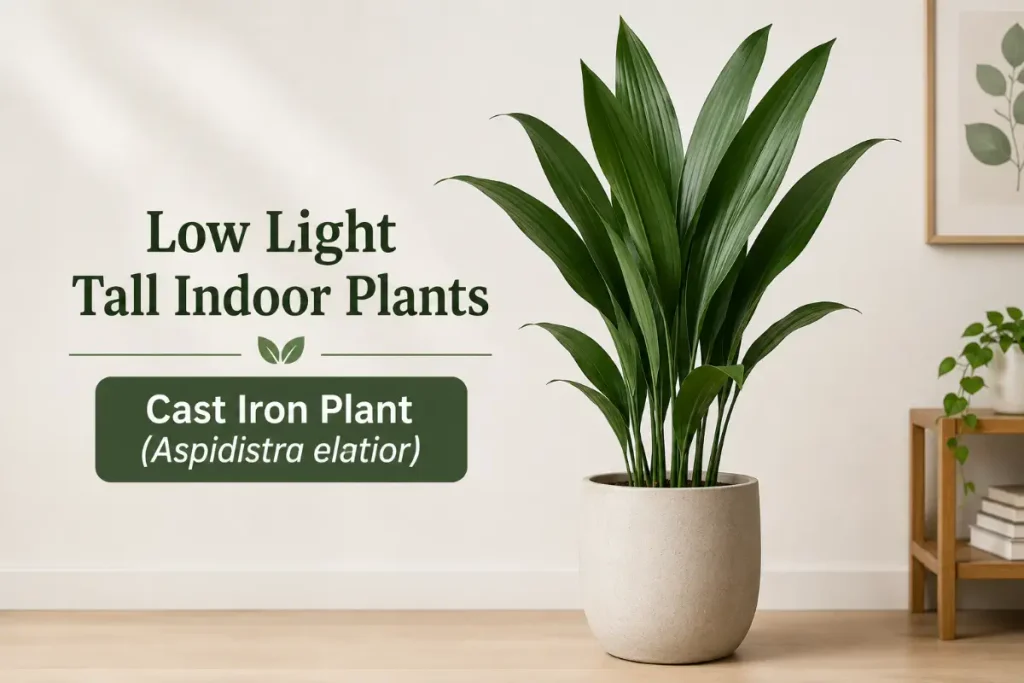
1. Cast Iron Plant (Aspidistra elatior)
Cast iron plant earns its name through its remarkable tolerance of truly poor conditions including low light, temperature extremes, irregular watering, and poor air quality. It is the plant for positions where every other houseplant has failed.
In terms of height, cast iron plant reaches three to four feet over several years with its characteristic dark green, strap-like leaves emerging directly from the soil. It is a slow grower but a supremely reliable one in conditions that defeat most alternatives.
In low light: Cast iron plant is as close to a true low-light plant as exists in common indoor cultivation. It maintains healthy leaf production in conditions that represent genuine low light. New leaves emerge slowly but reliably and the plant does not decline from insufficient light the way faster-growing plants do.
Care: Water when the top two inches of soil are dry. It tolerates irregular watering without the dramatic distress signals of less patient plants. Minimal fertilizing. Virtually pest-free. The most forgiving large-leaved houseplant available.
2. Mass Cane / Corn Plant (Dracaena fragrans ‘Massangeana’)
Mass cane is one of the most commonly seen large indoor plants in commercial spaces for a specific reason: it genuinely tolerates the fluorescent-lit, no-natural-light conditions of offices and hotel lobbies that would kill most other plants within months.
In good conditions mass cane reaches six to ten feet over many years. Its tree-like form with a cluster of broad, striped leaves at the top of a woody cane creates a natural, tropical presence in dim spaces that few other plants can match at the same height.
In low light: Mass cane tolerates medium to low indirect light without significant decline. Growth slows considerably but the plant maintains its appearance and health for years in conditions below what most other large indoor plants require. The yellow central stripe in the leaves may become less vivid in very low light as the plant produces more chlorophyll but the plant does not decline as rapidly as light-demanding alternatives.
Care: Water when the top two inches of soil dry out. Use filtered or distilled water to prevent the fluoride accumulation that causes the brown tips discussed in detail in the Specific Plant Care cluster post on mass cane. For complete care guidance, mass cane plant indoor covers every consideration including the water quality issue that causes the brown tips most mass cane owners experience.
3. ZZ Plant (Zamioculcas zamiifolia)
ZZ plant is one of the most genuinely low-light tolerant plants commonly available and one of the few that can be described honestly as a true low-light performer rather than a medium-light plant marketed as low-light.
Its glossy, dark green pinnate leaves on arching stems reach three to four feet in typical indoor conditions. The waxy leaf surface gives the plant a polished, always-clean appearance that suits contemporary interior styles particularly well.
What makes it genuinely low-light capable: ZZ plant grows from rhizomes that store significant water and nutrients. In low light conditions where most plants would starve from insufficient photosynthesis, ZZ plant draws on its rhizome reserves to maintain itself for extended periods. Growth is very slow in low light but the plant survives where others decline.
Care: Water only when the top two to three inches of soil are completely dry. ZZ plant is extremely susceptible to root rot from overwatering and the most common cause of ZZ plant death is treating it like a moisture-loving tropical plant rather than the drought-tolerant rhizome plant it actually is. Minimal fertilizing. Virtually pest-free. One of the lowest-maintenance large indoor plants available.
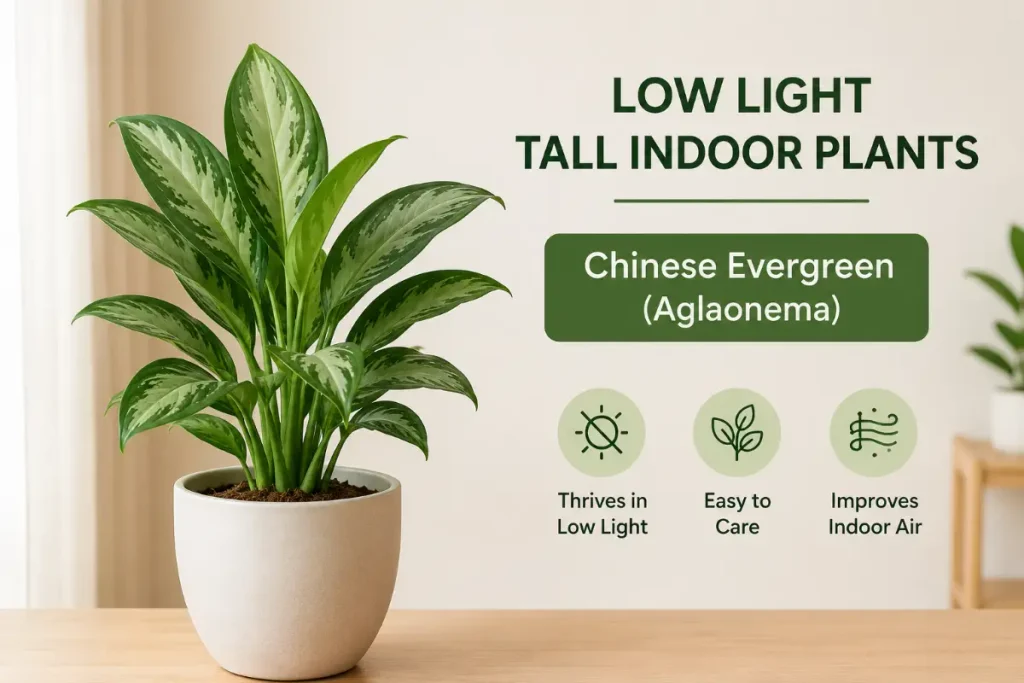
4. Chinese Evergreen (Aglaonema)
Chinese evergreen varieties include dozens of cultivars in green, silver, red, pink, and multicolored combinations that provide more visual variety than most other low-light plant groups. The solid green and silver varieties are the most tolerant of truly low light. The red and pink varieties need slightly more light to maintain their color.
Chinese evergreen reaches two to four feet over several years in typical indoor conditions, creating a bushy, full presence that fills dim corners effectively.
In low light: The classic green and silver Chinese evergreen varieties are among the few truly attractive plants in genuine low-light conditions. They maintain good leaf color and continue growing slowly even in ambient-light-only conditions that would stop most other plants.
Care: Water when the top inch of soil feels dry. Maintain temperatures above 60 degrees since Chinese evergreen is cold-sensitive. Avoid cold drafts from windows and doors. Minimal fertilizing through spring and summer.
5. Parlor Palm (Chamaedorea elegans)
The parlor palm is the most shade-tolerant palm commonly available for indoor growing and one of the few palm species that genuinely thrives in medium indirect light rather than needing the direct sun that most palm species require.
Reaching four to six feet over many years of indoor growth, parlor palm produces fine-textured, arching fronds that create the lush tropical presence most people associate with palms. It is significantly more cold-tolerant and shade-tolerant than areca palm, making it the practical choice for positions where areca palm would struggle.
In low light: Parlor palm maintains acceptable growth in medium to low indirect light that would cause most other palm species to decline. Its historical use as a Victorian parlor plant, before artificial lighting and before awareness of plant light requirements, demonstrates its genuine tolerance for interior dim conditions.
Care: Water when the top inch dries out. Maintain humidity above 40% to prevent the spider mites that specifically target parlor palm in dry conditions. Minimal fertilizing every four to six weeks through spring and summer. For comparison with areca palm care in similar positions, areca palm indoor plant care covers the care differences between these two palm species in detail.
6. Snake Plant (Sansevieria / Dracaena trifasciata)
Snake plant is consistently ranked among the most forgiving houseplants available and its combination of low-light tolerance, drought tolerance, and vertical growth makes it one of the most practical choices for tall accent plants in dim positions.
Snake plant varieties range from compact two-foot forms to impressive six-foot tall varieties. The architectural, upright form of the most common varieties creates a striking visual presence without requiring the spread of space that wider, arching plants need.
In low light: Snake plant survives in genuinely low light for extended periods, though growth slows to nearly zero in very dim conditions. In medium indirect light it maintains slow but consistent growth. In bright indirect light it grows noticeably faster and produces new leaves more frequently.
Care: Water only when the top two to three inches of soil are completely dry. Snake plant is one of the most overwatered houseplants because its tolerance for neglect makes owners forget it needs very little water. Root rot from overwatering is the primary cause of snake plant death. Minimal fertilizing. Hardy against pests. Virtually indestructible within its temperature range above 50 degrees.
7. Pothos Trained Upward on a Moss Pole
Pothos (Epipremnum aureum) is usually grown as a trailing plant but trained upward on a moss pole or trellis it becomes one of the most impressive tall indoor plants in low-light conditions. Mature pothos leaves on climbing stems are significantly larger than leaves on trailing stems, which produces the dramatic visual impact that makes staked pothos so visually compelling.
A well-established pothos on a six-foot moss pole in a medium-light position reaches an impressive height while maintaining the low-light adaptability that makes pothos one of the most widely recommended houseplants for challenging positions.
In low light: Pothos is one of the most light-flexible houseplants available. It maintains growth in conditions that would stop most other plants though color variegation in golden and marble queen varieties fades in very low light.
Care: Water when the top inch of soil dries out. Minimal fertilizing. Keep the moss pole moist to encourage aerial root attachment. Wipe leaves periodically since the large leaf surfaces accumulate dust in indoor conditions. For guidance on the peace lily that pairs well with upward-trained pothos in mixed low-light displays, peace lily indoor plant benefits covers the complementary low-light performer that combines beautifully with pothos in dim positions.
8. Philodendron (Upright Varieties)
Upright philodendron varieties including Philodendron erubescens (blushing philodendron), Philodendron bipinnatifidum (split-leaf philodendron), and Philodendron selloum grow to impressive heights and widths in typical indoor conditions while tolerating the medium to low indirect light that exceeds most other large plant requirements.
These upright species develop tree-like forms over years of indoor growth, with deeply lobed or large heart-shaped leaves on strong stems that create genuinely dramatic presence in dim interior positions.
Care: Water when the top inch of soil feels dry. Consistent moisture without waterlogging. Fertilize every two weeks through spring and summer. Wipe large leaf surfaces monthly to remove dust accumulation. For the complete guide to arrowhead plant care which covers the Syngonium relative that suits the same low-light positions as philodendron, arrowhead plant care indoors covers the care approach for one of the best compact low-light options in the same plant family.
9. Peace Lily (Spathiphyllum)
Peace lily rounds out this list as the only flowering plant that genuinely thrives in low-light conditions and can be considered a statement plant due to its bold, dark green leaves and distinctive white spathe flowers.
Large peace lily varieties reach three to four feet in height with an equal spread, creating a substantial, lush presence in dim positions. The white flowers that appear reliably without requiring bright light are unique among commonly grown houseplants and make peace lily the best choice when a low-light position needs both foliage presence and regular bloom.
Care: Water when the top inch of soil dries out. Maintain humidity above 40%. Fertilize every two weeks through spring and summer with a balanced fertilizer. For the complete guide to peace lily benefits and care, peace lily indoor plant benefits covers the documented air purification, blooming, and care considerations that make this plant one of the most valuable choices for dim indoor positions.
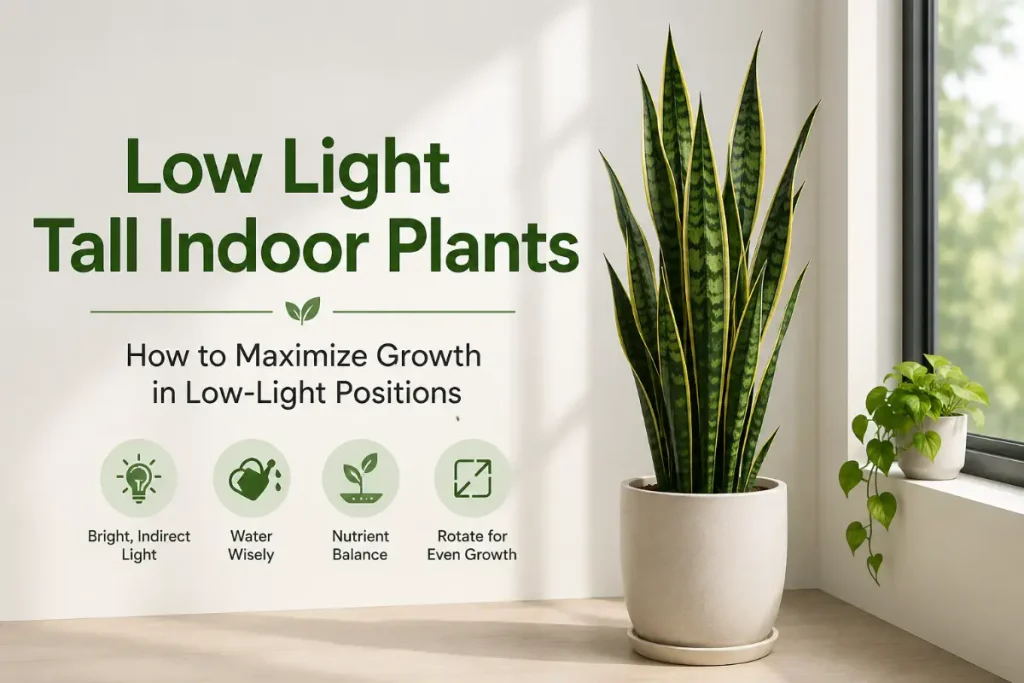
How to Maximize Growth in Low-Light Positions
Even the most shade-tolerant plants perform better with some light optimization. Several practices make a meaningful difference in how well plants in genuinely dim positions perform.
Clean windows and walls: Dirty windows reduce light transmission by 15 to 25%. In adjacent rooms, keeping windows clean maximizes the ambient light that reaches interior low-light positions through doorways and open spaces.
White and light-colored walls: Walls painted in white or very light colors reflect ambient light into spaces rather than absorbing it. A plant in a white-walled room with limited natural light receives significantly more reflected light than the same plant in a dark-walled room.
Supplemental artificial lighting: A standard LED grow light positioned above a low-light plant and running for eight to ten hours daily provides enough supplemental light to significantly improve plant performance in positions without adequate natural light. This is the most reliable way to maintain genuinely healthy plant growth in truly dark interior positions.
Rotate plants regularly: Plants in low-light positions lean toward their primary light source over time. Rotating one-quarter turn every two to four weeks ensures even light distribution across all sides of the plant and maintains a more symmetrical, upright form.
Conclusion
Low light tall indoor plants solve the visual challenge of dim interior spaces with living, growing presence rather than artificial alternatives. Cast iron plant for truly challenging positions. Mass cane and snake plant for the architectural vertical presence that suits contemporary interiors. ZZ plant for the most genuinely low-light tolerant option with the most contemporary aesthetic. Parlor palm for tropical softness without sun requirements. Chinese evergreen for variety across colors. Philodendron and pothos on poles for dramatic foliage at height. Peace lily for the only low-light flowering option that delivers both foliage and bloom reliably.
The common mistake with low-light plants is treating tolerance as preference. All nine plants in this guide grow better with more light than the minimum they can survive on. If any additional light can reach the position through window placement, wall color, supplemental lighting, or plant rotation, the plants benefit visibly. But in truly dim spaces where better options are not available, these nine deliver the most impressive performance of any commonly available large indoor plants.
Frequently Asked Questions
What is the tallest indoor plant for low light?
Mass cane (Dracaena fragrans ‘Massangeana’) and snake plant (Dracaena trifasciata) reach the greatest heights of commonly available low-light houseplants, with mass cane reaching six to ten feet and large snake plant varieties reaching five to six feet over many years of indoor growth. Philodendron selloum also develops impressive height and width in medium indirect light. Cast iron plant stays lower at three to four feet but is the most tolerant of genuinely dark positions.
Can any tall indoor plant survive in a room with no windows?
No plant survives permanently without any light. However, plants in rooms lit only by artificial overhead lighting can survive if the lighting runs for eight or more hours daily and provides adequate intensity. ZZ plant, cast iron plant, and snake plant are the most likely to survive in artificial-light-only conditions. For rooms with no windows and no dedicated grow lighting, supplemental LED grow lights running eight to twelve hours daily are the practical solution for maintaining plant health.
How do I know if my low-light plant is getting enough light?
Signs of adequate light include slow but consistent new leaf production, leaves that maintain their characteristic color and size, and stems that remain upright rather than leaning dramatically toward any light source. Signs of insufficient light include very slow or no new growth over months, leaves becoming pale or smaller than existing ones, and obvious etiolation where stems stretch toward the nearest light source with increasing space between leaf nodes.
Do low-light plants need fertilizing?
Yes, but less frequently than plants in brighter light. Low-light plants grow more slowly and use nutrients at a slower rate than the same plants in brighter conditions. Monthly fertilizing at half the standard rate through spring and summer is appropriate for most low-light plants. Fertilizing more frequently than growth requires accumulates unused salts in the limited pot volume which can damage roots over time.
Why is my low-light plant dropping leaves despite adequate care?
Leaf drop in low-light plants most commonly results from overwatering since low-light plants use less water than the same plants in bright light and the same watering frequency becomes overwatering when light levels drop. Check soil moisture at two to three inches before any watering and extend intervals significantly from what you used when the plant was in a brighter position. Cold drafts from windows and air conditioning vents are the second most common cause of sudden leaf drop in otherwise healthy low-light plants.
Can I move a low-light plant to a brighter position to help it recover?
Yes and this is often the most effective intervention for a struggling low-light plant. Moving to a brighter position, even temporarily for several months, allows the plant to build energy reserves through increased photosynthesis. The improved growth during the brighter period strengthens the plant for return to a lower-light position. Transition gradually rather than moving directly from very low to bright light to avoid the bleaching that occurs when shade-adapted leaves are suddenly exposed to significantly more light.
Pingback: Indoor Plants for Dark Spaces: 11 Easy Picks for Dim Rooms (2026) - Plant Quill