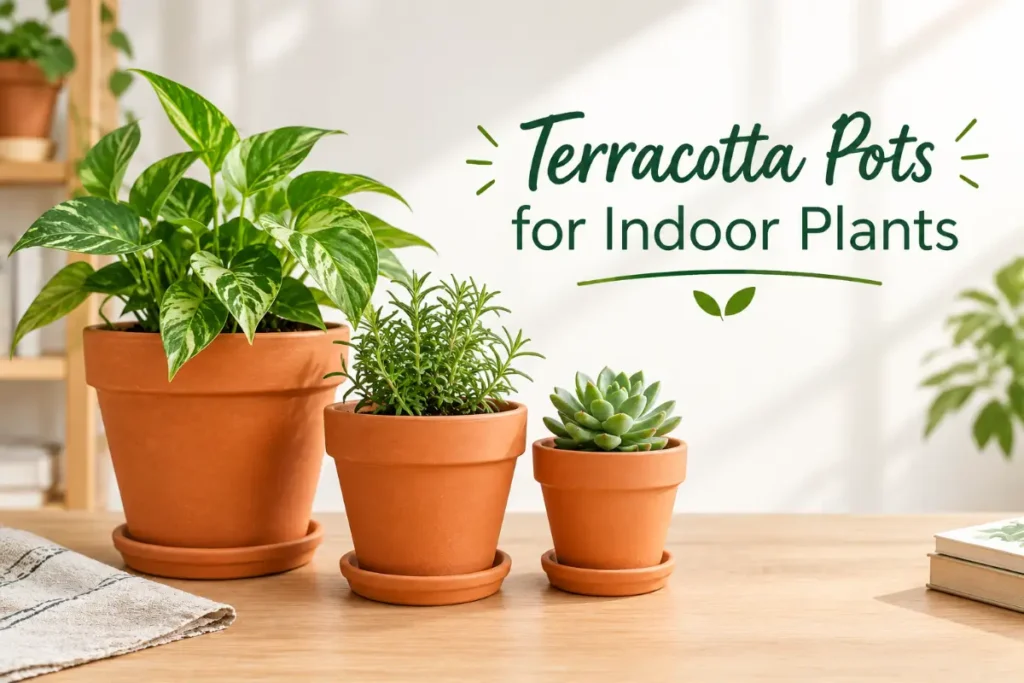
Terracotta pots for indoor plants have been the container of choice for growers for thousands of years — and for good reason. The unglazed fired clay that defines terracotta is porous, breathable, and naturally wicking, creating root conditions that closely mirror the well-aerated, free-draining soils that the majority of garden and indoor plants evolved in. In an age of cheap plastic alternatives, terracotta pots for indoor plants remain the technically superior choice for a wide range of species, particularly herbs, Mediterranean plants, succulents, cacti, and any plant susceptible to root rot.
Beyond their functional advantages, terracotta pots bring warmth and visual character to indoor spaces that plastic and synthetic materials simply do not replicate. The rich orange-brown tones of natural clay, the subtle variation in texture and colour across hand-thrown or mould-cast pots, and the way the surface ages to develop a patina of mineral deposits, moss, and use — these aesthetic qualities make terracotta a permanent fixture in thoughtfully designed indoor growing spaces.
Why Terracotta Pots Work Better for Many Indoor Plants
The fundamental advantage of terracotta pots for indoor plants is porosity. Unglazed terracotta is a permeable material through which water vapour and air pass continuously. This has two important effects on the root environment inside the pot.
First, moisture evaporates through the pot walls as well as from the compost surface and through drainage holes. This means the root zone of a plant in a terracotta pot dries more rapidly between waterings than the same plant in a plastic pot with identical compost and watering regime. For plants that prefer to dry out between waterings — lavender, rosemary, thyme, sage, succulents, cacti, and many Mediterranean herbs — this faster drying is a significant benefit that reduces the risk of root rot dramatically.
Second, the continuous gas exchange through porous terracotta walls keeps the root zone well oxygenated. Plant roots need oxygen as much as water, and the aerated root environment of a terracotta pot promotes vigorous root development and prevents the anaerobic conditions that cause root rot.
The practical difference is meaningful. A succulent in a terracotta pot and one in a plastic pot, watered identically on the same schedule, experience quite different root moisture levels — the terracotta plant may experience near-ideal moisture cycling while the plastic pot plant sits in excessively wet compost for extended periods. This explains why so many growers who switch from plastic to terracotta find their drought-tolerant and moisture-sensitive plants improve noticeably.
Which Indoor Plants Benefit Most from Terracotta
Mediterranean herbs — rosemary, thyme, lavender, oregano, and sage — are among the plants that benefit most from terracotta pots for indoor plants. These species evolved on thin, alkaline, fast-draining soils in intense heat and are adapted to frequent drying cycles. The breathable walls of terracotta support exactly this moisture pattern. Lavender in particular, as discussed in the can a lavender plant grow indoors post, benefits significantly from terracotta’s faster-drying properties.
Succulents and cacti are obvious candidates. These plants store water in their leaves, stems, or roots and are adapted to minimal, infrequent watering. Terracotta’s porosity ensures the growing medium dries rapidly and completely between waterings, matching the desert and semi-arid conditions these plants evolved in.
Citrus and other indoor fruit trees — particularly lemon, lime, and orange trees — perform well in terracotta pots. Container citrus is susceptible to root rot when compost stays wet, and terracotta’s breathability reduces this risk. The thermal mass of clay also buffers root zone temperature, smoothing out the temperature fluctuations that stress citrus roots.
Orchids in specialist bark-based growing medium benefit from the aeration and rapid drying that terracotta provides. Vanilla and other epiphytic growing projects similarly do well in terracotta when the growing medium is an orchid bark mix.
Annual food crops — tomatoes, peppers, chillies, and aubergines grown under grow lights — also benefit from terracotta, particularly if there is any tendency to overwater. The naturally faster drying prevents the root zone from becoming waterlogged between watering cycles.
Plants That Are Less Suited to Terracotta
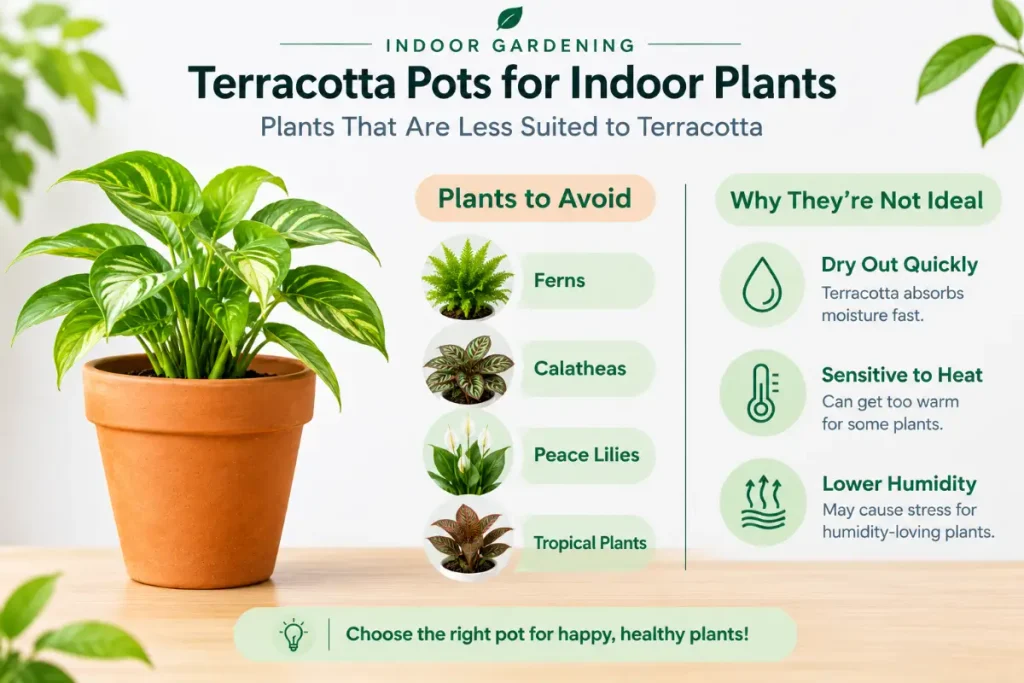
Terracotta pots for indoor plants are not universally ideal — some plants perform better in moisture-retentive plastic containers.
Moisture-loving tropical plants including most ferns, calatheas, peace lilies, and other rainforest-floor species evolved in conditions of consistent moisture. The faster drying of terracotta causes these plants to dry out too quickly, requiring more frequent watering that can become impractical. Plastic pots that retain moisture longer suit them better.
Seed trays and propagation containers: For germinating seeds and rooting cuttings, maintaining consistent surface moisture is critical. Terracotta dries the surface too rapidly for reliable germination of fine seeds. Use plastic trays or containers with a propagator lid for seed starting and rooting.
Plants in very small terracotta pots in hot, dry indoor conditions can dry out too rapidly even for drought-tolerant species — a tiny terracotta pot in a south-facing window during a heatwave may need daily watering. Scale pot size appropriately to the plant and conditions.
Sizes, Shapes, and Styles of Terracotta Pots for Indoor Plants
Terracotta pots for indoor plants are available in an enormous range of sizes, shapes, and styles — from the standard round tapered pot in sizes from 5 centimetres to 40 centimetres in diameter, through wide shallow pans suited to succulents and alpine plants, tall long toms suited to deep-rooted plants and bulbs, and decorative hand-painted or aged pots for display purposes.
Standard round pots in sizes from 7 to 20 centimetres cover the majority of indoor herb, vegetable, and houseplant growing needs. The tapered shape allows easy removal of the root ball at repotting time without root damage.
Shallow terracotta pans (sometimes called alpine pans or succulent dishes) are wide and shallow with a low profile — ideal for planting shallow-rooted succulents, cacti, and small alpine plants that would look lost in a deep standard pot.
Long tom pots are narrow and tall — the proportions of a standard pot extended downward. They suit deep-rooted plants like lavender, rosemary, and carrots that need root depth more than surface area.
Terracotta hanging baskets are available in smaller sizes and work well for trailing herbs, strawberries, and small ornamental plants in bright indoor positions. The porosity of hanging terracotta baskets does mean more frequent watering is needed than plastic equivalents.
Aged and antique-style terracotta — pots that are hand-thrown, distressed, or deliberately aged in appearance — brings a craft aesthetic to indoor growing spaces. These are functionally identical to standard machine-made terracotta but add visual character that mass-produced plastic pots cannot provide.
How to Prepare New Terracotta Pots
New terracotta pots should be soaked in water before first use. New pots are very dry and absorbent — if you plant straight into a dry terracotta pot, the clay draws moisture from the compost and roots immediately after watering, leaving the plant in unexpectedly dry conditions before the compost has had time to settle.
Soak new pots fully submerged in water for at least 30 minutes — ideally several hours or overnight — before planting. The clay absorbs water and becomes saturated, after which it will wick moisture more slowly and predictably. This one-time preparation makes a measurable difference to the plant’s establishment in its new container.
After soaking, allow the pot to drain briefly before adding compost and planting. The exterior of a well-soaked new terracotta pot feels damp and cool — this is normal and indicates the clay is properly prepared.
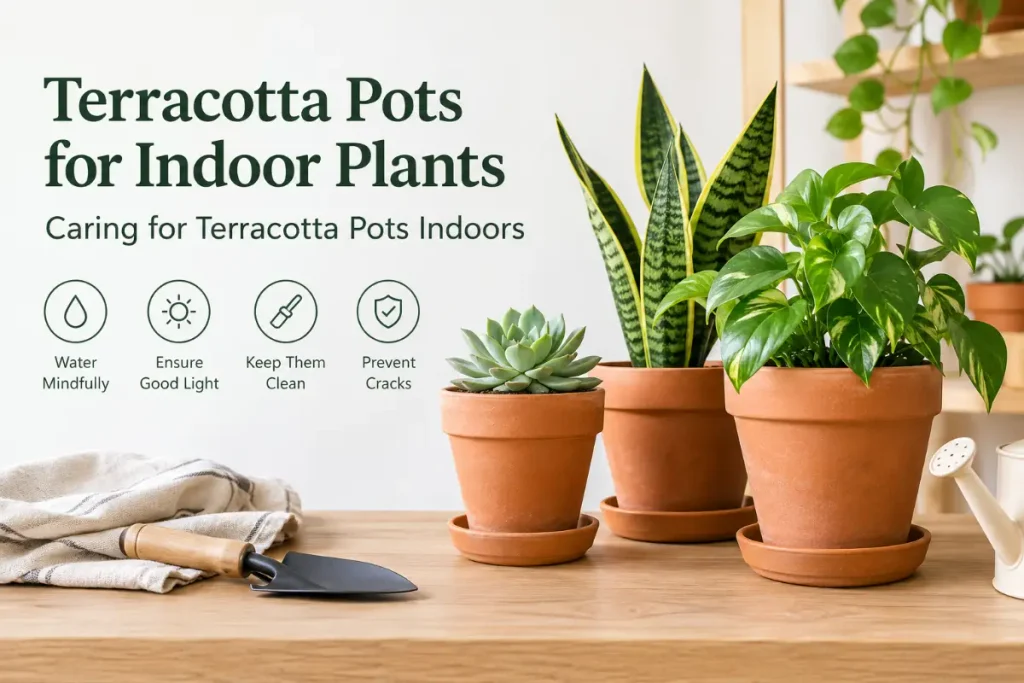
Caring for Terracotta Pots Indoors
White mineral deposits appear on the exterior of terracotta pots in hard water areas — a white or grey crusty deposit that forms as water evaporates through the pot walls and leaves dissolved minerals on the surface. This is entirely harmless but can be unsightly. Remove by scrubbing with a stiff brush and a dilute solution of white vinegar, which dissolves the calcium and magnesium deposits effectively. Rinse thoroughly after treating.
Moss and algae growth on the exterior of terracotta is a natural and attractive feature of aged pots in many growers’ views — the patina of green and grey growth adds character and signals a healthy, active root environment inside. If preferred clean, scrub with a stiff brush and water periodically.
Cracking can occur if terracotta pots are exposed to frost — water in the pores of the clay expands when frozen and can crack or spall the pot. Indoor pots are not at frost risk, but pots moved outdoors in summer should be brought back inside before the first frost. If storing terracotta pots outside, empty them and store upside down or in a frost-free space.
Cleaning between plants: When reusing terracotta pots for a new plant, wash thoroughly with hot water and a scrubbing brush to remove old compost and any mineral deposits. Disinfect briefly in a dilute bleach solution (one part bleach to ten parts water) if the previous plant suffered from disease or pests, then rinse thoroughly and soak before replanting.
Pairing Terracotta with the Right Compost
The benefits of terracotta pots for indoor plants are most fully realised when the compost inside also drains freely. Placing a drought-tolerant plant in dense moisture-retentive multipurpose compost in a terracotta pot still creates root rot risk — the porosity of the pot helps but cannot fully compensate for a poorly draining growing medium.
Match the compost to the plant’s needs and to the faster-drying environment of terracotta. For Mediterranean herbs and succulents, use a cactus and succulent compost or blend multipurpose compost with 30 to 40 percent perlite or coarse grit. Use specialist citrus compost for citrus and other fruit trees. For orchids and vanilla, use orchid bark as the primary medium. The compost and the pot work together — both should be selected with the plant’s natural habitat in mind.
For watering terracotta pots consistently — particularly in larger indoor food growing setups with multiple terracotta containers — a drip watering approach helps maintain the even moisture cycles that terracotta supports naturally. The drip irrigation for indoor plants guide covers how to set this up effectively for mixed container collections.
Terracotta vs Plastic: A Direct Comparison
The perennial debate among indoor growers about terracotta pots versus plastic containers rarely has a single correct answer — both have genuine advantages depending on the plant and context.
Weight: Terracotta is significantly heavier than plastic, which matters for large pots on shelves, windowsills with weight limits, or growing setups that need to be moved regularly. A large 30-centimetre terracotta pot is heavy even before soil and plant are added. Plastic wins on portability.
Cost: Terracotta is generally more expensive than plastic, though basic terracotta pots are widely available at modest prices. Plastic propagation trays and small pots are cheaper than terracotta equivalents. For large numbers of pots in a growing operation, plastic’s cost advantage matters.
Root health: For drought-tolerant species, terracotta’s breathability creates a superior root environment. For moisture-loving species, plastic’s moisture retention is the better match. Neither material is universally superior — the plant’s natural preference decides.
Aesthetics: Terracotta wins definitively for most indoor display contexts. The warm, natural, handcrafted appearance of clay pots in a home environment is more attractive to most eyes than plastic equivalents.
Durability: Quality terracotta pots are extremely durable if protected from frost — they can last decades. Plastic degrades with UV exposure outdoors (less relevant indoors) and becomes brittle over time. Terracotta wins on long-term durability in indoor use.
Using Terracotta Pots in Indoor Food Growing Setups
Terracotta pots for indoor plants are particularly well suited to food growing setups where the quality of the root environment directly affects harvest quality and yield. The aerated, naturally cycling root conditions of terracotta support the vigorous root development that productive food crops require.
Herb growing: A row of terracotta pots along a sunny kitchen windowsill — each planted with a single herb species — is one of the most practical and attractive indoor food growing arrangements possible. Rosemary, thyme, sage, oregano, and basil each suit individual 10 to 12 centimetre terracotta pots. The herbs thrive in the well-aerated conditions, the pots look beautiful together in a natural terracotta gradient, and the collection is both productive and decorative.
Strawberries: Container strawberries respond well to terracotta’s faster-drying conditions, particularly between fruiting cycles when the plants need slightly drier conditions at the crown to prevent rot. A large 20 to 25 centimetre terracotta pot or a terracotta strawberry tower planted with several plants provides productive strawberry growing that is both functional and ornamental. The can strawberry plants grow indoors post covers strawberry growing conditions in detail, and terracotta is the recommended container material for the reasons described here.
Chillies and peppers: Compact chilli and pepper varieties in 10 to 15 centimetre terracotta pots under a grow light produce excellent results. The well-oxygenated root environment of terracotta supports the extensive root system these plants develop when growing productively, and the faster drying reduces the waterlogging risk that is a common issue in plastic pots with heavy watering regimes during peak fruiting.
Salad greens and microgreens: Wide, shallow terracotta pans are ideal for growing cut-and-come-again salad leaves, herbs like chives and parsley, and microgreen crops. The broad surface area relative to depth suits shallow-rooted leafy crops perfectly, and the terracotta provides an attractive presentation for a kitchen windowsill herb and salad garden.
The Aesthetic Case for Terracotta Indoors
Beyond their functional advantages, terracotta pots for indoor plants contribute to the visual character of a growing space in ways that other container materials struggle to match. There is something fundamentally pleasing about the combination of living green plants against warm orange-brown clay that resonates deeply — perhaps because it echoes the palette of natural landscapes, of earth and vegetation, in a way that plastic and synthetic containers do not.
The way terracotta ages indoors adds rather than detracts from its appeal. The white mineral bloom on the exterior of regularly watered pots in hard-water areas has its own austere beauty. The slight darkening of the clay around watermarks, the gradual softening of the surface texture as the clay weathers — these are signs of a pot in active use, of a plant living and growing inside it, and they give terracotta an honest, lived-in quality that mass-produced plastic containers lack entirely.
Grouping terracotta pots of different sizes together creates natural visual compositions — the scale relationships between a large 25-centimetre pot and a cluster of smaller 7 and 10-centimetre pots around it, all in the same warm clay tone, produce a cohesive, beautiful growing display. Adding a saucer under each pot in matching terracotta completes the look while also protecting surfaces from moisture.
For growers who care about both the quality of what they grow and the aesthetic quality of their growing space, terracotta pots represent the best of both — functional performance and natural beauty in the same simple, ancient material.
Buying Quality Terracotta Pots
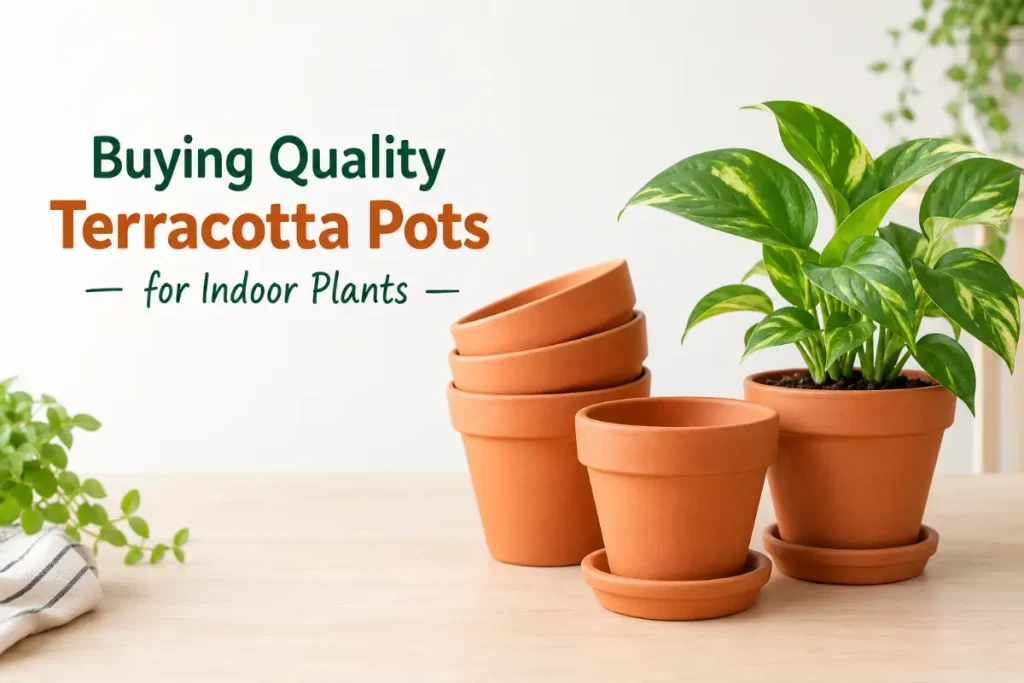
Not all terracotta pots are created equal. Mass-produced terracotta from low-cost sources can be poorly fired, unevenly shaped, or made from clay of inconsistent porosity. Quality terracotta pots are made from well-processed clay, fired at consistent high temperatures, and have even wall thickness that provides reliable porosity across the entire pot surface.
When purchasing terracotta pots, look for even colour (very pale or very uneven terracotta may indicate inconsistent firing), consistent wall thickness when viewed from the drainage hole, and smooth rims that will not crack readily with normal handling. Pots from reputable pottery suppliers and garden centres with established sourcing are generally reliable. Cheap terracotta sold as novelty items or in non-specialist retail contexts is often lower quality.
Handmade and artisan terracotta pots — from independent potters and specialist horticultural ceramicists — are more expensive but offer superior quality, interesting shapes, and individual character that mass-produced equivalents do not provide. For a collection of display pots for a living room or kitchen, the investment in a few well-made handmade terracotta pieces is worthwhile.
Conclusion
Terracotta pots for indoor plants are the technically superior choice for any species that benefits from aerated, fast-drying root conditions — Mediterranean herbs, succulents, cacti, citrus, and many indoor food crops. Their porosity and breathability create root environments that closely replicate natural growing conditions, reducing root rot risk and promoting vigorous root development. Aesthetically, their warm clay tones and the character they develop with age make terracotta pots the natural complement to a thoughtful indoor growing space. For broader guidance on creating productive indoor growing environments, the Royal Horticultural Society’s advice on containers and composts covers pot selection, compost matching, and drainage principles comprehensively. Paired with appropriate watering practices — including the self-watering approaches in the self watering system for indoor plants guide — and matched with the right compost, terracotta pots are a long-term investment in the health and productivity of your indoor plants.
FAQs
Are terracotta pots good for indoor plants?
Yes — terracotta pots are excellent for many indoor plants, particularly those that prefer free-draining conditions. The porous, breathable clay allows moisture to evaporate through the pot walls, drying the root zone faster between waterings and keeping roots well oxygenated. This benefits Mediterranean herbs, succulents, cacti, citrus, and indoor food crops significantly.
Do terracotta pots dry out too fast for indoor plants?
For drought-tolerant plants, the faster drying of terracotta is a benefit. For moisture-loving tropical plants like ferns, calatheas, and peace lilies, terracotta may dry out too quickly and require more frequent watering. Match the pot material to the plant’s moisture preference — terracotta suits dry-side plants, plastic suits moisture-loving ones.
Should I soak new terracotta pots before planting?
Yes — soak new terracotta pots in water for at least 30 minutes before first use. Dry, new terracotta is very absorbent and pulls moisture from compost immediately after planting. Pre-soaking saturates the clay and creates more predictable moisture conditions for the plant from the start.
How do I remove white deposits from terracotta pots?
White or grey crusty deposits on terracotta pots are mineral (calcium and magnesium) deposits left by hard water evaporating through the porous clay. Remove by scrubbing with a stiff brush and dilute white vinegar solution, which dissolves the deposits effectively. Rinse thoroughly after treatment.
Can I use terracotta pots for tomatoes and peppers indoors?
Yes — tomatoes, peppers, and other fruiting crops in terracotta pots benefit from the well-aerated root environment. Use a pot large enough for the plant’s root system (at least 10 to 15 litres for tomatoes), pair with a nutrient-rich free-draining compost, and water more frequently than you would for a plastic pot of the same size, as terracotta dries faster.
Do terracotta pots need drainage holes?
All plant containers need drainage holes, including terracotta. The porosity of terracotta helps moderate moisture but does not eliminate the need for drainage — without holes, water accumulates at the bottom of the pot and causes root rot regardless of pot material. Standard terracotta pots come with a drainage hole; ensure it is clear and unblocked before planting.
How do terracotta pots affect watering frequency?
Plants in terracotta pots typically need watering more frequently than the same plant in a plastic pot, because moisture evaporates through the pot walls as well as from the surface and drainage holes. In warm, dry indoor conditions, the difference can be significant — check the compost moisture of terracotta pots more regularly than plastic equivalents, particularly for small pots in sunny positions.
Are terracotta pots better than plastic for succulents?
Yes — terracotta is the preferred pot material for succulents and cacti. The rapid moisture loss through the porous walls matches these plants’ preference for very dry root conditions between waterings. A succulent in terracotta is significantly less prone to overwatering and root rot than the same plant in a plastic pot.
How long do terracotta pots last indoors?
Quality terracotta pots last indefinitely indoors — they are essentially ceramics and do not degrade with normal indoor use. They can crack if dropped or subjected to sharp impact, and indoor pots are protected from the frost damage that reduces outdoor terracotta lifespan. A well-made terracotta pot kept indoors can last generations.
Can I use terracotta pots with self-watering systems?
Yes — terracotta pots work well with drip irrigation systems and individual drip emitters. The porosity of the pot does mean the compost dries faster than plastic, so drip systems serving terracotta containers may need slightly higher flow rates or more frequent watering cycles to maintain the same moisture level as plastic pot equivalents. Monitor the compost moisture closely when first setting up a drip system with terracotta pots.