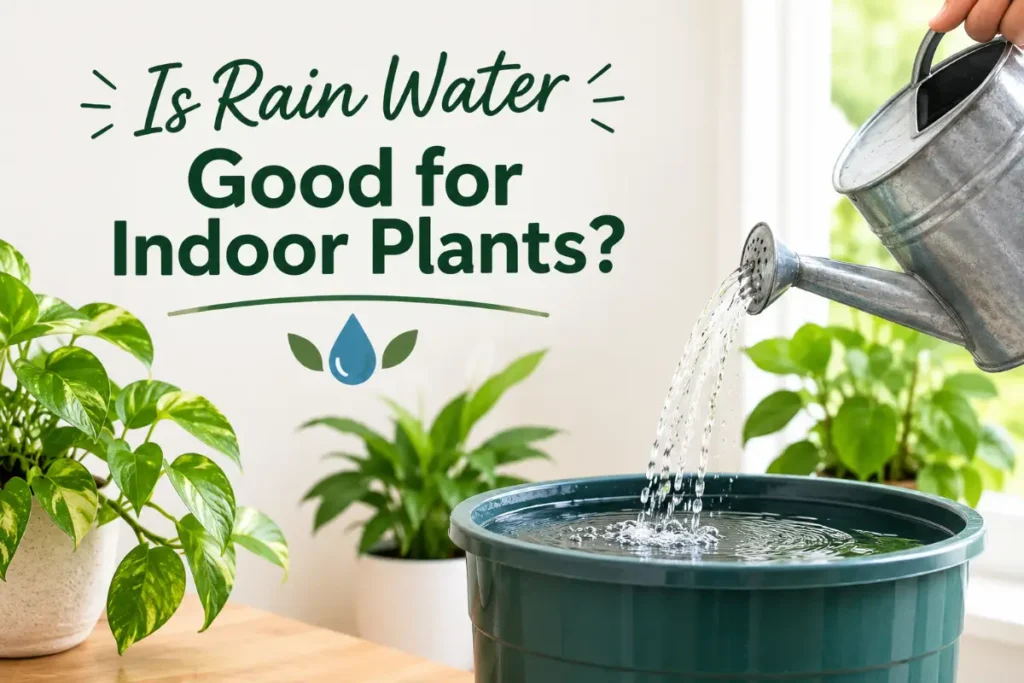
If you have ever wondered whether the water you use matters as much as how often you water, the answer is: for some plants, it matters considerably. Is rain water good for indoor plants? The short answer is yes — in most cases, rainwater is better than tap water for indoor plants, and for certain sensitive species it makes a meaningful, visible difference to their health and appearance. But the full picture is more nuanced than a simple yes or no.
This guide covers the science of why rainwater is beneficial, which indoor plants benefit most and which are relatively indifferent, how to collect and store rainwater safely, and when tap water is perfectly fine — so you can make informed decisions about your specific plants and situation.
What Makes Rainwater Different from Tap Water?
To understand whether is rain water good for indoor plants, it helps to know exactly what distinguishes rainwater from the water coming out of your tap.
pH: Rainwater is naturally slightly acidic — typically around pH 5.5–6.5, because atmospheric CO₂ dissolves into water droplets as they fall, forming weak carbonic acid. Most indoor plants prefer a slightly acidic root environment (pH 5.5–6.5), which happens to match rainwater’s natural pH. Tap water in the UK is typically pH 7.0–8.0 (neutral to slightly alkaline) due to treatment processes and the limestone geology of many catchment areas.
Dissolved minerals (hardness): Tap water in hard-water areas contains significant calcium and magnesium carbonates — the minerals that build up as limescale in kettles. While calcium and magnesium are plant nutrients, the concentrations in hard tap water can, over time, raise the pH of compost as the carbonates accumulate, and leave white mineral deposits on leaves and pot surfaces.
Chlorine and chloramine: UK water companies add chlorine or chloramine to tap water as disinfectants. Chlorine is volatile and dissipates if water is left in an open container overnight. Chloramine (used in some areas) is more stable and does not dissipate. Some sensitive species are genuinely affected by these additives at the concentrations typically found in tap water.
Fluoride: Added to some UK water supplies at low concentrations for dental health purposes, fluoride is also naturally present in some water sources. Certain houseplants are genuinely sensitive to fluoride — it accumulates in leaf tissue over time and causes characteristic brown tips and margins on affected species.
Nitrates and trace minerals: Rainwater picks up small amounts of nitrogen compounds and trace minerals from the atmosphere, providing a very dilute natural fertiliser — negligible in nutritional terms but another reason rainwater has a slight edge over pure distilled water.
So Is Rain Water Good for Indoor Plants? The Science
Rainwater’s combination of slightly acidic pH, absence of chlorine and fluoride, and low mineral content makes it the closest analogue to what most tropical and temperate houseplants would receive in their natural environments. Tropical plants evolved in environments where rainwater reaches roots — soft, slightly acidic, free of the alkalising minerals that characterise hard tap water.
The practical effects of using rainwater consistently versus hard alkaline tap water over months and years:
- Compost pH stays in the optimal range — avoiding the gradual alkalinisation that reduces nutrient availability and shows up as yellowing leaves (often incorrectly attributed to nutrient deficiency when the nutrients are present but locked out by high pH)
- Sensitive species avoid fluoride and chlorine accumulation — fewer brown leaf tips, better overall leaf quality
- Mineral salt build-up is reduced — less white crust on compost surfaces and pot rims, less need for flushing
- Root health is better supported long-term — stable pH and absence of disinfectant chemicals create a healthier microbial environment in the compost
For the majority of common, robust houseplants — Pothos, Monstera, Philodendron, ZZ plant, Snake Plant — the difference between rainwater and tap water is modest and may not be clearly visible. But for sensitive species, is rain water good for indoor plants is not merely an academic question — it is often the explanation for persistent problems that do not resolve with other interventions.
Plants That Benefit Most from Rainwater
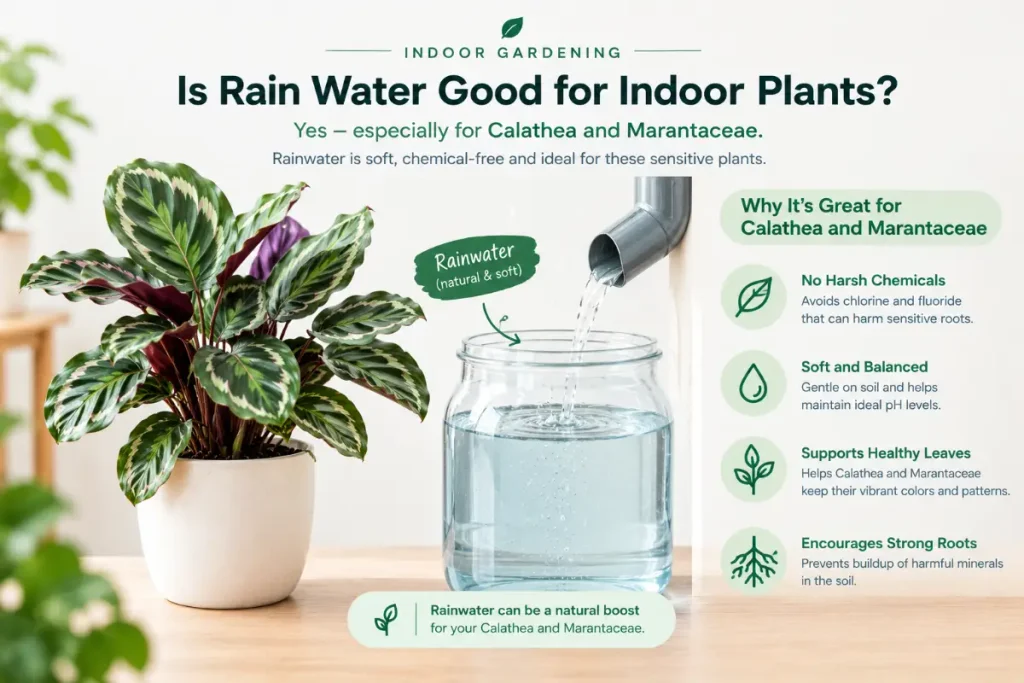
Calathea and Marantaceae
This family — Calathea, Maranta, Ctenanthe, Stromanthe — is acutely sensitive to both fluoride and chlorine in tap water. Symptoms of water quality stress appear as brown, crispy leaf margins and tips that progress inward if tap water use continues. Many gardeners spend months troubleshooting humidity and watering frequency before discovering that switching to rainwater resolves the problem quickly. For Calathea owners in hard-water areas, using rainwater is not optional — it is the difference between a thriving plant and a persistent struggle. A broader look at indoor plant leaves curling inward covers the full range of causes of leaf stress that water quality can contribute to.
Carnivorous Plants (Sundews, Venus Flytraps, Pitcher Plants)
Carnivorous plants are the most extreme case of water sensitivity among indoor plants. They evolved in nutrient-poor, acidic wetlands and are physiologically intolerant of the minerals and additives in tap water — even small concentrations cause root damage and eventual death. Rainwater or distilled water is non-negotiable for these species.
Orchids (Phalaenopsis and others)
Orchids are generally more tolerant of tap water than Calathea but perform noticeably better with soft, slightly acidic water. The most visible benefit is in root health — orchid roots grown in rainwater remain firm, green, and active rather than developing the brown, salt-damaged tips that appear with consistent hard water use. Rainwater also helps maintain the slightly acidic pH that orchid bark and sphagnum moss media prefer.
Ferns
Most ferns prefer consistently moist, slightly acidic conditions — exactly what rainwater provides. Hard alkaline tap water gradually raises compost pH in fern pots, reducing the availability of micronutrients and leading to the yellowing and frond dieback that is commonly attributed to low humidity but is often partly a water quality issue.
Dracaena and Spider Plants
Both Dracaena and Chlorophytum (Spider Plant) are well-known fluoride-sensitive species. The characteristic brown leaf tips on both plants — often blamed on dry air — are frequently caused or worsened by fluoride in tap water. Switching to rainwater or using water left overnight in an open container reduces fluoride-related tip browning significantly.
Azaleas (grown as indoor plants)
Azaleas are calcifuges — lime-hating plants that require acidic conditions to thrive. Hard alkaline tap water rapidly neutralises the acidic compost they need, leading to iron chlorosis (yellowing between veins) and poor flowering. Rainwater is ideal for maintaining the acidic conditions azaleas require.
Plants That Are Relatively Indifferent to Water Type
For robust, adaptable houseplants with no particular sensitivity to pH, fluoride, or minerals, the difference between rainwater and tap water is small:
- Pothos (Epipremnum aureum): Extremely adaptable — handles hard tap water without issue in most cases.
- Monstera deliciosa: Tolerant of various water types; tap water in most UK areas causes no visible problems.
- ZZ plant (Zamioculcas zamiifolia): Very tolerant; drought-adapted and largely indifferent to water mineral content.
- Snake plant (Sansevieria/Dracaena trifasciata): One of the toughest houseplants; handles tap water well.
- Peace lily (Spathiphyllum): More sensitive than the above but generally tolerates tap water; may show slight tip browning in very hard-water areas.
- Cacti and succulents: Prefer infrequent watering with water that drains quickly; tap water is generally fine, and the mineral deposits left on terracotta pots are cosmetic rather than harmful.
For these plants, using tap water is perfectly adequate — reserving rainwater for the sensitive species above is the most practical approach if your collection is mixed.
How to Collect Rainwater Safely
Collecting rainwater for indoor plant use is straightforward and cost-free. The main considerations are storage container cleanliness and collection surface quality.
Water butts: A standard garden water butt connected to a downpipe is the most common and practical collection method. Aim for an opaque container — light promotes algae growth in stored water. Keep the lid on to prevent mosquito breeding and leaf contamination. Clean the butt annually with a dilute bleach solution (rinse thoroughly before refilling).
Collection from conservatory or greenhouse roofs: Clean glass or polycarbonate roofs collect excellent quality rainwater — free of the moss, bird droppings, and organic debris that can contaminate water from old tile or slate roofs.
Avoid: Water collected from lead roofs, painted surfaces, or very old tile roofs with heavy moss or lichen growth. Lead leaches into collected water from lead flashing; painted surfaces may introduce contaminants; heavy organic matter in collected water introduces pathogens that can cause root rot.
Containers for indoor use: Keep a dedicated watering can or large jug indoors filled with rainwater, topping up as needed from the outdoor butt. An indoor container at room temperature ensures you are always watering with water at an appropriate temperature — cold water direct from an outdoor butt in winter can shock tropical plant roots.
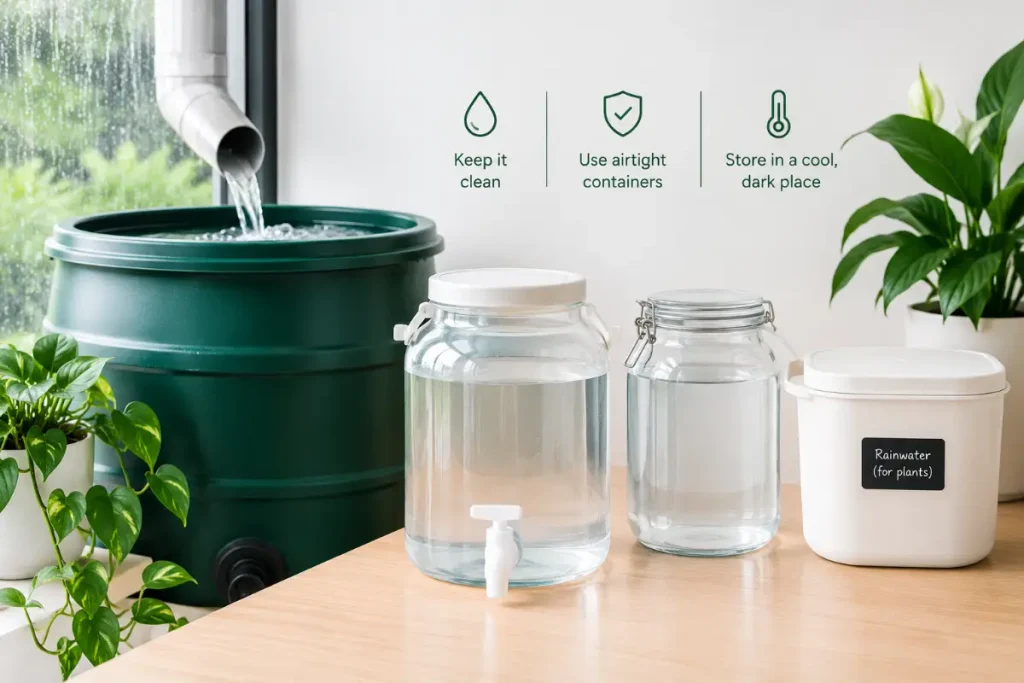
How to Store Rainwater Without It Going Bad
Stored rainwater can develop algae, bacteria, and fungal spores over time — particularly if stored in clear containers in light, or left uncovered. For indoor plant use, fresh rainwater is always preferable to water stored for extended periods.
Guidelines:
- Store in opaque, covered containers
- Use within 2–3 weeks of collection for best quality
- If water develops a cloudy appearance or unusual smell, discard and refresh
- In summer, water stored outdoors warms quickly — an asset for indoor plant watering (room temperature water is ideal), but also accelerates microbial growth
- A small piece of activated charcoal placed in the storage container helps suppress algae and keeps the water fresh longer
When Tap Water Is Fine — and How to Improve It
For plants that tolerate tap water, and for situations where rainwater collection is impractical, tap water is adequate with a few simple improvements:
Leave overnight in an open container: Chlorine (though not chloramine) dissipates from tap water left uncovered for 12–24 hours. This is a worthwhile step for any sensitive species when rainwater is unavailable.
Use a water filter: Jug filters (Brita and similar) remove chlorine, some heavy metals, and improve taste — but do not remove fluoride or significantly reduce water hardness. Reverse osmosis filters remove virtually everything including fluoride and minerals, producing water similar to distilled water. These are more expensive but produce excellent quality water for the most sensitive species.
Let it warm: Cold tap water (especially in winter) is below the soil temperature of tropical houseplants. Watering with cold water can temporarily shock roots and slow water uptake. Fill your watering can and leave it at room temperature for an hour before using.
Flush periodically with rainwater: If you use tap water regularly, flushing pots thoroughly with rainwater every month or two washes out accumulated mineral salts and resets the compost pH toward a more neutral starting point.
Managing watering consistently — whether rainwater or tap — is easier with a structured approach. An indoor plant watering schedule calibrated to your plants and seasons takes the guesswork out of frequency, while water quality choices like rainwater use address the chemistry of what you are applying.
Rainwater vs. Distilled Water vs. Filtered Water
For gardeners who cannot collect rainwater easily — particularly those in flats or urban settings without outdoor access — the alternatives are:
Distilled water: Produced by heating water to steam and condensing it, distilled water is essentially pure H₂O with no minerals, chlorine, or fluoride. It is the safest choice for carnivorous plants and the most sensitive houseplants, but is relatively expensive for use across a whole collection and requires purchase. It also lacks the trace nitrogen compounds that give rainwater a slight fertiliser edge.
Reverse osmosis (RO) water: Produced by forcing water through a membrane that removes virtually all dissolved substances. Similar in quality to distilled water and available from domestic RO filter units. More cost-effective for regular use than purchasing distilled water.
Filtered tap water: Jug filters remove chlorine and improve taste but do not remove fluoride or significantly reduce hardness. Better than untreated tap water for sensitive species but not equivalent to rainwater or distilled water for the most demanding plants.
In order of preference for sensitive houseplants: rainwater ≥ distilled water = RO water > filtered tap water > tap water left overnight > cold tap water direct.
Practical Setup: Getting Rainwater to Your Indoor Plants
For gardeners in houses with gardens, setting up rainwater collection is simple. For flat dwellers or those without outdoor access, the options are more limited but not absent.
House with garden: A 100–200 litre water butt connected to a downpipe collects enough water during a single moderate rainfall event to last weeks of indoor plant watering. Position close to the house for convenient access. Fill a 5–10 litre watering can from the butt weekly and keep it indoors at room temperature, ready for use.
Flat or urban setting without outdoor access: Options are more limited. A large bowl or container placed on a balcony or windowsill during rain collects modest amounts — enough for the most sensitive plants in a small collection. Alternatively, distilled water (purchased in 5-litre containers from supermarkets) or RO water from a counter-top filter provides equivalent quality. A basic counter-top reverse osmosis unit (£30–80) pays for itself within a few months compared to repeatedly purchasing bottled water.
Shared gardens or communal outdoor spaces: A small, portable water butt with a lid can sometimes be positioned in a communal garden with permission. Even a 30-litre container collects sufficient rainwater for a modest indoor plant collection during wetter months.
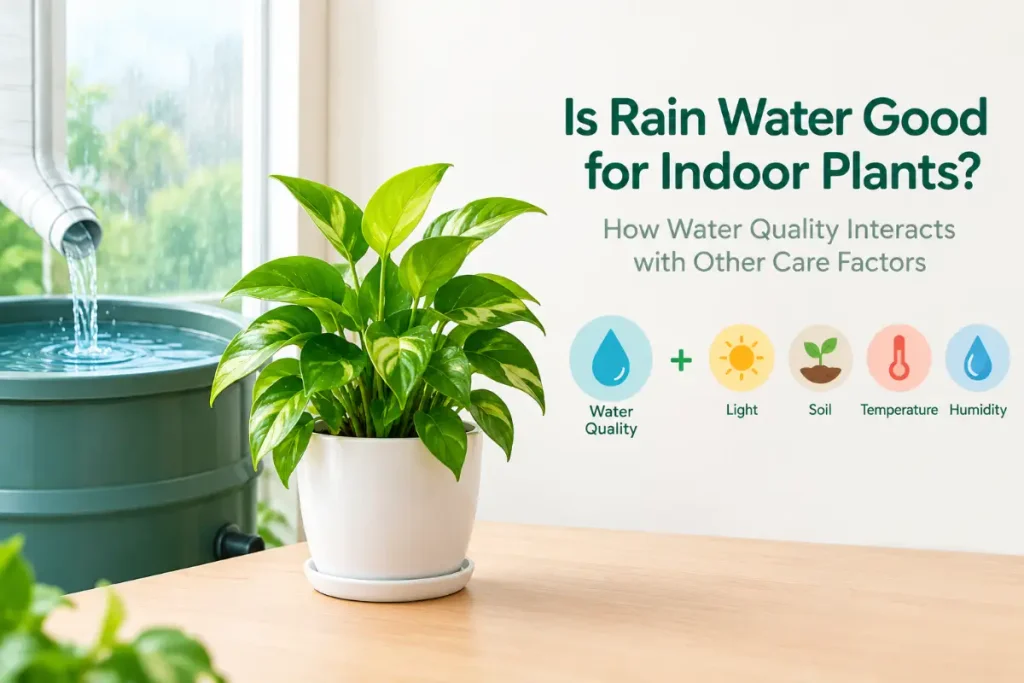
How Water Quality Interacts with Other Care Factors
Water quality does not operate in isolation — it interacts with other aspects of plant care in ways that affect the overall outcome.
Compost choice: Compost with high organic matter content buffers pH changes better than inert, mineral-heavy growing media. Well-made peat-free compost with good coir content maintains a more stable pH over time even when watered with slightly alkaline tap water. Plants in orchid bark or inorganic media (perlite, LECA) are more immediately affected by water pH because the medium itself provides less buffering capacity.
Pot size and flushing: Smaller pots accumulate mineral salts faster than larger ones — there is less compost volume to dilute incoming minerals. Flush smaller pots more frequently with rainwater to prevent salt build-up.
Feeding interactions: High-mineral tap water already delivers calcium and magnesium to the root zone. In hard-water areas, using a fertiliser rich in additional calcium and magnesium can create an oversupply — particularly of calcium — that raises pH and interferes with other nutrient uptake. Using rainwater eliminates this variable, making fertiliser application more predictable and effective.
Drainage: Is rain water good for indoor plants is partly a question of drainage — rainwater in a pot with excellent drainage and regular flushing has less time to interact with the growing medium than the same water sitting in a poorly draining, waterlogged pot. Good drainage for indoor plants amplifies the benefit of good watering practices, including the choice to use rainwater — and makes the consequences of any water quality less severe because the water moves through rather than accumulating.
Understanding how these factors interact allows you to make targeted decisions — you might, for example, prioritise rainwater for plants in inorganic media (most sensitive to pH changes) while being comfortable with filtered tap water for plants in organic compost-based mixes with good drainage.
Conclusion
Is rain water good for indoor plants? Yes — for the majority of plants, and decisively so for sensitive species like Calathea, ferns, carnivorous plants, orchids, and fluoride-sensitive Dracaena and Spider Plants. The combination of slightly acidic pH, absence of chlorine and fluoride, and low mineral content makes rainwater the ideal watering source. For robust, adaptable plants, tap water is perfectly adequate — but collecting rainwater costs nothing, requires minimal effort, and gives you the best possible input for your plants’ long-term health.
For comprehensive advice on plant watering and water quality across a wide range of species, the RHS watering guidance covers the topic in depth alongside specific recommendations for ornamental plants and food crops.
FAQs
Is rain water good for indoor plants compared to tap water?
Yes — rainwater is typically better than tap water for indoor plants. It is naturally slightly acidic (matching the preferred root zone pH of most houseplants), free of chlorine and fluoride additives, and lower in dissolved minerals than hard tap water. The benefit is most pronounced for sensitive species like Calathea, ferns, and carnivorous plants; robust houseplants like Pothos and Monstera tolerate tap water well.
Which indoor plants need rainwater most urgently?
Calathea and other Marantaceae, carnivorous plants (Venus flytraps, sundews, pitcher plants), orchids, ferns, Dracaena, and Spider Plants benefit most significantly from rainwater. Calathea in particular show rapid improvement — brown leaf margins and tips caused by tap water quality often resolve within a few weeks of switching to rainwater or distilled water.
Can rainwater go bad if stored too long?
Yes — stored rainwater can develop algae, bacteria, and fungal spores over time, particularly in warm conditions or if stored in clear containers exposed to light. Store in opaque, covered containers and use within 2–3 weeks. Water that smells unusual or looks cloudy should be discarded.
Is collected rainwater safe to use immediately?
Generally yes, for plant watering — it does not need treatment before use on houseplants. Avoid using water collected from lead, painted, or heavily contaminated surfaces, and let the first flush of rain after dry spells run off before collecting (this initial flow carries accumulated dust and bird droppings from the roof).
Does rainwater have nutrients in it?
Rainwater picks up trace amounts of nitrogen compounds (from atmospheric nitrogen fixed by lightning and industrial processes), giving it a very slight fertiliser quality. This is nutritionally negligible for well-fed houseplants but may benefit plants grown in very low-nutrient media, such as orchids and carnivorous plants.
What if I cannot collect rainwater — what is the next best alternative?
Distilled water or reverse osmosis water are the closest alternatives for sensitive species. For less sensitive plants, leaving tap water in an open container overnight disperses chlorine (though not fluoride or minerals). A jug filter reduces chlorine further. For carnivorous plants, only distilled, RO, or rainwater should be used — tap water of any kind causes harm over time.
Does the pH of rainwater really matter for houseplants?
Yes, for long-term root zone health. Most houseplants prefer compost at pH 5.5–6.5 — the natural range of rainwater. Consistently watering with alkaline tap water (pH 7–8) gradually raises compost pH, reducing the availability of micronutrients like iron and manganese. This shows up as yellowing leaves between veins (chlorosis), which is often misattributed to nutrient deficiency when the nutrients are present but inaccessible due to high pH.
Is rainwater better than bottled mineral water for indoor plants?
No — bottled mineral water is often high in dissolved minerals (calcium, magnesium, sometimes sodium) and may be alkaline. It offers no advantage over tap water for most plants and is unnecessarily expensive. Rainwater, distilled water, or RO water are all better choices for sensitive species.
How do I know if my tap water is causing problems for my plants?
Look for characteristic symptoms: brown leaf tips and margins on otherwise well-cared-for plants (especially Dracaena, Spider Plants, Peace Lily); white mineral crusting on pot surfaces and compost; gradual yellowing with no improvement from feeding (suggesting pH-related nutrient lockout). A water hardness test kit (available from aquarium suppliers) tells you precisely how hard your tap water is — above 200 ppm (or 14 degrees hardness) is considered very hard and is more likely to cause issues for sensitive species.
Can I water all my indoor plants with rainwater, or should I use it selectively?
You can use rainwater on all indoor plants without any downside. If supply is limited, prioritise it for the sensitive species listed in this guide — Calathea, ferns, orchids, Dracaena, carnivorous plants — and use tap water (left overnight if possible) for robust species like Pothos, Monstera, and succulents.