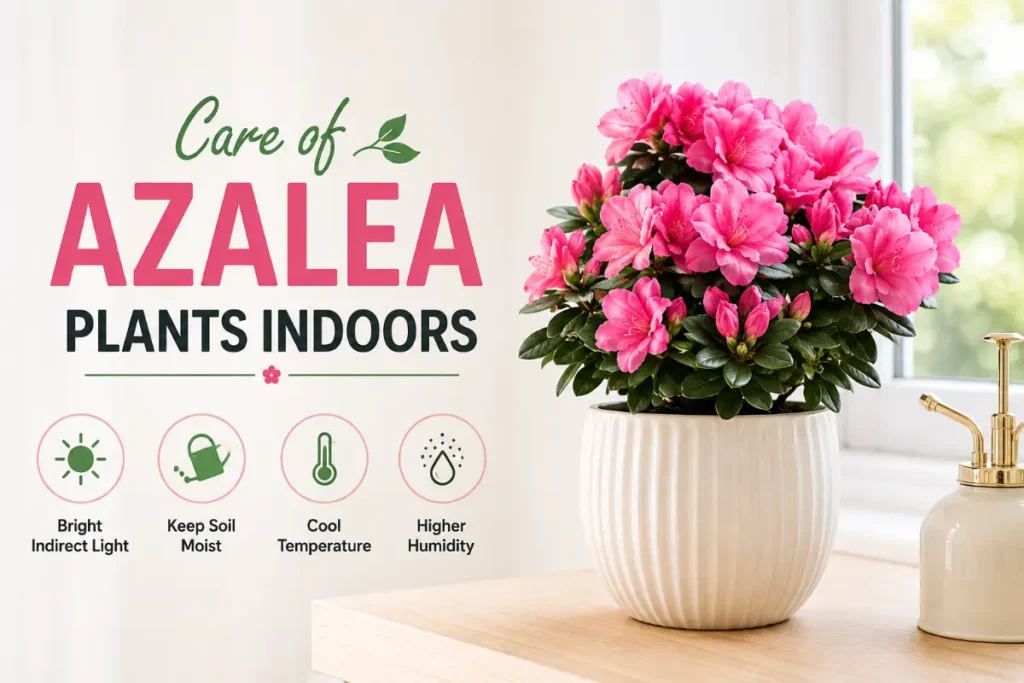
Care of azalea plants indoors is more specific than most flowering houseplant care and the specificity is exactly what makes the difference between an azalea that blooms magnificently for six weeks and one that collapses within ten days of purchase. Azaleas sold as indoor gift plants are naturally cool-weather, acid-soil shrubs that have been forced into bloom by commercial growers using precise environmental controls. Bringing one home into a warm, dry, neutral-soil indoor environment without adjusting those conditions is the reason most indoor azaleas fail so quickly.
The plant owners who keep azaleas blooming for weeks and successfully bring them back to bloom the following year follow a specific set of practices that match care to what the plant actually needs rather than what seems intuitively right for a flowering houseplant.
Quick Answer
Care of azalea plants indoors requires cool temperatures between 50 and 65 degrees Fahrenheit during the bloom period, consistently moist acidic soil with a pH between 4.5 and 6.0, bright indirect light away from heat sources, high humidity without misting the flowers, bottom watering or careful top watering that avoids the crown, fertilizing with an acid-specific product after blooming ends, a summer outdoor period for best results, and cool fall temperatures to set next season’s buds. Warm indoor temperatures are the single biggest reason azalea blooms fail quickly.
Understanding Indoor Azalea: What You Are Actually Working With
The azaleas sold as indoor gift plants, typically Belgian or Indian hybrid varieties of Rhododendron simsii, are compact, profusely flowering shrubs bred specifically for container blooming. They are not tropical plants. They are not houseplants in the traditional sense. They are temperate, cool-preferring, acid-loving shrubs that commercial growers have temporarily convinced to bloom out of their natural season using controlled greenhouse environments.
Understanding this changes every care decision. The warm living room that suits your tropical houseplants is hostile to an azalea in bloom. The neutral potting mix that works for most houseplants is too alkaline for a plant that evolved in acidic woodland soil. The misting approach that benefits humidity-loving tropicals creates the conditions for botrytis grey mold on azalea flowers in cool conditions.
The good news is that the specific requirements that make azalea care different from typical houseplant care are all manageable once you know what they are.
Step 1: Temperature Controls Everything About Bloom Duration
This is the care factor most commonly misunderstood and most directly responsible for the two-week disappointments that make people write off azaleas as difficult.
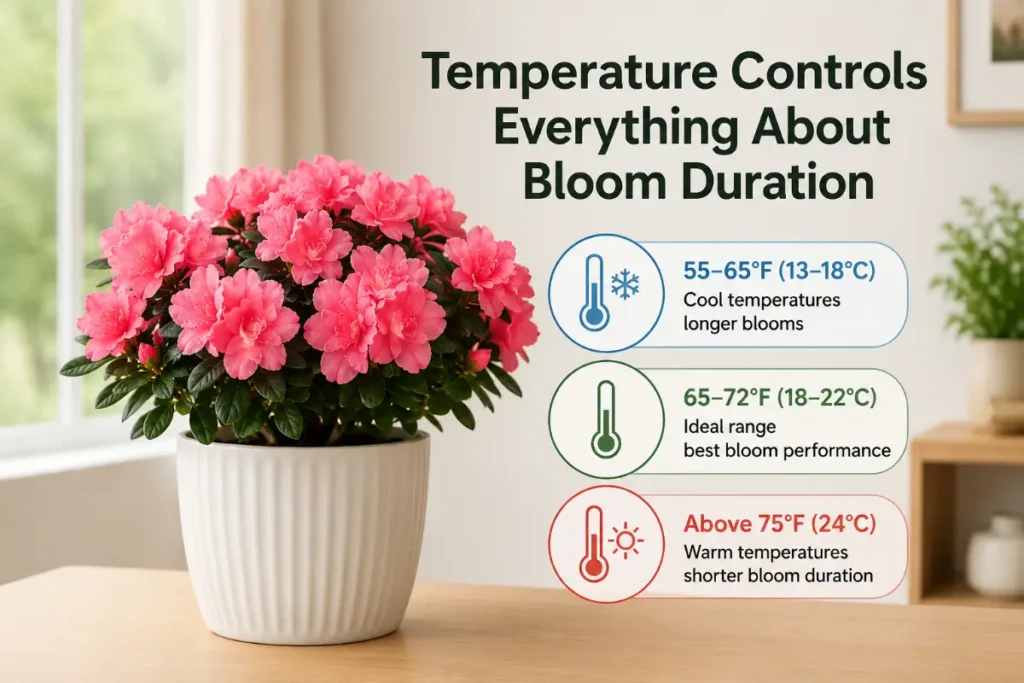
The target: 50 to 65 degrees Fahrenheit throughout the bloom period. At this range individual flowers last significantly longer, buds open gradually in succession over weeks rather than all at once, and the plant maintains the energy balance needed to sustain continuous bloom production.
What warm temperatures do: Above 68 degrees consistently, azalea flowers fade within days of opening and all remaining buds accelerate toward opening simultaneously. The overall bloom period compresses dramatically. In a warm 72 to 75 degree living room, what should be a six-week display collapses into two weeks regardless of how perfectly every other care factor is managed.
Finding the right spot: The coolest bright room in your home. A north-facing room that stays several degrees cooler than heated spaces. A bright enclosed porch that does not receive direct heating. A sunny but unheated spare bedroom. Even positioning away from radiators and heating vents in an otherwise warm room helps.
Night temperatures: Cool nights between 50 and 55 degrees dramatically extend bloom duration even when daytime temperatures are slightly above the ideal range. A room with a programmable thermostat set to drop at night produces noticeably longer azalea bloom than a room that maintains constant warmth.
Step 2: Maintain Acidic, Consistently Moist Soil
Azaleas are ericaceous plants that evolved in acidic woodland soils and require a specific pH range to absorb the minerals that keep them healthy. This two-part soil requirement, consistent moisture and appropriate acidity, is what most standard houseplant care approaches fail to provide.
pH requirement: Between 4.5 and 6.0. Commercial potting mix is typically pH 6.5 to 7.0, which is too alkaline for azaleas. In neutral soil, iron and other trace minerals become chemically unavailable even when physically present, causing the interveinal chlorosis (yellowing between leaf veins while veins stay green) that indicates mineral lockout rather than deficiency.
Maintaining acidity: Use ericaceous potting mix formulated for acid-loving plants at the next repotting. Water with rainwater, distilled water, or filtered water since hard tap water is often alkaline and gradually raises soil pH with every application. Add used coffee ground water (one tablespoon of used grounds per quart, steeped 24 hours, strained) every three to four weeks to help maintain acidity. For the complete guide to coffee grounds and acid-loving plants, what indoor plants like coffee grounds covers azaleas specifically alongside every other ericaceous plant.
Moisture management: Check soil moisture every two days during the bloom period. Water when the top half inch feels dry. Azaleas prefer consistently moist conditions rather than the dry-then-water cycle that suits drought-tolerant plants.
Bottom watering: Bottom watering by placing the pot in a shallow dish of water for 20 to 30 minutes prevents the crown rot that develops when water contacts the dense growth at the base of azalea stems repeatedly. If top watering, water carefully at the soil perimeter avoiding the crown entirely.
Step 3: Provide Bright Indirect Light
Azaleas need adequate light to sustain bloom and to support the photosynthesis that keeps the foliage healthy through the bloom period, but direct harsh sun shortens flower life and scorches foliage.
What works: Bright indirect light from a north or east-facing window. Filtered light through a sheer curtain from south or west-facing windows. Morning sun from an east-facing exposure is tolerated well.
What causes problems: Direct afternoon sun wilts flowers quickly and causes brown scorching on foliage. Very low light stops new bud development even when existing flowers remain open, exhausting the visible bloom supply without replacement.
The cool-bright tradeoff: Since temperature affects bloom duration more significantly than light level within the reasonable indoor range, prioritize the cooler position over the brighter one when the two conflict. A slightly dimmer north-facing cool room extends bloom more than a brighter but warmer south-facing room.
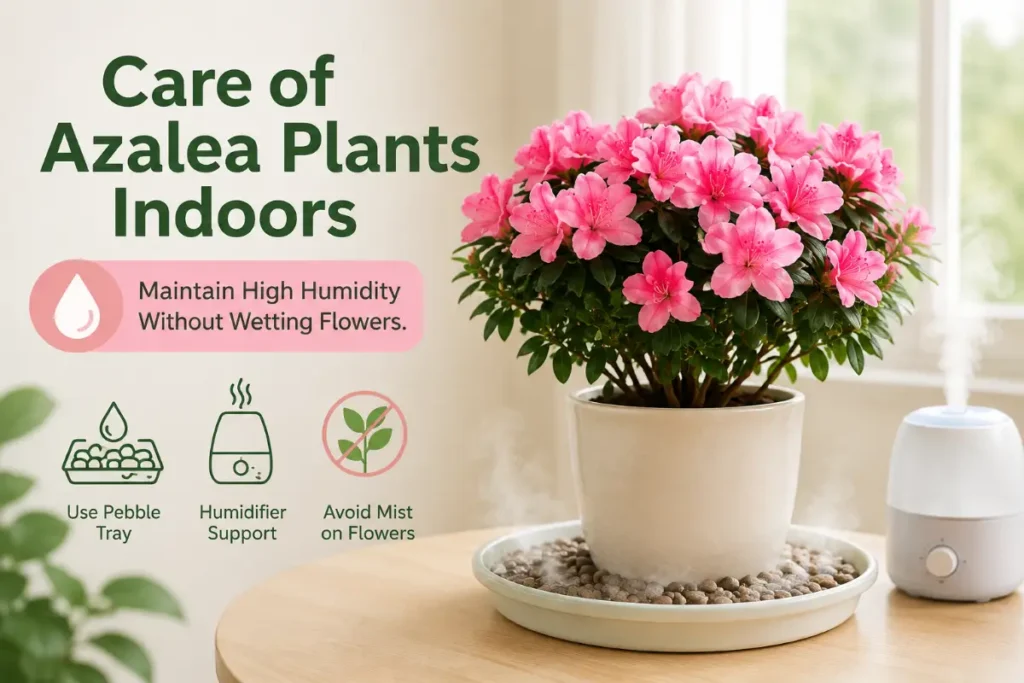
Step 4: Maintain High Humidity Without Wetting Flowers
Azaleas prefer humidity above 50% but their dense growth and the cool conditions they require create ideal conditions for botrytis grey mold when water contacts flower petals or the plant crown.
Effective humidity solutions: A pebble tray with water beneath the pot. Grouping with other plants to raise collective humidity through combined transpiration. A humidifier positioned nearby that raises ambient humidity without directing moisture at the plant directly.
What to avoid absolutely: Misting the flowers or misting the foliage in the dense crown area. Cool humid conditions combined with water on surfaces are exactly what botrytis requires to establish and spread. Even light misting that seems harmless in warmer, less humid conditions creates visible grey mold on azalea flowers within days.
Signs of adequate humidity: Flowers maintaining their color and substance for longer than expected. Foliage that stays glossy rather than developing the dull matte appearance of moisture-stressed leaves. No brown petal edges appearing despite cool temperatures.
Step 5: Remove Spent Flowers by Twisting Not Cutting
Deadheading azalea flowers correctly matters more than with most flowering plants because new growth buds and next season’s flower buds form directly behind spent flowers. Leaving stubs or damaging the growth point behind the flower eliminates the following season’s bloom potential at that stem.
Correct technique: Grasp the spent flower at its base where it connects to the stem and twist gently while pulling upward with a slight outward motion. The flower separates cleanly from the calyx at the natural abscission point without leaving a stub. Do not use scissors for deadheading since cut stubs left attached to the stem create entry points for rot pathogens in the cool moist conditions azaleas prefer.
Timing: Remove individual flowers as soon as their petals begin dropping or browning. Do not wait until the whole flower head has collapsed since the longer spent material remains attached, the greater the rot and disease risk.
After all flowers finish: Once the complete bloom cycle has ended, a light shaping prune removes any crossed or overcrowded stems and improves air circulation through the plant interior. Do not prune heavily after midsummer since late-season pruning removes the developing buds for next year’s bloom.
Step 6: Fertilize With Acid-Specific Products After Blooming
Azalea nutritional needs differ from most houseplants in two important ways: they need fertilizer specifically after blooming rather than during it, and they need formulas designed for acid-loving plants rather than standard balanced houseplant fertilizers.
Why not during bloom: Fertilizing during the active bloom period stimulates new vegetative growth at the expense of flower quality and duration. The plant redirects energy from sustaining flowers to producing new leaves and stems in response to fertilizer inputs. This shortens the bloom period you paid for.
What to use after bloom: Miracid Acid Plant Food, Espoma Holly-Tone, or any fertilizer specifically formulated for azaleas and rhododendrons. These provide nitrogen in ammonium form which is more appropriate for acid-loving plants and helps maintain soil pH alongside providing nutrition. Standard balanced houseplant fertilizers provide nitrogen primarily in nitrate form which is less appropriate for ericaceous plants and can gradually alkalinize the soil.
Schedule: Every two weeks from the end of the bloom period through late summer. Stop in late summer to allow new growth to mature and harden before the cool fall temperatures that trigger flower bud set for the following season.
Step 7: Provide an Outdoor Summer Period
This single step separates azalea owners who successfully rebloom their plants from those who cannot. An outdoor summer period provides conditions that indoor environments cannot replicate: natural day length cycles that signal the plant’s seasonal rhythm, appropriate light intensity, natural air circulation, and the temperature variation that supports healthy growth.
When to move outside: After the last frost date and once nighttime temperatures consistently stay above 45 degrees. In most US regions, late April through May.
Where to place outdoors: Partial shade with morning sun and afternoon protection. Under a deciduous tree canopy that provides filtered light is ideal. Full all-day sun causes heat stress and leaf scorch on plants acclimatized to indoor light levels.
What summer outdoors accomplishes: New vegetative growth develops and hardens through summer. The plant’s metabolism follows its natural seasonal rhythm in a way that indoor conditions with their constant temperature and artificial day length cannot provide. By late summer the plant begins setting next season’s flower buds in response to shortening days and cooling temperatures. This bud-setting process is what most indoor-only azaleas fail to complete, which is why they either do not rebloom or rebloom poorly.
Before bringing inside in fall: Inspect thoroughly for pests that may have established during outdoor summer. Wash down with a water spray and check undersides of leaves. For guidance on identifying and treating pests found on plants being moved indoors, indoor plant spray for bugs covers every effective spray approach for the pest species most likely to accompany azaleas moved from outdoor to indoor conditions.
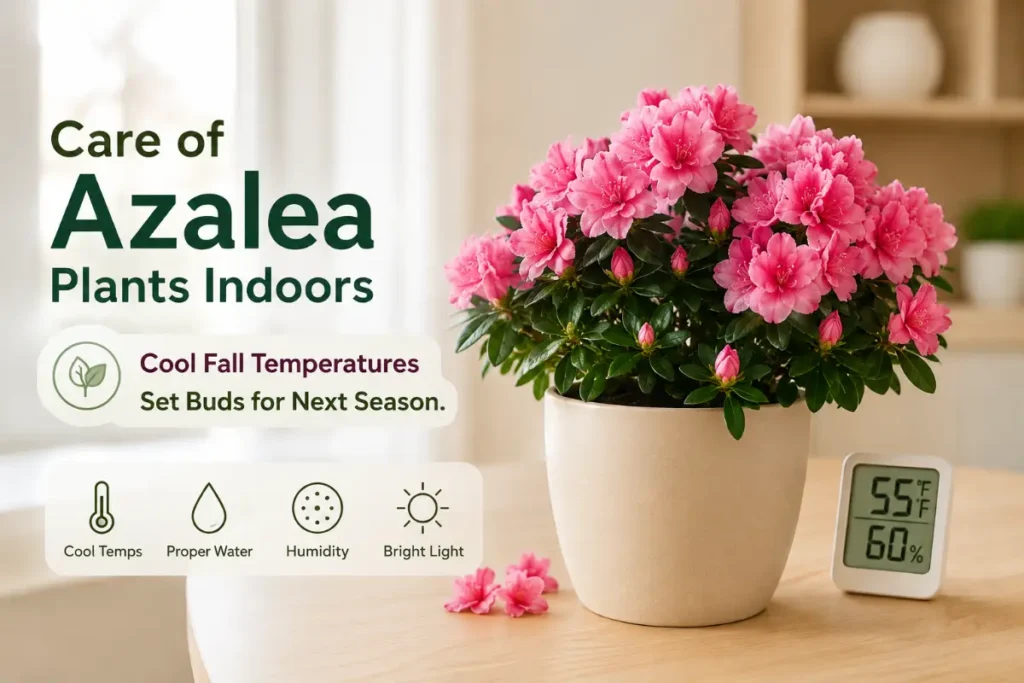
Step 8: Cool Fall Temperatures Set Buds for Next Season
This final step is what triggers the following season’s bloom and is the most commonly overlooked factor in successfully reblooming azaleas.
Azaleas require six to eight weeks of cool temperatures between 40 and 50 degrees Fahrenheit in fall to complete the flower bud development that began with late summer’s shortening days. Without this cool conditioning period, buds that formed over summer remain vegetative rather than developing into flower buds, and the plant produces only foliage the following season.
How to provide it: Leave the plant outdoors as temperatures cool in fall until nighttime temperatures approach 28 to 30 degrees. In USDA zones 7 and above this often means outdoor placement through October or November. The transition from summer to fall temperatures outdoors naturally provides the cool conditioning that flower buds need.
After bringing inside: Place in the coolest bright location available indoors. The cool indoor conditions of an unheated spare room or enclosed porch continue the conditioning that prepares the plant for its next bloom cycle. As temperatures remain cool and the plant approaches its natural winter bloom season, buds begin to show color and the cycle that began with last summer’s bud set approaches its visible conclusion.
For the complete guide to azalea indoor care that covers this seasonal cycle alongside the specific differences between azalea and hydrangea indoor management, indoor azalea plant care covers every aspect of the azalea bloom cycle with detailed seasonal timing guidance.
Common Azalea Problems and How to Fix Them
Bud drop before flowers open: Warm temperatures, low humidity, or sudden environmental change. Move to cooler position immediately and increase humidity. Ethylene from ripening fruit nearby also causes bud drop. Keep away from fruit bowls.
Flowers fading within one to two weeks: Temperatures above 68 degrees are the most common cause. Move to the coolest available bright position. This is the most frequently experienced azalea care problem and almost always traces back to placement in a warm room.
Yellow leaves with green veins (interveinal chlorosis): Soil pH too high causing iron lockout. Switch to acidified water (rainwater or filtered water), use acid-specific fertilizer, add coffee ground water every three to four weeks. A pH test kit confirms whether the soil is in the target range.
Grey fuzzy mold on flowers: Botrytis from water on flowers in cool humid conditions. Remove affected material immediately and ensure no water contacts flowers during watering. Improve air circulation around the plant.
No bloom the following season despite otherwise good care: Most commonly caused by insufficient cool fall conditioning or pruning after midsummer that removed developing buds. Review the outdoor summer and fall cool conditioning steps.
Selecting the Right Indoor Azalea at the Store
Most care problems with indoor azaleas begin at the point of purchase when the wrong plant or a stressed plant is chosen. A few minutes of evaluation at the store make a significant difference in how the plant performs at home.
Look for more buds than open flowers. A plant where most buds are still tightly closed with just a few open flowers will bloom for significantly longer than one where all flowers are already fully open. The fully open plant may look more spectacular at the store but is closer to the end of its bloom cycle at the moment of purchase.
Check the foliage. Dark green glossy leaves all the way down the plant indicate healthy root function and adequate nutrition. Yellow lower leaves, spotted leaves, or dull, matte-surfaced foliage indicate stress that will shorten bloom duration.
Feel the soil. It should feel slightly moist throughout. Bone dry soil indicates the plant has already experienced water stress. Soggy saturated soil suggests possible root rot beginning in poor store care conditions.
Check the store display position. Azaleas displayed near warm heating vents, automatic sliding entry doors, or in very warm areas of the store have already experienced the temperature stress that shortens bloom. Choose plants from cooler display areas when possible.
Variety awareness. Most retail azaleas are Belgian hybrid varieties without specific variety labeling. If labeled, varieties known for particularly long indoor bloom include Hilde, Ambrosiana, and Vervaeneana. Unlabeled plants are fine but cannot be specifically selected for these characteristics.
Conclusion
Care of azalea plants indoors is most rewarding when approached as seasonal management of a cool-weather outdoor shrub rather than as standard houseplant care. Cool temperatures during bloom extend the display from two weeks to six. Acidic soil maintained with ericaceous mix and appropriate watering keeps the plant nutritionally healthy. Correct deadheading preserves next season’s bloom potential. An outdoor summer period provides the conditions that complete bud set reliably. And cool fall temperatures trigger the flower bud maturation that makes reblooming possible.
The azalea owners who successfully rebloom their plants year after year are not doing anything mysterious. They are matching care to the plant’s natural seasonal rhythm with the specific accommodations its cool-weather, acid-soil nature requires. Follow those steps consistently and an indoor azalea becomes one of the most rewarding seasonal flowering plants you can grow.
Frequently Asked Questions
How long do indoor azaleas bloom?
With cool temperatures between 50 and 65 degrees Fahrenheit, indoor azaleas bloom for five to eight weeks. In warm rooms above 68 to 70 degrees the bloom period shortens to two to three weeks. Temperature is the single biggest factor determining bloom duration. The coolest bright position available is always the right location for a blooming azalea.
Why is my indoor azalea dropping its buds?
Bud drop before opening is most commonly caused by warm temperatures, low humidity, or sudden changes in the plant’s environment. Move to a cooler position immediately. Increase humidity with a pebble tray or humidifier. Avoid moving the plant between different locations since environmental change itself triggers bud drop in azaleas. Ethylene gas from nearby ripening fruit also causes rapid bud drop.
How do I get my azalea to rebloom next year?
Successful reblooming requires three steps in sequence: fertilize with acid-specific plant food from the end of bloom through late summer, move outdoors to partial shade for summer where natural conditions trigger bud development and hardening, and provide cool fall temperatures between 40 and 50 degrees for six to eight weeks before the next bloom season. Missing any of these three produces foliage-only growth rather than flowers the following season.
What kind of soil do indoor azaleas need?
Acidic soil with a pH between 4.5 and 6.0. Ericaceous potting mix formulated for azaleas and rhododendrons maintains appropriate pH. Water with rainwater or filtered water since hard tap water is often alkaline and gradually raises soil pH with repeated use. Add coffee ground water every three to four weeks and use acid-specific fertilizer after blooming to maintain the acidity azaleas require for healthy iron and mineral uptake.
Should I mist my indoor azalea?
No. Misting creates conditions for botrytis grey mold on the flowers and dense crown growth in the cool humid conditions azaleas otherwise prefer. Maintain humidity through a pebble tray with water beneath the pot or a nearby humidifier that raises ambient humidity without directing moisture directly at the plant. These methods provide the sustained humidity benefit azaleas need without the disease risk that misting creates.
Are indoor azaleas toxic to pets?
Yes. Azaleas contain grayanotoxins throughout their tissue that cause vomiting, drooling, weakness, coordination loss, and in severe cases cardiac issues in cats and dogs. Even small amounts of foliage cause significant toxicity symptoms. Keep azaleas completely out of reach of pets or choose non-toxic flowering alternatives for households with animals that chew on plants.