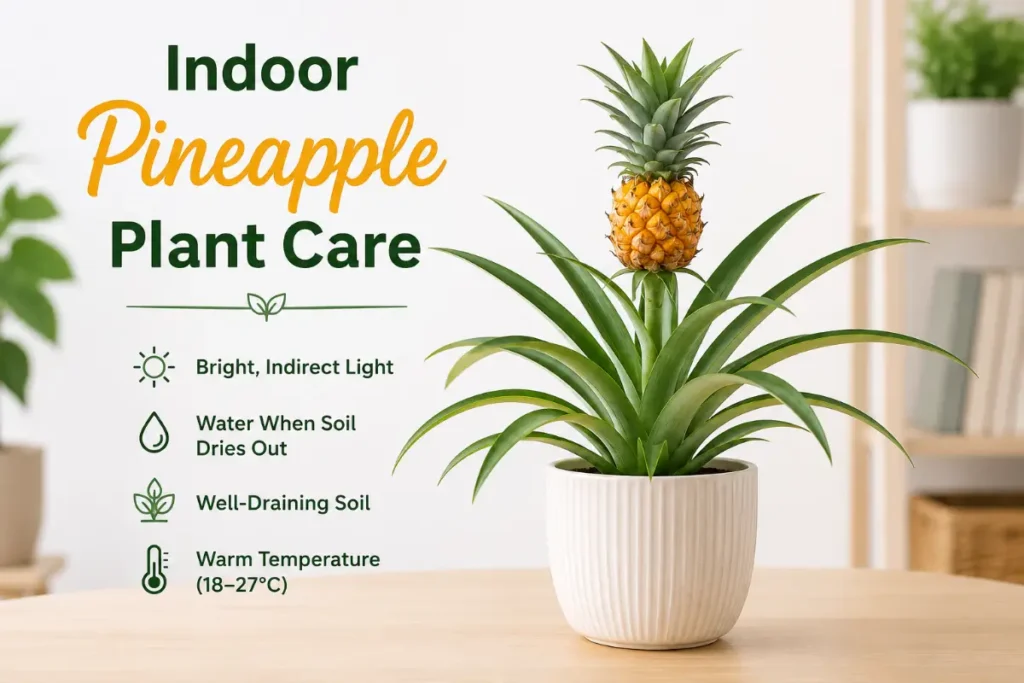
Indoor pineapple plant care is one of the most rewarding of all indoor gardening projects because you can start an entire pineapple plant from the crown of a store-bought fruit for essentially zero cost and grow it into a striking tropical specimen that actually produces fruit. The process takes patience, two to three years from planting to fruit, but the pineapple plant itself is genuinely beautiful throughout that time with its architectural rosette of spiny grey-green leaves that make it one of the most distinctive houseplants available.
Most people who grow pineapples indoors are surprised by how straightforward the care is. Pineapple (Ananas comosus) is a bromeliad native to tropical South America where it grows in full sun, poor well-draining soil, and tolerates the kind of drought and neglect that kills most tropical houseplants. This resilience makes it one of the more forgiving tropical plants you can grow indoors once you understand its specific preferences.
Quick Answer
Indoor pineapple plant care requires the brightest light available (direct sun through a south-facing window for at least six hours daily), well-draining soil with very low organic matter, watering when the soil is completely dry, temperatures above 65 degrees Fahrenheit, fertilizing lightly every two to four weeks through spring and summer, and patience through the two to three year process from planting crown to fruit production. Fruiting can be triggered by exposing the plant to ethylene gas from a ripe apple placed under a bag covering the plant for several days.
Starting a Pineapple Plant From a Store-Bought Fruit
The most satisfying way to begin indoor pineapple plant care is growing your own plant from a supermarket pineapple crown rather than purchasing a potted plant. This propagation method is free, successful with virtually any fresh supermarket pineapple, and produces a healthy plant within a few months.
Choosing the right pineapple: Select a fresh pineapple with a green healthy crown of leaves rather than a dried-out or yellowing crown. The crown leaves should be green and firm not brown or drooping. Fresh pineapples with vibrant crowns produce much higher rooting success than those with damaged or dried crowns.
Preparing the crown: Grasp the pineapple body firmly and twist the crown with your other hand. It separates cleanly from the fruit with a sharp twisting motion. Alternatively, cut the crown from the fruit leaving approximately an inch of fruit flesh attached, then carefully remove all fruit flesh from below the crown to expose the base. Remove the bottom two to three rows of leaves from the crown base to expose the stem tissue that will produce roots.
Drying the crown: Allow the prepared crown to sit in a dry, airy location for two to three days before planting. This drying period reduces the likelihood of the base rotting before roots develop.
Rooting options: You can root the crown in water by suspending it over a glass of water with the base just touching the water surface (using toothpicks through the lower leaves to hold it in position). Change water every two to three days. Roots develop within two to four weeks. Alternatively, plant directly into well-draining potting mix and keep barely moist until roots establish over four to six weeks.
Step 1: Provide Maximum Light
Light is the single most important factor in indoor pineapple plant care and the factor most commonly underestimated. Pineapples in their natural tropical environment receive essentially all-day direct intense sunlight. Indoor conditions with their filtered, reduced light represent a significant compromise that the plant tolerates but does not prefer.
What the plant needs: Direct sunlight through a south-facing window for a minimum of six hours daily. More is better. A south-facing window that receives sun from morning through afternoon is ideal. West-facing windows that catch afternoon sun are the next best option.
What happens in insufficient light: The leaves grow longer and narrower rather than the compact, broad rosette form that indicates adequate light. The grey-green leaf color becomes less vibrant. Growth slows to near zero in very low light. Fruit production in insufficient light is essentially impossible regardless of how long the plant has been growing.
Grow lights: A high-output LED grow light positioned eight to twelve inches above the plant and running fourteen hours daily can supplement or replace natural light in homes without adequate south-facing window exposure. This is the practical solution for apartment growers or those without south-facing windows who want to grow pineapple to fruiting.
Step 2: Use the Right Soil
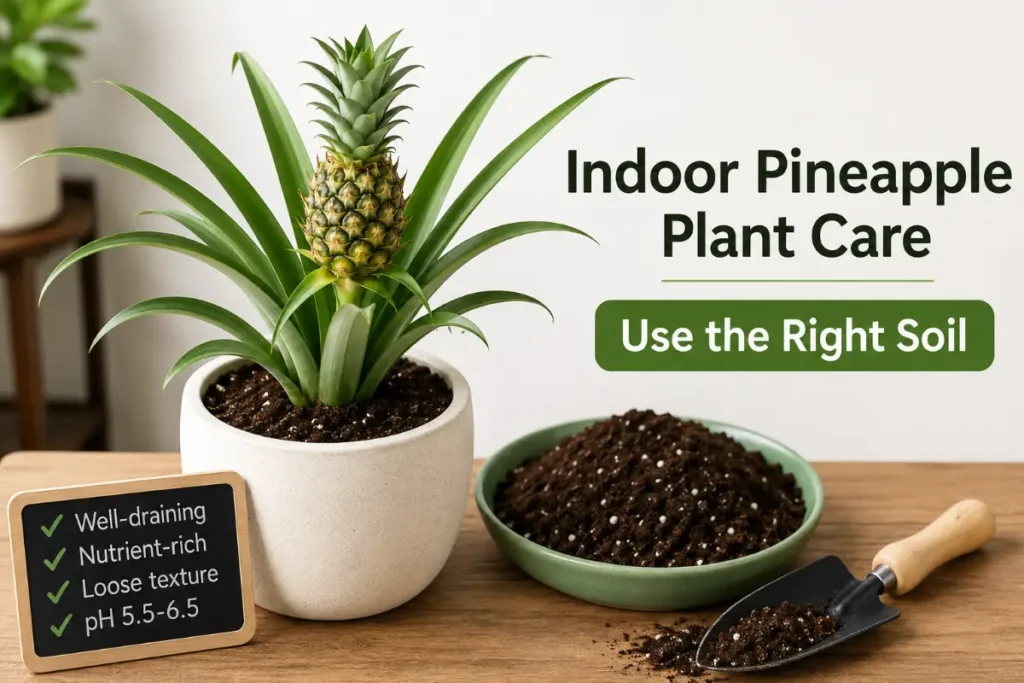
Pineapple is a bromeliad that evolved in tropical environments with fast-draining, nutrient-poor soil. It is one of the few edible plants that actually performs better in lean, well-draining conditions than in the rich, moisture-retentive mixes that most vegetables and fruiting plants prefer.
The right soil: A mix of 50% standard potting mix with 50% perlite or coarse sand creates the fast-draining, lean conditions pineapple roots expect. Alternatively, a cactus and succulent potting mix provides appropriate drainage without modification.
What to avoid: Rich potting mixes with high organic content hold too much moisture for pineapple roots. Soil that stays moist for more than five to seven days after watering creates the conditions for the root rot that is the primary non-light cause of indoor pineapple failure.
Pot selection: Always use a pot with drainage holes. Terracotta pots improve drainage by allowing moisture to evaporate through their porous walls alongside the drainage holes.
For the complete guide to building fast-draining soil mixes for drought-tolerant tropical plants, soil mixture for indoor plants covers every component and ratio with guidance specific to plants with low moisture-tolerance root systems.
Step 3: Water Correctly for Drought-Tolerant Roots
Pineapple is significantly more drought-tolerant than most tropical houseplants because of its bromeliad nature and its adaptation to the seasonal dry periods of tropical South America.
The correct approach: Allow the soil to dry completely before watering. Push your finger two to three inches into the soil. Water only when that depth feels completely dry. In a sunny position during summer this might mean watering every ten to fourteen days. In winter or lower light every twenty-one to twenty-eight days.
The cup: Like many bromeliads, pineapple has a cup formed by the overlapping leaf bases at the center of its rosette. Keeping a small amount of water in this cup provides supplemental moisture that the plant absorbs through its leaves as well as roots. Flush and refill this cup every two to three weeks to prevent stagnation and mosquito breeding.
Signs of overwatering: Soft, yellowing leaves starting from the base of the plant. A mushy or rotting smell from the soil. Root rot in pineapple progresses quickly in consistently wet soil and is difficult to recover from once established.
Signs of underwatering: The leaf tips become brown and dry. The leaves develop a more grey than green color as the plant conserves moisture. Growth stalls completely.
Step 4: Maintain Warm Temperatures
Pineapple is a tropical plant with genuine sensitivity to cold and absolutely no frost tolerance.
Ideal range: 65 to 95 degrees Fahrenheit. The plant actively grows and thrives throughout this range with peak growth occurring between 75 and 85 degrees.
Cold sensitivity: Below 60 degrees growth slows significantly. Below 50 degrees the plant shows visible cold stress with yellowing, browning leaf tips, and halted growth. Frost kills pineapple plants immediately.
Practical implications: Pineapple is one of the few houseplants that tolerates and actually prefers the warm temperatures that tropical plants like it evolved in. Unlike azaleas and cyclamen where warmth is the enemy, pineapple grows best in warm sunny conditions. Keep it away from cold drafts from exterior doors and air conditioning vents that blow cold air directly on the plant, but otherwise welcome the warm conditions of most heated homes.
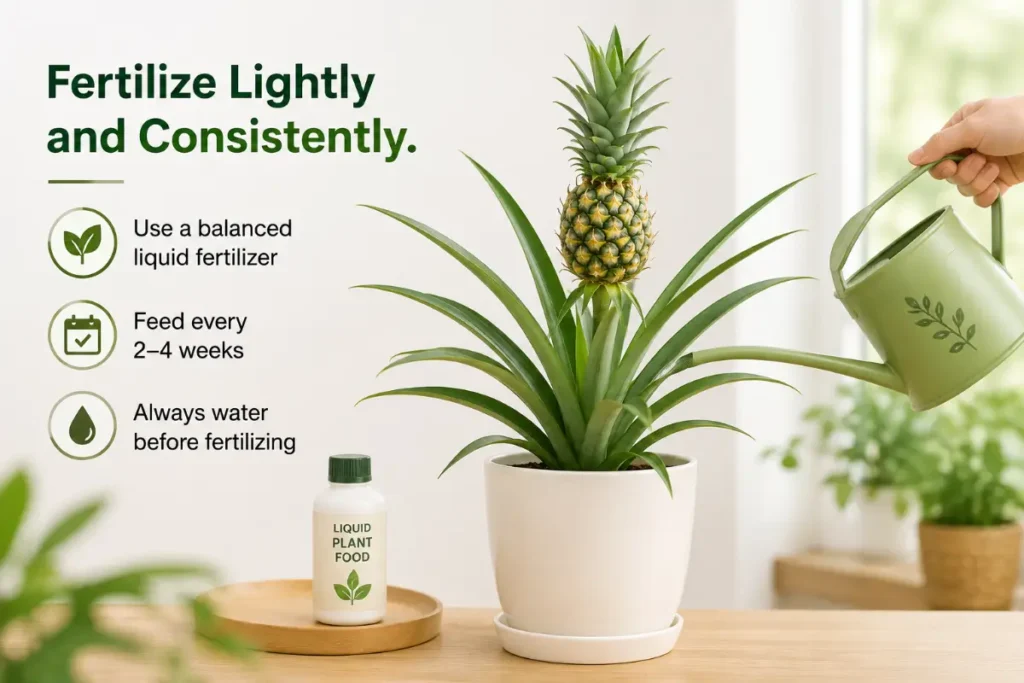
Step 5: Fertilize Lightly and Consistently
Pineapple does not need heavy fertilizing and benefits from the lean conditions that its natural habitat provides. However, light and consistent nutrition through the growing season supports the active growth that eventually leads to fruiting.
Through spring and summer: Feed every two to four weeks with a balanced liquid fertilizer at half the label rate. The low concentration suits pineapple’s modest nutritional requirements without the excessive growth that heavy feeding can produce.
Foliar feeding: Pineapple, as a bromeliad, absorbs nutrients effectively through its leaves as well as roots. Diluting liquid fertilizer to quarter strength and applying it to the leaves and the central cup alongside soil application improves nutritional uptake efficiency compared to soil-only feeding.
What to avoid: High-nitrogen synthetic fertilizers at full rate drive excessive leafy growth at the expense of the compact rosette form that is aesthetically most attractive and at the expense of fruit production triggers. Moderate, balanced nutrition produces better fruiting outcomes than aggressive feeding.
Fall and winter: Reduce to monthly feeding or stop entirely when growth slows during the shorter days of fall and winter.
Step 6: Trigger Fruiting With Ethylene
This is the most fascinating aspect of indoor pineapple care. Pineapples are triggered into fruit production by ethylene gas, and you can deliberately expose your plant to ethylene to force fruiting at a time of your choosing rather than waiting for the plant to fruit naturally.
When to trigger: The plant should be at least two years old and have a healthy rosette of at least twelve to fifteen leaves before ethylene treatment is likely to be effective. Younger or smaller plants are too immature to respond to fruiting triggers.
The apple method: Place one to two ripe or overripe apples near the base of the pineapple plant and enclose both the plant and apples in a large clear plastic bag. Seal the bag loosely to keep ethylene produced by the ripening apples concentrated around the plant. Leave in place for seven to ten days then remove the bag and apples.
What happens next: Within two to three months of successful ethylene treatment, a small red center appears at the heart of the rosette. This red center gradually develops into the flower stalk and eventually the small pineapple fruit. The fruit develops slowly over four to six months from flower emergence to harvest.
Temperature during treatment: Keep the plant in its normal warm sunny position during and after ethylene treatment. The ethylene triggers the hormonal cascade that leads to flowering but warm temperatures and good light support the energy-intensive fruit development that follows.
Step 7: Harvest and Propagate
Knowing when and how to harvest the pineapple fruit and how to continue the plant for future fruiting completes the indoor pineapple growing cycle.
When to harvest: A ripe indoor pineapple smells unmistakably of pineapple at its base. The bottom third of the fruit turns yellow-orange. Individual segments at the base yield slightly to gentle pressure. These three signs together indicate the fruit is ripe and ready to harvest.
How to harvest: Cut the fruit from the central stalk with a clean sharp knife leaving a few inches of stalk attached to the fruit. The main plant does not produce another fruit from the same rosette but produces offsets (called ratoons or pups) from the base and sides of the plant.
The pups: Within weeks to months of the main plant fruiting, small offset plants develop at the base of the spent mother plant. These pups eventually produce their own fruits more quickly than the original crown-grown plant since they are already established with the parent plant’s root system. Allow pups to develop to at least one-third the size of the parent plant before separating and potting individually.
Using the fruit crown: The crown of your homegrown pineapple can itself be used to start a new plant using the same preparation and rooting method described at the beginning of this guide, continuing the cycle indefinitely from a single original supermarket purchase.
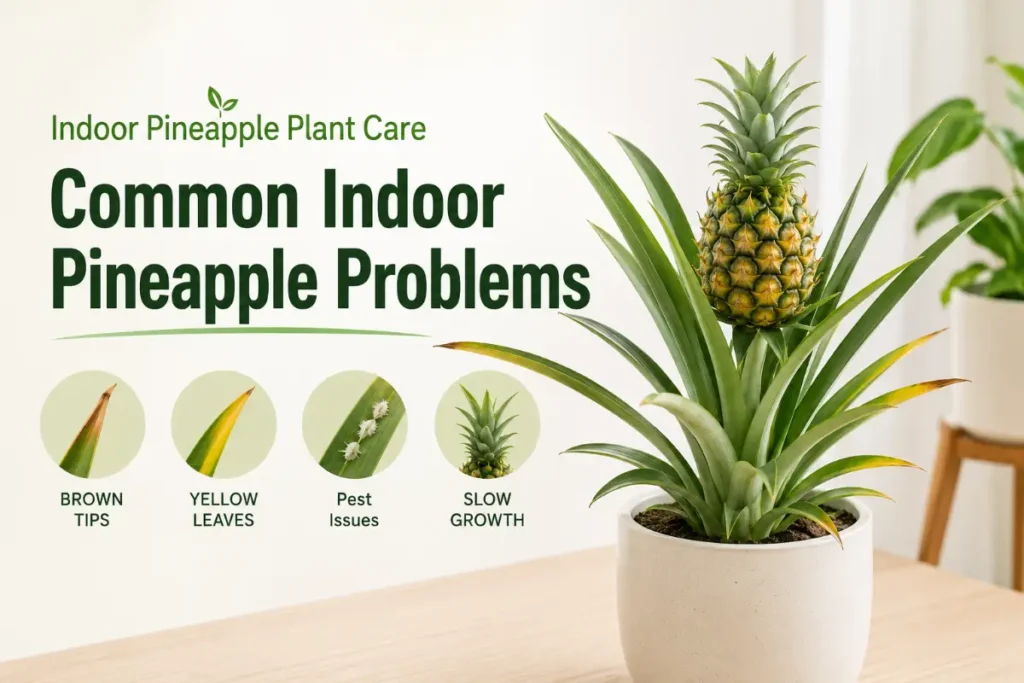
Common Indoor Pineapple Problems
Brown leaf tips: Most commonly caused by fluoride or salt accumulation from tap water. Switch to filtered or distilled water and flush the soil monthly with excess water to leach accumulated minerals.
Yellowing lower leaves: Normal aging of the oldest leaves as the plant matures and produces new growth from the center. If yellowing affects young inner leaves, check for overwatering causing root stress.
No fruiting after three years: Insufficient light is the most common cause of fruiting failure. Increase light significantly or add a grow light. Also check that the plant has been grown in consistently warm conditions since cool temperatures inhibit fruiting triggers. Try the apple ethylene treatment after ensuring light and temperature conditions are appropriate.
Pale grey-green leaves rather than rich green: Almost always insufficient light. Increase direct sun exposure immediately.
Soft rotting base: Root rot from overwatering. Remove from pot, trim all affected roots and base tissue, dust cut surfaces with cinnamon or sulfur, and repot into fresh fast-draining soil. Allow to dry more thoroughly between future waterings.
Pineapple Plant as a Statement Houseplant
Even before it fruits, the indoor pineapple plant earns its space as a genuinely striking architectural houseplant. The radiating rosette of spiny, channeled, grey-green leaves creates a visual structure that few other houseplants match. In a large terracotta pot in a sunny south-facing window, a mature pineapple plant makes the kind of statement that more expensive and demanding tropical statement plants like fiddle leaf fig and bird of paradise produce, but with significantly less fuss about watering frequency and environmental stability.
The pineapple plant’s tolerance for occasional neglect, its preference for the warm sunny conditions that many homes naturally provide in their brightest rooms, and its virtually indestructible nature within its acceptable temperature range make it one of the more genuinely easy large-statement indoor plants available once it is established. The two-year patience investment for fruit is the only real challenge for a plant that is otherwise straightforward to maintain.
Fertilizer and Soil Amendments for Indoor Pineapple
Understanding which fertilizer approaches produce the best results for pineapple versus which ones create problems helps you support the plant’s growth without unintentionally working against fruit production.
Foliar application: Because pineapple is a bromeliad that evolved absorbing water and nutrients through its leaf surfaces as well as its roots, foliar feeding is unusually effective for this species compared to most houseplants. A quarter-strength solution of balanced liquid fertilizer sprayed onto leaf surfaces and into the central cup every two to three weeks during the growing season supplements soil feeding and improves overall nutrition delivery.
Potassium emphasis before fruiting: In the months approaching the expected fruiting trigger or ethylene treatment, shifting to a fertilizer with a slightly higher potassium content (the third number in the NPK ratio) supports the flowering and fruiting process that potassium specifically enables in most fruiting plants. Banana peel water applied to the soil and the central cup every two to three weeks provides a natural potassium supplement. For the complete guide to banana peel water and other kitchen-derived fertilizer options that provide potassium for flowering and fruiting plants, diy fertilizer for indoor plants covers every preparation method with specific guidance on timing and application rates for fruiting tropical plants.
What not to use during bud development: High-nitrogen fertilizers applied after a fruiting trigger has been successful and a bud is developing can redirect the plant’s energy toward vegetative growth at the expense of fruit development. Reduce nitrogen and maintain or increase potassium from bud emergence through fruit development for the most energy efficiently directed toward the fruit itself.
Conclusion
Indoor pineapple plant care is one of the most uniquely satisfying houseplant projects because the endpoint is an actual edible fruit produced on a plant you grew from a supermarket purchase. The care itself is among the more forgiving of any indoor fruiting plant: maximum light, very well-draining lean soil, patient drought-tolerant watering, warm temperatures, and light consistent fertilizing through the growing season.
The patience required is real. Two to three years from crown to first fruit is the realistic timeline for most indoor-grown pineapples. But the plant is genuinely attractive throughout that period and the moment a small fruit begins developing in the heart of the rosette you grew from scratch is one of the most rewarding experiences in indoor gardening.
Start with a fresh supermarket pineapple, root the crown, provide maximum light in your best south-facing window, water when the soil is completely dry, and let warm indoor temperatures and consistent light nutrition do the rest. The fruit will come.
Frequently Asked Questions
How long does it take to grow a pineapple indoors?
From rooting a store-bought crown to first fruit typically takes two to three years under good indoor conditions with maximum available light. The first year establishes the root system and begins building the leaf rosette. The second year produces the mature rosette size needed for fruiting. Fruit development after successful ethylene triggering takes an additional four to six months. Subsequent pups from the same plant fruit more quickly than the original crown since they benefit from the established root system.
Do indoor pineapple plants need direct sunlight?
Yes, as much direct sunlight as you can provide. A minimum of six hours of direct sun through a south-facing window is needed for healthy growth and fruit production. In lower light pineapples survive but grow very slowly and rarely fruit. A high-output LED grow light running fourteen hours daily is the practical solution for homes without adequate direct natural sunlight.
How often should I water an indoor pineapple plant?
Water only when the soil is completely dry two to three inches down, typically every ten to fourteen days in summer and every twenty-one to twenty-eight days in winter. Pineapple is significantly more drought-tolerant than most tropical houseplants and root rot from overwatering is more common than underwatering damage in typical indoor collections.
Can I grow a pineapple from a store-bought fruit?
Yes. Twist or cut the crown from a fresh supermarket pineapple, remove a few bottom rows of leaves, allow to dry for two to three days, then root in water or moist well-draining potting mix. Roots develop within two to six weeks and the plant establishes and begins growing normally within three months of successful rooting. Any fresh pineapple with a green healthy crown works for this propagation method.
How do I get my indoor pineapple to produce fruit?
Ensure the plant is at least two years old with a healthy rosette of twelve or more leaves. Place one to two ripe apples near the plant base and enclose both in a sealed clear plastic bag for seven to ten days. The ethylene gas from ripening apples triggers the hormonal cascade that leads to flowering and fruiting. Results appear as a red center developing in the plant’s heart within two to three months of successful treatment.
Is indoor pineapple plant safe for pets?
The pineapple fruit flesh is safe for dogs in small amounts. However, the pineapple plant’s stiff, spiny leaf edges can cause physical injury to pets that contact or chew on the leaves. The bromeliad sap also causes mild irritation in some animals. Keep pineapple plants elevated and out of reach of pets that regularly interact with or chew on houseplants to prevent physical injury from the sharp leaf edges.