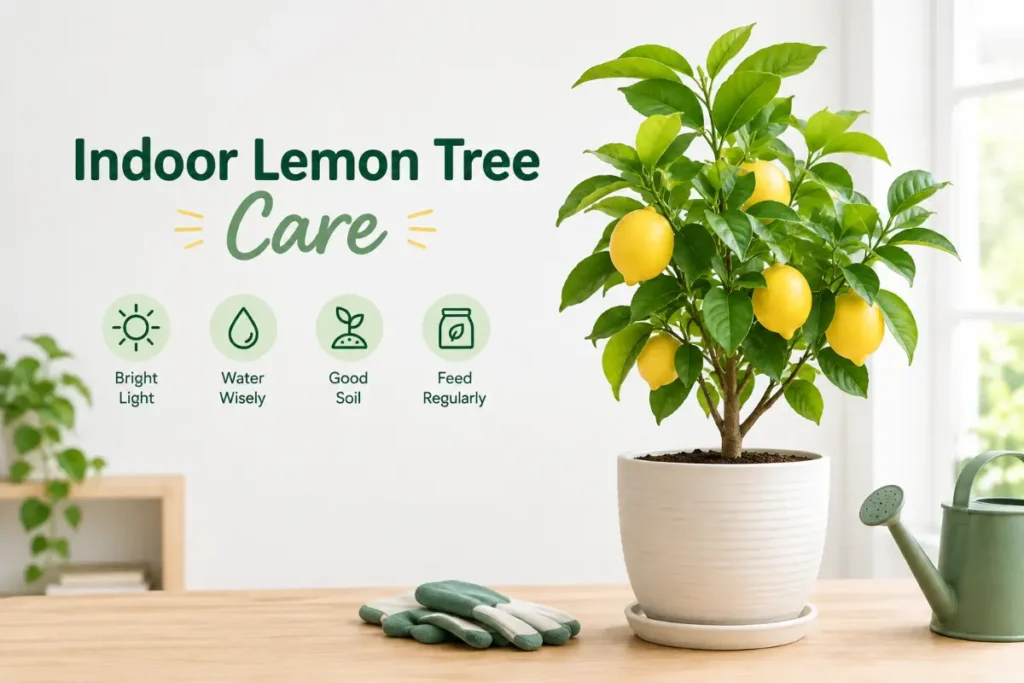
Indoor lemon tree care is one of the most rewarding but most technically specific challenges in indoor food growing. People who get it right enjoy fragrant white flowers and fresh lemons from a kitchen tree for years. People who make the nine mistakes covered in this guide watch their tree yellow, drop leaves and fruit, attract scale and spider mites, and decline despite their genuine effort.
This guide takes a problem-first diagnostic approach to indoor lemon tree care, covering each of the nine mistakes that most commonly derail indoor lemon trees and exactly what to do about each one. If your tree is struggling, start here before investing in any new products or equipment.
Quick Answer
The nine most common indoor lemon tree care mistakes are: choosing a seed-grown rather than grafted tree, insufficient direct sun, using alkaline tap water, overwatering in winter, using the wrong fertilizer without zinc, ignoring spider mites and scale until advanced, planting in standard potting mix without citrus-appropriate drainage, keeping the tree too warm without humidity, and expecting fruit too soon without patience. Each has a specific fix that this guide covers in detail.
Understanding What Indoor Lemon Trees Actually Need
Before covering the mistakes, understanding the baseline conditions that produce a thriving indoor lemon tree provides context for why each mistake matters.
Meyer lemon trees in appropriate indoor conditions — maximum direct south-facing sun, citrus-specific well-draining potting mix, filtered water, biweekly citrus fertilizer, humidity above 50%, and patient multi-year establishment — produce fragrant white flowers and genuine lemons continuously. The gap between this outcome and what most indoor lemon trees actually experience comes down to the nine specific failures this guide addresses.
Mistake 1: Buying a Seed-Grown Tree Instead of a Grafted One
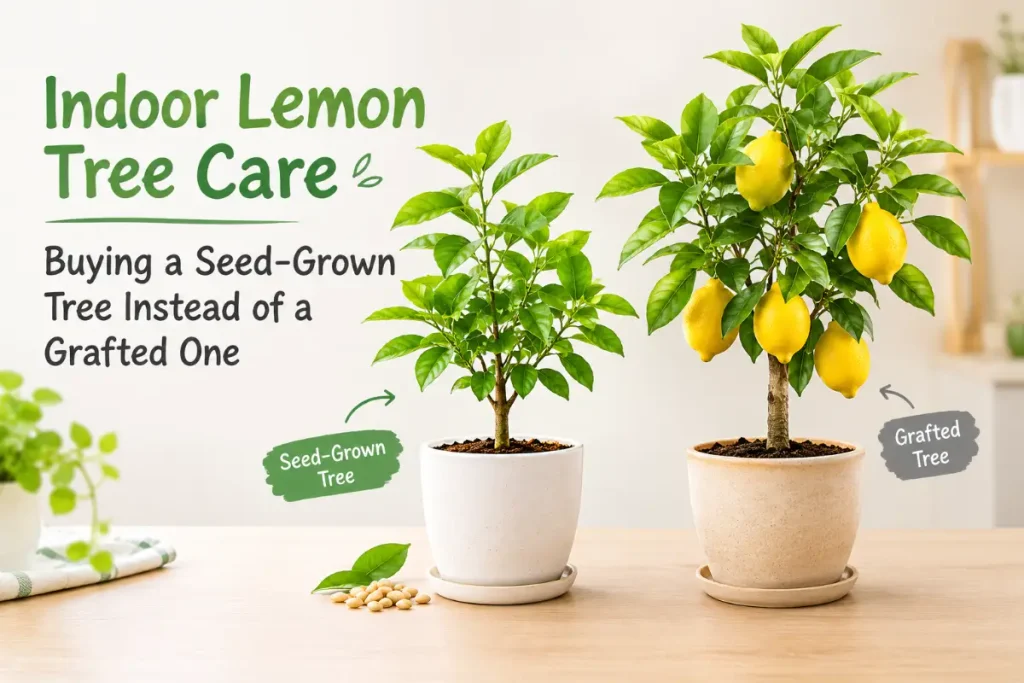
This is the most consequential mistake and the one made most often at the point of purchase. Seed-grown lemon trees are beautiful plants that grow vigorously, but they take seven to fifteen years to reach fruiting age. Grafted dwarf trees purchased from reputable nurseries are already of fruiting age and produce flowers and fruit within one to two years of purchase.
How to tell the difference: A grafted tree has a visible graft union — a slight swelling or angled join on the lower main stem several inches above the soil level where the scion (fruiting variety) was attached to the rootstock. Seed-grown trees have a uniformly straight stem without this union.
The fix: If you already have a seed-grown tree and are willing to wait, maintain it as a beautiful foliage plant with patience. If you want lemons within a reasonable timeframe, purchase an Improved Meyer Lemon grafted dwarf tree from a reputable fruit tree nursery. Do not expect fruit from a seed-grown tree in any indoor setting within less than seven years.
Mistake 2: Insufficient Direct Sun
The most common ongoing care mistake for trees that are properly purchased as grafted varieties. Lemon trees need six or more hours of direct south-facing window sun daily — not bright indirect light, not a well-lit room, but actual sun rays touching the plant through a window for six or more hours.
What insufficient light produces: Healthy-looking foliage with no flowers. Or flowers that open and drop without setting fruit. Or fruit that sets but never ripens. All of these symptoms trace back to insufficient light more often than any other single cause.
The fix: Move to a south-facing window immediately and position as close to the glass as practical. If no south-facing window provides six or more hours, supplement with a full-spectrum LED grow light delivering 500 to 700 PPFD for 14 to 16 hours daily. This is the most important single improvement most struggling indoor lemon trees need. For the complete guide covering grow light specifications and setup for fruiting indoor plants, UV light for plants indoor covers the spectral requirements and PPFD targets that make grow lights effective for citrus rather than merely decorative.
Mistake 3: Using Alkaline Tap Water
This mistake produces symptoms so gradually that most owners never connect the cause to the outcome. Hard municipal tap water in many US cities has pH between 7.0 and 8.5. Repeated watering with alkaline water raises soil pH above 6.5 within months, locking out the iron, zinc, and manganese that lemon trees need for healthy leaf color and function.
The visible symptoms: New leaves emerging with yellow areas between green veins (interveinal chlorosis). The yellowing appears first on new growth rather than old, which is the diagnostic indicator of pH-driven iron deficiency rather than nitrogen deficiency (which yellows older lower leaves first).
The fix: Switch to collected rainwater, filtered water, or reverse osmosis water immediately. Apply chelated iron as a foliar spray and soil drench to address the acute deficiency. Lower soil pH with elemental sulfur if testing confirms pH above 6.0. If tap water is your only option, add one to two milliliters of white vinegar per gallon to acidify it before use.

Mistake 4: Overwatering in Winter
Indoor lemon trees need significantly less water in winter as growth slows and light intensity drops. Maintaining summer watering frequency through fall and winter overwaters the tree when it cannot use the moisture, creating the chronically wet root conditions that initiate root rot.
The seasonal difference: In summer in a south-facing window, a lemon tree in a ten-inch container may need water every five to seven days. In winter in the same position, the same tree may need water only every twelve to sixteen days. The soil check at two inches depth tells you when to water regardless of calendar schedule.
The fix: Always check two inches into the soil before watering. In winter, extend the interval significantly from summer watering. A lemon tree that looks slightly less turgid in winter than summer is normal dormancy behavior, not a signal to water more frequently.
Signs of winter overwatering that has caused root damage: Yellow leaves falling in quantity (different from normal lower leaf replacement). Wilting that does not recover after watering. Soft mushy roots when the plant is removed from its pot. These advanced symptoms require immediate repotting in fresh well-draining mix with all damaged roots removed.
Mistake 5: Using the Wrong Fertilizer Without Zinc
Generic balanced fertilizers lack the zinc and other micronutrients that citrus specifically requires. Zinc deficiency in lemon trees produces a distinctive symptom called little leaf, where new leaves emerge smaller than normal with mottled coloration. Manganese deficiency causes its own pattern of interveinal chlorosis different from iron deficiency.
The fix: Use a fertilizer specifically formulated for citrus that includes zinc, manganese, and iron as micronutrients alongside the primary NPK. Citrus fertilizers use ammonium-based nitrogen that slightly acidifies the soil with each application, which is a secondary benefit for pH maintenance. Apply every two weeks through spring and summer and monthly in fall. Stop through the coldest winter months when growth is minimal.
The organic option: Worm casting tea every two weeks provides gentle balanced nutrition with soil biology benefits. For citrus specifically, combine worm castings with a citrus-specific liquid fertilizer rather than replacing it entirely, since the micronutrient package in the citrus fertilizer addresses needs that general organic fertilizers do not fully cover. For the complete organic fertilizer guide for fruiting trees, natural fertilizer for indoor plants covers every effective approach with specific guidance for fruiting crops.
Mistake 6: Ignoring Spider Mites and Scale Until Advanced
Spider mites and scale insects are the two most common indoor lemon tree pests and both establish most readily in the warm, dry, still indoor air that heated homes produce in winter. Both are significantly easier to manage when caught early than when the infestation becomes advanced.
Spider mites: Tiny red or brown mites that produce stippling damage (tiny pale dots) on leaf surfaces and fine webbing between leaves and stems. Visible with a hand lens on leaf undersides. In early infestation the stippling on a few leaves is the first sign. By the time webbing is extensive and leaves are falling, the infestation has reached a level requiring multiple treatment rounds.
Scale insects: Flat, brown or tan shell-like bumps on stems and leaf undersides. Produce sticky honeydew that encourages sooty mold growth on surfaces below. Early infestation shows as a few small bumps. Advanced infestation coats stems in overlapping shells and significantly weakens the tree.
The fix for both: Inspect leaf undersides and stem surfaces monthly. Catch early infestations (a few mites or a few scale) with manual removal and a single neem oil spray application. Advanced infestations require neem oil spray every seven days for four to six weeks alongside manual removal of scale. For spider mites specifically, maintaining humidity above 50% prevents establishment since mites thrive in dry conditions. For the complete pest management approach for indoor fruit trees and plants, how to get rid of aphids on indoor plants covers the treatment escalation that applies to the broader range of indoor citrus pests including aphids alongside mites and scale.
Mistake 7: Planting in Standard Potting Mix Without Amendment
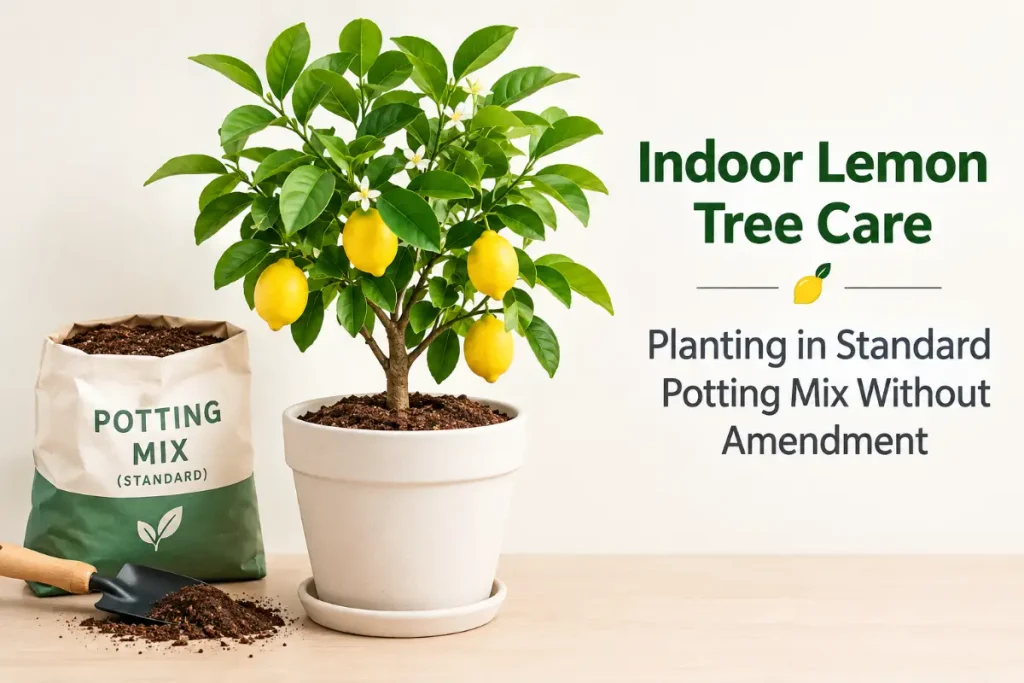
Standard potting mix retains far more moisture than lemon tree roots tolerate. The combination of citrus’s sensitivity to root rot and standard potting mix’s moisture retention creates conditions where root rot develops reliably over months regardless of careful watering.
The correct mix: 60% quality potting mix or bark-based medium. 20 to 30% coarse perlite. 10 to 20% coarse bark chips. This drains completely within sixty seconds of watering and reaches appropriate dryness at two inches within five to eight days in typical indoor conditions. Alternatively, commercial citrus potting mix provides the pre-formulated well-draining, slightly acidic profile appropriate for lemon trees without requiring individual component mixing.
The fix: If your tree is already in standard potting mix and declining, repot in spring into the correctly amended mix. Examine roots during repotting and trim any dark, mushy sections. Position the root ball at the same soil depth as previously. Allow four to six weeks before resuming fertilizing after repotting to allow root establishment.
Mistake 8: Warm Temperature Without Adequate Humidity
Lemon trees in warm, dry heated indoor air through winter develop the leaf tip browning, increased spider mite susceptibility, and general stress that significantly impairs fruit production in the following season.
The double problem: Warm indoor air in winter (above 70 degrees) increases the tree’s transpiration demand. Low winter humidity (below 40% in many heated homes) reduces the moisture available from ambient air. The combination stresses the tree’s moisture balance more than either factor alone.
The fix: Run a humidifier nearby through winter to maintain humidity above 50%. Position away from forced-air heating vents and radiators that produce the warmest, driest air in the room. If the tree is near a cold south-facing window, ensure it is not also in the blast zone of a nearby heating vent that creates an extreme warm-dry microclimate.
Mistake 9: Expecting Fruit Too Soon
This is the expectation management mistake rather than a care mistake, but it causes more lemon trees to be abandoned or discarded before they ever produce than any other single factor.
The realistic timeline: A grafted Meyer lemon purchased as a young tree produces its first indoor flowers within six to twelve months and first ripe fruit within twelve to twenty-four months. The ripe fruit development takes six to nine months from successful flower pollination. A tree that blooms in January may produce ripe lemons in October of the same year or as late as the following spring.
Why patience is required: Lemon trees invest significantly in root establishment and structural development in their first year or two before channeling resources into consistent fruiting. This is normal biological prioritization rather than a sign of care failure.
The fix: Commit to at least two to three years with appropriate care before concluding the tree is non-productive. Verify the tree is grafted (not seed-grown). Maximize direct sun access. Hand-pollinate every flower. And wait. The indoor lemon tree that has been properly established for two to three years becomes one of the most impressive and continuously productive indoor food plants available. For the complete foundational guide to indoor lemon tree care that covers every care step alongside the honest realistic expectations that this diagnostic post addresses specifically, how to grow a lemon tree indoors covers every aspect of setup, variety selection, and long-term management.
Diagnosing Your Lemon Tree: A Quick Reference
Yellow leaves on new growth with green veins: Iron or zinc deficiency from high soil pH. Switch to acidified water and apply chelated iron.
Yellow leaves on older lower growth: Nitrogen deficiency or overwatering. Assess soil moisture and begin or increase fertilizing with citrus formula.
Flowers dropping without fruit: Insufficient pollination or temperature above 85 degrees. Hand-pollinate every flower daily. Check canopy temperature near grow lights.
Fruit setting but not ripening: Insufficient light or too-cool temperatures. Maximize light access and ensure temperatures stay above 60 degrees.
Sticky substance on leaves: Scale insect honeydew or aphid excretion. Inspect stems and leaf undersides. Treat with neem oil spray.
Fine stippling on leaves with webbing: Spider mites. Begin neem oil spray immediately and increase humidity above 50%.
Wilting despite moist soil: Root rot from overwatering. Remove from pot, trim damaged roots, repot in fresh well-draining mix.
Leaf drop in winter without other symptoms: Normal response to lower light and cooler temperatures. Maintain consistent care and the tree recovers in spring.
Seasonal Care Calendar for Indoor Lemon Trees
A month-by-month approach to indoor lemon tree care prevents the seasonal mistakes that derail otherwise well-managed trees.
January through February: Minimal watering every twelve to sixteen days. No fertilizing. Inspect weekly for scale and spider mites that establish most readily in the warm dry heated air of winter. Clean leaves with a damp cloth to remove dust accumulation that reduces photosynthetic efficiency in the lower winter light. Run humidifier to maintain above 50% humidity.
March through April: Growth resumes as day length increases. Resume biweekly citrus fertilizer. Begin increasing watering frequency as growth accelerates. Hand-pollinate any emerging flowers from the first spring bloom flush which is typically the most abundant bloom of the year.
May through June: Full active growing season. Maximum watering frequency. Biweekly fertilizer application. Move outdoors to a sheltered south-facing position if outdoor space and temperatures above 50 degrees at night allow. Begin acclimating gradually to outdoor direct sun over two weeks. Outdoor summer placement produces the most vigorous growth and most abundant bloom of any growing condition.
July through August: Peak outdoor or indoor summer growing. Monitor for spider mites, aphids, and scale. Water more frequently in the warmth of summer growing conditions. Maintain fertilizing schedule. If the tree has set fruit from spring bloom, the developing fruit is in its active growth phase and consistent moisture and nutrition are critical to final fruit size.
September through October: Begin gradual reduction in fertilizing. Bring outdoors-summered trees inside before nighttime temperatures drop below 50 degrees. Acclimate back to indoor conditions over two weeks. Harvest any fruit that has ripened from spring bloom pollination.
November through December: Stop fertilizing. Significantly reduce watering to every ten to fourteen days. Maintain humidity. Inspect for the pest pressure that increases in heated dry winter air. The tree may drop some leaves and slow growth significantly. This is normal winter response rather than a care failure.
When to Repot an Indoor Lemon Tree
Repotting at the wrong time or into the wrong container creates the root disturbance and overwatering risk that sets indoor lemon trees back significantly.
When: Spring before active growth begins is the ideal repotting time. The plant’s growing energy heals root disturbance and establishes in new soil most rapidly during spring growth initiation. Avoid repotting in winter or during active fruiting when disturbance stress is most likely to cause flower and fruit drop.
How often: Every two to three years when roots emerge from drainage holes in quantity or when the tree dries out within two to three days of thorough watering indicating the root mass has displaced most soil volume.
Container size: Two to four inches larger in diameter than the current container. Resist the temptation to move to a very large container thinking bigger is better — excess soil volume holds moisture longer than roots use and increases root rot risk.
Post-repotting care: Wait four to six weeks before resuming fertilizing after repotting. Maintain consistent moisture without overwatering during root establishment. Expect some temporary leaf drop or reduced growth as the tree adjusts to new soil conditions before resuming active growth.
Conclusion
Indoor lemon tree care failures trace consistently to the same nine mistakes: wrong tree type, insufficient light, alkaline water, winter overwatering, missing micronutrients, late pest detection, wrong potting mix, warm dry air, and impatience. Addressing the one or two mistakes most relevant to your specific tree produces faster improvement than attempting to optimize every care variable simultaneously.
Identify which of the nine mistakes describes your tree’s current situation. Fix that first. Then work through the others systematically. A lemon tree that has been declined for months from a correctable cause responds to appropriate care with new growth and eventually renewed flowering and fruiting that validates the investment of patient, attentive management.
Frequently Asked Questions
Why are my indoor lemon tree leaves turning yellow?
Yellow leaves on indoor lemon trees have several distinct patterns indicating different causes. Yellow new leaves with green veins indicate iron or zinc deficiency from soil pH above 6.0, usually caused by alkaline tap water. Yellow older lower leaves indicate nitrogen deficiency or overwatering. Uniform yellow across all ages of leaves indicates a combination of problems. Test soil pH, switch to acidified or filtered water, assess watering frequency against the two-inch soil check, and begin fertilizing with a citrus-specific formula that includes micronutrients.
How often should I water an indoor lemon tree?
Water when the top two inches of soil feel completely dry. In summer in a bright south-facing window this typically means every five to seven days. In winter every twelve to sixteen days. Never water on a fixed schedule regardless of soil moisture. The two-inch check before every potential watering prevents both the drought stress and the root rot overwatering that are the two most damaging moisture management mistakes for indoor lemon trees.
Why is my indoor lemon tree dropping its flowers?
Flower drop without fruit set is most commonly caused by failure to hand pollinate (indoor trees have no bee access), temperature above 85 degrees causing pollen sterility, or sudden environmental changes such as moving the tree or changing light significantly. Hand-pollinate every open flower daily using a small paintbrush or electric toothbrush. Check canopy temperature near grow lights. Avoid moving the tree during bloom if possible.
What fertilizer is best for indoor lemon trees?
A fertilizer specifically formulated for citrus that includes zinc, manganese, and iron alongside the primary NPK. Citrus fertilizers use ammonium-based nitrogen that mildly acidifies soil with each application, supporting the slightly acidic conditions lemon trees prefer. Apply every two weeks through spring and summer and monthly in fall. Stop through the coldest winter months.
How do I get rid of scale on my indoor lemon tree?
Dip a cotton swab in rubbing alcohol and apply directly to each scale insect to dissolve its protective shell. Follow with a neem oil spray covering all stem and leaf surfaces every seven days for four to six weeks. For severe infestations, a systemic insecticide applied as a soil drench reaches the scale through the plant’s vascular system without requiring coverage of every surface. Regular monthly inspection catches scale in early stages when manual removal is faster and more effective.
Is it normal for an indoor lemon tree to drop some leaves?
Some leaf drop is normal for indoor lemon trees through winter as the plant responds to lower light and slightly cooler temperatures. Lower leaves on older stems naturally age and drop as the tree produces new growth from the top. Dramatic leaf drop in any season, particularly if accompanied by yellowing or wilting, indicates a care problem including overwatering, root rot, severe pest infestation, or extreme temperature stress rather than normal leaf aging.