
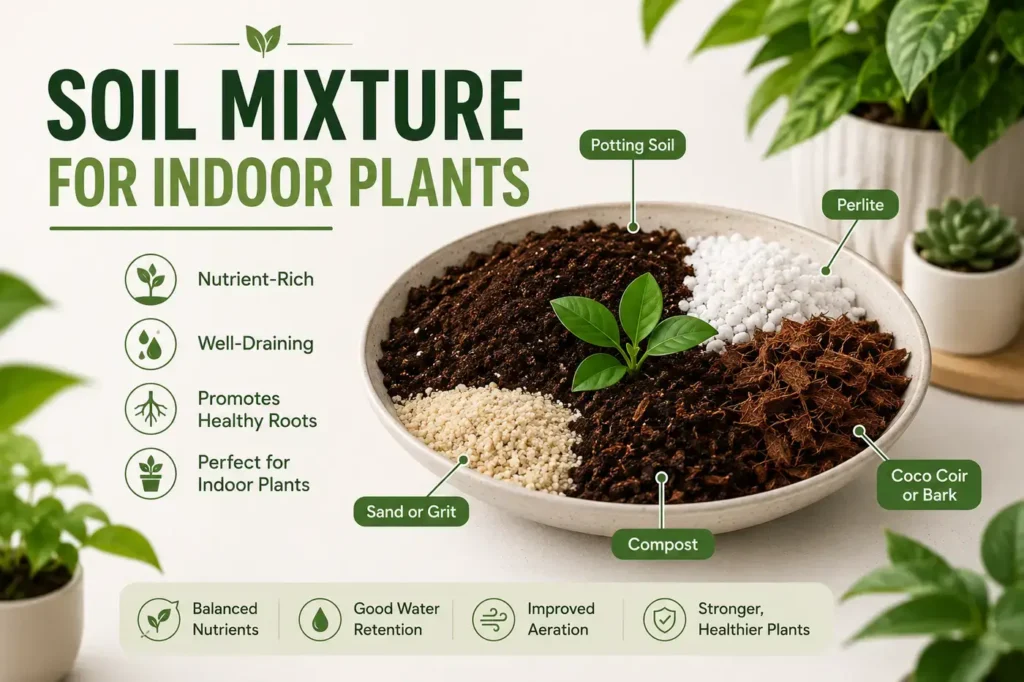
The right soil mixture for indoor plants makes a bigger difference to plant health than most people realize until they have experienced what happens when the wrong mix is used. A cactus in standard houseplant potting mix develops root rot within months. A tropical fern in cactus mix dries out faster than its roots can absorb water. A peace lily in garden soil compacts so tightly that oxygen cannot reach the roots and the plant slowly suffocates despite regular watering. Soil mixture for indoor plants is not a universal formula: it is a set of recipes that match the physical and chemical properties of the growing medium to the natural environment each plant evolved in and the specific conditions of life in a pot.
This guide covers 7 soil mixture recipes for the most common indoor plant categories, what each ingredient contributes to the final mix, how to source every component, and the diagnostic signs that tell you when the mix a plant is currently growing in needs to change.
Quick Answer
The best soil mixture for indoor plants depends on the plant type. Tropical foliage plants thrive in a mix of 60% potting mix, 20% perlite, and 20% worm castings. Succulents and cacti need 50% potting mix and 50% coarse sand or perlite. Orchids require bark-based mix without soil. Herbs grow best in 70% potting mix and 30% perlite. Ferns prefer 50% potting mix, 30% peat moss or coco coir, and 20% perlite. African violets need fine-textured mix with added perlite. Carnivorous plants need pure peat moss and perlite with no added nutrients. All indoor plant mixes require excellent drainage and should never include garden soil.
Why Garden Soil Never Works for Indoor Plants
Before getting into specific mix recipes, understanding why garden soil fails in pots explains why every recipe below uses commercial potting components rather than outdoor soil.
Garden soil in a pot compacts completely within weeks. In an outdoor bed, earthworms, roots, and freeze-thaw cycles constantly break up and aerate soil. In a pot with none of these forces operating, garden soil collapses into a dense, poorly draining block that suffocates roots, holds water far too long, and blocks the oxygen exchange that roots require alongside water. The result is a consistently wet, airless environment where root rot fungi thrive and the plant slowly declines even with attentive care.
Commercial potting mixes are engineered to maintain the pore structure that roots need in a container environment by combining fine particles that retain moisture and nutrients with coarser particles that create drainage channels and air pockets. Understanding the role of each component type helps you adjust any recipe based on what is available to you or what a specific plant needs.
The Key Ingredients and What Each One Does
Perlite: Volcanic glass expanded by heat into lightweight white pellets. Improves drainage and aeration dramatically. Does not hold water. Adding perlite to any mix makes it drain faster and increases air spaces in the root zone. Essential for almost every indoor plant mix.
Peat moss: Partially decomposed sphagnum moss harvested from bogs. Excellent moisture retention, slightly acidic pH, and fine texture. Used to add water-holding capacity to mixes for moisture-loving plants. Environmental concern around peat harvesting makes coco coir the preferred alternative for many gardeners.
Coco coir: Fibrous material from coconut husks. Similar moisture retention to peat moss but with a more neutral pH and a sustainable sourcing story. A direct substitute for peat moss in most indoor plant mix recipes.
Worm castings: Earthworm-processed organic matter. Adds balanced nutrition, beneficial microorganisms, and improved soil structure. At the 15 to 20% ratio used in most recipes, provides long-term slow-release nutrition without risk of nutrient burn.
Coarse sand: Horticultural or builder’s sand with particle size of 1 to 2 millimeters. Improves drainage in mixes for desert plants. Use coarse sand specifically since fine sand actually reduces drainage by filling pore spaces rather than creating them.
Orchid bark: Pine or fir bark in medium to large chip sizes. Provides the coarse, free-draining, airy structure that epiphytic plants including orchids, bromeliads, and some aroids require. Does not retain significant moisture.
Peat-based or coir-based commercial potting mix: The base of most recipes, providing the structure, moderate moisture retention, and initial starter nutrients that most indoor plants need. Choose a quality potting mix without excessive perlite already added (since you will add your own to control the ratio) and without water-absorbing crystal additives that interfere with proper watering management.
7 Soil Mixture Recipes for Indoor Plants
Recipe 1: Tropical Foliage Plants
This recipe suits the largest category of common houseplants including monsteras, philodendrons, pothos, peace lilies, snake plants, ZZ plants, rubber plants, and bird of paradise. These plants evolved in tropical forest environments with rich organic soil that drains freely after rainfall rather than staying saturated.
Ingredients:
- 60% quality peat or coir-based potting mix
- 20% perlite
- 20% worm castings
Why this ratio works: The potting mix base provides structure and moderate moisture retention appropriate for plants that want consistent moisture without waterlogging. The perlite at 20% increases drainage significantly over standard potting mix alone, preventing the compaction and waterlogging that causes root rot in tropical plants in pots. The worm castings at 20% provide slow-release balanced nutrition and beneficial microbial inoculation that supports the vigorous growth these plants produce through the growing season.
How to mix it: Combine the three components in a large container or on a tarp and mix thoroughly until evenly distributed. Moisten slightly before use since very dry components do not mix evenly. Fill the pot to within an inch of the rim to allow for watering without overflow.
Signs this mix suits your plant: New leaves unfurl regularly through the growing season. The soil feels moist but not soggy 24 to 48 hours after watering. Water flows freely from drainage holes immediately when you water rather than pooling on the surface.
Signs the mix needs adjustment: Water pools on the soil surface for more than a minute before absorbing (add more perlite). Soil dries out within one to two days of watering on medium-sized plants (reduce perlite or add coco coir for more moisture retention).
Recipe 2: Succulents and Cacti
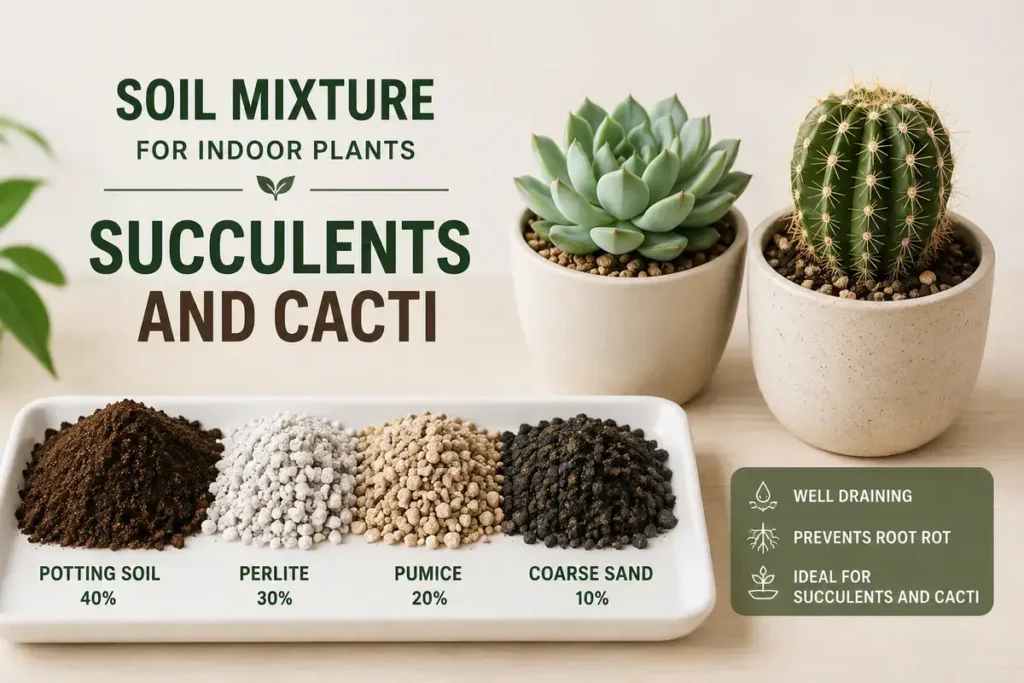
Succulents and cacti evolved in desert environments with fast-draining, low-organic soil that dries completely between infrequent rainfall events. The most common cause of succulent death in indoor collections is a soil mix that holds too much moisture, creating conditions that cause root rot in plants that require their roots to dry completely between waterings.
Ingredients:
- 50% quality potting mix
- 50% coarse perlite or coarse horticultural sand
Why this ratio works: The equal ratio of potting mix to drainage material creates a growing medium that dries out quickly and completely after watering, mimicking the sharp drainage that desert plants require. At this ratio, the mix typically dries to the bottom of a standard 4 to 6-inch pot within two to four days after thorough watering, which is the target drying time for most common succulent and cactus species.
Adjustments for specific species: Very drought-tolerant species including lithops (living stones) and some haworthia varieties benefit from an even sandier mix of 30% potting mix and 70% coarse perlite or sand. Most common echeverias, aloes, and jade plants perform well at the standard 50/50 ratio.
Signs this mix suits your plant: The soil dries completely within two to four days after watering on most pot sizes. Leaves remain firm and plump rather than soft and mushy. The plant maintains its compact, structured form rather than stretching toward light.
Signs the mix needs adjustment: The plant shows soft, mushy leaves or stem base, which indicates the mix is holding too much moisture for the species (increase perlite to 60% or higher). The plant shrivels between waterings faster than expected for the pot size (reduce perlite ratio slightly).
Recipe 3: Orchids
Most orchids grown as houseplants, primarily Phalaenopsis (moth orchids), are epiphytes that grow naturally on tree bark rather than in soil. Their roots require far more oxygen than any soil-based mix provides and tolerate periods of complete dryness between waterings in a way that would kill most houseplants. Standard potting mix kills orchids by suffocating the roots in the moisture-retaining, low-oxygen environment it creates.
Ingredients:
- 80% medium orchid bark (pine or fir bark, chip size approximately half to one inch)
- 10% perlite
- 10% horticultural charcoal
Why this ratio works: The large bark chips create enormous air spaces between particles where orchid roots receive the oxygen they require. Water flows through the mix almost immediately after watering, leaving the bark chips moist but not waterlogged and the air spaces fully open for root respiration. The charcoal absorbs impurities and helps prevent bacterial and fungal buildup in the enclosed pot environment.
Application notes: Orchid roots benefit from being visible and the translucent walls of plastic orchid pots serve a diagnostic function since the color of the roots tells you whether the plant needs water (silvery-white roots are dry, green roots are moist). Repot orchids only when the bark has fully broken down into fine particles that no longer provide the drainage and aeration the roots need, typically every one to two years.
Signs this mix suits your plant: Roots are healthy, green or white, and firm. New leaves and flower spikes emerge regularly. Water flows through the pot immediately when applied.
Recipe 4: Herbs Grown Indoors
Culinary herbs including basil, cilantro, parsley, mint, rosemary, and thyme have different needs from each other but share a preference for well-draining, moderately fertile soil that does not stay wet for extended periods. Herbs in overly rich or moisture-retaining soil produce lush but weak, poorly flavored growth. The essential oil content that drives herb flavor develops most strongly in plants growing in slightly lean, well-draining conditions.
Ingredients:
- 70% quality potting mix
- 30% perlite
Adjustments by herb type: Mediterranean herbs including rosemary, thyme, and lavender prefer sharply draining, slightly lean soil and benefit from a ratio closer to 50% potting mix and 50% perlite or coarse sand. Moisture-loving herbs including mint, parsley, and cilantro perform well at the standard 70/30 ratio without further modification.
Why this ratio works: The 30% perlite addition improves drainage significantly over standard potting mix while retaining enough moisture for the active root systems of productive herb plants. This balance supports the consistent moderate moisture that most herbs prefer while preventing the waterlogging that causes root rot in the small pots most kitchen herbs are grown in.
Recipe 5: Ferns and Moisture-Loving Tropicals
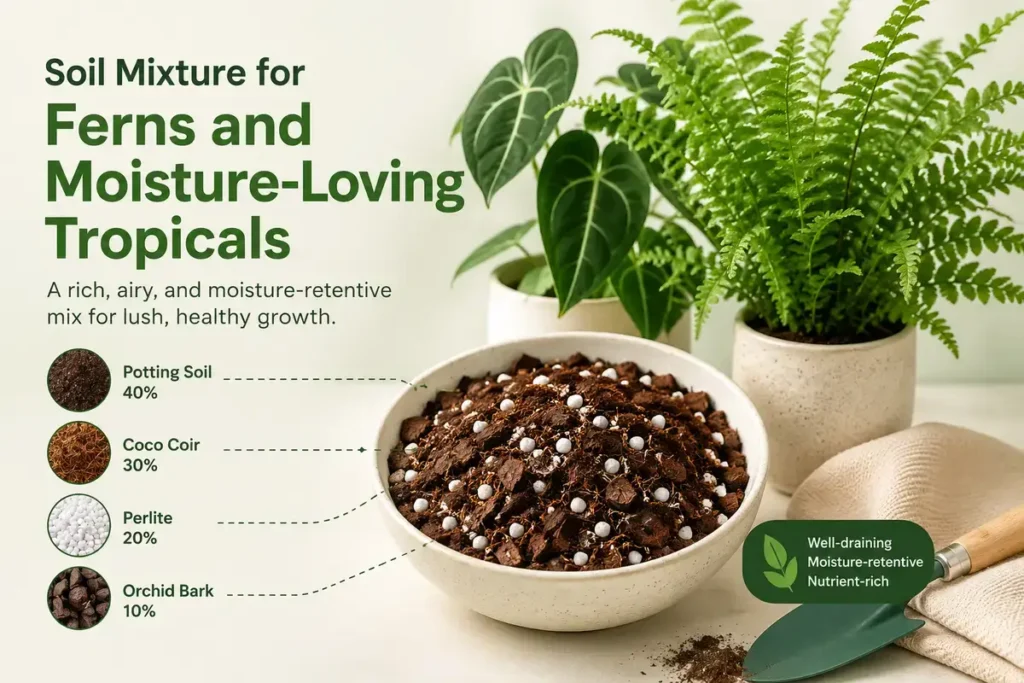
Ferns, calatheas, marantas, and similar moisture-loving plants evolved in humid, shaded forest environments with consistently moist, humus-rich soil that never fully dries out. Unlike most other indoor plants, these species perform best in soil that retains more moisture than standard potting mix provides, while still draining well enough to prevent the anaerobic conditions that cause root rot.
Ingredients:
- 50% quality potting mix
- 30% peat moss or coco coir
- 20% perlite
Why this ratio works: The additional peat or coir at 30% increases moisture retention significantly above standard potting mix alone, creating the consistently moist conditions ferns and calatheas require without the saturation that causes root rot. The perlite at 20% maintains adequate drainage even with the additional moisture-retaining components, ensuring that while the mix stays moist, it does not become waterlogged.
Signs this mix suits your plant: The soil remains evenly moist for three to five days after watering in a standard 6-inch pot. Leaves remain upright and crisp rather than wilting between waterings. Fronds on ferns unfurl in healthy, undamaged spirals without brown tips from dehydration.
Recipe 6: African Violets and Gesneriads
African violets, streptocarpus, episcias, and other gesneriads require a fine-textured, well-aerated mix that stays evenly moist without becoming waterlogged. Their fine, sensitive roots are damaged by coarse particles that create air pockets large enough to dry out root tips and by heavy mixes that compact around the root system.
Ingredients:
- 50% quality fine-textured potting mix (African violet specialty mix if available)
- 25% perlite (fine grade, not coarse)
- 25% vermiculite
Why this ratio works: Vermiculite, which is expanded mica, holds moisture and nutrients while remaining lightweight and preventing the compaction that heavier components cause around fine root systems. Combined with fine-grade perlite for drainage and a good base potting mix, this combination creates the evenly moist, fine-textured environment that African violet roots grow through most vigorously.
Application notes: African violets prefer to be watered from the bottom by placing the pot in a shallow dish of water and allowing the mix to absorb moisture upward through the drainage holes. This bottom-watering method prevents the crown and leaf base from remaining wet, which causes crown rot in African violets that top watering often creates.
Recipe 7: Carnivorous Plants
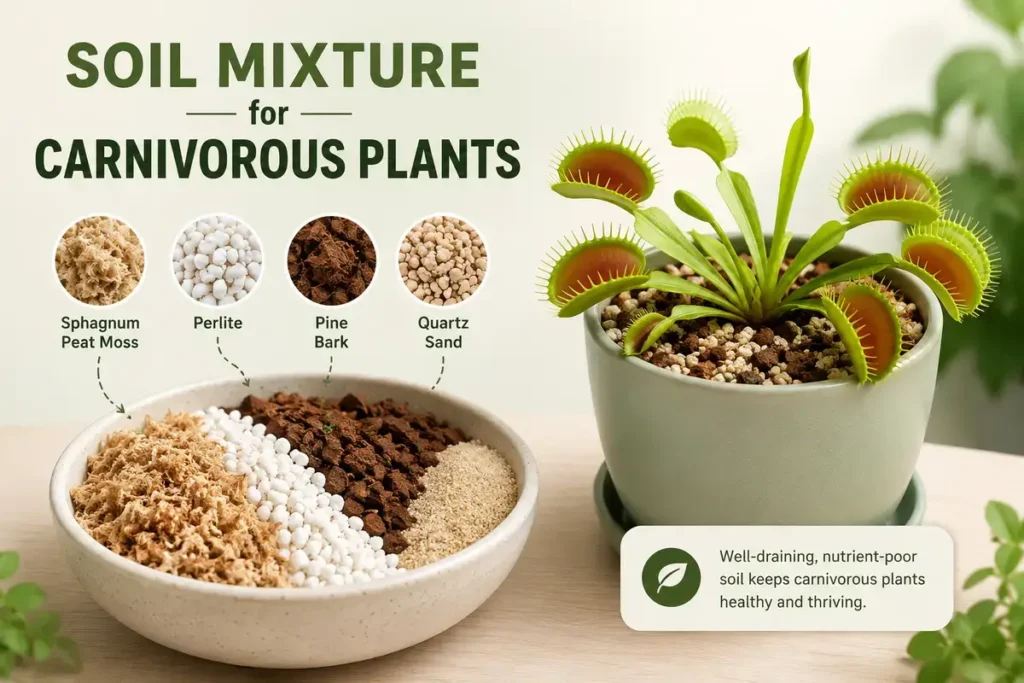
Carnivorous plants including pitcher plants, Venus flytraps, sundews, and butterworts evolved in nutrient-poor bog environments where they developed insect-capturing mechanisms to supplement the minimal nutrition their native soil provides. Commercial potting mix is too nutrient-rich for these plants and synthetic or organic fertilizers damage them by feeding the roots in ways their biology is not adapted to handle.
Ingredients:
- 50% pure sphagnum peat moss (not peat-based potting mix, which contains fertilizer)
- 50% perlite
Critical notes: Use only pure unfertilized peat moss without added nutrients, wetting agents, or pH adjusters. Use only distilled water, rainwater, or reverse osmosis water since the minerals in tap water accumulate in the nutrient-poor mix and damage carnivorous plant roots over time. Never add worm castings, compost, fertilizer of any kind, or any amendment other than pure peat and perlite. Carnivorous plants get their nutrition from the insects they catch, not from the growing medium.
Signs this mix suits your plant: Traps remain active and healthy. Plants maintain their characteristic deep green color without yellowing from mineral excess. New traps develop regularly through the growing season.
How to Improve Existing Indoor Plant Soil Without Repotting
Sometimes repotting is not practical immediately but the existing soil mix clearly needs improvement. These methods address the most common soil problems without a full repot.
For compacted, poorly draining soil: Use a chopstick or thin dowel to gently poke several holes through the soil from the surface to near the drainage holes of the pot. This immediately improves drainage and oxygen penetration without disturbing the root system significantly. Top-dress with a half-inch layer of perlite after this treatment to improve surface drainage between repottings.
For nutritionally depleted old potting mix: Top-dress with worm castings at a half-inch layer and water thoroughly to begin moving nutrients down through the old mix. Add liquid fertilizer applications every two weeks through the growing season to compensate for the depletion of starter nutrients in old mix. For complete guidance on the most effective fertilizer options for supplementing depleted indoor plant soil between repottings, best liquid fertilizer for indoor plants covers every product with specific guidance for different plant types and growth stages.
For soil that dries too quickly: Top-dress with a half-inch layer of coco coir and water it in to improve surface moisture retention. Switching to a larger pot with more soil volume also reduces how quickly the root zone dries out between waterings.
When to Repot Into Fresh Soil Mixture
Every one to two years for actively growing plants. Commercial potting mix breaks down structurally over 12 to 18 months of regular watering and microbial activity, losing the drainage and aeration properties that make it effective as a growing medium even if the plant has not outgrown the pot.
When roots emerge from drainage holes. Root emergence signals that the plant has used all available soil volume and needs either a larger pot or root pruning combined with fresh mix in the same pot size.
After pest infestations in the soil. Following a confirmed fungus gnat, root aphid, or soil mite infestation, repotting into fresh sterile mix removes the pest population and the soil conditions that supported it more completely than any soil drench treatment.
When the plant shows unexplained decline. A plant declining without obvious pest or disease cause and growing in soil that has been in use for more than a year often responds dramatically to repotting into fresh mix with the appropriate recipe for its type. For comprehensive guidance on the natural soil amendment options that make every soil mixture recipe more effective and longer-lasting, natural fertilizer for indoor plants and worm castings for indoor plants cover the amendment options that transform standard potting mix recipes into living, biologically active growing environments that support long-term plant health.
Conclusion
The right soil mixture for indoor plants is the foundation of everything else you do for your plants. Correct watering means nothing if the mix drains so poorly that the roots stay saturated regardless. Careful fertilizing means nothing if the soil structure prevents roots from expanding through the medium to access the nutrients. Getting the mix right for each plant type removes these foundational barriers to healthy growth and makes every other aspect of care more effective.
Start with the recipe for the plant category that represents most of your collection. Mix a batch fresh rather than buying pre-amended mixes where you cannot control the component ratios. Repot every one to two years even when the plant has not outgrown its pot. And match the physical properties of the mix to what the plant’s roots actually need in terms of moisture, drainage, and aeration based on where the plant evolved, not just on what the generic potting mix label recommends.
Frequently Asked Questions
Can I use garden soil for indoor plants?
No. Garden soil compacts completely in a pot within weeks, creating poor drainage, minimal aeration, and the consistently wet conditions that cause root rot in virtually every common houseplant species. It also introduces weed seeds, pest eggs, and soil pathogens that are kept in check by outdoor conditions but proliferate in the stable indoor pot environment. Always use commercial potting mix components formulated for container growing as the base of any indoor plant soil recipe.
How do I know if my indoor plant soil needs changing?
Signs that soil needs changing include water pooling on the surface for more than a minute before absorbing (indicating compaction), visible roots emerging from drainage holes (indicating the plant has outgrown the soil volume), white crusty mineral deposits on soil surfaces (indicating fertilizer salt accumulation), a sour or rotten smell from the soil (indicating root rot or anaerobic conditions), or a plant that is declining despite appropriate care and has been in the same mix for more than a year.
How much perlite should I add to indoor plant soil?
The correct perlite ratio depends on the plant type. Most common tropical foliage plants benefit from 20 to 30% perlite added to standard potting mix. Succulents and cacti need 40 to 50% perlite or coarse sand for adequate drainage. Moisture-loving ferns and calatheas work well with 15 to 20% perlite since they need more moisture retention. The visual test for the right ratio is whether the mixed soil feels loose and gritty rather than dense and clumping when squeezed in your hand.
Should I add fertilizer to my indoor plant soil mix?
Adding worm castings at 15 to 20% of the total mix volume when making fresh potting mix provides starter nutrition and beneficial microorganisms without the burn risk of synthetic fertilizers added to new soil. Avoid adding concentrated synthetic fertilizers directly to potting mix since this creates hot spots of concentrated nutrients that burn roots on contact. Wait four to six weeks after potting into a new mix before starting a liquid fertilizer routine, since fresh potting mix typically contains starter nutrients for the initial establishment period.
Is peat moss or coco coir better for indoor plant soil?
Both perform similarly as moisture-retaining components in indoor plant soil mixes with a few differences. Coco coir has a more neutral pH (around 6.0) compared to peat moss (around 4.5), making it more appropriate for plants that prefer neutral soil and better as a general-purpose amendment. Peat moss is more appropriate for plants that specifically need acidic conditions. Coco coir is the more environmentally sustainable choice since it is a byproduct of coconut processing rather than mined from non-renewable peat bogs. Either works effectively in any recipe above as a direct substitution.
How long does indoor potting mix last before needing replacement?
Most commercial potting mixes maintain their effective drainage and aeration structure for 12 to 18 months under normal watering and fertilizing conditions before breaking down enough to warrant replacement. Signs of breakdown include the mix becoming very dense and dark, draining slowly despite no obvious compaction, and developing a fine, peat-dust texture that indicates the structural particles have broken down. Plants in broken-down potting mix typically show slow growth, susceptibility to root rot, and declining health even with good care, which improves dramatically when repotted into fresh appropriately formulated mix.
Pingback: Indoor Pineapple Plant Care: 7 Steps to Grow Tropical Fruit - Plant Quill
Pingback: Hawaiian Ti Plant Indoor Care: 8 Steps to Keep It Bold and Colorful - Plant Quill
Pingback: Goldfish Plant Care Indoors: 7 Steps to Abundant Blooms All Year - Plant Quill
Pingback: How to Keep a Lily Plant Alive Indoors: 8 Steps That Actually Work - Plant Quill
Pingback: Elephant Ear Plant Care Indoors: 8 Steps to Massive Leaves - Plant Quill
Pingback: White Bird of Paradise Indoor Plant Care: Complete Guide (2026) - Plant Quill
Pingback: Eucalyptus Plant Care Indoor: 7 Steps to Keep It Thriving Indoors - Plant Quill
Pingback: White Bird of Paradise Indoor Plant Care: Complete Care (2026 Guide) - Plant Quill
Pingback: Indoor Rose Plant Care: 8 Steps to Keep Roses Blooming Inside - Plant Quill
Pingback: How to Care for Rosemary Plant Indoors: 9 Mistakes to Avoid - Plant Quill
Pingback: Care for Rosemary Plant Indoors: 8 Proven Tips to Keep It Thriving - Plant Quill
Pingback: Ficus Plant Care Indoor: 8 Steps to Stop the Leaf Drop for Good - Plant Quill
Pingback: Peat Moss for Indoor Plants: 7 Things You Need to Know - Plant Quill
Pingback: Indoor Plants That Like Direct Sunlight: 11 Sun-Loving Choices (2026) - Plant Quill
Pingback: Full Sun Indoor Plants: 9 Best Picks for Your Sunniest Windows 2026 - Plant Quill
Pingback: Plants That Like Direct Sunlight Indoor: 10 Sun-Loving Picks for 2026 - Plant Quill
Pingback: Indoor Plants That Like Direct Sun: 9 Picks for Hot, Bright Spaces - Plant Quill